
Gutters do more than carry rainwater away from a roof. In Rogers, they also need to handle heavy precipitation, snow, freezing temperatures, and runoff that can affect siding, fascia, landscaping, and the ground around your home.
For homeowners researching gutter installation rogers, the right starting point is an inspection of the roof edge, drainage path, and discharge areas. The final system should fit the property’s rooflines and Minnesota weather conditions.
The right approach depends on your roofline, existing drainage, exterior materials, and signs of leaks, sagging, or storm damage. A thoughtful plan can also identify related roofing or siding concerns before installation begins. Here is what Rogers homeowners should consider when preparing for a gutter project.
Contact Referred Restoration online to discuss your Rogers gutter project or call (763) 726-4245.
Why Gutter Planning Matters for Rogers Homes
Gutters do more than collect water at the roof edge. They help direct runoff away from siding, soil, walkways, and the foundation. In Rogers, that planning needs to account for changing conditions throughout the year. Rain, snow, freezing temperatures, and storm exposure can all add stress to exterior drainage systems.
A system that appears adequate during a light rain may still struggle when several weather conditions overlap. Heavy precipitation can expose undersized or poorly directed downspouts. Snow and ice can add weight around the roof edge. Repeated freezing and thawing may make existing leaks, loose sections, or sagging more noticeable. These conditions do not mean every home needs the same gutter solution. They do mean that placement, slope, outlets, and discharge areas deserve attention before installation begins.
Drainage starts with the whole roof edge
Effective planning looks beyond the gutter itself. Roof valleys can concentrate runoff in specific areas, while landscaping, grading, decks, and walkways may affect where downspouts should release water. Siding and fascia also need to be considered so the installation supports the surrounding exterior rather than creating a new maintenance concern.
Homeowners should also consider how the system will be accessed and maintained after installation. Clear routes for seasonal inspection can make it easier to notice debris, loose fasteners, overflow, or damage after a storm. If water continues to collect near the home, the issue may involve more than the gutter channel. A site-specific review can help distinguish a gutter problem from a discharge, grading, roofing, or siding concern.
Why an assessment is useful
Planning with an inspection allows the proposed system to reflect the home’s rooflines and drainage needs. Referred Restoration provides Rogers gutter services, including inspections, repairs, seamless gutter installation, downspout work, and gutter guard installation. The process centers on reviewing the property, developing a custom solution, and completing professional installation.
That approach gives Rogers homeowners a clearer basis for deciding what should be repaired, replaced, or improved. It also keeps the focus on directing water safely through every season, rather than choosing a system based only on appearance.
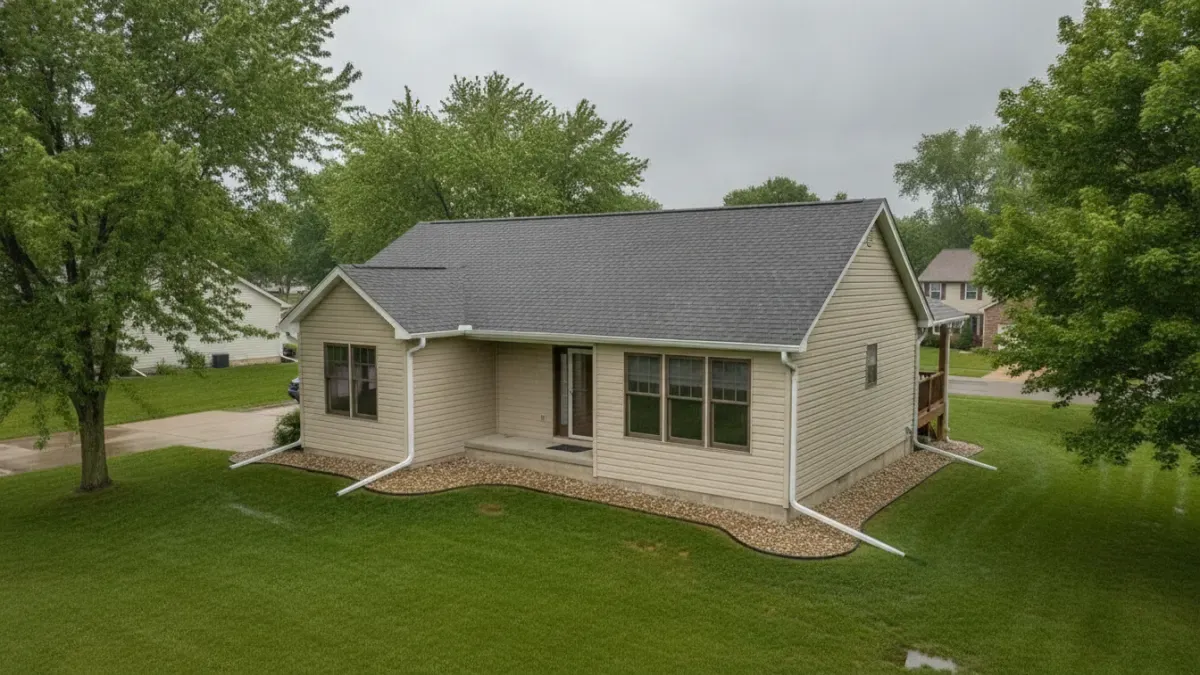
What Should a Gutter Inspection Cover?
A useful gutter inspection looks beyond the visible troughs. It evaluates how water moves from the roof edge, through the gutter system, and away from the home’s foundation. That broader review helps identify whether the right solution is repair, replacement, improved downspout routing, or coordination with other exterior work.
Roof edges, fascia, and the existing system
The inspection should begin where runoff enters the system. The roof edge, drip edge, fascia, and gutter attachment points should be checked for visible damage, separation, sagging, or areas where water may bypass the gutter. Fascia concerns may also affect how securely a new system can be installed.
The existing gutters should be reviewed for leaks, dents, loose sections, poor alignment, heavy debris, and signs of overflow. A professional can also assess whether the current layout is still appropriate for the roof design and the home’s drainage needs. If storm damage or roof-edge deterioration is present, a roofing professional may need to coordinate the next steps with the gutter work.
Downspouts and water discharge
Downspouts are as important as the gutters themselves. An inspection should confirm that outlets are positioned to collect water effectively and that downspouts are connected, open, and securely attached. It should also consider where each downspout releases water. Discharge should move water away from the foundation and avoid directing runoff toward walkways, neighboring areas, or places where it can collect.
Extensions, splash control, and the condition of the surrounding soil may all affect the final drainage plan. If the yard slopes toward the house or landscaping limits the available discharge path, those conditions should be addressed before installation begins.
Grading, landscaping, and related exterior needs
Soil grade, planting beds, mulch, patios, and other landscaping can influence how water leaves the property. The inspection should note obstacles that could interfere with safe access, downspout placement, or future maintenance. It should also identify whether siding, trim, or fascia shows moisture-related concerns. When siding needs to be reviewed alongside the gutter system, Rogers siding contractors can help coordinate that portion of the exterior assessment.
This inspection-first approach keeps gutter installation focused on the home’s full drainage path, not just the replacement of one visible component.
Gutter Installation Rogers Homeowners Should Plan For
Choosing a gutter system is not only a material decision. The right approach should fit the home, the roof edge, the drainage plan, and the conditions the system will face through Minnesota seasons. During an assessment, homeowners can discuss how the gutters should work with existing exterior features and whether related repairs should be addressed before installation.
Aluminum, steel, and seamless systems each offer a different way to approach the project. The table below provides a starting point for the conversation. It is not a substitute for inspecting the property, because the best selection depends on the home’s existing condition and drainage needs.
| Gutter option | Key characteristic | Planning consideration |
|---|---|---|
| Aluminum | Lightweight and rust-resistant | A practical material to discuss when keeping system weight and resistance to rust in view. |
| Steel | Heavy-duty option | May be considered when a homeowner is evaluating a sturdier material approach for the home. |
| Seamless systems | Minimize leak points | Useful to consider when reducing the number of joints is an important part of the drainage plan. |
Match the system to the whole drainage plan
Material selection should happen alongside decisions about gutter runs, outlets, and downspouts. A system can look appropriate on paper but still need a closer review if water is directed toward landscaping, siding, walkways, or the home’s foundation. Roof valleys and sections that collect more runoff also deserve attention during planning.
Rogers homeowners may also want to consider how the system will be accessed for seasonal care. Gutters should be planned around safe access, nearby landscaping, and features that could make inspection or cleaning more difficult. These practical details can be discussed before work begins, along with whether gutter guards or additional downspout work would support the overall plan.
Homeowners should also mention any history of leaks, sagging, damage, repeated clogs, or water near the basement or foundation. Those details help guide the assessment and may reveal that a repair, downspout adjustment, or related exterior work belongs in the same plan. If the roof edge or siding needs attention, coordinating the work can help avoid overlooking the places where water moves from one exterior surface to another.
For a local review of material choices, drainage needs, and installation options, explore Rogers gutter services. Referred Restoration’s process centers on an inspection, a custom solution, and professional installation, so the recommendation can reflect the home rather than a one-size-fits-all package.
How Does Gutter Installation Work From Start to Finish?
A well-planned installation is more than attaching a channel along the roof edge. The work should account for how water leaves the roof, where it will discharge, and how the crew can protect the home and surrounding property. A practical installation process usually includes these stages:
- Confirm the scope and site conditions. The process begins with an inspection and a clear discussion of the work involved. This may include replacing an existing system, adding downspouts, addressing leaks or sagging, or coordinating gutter work with roofing or siding repairs. The roof edges, fascia, landscaping, driveway, walkways, and areas affected by runoff should all be considered before materials and placement are finalized.
- Protect the property and establish safe access. Before installation begins, the work area should be prepared to reduce the risk of damage to siding, plants, trim, pavement, and other nearby surfaces. Safe access to the roof edge is also important, particularly where landscaping, uneven ground, or winter conditions can complicate the work. Clear communication about access points and outdoor items helps keep the project organized.
- Plan the runs, slopes, and outlets. Gutter runs should follow the roof edges while directing water toward planned outlets. Valleys, roof sections, corners, and the location of downspouts influence the layout. The discharge direction also matters. When the property layout allows, water should be directed away from vulnerable areas rather than toward a foundation, walkway, or low section of the yard.
- Install and secure the gutter sections. The installer positions the gutters and secures them to the appropriate roof-edge structure. Connections, corners, end caps, and outlets need careful attention because loose hardware or poorly aligned joints can contribute to leaks and overflow. The final system should fit the home rather than forcing a standard layout onto different rooflines.
- Connect and direct the downspouts. Downspouts carry collected water from the gutters toward the selected discharge points. Their placement should work with the roof layout, siding, landscaping, and surrounding grade. Extensions or other drainage components may be appropriate in some situations, but the right approach depends on the property and the observed flow path.
- Inspect the completed work and clean the site. Before the crew leaves, the installation should be reviewed for secure sections, open outlets, connected downspouts, visible gaps, and a clean work area. Where practical, the flow path can be checked to identify obvious overflow or discharge concerns. Removed materials, fasteners, and debris should be collected so the homeowner is not left managing installation waste.
For homeowners researching Rogers gutter services, asking how the layout, downspouts, and site protection will be handled can make the installation plan easier to understand.
How Can You Check New Gutters After Installation?
A careful check after installation helps confirm that water is moving through the system as intended and that the gutters fit the home properly. Walk around the property from ground level and look at the gutter runs, joints, end caps, outlets, and downspouts. The channels should appear securely attached, with no visible sagging, separation, or sections pulling away from the fascia.
Observe the system during rain
The most useful test happens during a steady rain. Watch water as it enters the gutters from the roof edge. It should move toward the outlets without spilling over the front edge or collecting in low sections. Pay close attention to roof valleys and areas where several roof planes direct water toward one run. These locations may need particular attention because concentrated flow can expose drainage issues that are not obvious on a dry day.
Follow each downspout to its discharge point. Water should be directed away from the foundation and should not pool beside the home, flow toward a walkway, or wash out nearby landscaping. If an extension or other drainage adjustment is part of the plan, confirm that it remains in position after the first significant rainfall.
Review connections and surrounding materials
Check that downspouts remain connected and that joints are not visibly leaking. Look along the fascia, siding, and foundation for new water marks after rainfall. A small issue is easier to address when it is found early, before repeated moisture affects adjacent materials. If gutter work was coordinated with roof or siding repairs, review those transition areas as well.
Maintain the system through Minnesota seasons
Seasonal maintenance should include removing leaves and other debris, checking outlets, and looking for movement after major storms. Before and after winter, inspect for conditions that may affect drainage as snow, ice, and freezing temperatures put additional strain on exterior components. Avoid pulling on gutters or breaking ice loose with tools. If snow or ice buildup, repeated overflow, or new sagging appears, arrange an inspection rather than assuming the system will correct itself.
For related guidance, review these warning signs your Minnesota gutters need replacement. Prompt attention to leaks, damage, or drainage changes can help determine whether a targeted repair or a broader assessment is appropriate.
When Should You Schedule Gutter Installation in Rogers?
Schedule an inspection when your gutters stop moving water reliably or when exterior work creates an opportunity to improve the drainage system. Visible leaks, sagging sections, separated joints, or storm damage are clear reasons to request an assessment. You do not have to wait for a major failure. Repeated clogs, overflow during rain, water collecting near the foundation, or staining along the siding can also indicate that the current layout needs attention.
Rogers homes face precipitation, snow, freezing temperatures, and changing weather conditions that can expose weak points over time. A professional inspection can look beyond the gutter trough itself, including the roof edge, fascia, downspouts, discharge points, and nearby landscaping. The goal is to identify whether a targeted repair, a drainage adjustment, or a new system is the most appropriate response.
Repair or replacement: what should you consider?
Repair may make sense when the underlying system is generally sound and the issue is limited to a loose section, damaged outlet, leaking joint, or poorly secured downspout. Replacement deserves consideration when damage is widespread, sections repeatedly fail, the system cannot handle the home’s drainage needs, or the layout consistently directs water toward vulnerable areas. An inspection helps separate an isolated defect from a pattern that will continue to require attention.
Timing also matters when gutters are part of a larger exterior project. If you are planning roofing work, roof-edge repairs, siding work, or fascia repairs, coordinate the projects before installation begins. That makes it easier to confirm where gutters and downspouts should sit and reduces the chance of disturbing newly completed work. Referred Restoration can assess related exterior needs as part of its inspection, custom-solution, and professional-installation process.
For homeowners comparing options, Rogers gutter services can include inspections, repairs, seamless gutter installation, downspout work, and gutter guards. Request an assessment after a storm, before planned exterior renovations, or whenever you notice a recurring drainage problem.
A site-specific inspection can help clarify whether your Rogers home needs repair, replacement, improved downspout planning, or a new seamless system. Referred Restoration can review the current setup and discuss a practical next step based on your home’s drainage needs.
Contact Referred Restoration online or call (763) 726-4245 to discuss your gutters and schedule an inspection.
Frequently Asked Questions
What should a gutter inspection cover?
A thorough inspection should review the roof edge, fascia, existing gutters, joints, outlets, downspouts, and discharge areas. It should also look for leaks, sagging, damage, repeated clogs, and related roofing or siding concerns before a system is selected.
Are seamless gutters a good choice for a Rogers home?
Seamless gutters can be a practical option when minimizing leak points is a priority. The right system still depends on the roof layout, drainage needs, material selection, and the condition of the home’s fascia and exterior.
How should downspouts be planned during installation?
Downspouts should be positioned to collect water from the planned gutter runs and direct it away from the foundation. Planning should account for roof valleys, landscaping, grading, siding, walkways, and where discharge can flow safely during rain and snowmelt.
How do I maintain new gutters after installation?
Check gutters and downspouts seasonally and after major storms for debris, overflow, loose sections, damaged outlets, or water collecting near the home. Watching the system during rainfall can reveal drainage issues that are not obvious on a dry day.
Should I repair my gutters or replace them?
Repair may be appropriate for isolated leaks, loose sections, or limited damage. Replacement is worth discussing when problems are widespread, sagging or clogs keep returning, or the system no longer manages water effectively. An inspection can clarify the practical next step.
Ready to Plan Your Gutter Project?
Contact Referred Restoration online or call (763) 726-4245 to discuss your gutters and schedule an inspection.