
Gutter Replacement for Minnesota Homes: Warning Signs
How Do You Know When Gutter Replacement Is Needed?
Minnesota gutters work through snow, freeze-thaw cycles, heavy rain, and seasonal debris. Small problems can become bigger exterior concerns when water spills over the edge, collects near the foundation, or reaches the fascia and roof edge.
Contact Referred Restoration online
gutter replacement is usually worth considering when damage is widespread, sections repeatedly sag or leak, or the system no longer directs water away from the home. A condition-based inspection can separate an isolated repair from a better long-term solution, including custom-fitted seamless gutters with fewer potential leak points.
Referred Restoration provides honest assessments for homeowners in Rogers, Cottage Grove, and nearby Minnesota communities. Its Rogers gutter services can be considered after reviewing the system. The right decision depends on the condition of the gutters, downspouts, attachment points, and surrounding roof edge, not on a one-size-fits-all recommendation.
Start by looking for the visible signs that indicate your gutter system may be struggling.
What Are the Signs You Need Gutter Replacement?
Gutters do more than collect rainwater. They guide runoff away from your siding, fascia, foundation, and basement. When the system can no longer do that reliably, replacement may be more practical than repeated patching. The right decision depends on the pattern and extent of the damage, not on one isolated blemish.
Visible wear along the gutter channel
Walk around the home and look for gutters that sag, pull away from the fascia, or have loose and detached sections. Sagging often points to loose, broken, or poorly spaced hangers. It can also change the gutter’s slope, allowing water to sit instead of moving toward the downspouts. Other visible warning signs include peeling or bubbling paint, rust spots, cracks, and splits. Peeling paint can indicate moisture escaping at a seam, while rust suggests the protective coating has broken down. Even a small crack can enlarge and allow water to leak onto nearby trim. These are recognized signs of gutter wear, but an inspection can determine whether a local repair is sufficient. Rogers gutter repair and replacement services can be evaluated based on the condition of the full system.
Overflow during ordinary rainfall
Water pouring over the front edge during a normal storm deserves attention, especially when the gutters are clear. A blockage from leaves, twigs, or shingle grit may be the cause. But recurring overflow can also point to an incorrect slope, undersized downspouts, separated joints, or a system that has lost its shape. Watch for water stains on the siding and trim, or for streams forming where downspouts should be carrying runoff. If overflow continues after cleaning, the problem is likely more than routine debris.
Pooling water and eroded soil
Check the ground after rainfall. Puddles near the foundation, channels cut into the soil, washed-out mulch, or exposed soil can show that runoff is not being directed away effectively. Protecting adjacent siding is also part of the exterior review, especially when splashback is persistent. Uncontrolled discharge may contribute to foundation damage or basement leaks over time. Downspout extensions should move water away from the foundation rather than releasing it directly beside the wall. These ground-level signs are easy to overlook because they develop gradually, but they can be more meaningful than a gutter’s appearance alone.
Damage at the fascia or roof edge
Overflowing or leaking gutters can keep fascia boards wet and may contribute to rot. Clogged gutters have also been associated with damage to fascia and the roof deck. Look for soft wood, staining, peeling finishes, or gaps where the roof edge meets the gutter. During a replacement assessment, the fascia and roof edge should be checked before new gutters are attached. A broader roof inspection in Rogers may be useful when damage extends beyond the gutter line. Addressing any underlying damage helps the replacement system sit securely and function as intended.
Replacement is worth discussing when several signs appear together, when damage is spread across multiple sections, or when the system repeatedly fails after maintenance. A condition-based inspection can separate a repairable issue from a broader drainage problem without treating every aging gutter as an emergency.
Can Gutter Replacement Be Avoided With Repairs?
A small, isolated problem does not always mean the entire gutter system needs to be replaced. A loose fastener, separated joint, or limited leak may be reasonable to repair when the surrounding gutter is still straight, intact, and securely attached. The right choice depends on whether the damage is local or a symptom of broader system failure.
When a repair may be enough
Repair can make sense when one section has a minor crack, a single leaking connection, or a detached hanger. The rest of the system should be straight, intact, and securely attached. The repair should address the underlying issue, not just cover the visible leak. For example, resealing a joint will not solve a gutter that is pulling away from the fascia because its hangers are loose or the supporting wood is deteriorated.
It is also worth checking what happens during rain. If water flows through the system without pooling, overflowing, or spilling against the house, a targeted repair may restore proper performance. A professional can inspect the affected area and determine whether a repair is durable or likely to be temporary.
When replacement becomes more practical
Replacement is generally more practical when problems appear in several places or keep returning after repairs. Widespread rust and corrosion, multiple cracks, repeated leaks, and long sections that sag or pull away from the fascia suggest that the material or attachment system has reached the end of its useful service. Peeling paint can also indicate moisture leaking from gutter seams, rather than being only a cosmetic issue. Visible signs such as rust, cracks, sagging, and detached sections are commonly associated with gutters that need replacement (source).
Look beyond the gutter itself. Pooling water or soil erosion near the foundation may mean runoff is not being directed away effectively (source). Overflow can also affect fascia boards and the roof edge over time. If the system has poor pitch, water may sit in the channel instead of moving toward the downspouts. Correct slope and secure attachment are important parts of effective installation (source).
How Minnesota Weather Changes Gutter Performance
Gutters in Minnesota manage more than ordinary rainfall. Homes across the state face frequent precipitation and about 43 inches of annual snowfall, which puts repeated stress on the roof edge, gutter hangers, seams, and downspouts. A system that performs well during a mild summer storm can struggle after snow accumulation, spring thaw, or a series of heavy showers.
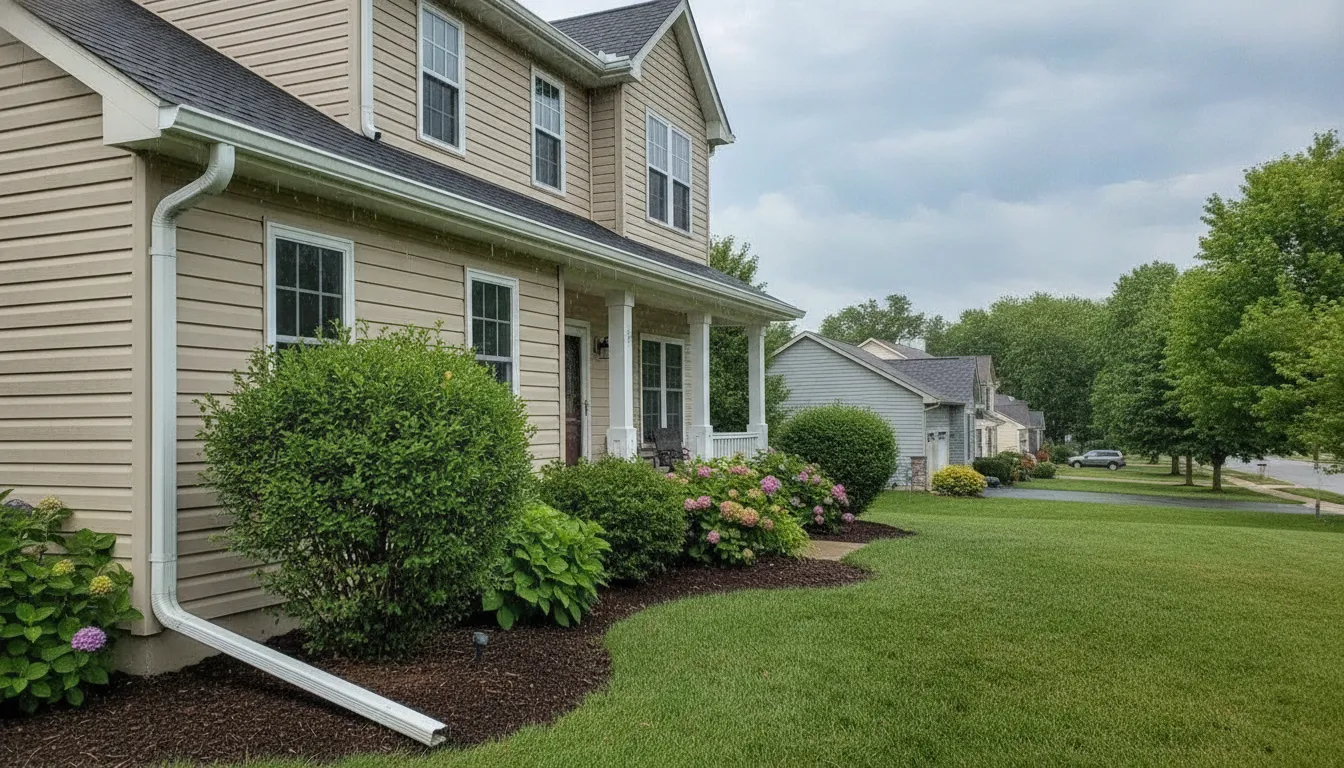
Ice dams can redirect melting snow
The University of Minnesota Extension defines an ice dam as a ridge of ice at the roof edge that prevents melting snow from draining off the roof. Water that backs up behind an ice dam can enter the home and damage walls, ceilings, insulation, and other areas. Persistent moisture may also support mold and mildew growth. Read the University of Minnesota Extension guidance on preventing ice dams for additional safety and maintenance information.
Gutters do not cause every ice dam, and replacing them does not solve every roof-ventilation or insulation problem. However, damaged, clogged, or poorly sloped gutters can make drainage problems worse. Ice-dam concerns should be evaluated alongside the roof edge, attic conditions, and overall water-management plan.
Heavy precipitation and fast runoff expose weak drainage
During a strong storm, water moves quickly from the roof into the gutter. Downspouts that are undersized, blocked, or poorly positioned may not carry that flow away efficiently. Overflow can leave wet soil against the foundation, erode landscaping, or stain and damage fascia. Downspout extensions also matter because they help direct runoff away from the foundation rather than releasing it beside the wall.
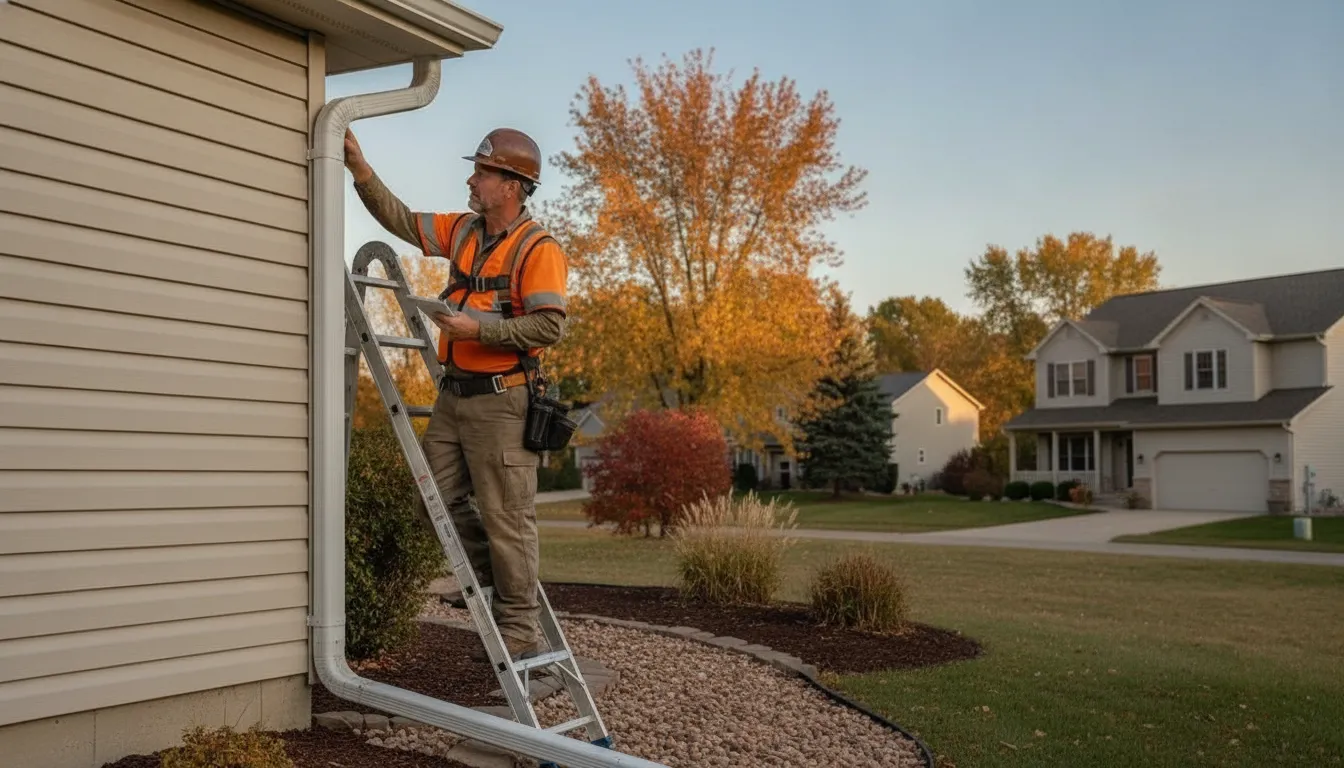
For a broader look at how roof design and drainage work together, review this guide to proper roof installation and drainage. A professional gutter replacement assessment should consider roof runoff, downspout locations, fascia condition, and the home’s surrounding grade rather than treating the gutter channel as an isolated component.
Why Choose Seamless Gutters for a Minnesota Home?
Seamless gutters can be a practical option when an older system has repeated leaks, loose joints, or sections that no longer direct water reliably. Unlike sectional gutters, which are assembled from multiple pieces, seamless systems are formed in long runs with fewer connection points. That reduces the number of places where seals can weaken and water can escape. The result is not a guarantee against leaks, but it can simplify the system and reduce a common source of gutter problems.
Fewer seams and less routine maintenance
Every joint is a potential maintenance point. Seamless gutters reduce those joints, which may help limit leak points and the need for repeated sealing compared with a traditional sectional system. They are also considered a sleek, durable, and low-maintenance choice. However, seamless does not mean maintenance-free. Leaves, twigs, shingle grit, and ice can still affect the channels and downspouts, so the system should be checked regularly.
Choosing between aluminum and steel
Material selection should reflect the home, roof runoff, and the installation conditions. Aluminum is lightweight and rust resistant, making it a common choice for residential gutter systems. Steel is heavier duty and may suit homeowners who want a more substantial material. An installer can discuss the practical differences and recommend an option based on the home’s layout and the existing fascia, the trim board that supports the gutter.
| Gutter option | Potential fit | What to consider |
|---|---|---|
| Seamless aluminum | Many residential rooflines | Lightweight and rust resistant |
| Seamless steel | Heavier-duty material needs | Heavier material that needs secure attachment |
| Gutter guards | Properties with recurring debris | Can reduce debris, but inspections remain important |
A custom fit for the roofline
Seamless gutters are commonly custom-fabricated on site to match a home’s specific dimensions. That allows the installer to plan each run around roof edges, corners, valleys, and downspout locations rather than relying only on standard sections. Correct slope, secure attachment, and properly placed downspouts still matter as much as the gutter material. A well-fitted system should move water toward its outlets instead of allowing it to sit in low spots.
What Happens During a Professional Gutter Replacement?
A professional gutter replacement should be more than removing an old channel and attaching a new one in the same location. The installer first evaluates how water moves across the roof and around the home, then builds a system that fits the roofline, fascia, and discharge points. That process matters in Minnesota, where frequent precipitation, snow, and freeze-thaw conditions can put added stress on exterior drainage.
- Inspect the existing system and roof edge. The visit begins with a review of the gutters, downspouts, hangers, fascia boards, and roof edge. The installer looks for leaks, sagging, loose sections, corrosion, blockages, and areas where water has been pooling or overflowing. The fascia and roof edge should also be checked for rot or other damage, since replacing gutters can reveal problems that were hidden behind the old system. This inspection helps determine whether the project involves gutter replacement alone or whether related repairs should be discussed first.
- Plan the drainage path. Next, the installer maps the roofline and identifies where water should enter the gutters, how sections should be divided, and where downspouts can discharge safely. The plan should account for roof valleys, corners, entrances, landscaping, and the location of the foundation. A gutter system is only useful when it moves water away from the house rather than concentrating runoff beside it.
- Set the pitch and secure the gutters. Gutters need a controlled pitch, meaning a slight slope that guides water toward the downspouts instead of allowing it to stand in the channel. The installer positions the system along the fascia and secures it with appropriate hangers and fasteners. Correct slope and secure attachment help the system handle runoff without sagging or retaining stagnant water. The result should follow the roofline cleanly. It should also maintain a dependable path for water.
- Install downspouts and discharge extensions. Downspouts are connected at planned collection points and routed vertically along the exterior. Extensions or other discharge solutions carry water away from the foundation rather than releasing it directly beside the wall. Downspouts also need to remain clear and appropriately sized for the roof area they serve, especially during heavy rainfall.
How Do You Maintain New Gutters After Installation?
New gutters still need routine attention. A simple maintenance schedule helps you catch blockages, loose attachments, and drainage problems before runoff reaches the siding, fascia, or foundation. Inspect the system at least twice a year, ideally in spring and fall, and look it over again after a major storm. Heavy rain, wind, and falling branches can shift sections or add debris even when the gutters were recently installed.
Clear debris before it becomes a blockage
Remove leaves, twigs, and accumulated shingle grit from the gutter channel. Sediment can collect in low areas and wash toward the downspouts, where it may create a deeper blockage. The result can be overflow during the next heavy rain. Gutter maintenance guidance commonly recommends checking the system twice yearly and after major storms to confirm that it remains clear and properly attached.
Do not stop at the visible section. Run water through each downspout and confirm that it exits freely at the bottom. Check that extensions or splash areas direct water away from the foundation rather than allowing it to pool beside the home. If water backs up, a downspout is loose, or an extension has shifted, correct the issue before the next storm. Properly sized and unobstructed downspouts are especially important when rainfall is heavy.
Know when to leave the ladder work to a professional
Only clean gutters yourself if you can work from stable, level ground with the right equipment and a clear weather window. Never climb onto a wet, icy, or unstable roof, and do not stretch sideways from a ladder to reach another section. If the gutters are high, difficult to access, visibly pulling away, or damaged after a storm, arrange a professional inspection instead. A technician can assess the attachment points, pitch, downspouts, and any water-related damage without turning routine maintenance into a safety risk.
Contact Referred Restoration online
Frequently Asked Questions
Do I need gutter replacement?
Replacement may be appropriate when gutters repeatedly leak, sag, overflow, or pull away from the home. Water pooling near the foundation, soil erosion, or damaged fascia can also indicate that the system is no longer directing runoff effectively. An inspection can help distinguish an isolated repair from broader failure.
How often should gutters be replaced?
There is no universal replacement schedule. Material, installation quality, maintenance, weather exposure, and physical damage all affect service life. In Minnesota, snow, ice, freeze-thaw cycles, and frequent precipitation can place added stress on gutters, so condition matters more than age alone.
What are the benefits of seamless gutter replacement?
Seamless gutters have fewer joints than sectional systems, which reduces potential leak points and can simplify maintenance. They are commonly custom-fabricated for a home’s dimensions. Referred Restoration offers lightweight, rust-resistant aluminum and heavy-duty steel options, depending on the home’s needs.
Do I need to replace my downspouts when I replace my gutters?
Not always, but downspouts should be evaluated as part of the replacement. They need to be free of damage and appropriately sized and positioned to carry water away from the foundation. Reusing sound downspouts may be practical, while damaged or poorly placed components may need replacement or adjustment.
Ready to Discuss Gutter Replacement?
A closer look at your gutters can help clarify whether targeted repairs or a complete replacement makes sense for your Minnesota home. Referred Restoration can review the system, discuss your concerns, and help you understand the next practical step.
Contact Referred Restoration online to discuss gutter replacement.
You can also call (763) 726-4245 with questions.