
Learning how to replace glass in an insulated window starts with recognizing that the glass is usually a sealed insulated glass unit, not a loose pane that can be cut and dropped into place. The unit, sash, frame, glazing method, safety-glass requirements, and the condition of the opening all affect whether a glass-only repair is appropriate. Minnesota homeowners should also take extra care around broken glass, cold weather, and moisture that may have reached the frame.
Contact Referred Restoration online or call (763) 726-4245 to request a window inspection.
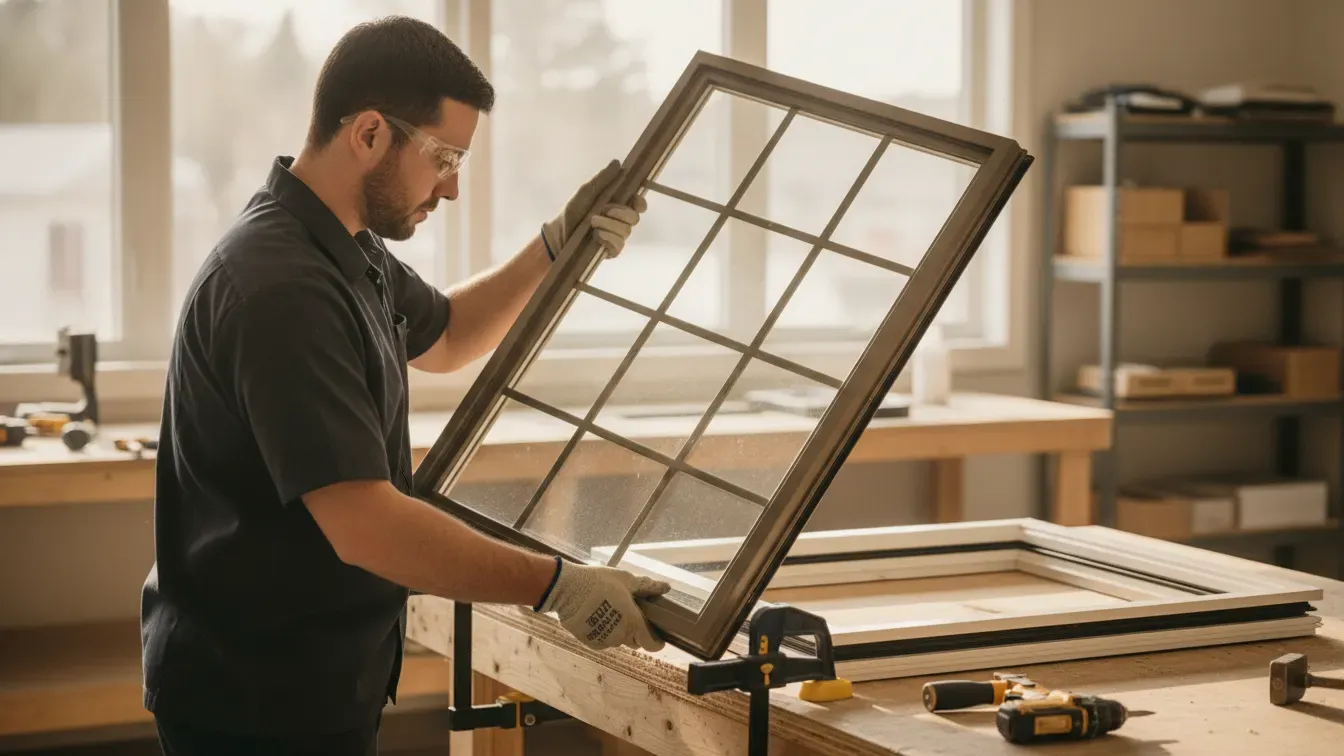
Short answer: To replace glass in an insulated window safely, secure the area, identify the removable sash and sealed unit, measure the replacement assembly precisely, confirm the correct safety-glass and energy specifications, and install it with the right setting and sealing materials. Stop and call a professional if the glass is broken, the frame is damaged, the window is elevated, or the unit cannot be identified with confidence.
What is glass in an insulated window?
Glass in an insulated window is commonly part of an insulated glass unit, or IGU. An IGU joins two or more panes around a sealed airspace, often with a spacer and desiccant. The complete assembly is built to fit the sash and support the window’s weather and thermal performance. Replacing only one loose pane is generally not the same job as replacing the sealed unit.
That distinction matters when a window is foggy, cracked, or no longer comfortable near the glass. A failed seal can allow moisture into the space between panes. A damaged pane can compromise the sealed assembly. In either case, the practical repair may be a replacement IGU that matches the sash rather than a piece of single-pane glass.
For background on trapped moisture and failed seals, see Referred Restoration’s guide to window seal failure and foggy glass. That guide covers diagnosis. This article focuses on the safe replacement process and the limits of a glass-only repair.
When is glass-only replacement the right option?
Glass-only replacement can make sense when the sash and frame are sound, the opening is not showing ongoing moisture damage, and the replacement IGU can be matched to the original assembly. It is less suitable when the frame is warped, rotted, leaking, difficult to operate, or unable to hold the replacement unit securely.
| What you observe | Possible next step | Why an inspection matters |
|---|---|---|
| Fog or droplets between panes | Replace the failed insulated glass unit | The seal may have failed while the frame remains usable. |
| One cracked pane with a sound sash | Assess for a matching replacement IGU | The replacement must match thickness, dimensions, coatings, and safety requirements. |
| Soft, stained, or deteriorated frame | Consider a broader window repair or replacement | A new glass unit will not correct damaged framing or a leaking opening. |
| Window will not open, close, or lock | Inspect the sash, hardware, and frame together | Hardware or alignment problems may make a glass-only repair incomplete. |
| Breakage after a storm | Secure the opening and arrange an assessment | Wind, hail, and surrounding exterior damage may affect more than the glass. |
The U.S. Department of Energy’s Window Glass Replacement job aid emphasizes correct sizing, suitable safety glass, durable fastening, a clean surface, and a complete seal. Those checks are useful even when a homeowner is deciding whether to proceed, because they show why this work is more than inserting a new pane.
How do you replace glass in an insulated window safely?
Replacing an insulated glass unit safely requires controlled removal, accurate identification, and a stable installation. The exact sequence varies by window manufacturer and glazing system, so use these steps as a planning guide rather than a substitute for the manufacturer’s instructions or a qualified assessment.
- Make the area safe. Keep children and pets away. Wear eye protection, sturdy shoes, and cut-resistant gloves. Do not press on cracked glass, pick up fragments with bare hands, or work from a roof, ladder, or upper-story exterior position. If the opening is exposed, use a temporary barrier only if it can be secured without contacting unstable glass.
- Identify the sash and glazing system. Determine whether the sash can be removed safely and whether the IGU is held by interior stops, exterior stops, a dry-glaze gasket, or another system. Take photos of the stops, setting blocks, spacer, and orientation before removal. Do not pry aggressively against a frame that may crack or deform.
- Inspect the frame before ordering. Look for swelling, soft wood, corrosion, distortion, staining, failed corners, or evidence of water entry. Check whether the sash operates and locks correctly. If the frame cannot support a replacement unit or the opening has hidden damage, a full window solution may be more appropriate.
- Measure the existing unit carefully. Record the visible width and height, overall IGU thickness, spacer type, pane count, low-emissivity coating if known, safety-glass markings, and any manufacturer information. Measurements should be checked at multiple points. Do not order from one rough measurement or assume a replacement unit is interchangeable with a different sash.
- Order a matched insulated glass unit. The replacement should fit the sash and meet the original or approved performance and safety specifications. Confirm whether the glass must be tempered or laminated for its location. A glass supplier or window professional can verify the specifications before fabrication.
- Remove the damaged unit with support. A sealed glass unit can be heavy and awkward even when it is not broken. Support the sash and unit as stops or glazing materials are removed. If the glass is cracked, the seal is failing, or the unit will not release without force, stop rather than turning a controlled repair into a larger breakage event.
- Prepare the seat and setting points. Remove loose debris and old material without damaging the sash. The support points need to be clean and correctly positioned. Do not use random shims, excessive force, or expanding foam as a substitute for the window’s intended glazing system.
- Set, secure, and seal the replacement. Place the IGU on the correct setting blocks, center it without stressing the edges, reinstall the stops or gasket, and use only compatible glazing or sealant materials. The edge seal should be continuous where the design requires it. The U.S. Department of Energy checklist calls for durable fastening and a seal that limits air and water movement.
- Check the finished window. Confirm that the glass is intact, the sash is square enough to operate, locks engage, stops are seated, the perimeter is sealed, and no part of the frame is under abnormal pressure. Look for air movement or water-entry paths without testing an unfinished seal during bad weather.
A homeowner can learn the sequence without taking on every step. If safe access, accurate measurements, or the correct glazing materials are uncertain, an inspection is the safer next action.
What should you measure before ordering replacement glass?
Before ordering an insulated glass unit, record the opening and the assembly details that control fit. A small measurement error can leave the unit too tight, unsupported, or unable to seal correctly. The following checklist helps organize information for a professional or glass supplier:
- Visible glass width and height, measured at more than one point
- Overall IGU thickness, measured only when it can be done safely
- Number of panes and approximate airspace or spacer configuration
- Frame and sash material, such as vinyl, wood, or metal
- Glazing method, stops, gaskets, and visible setting blocks
- Tempered or laminated safety-glass markings, if present
- Low-emissivity coating, tint, grille, or pattern that must be matched
- Manufacturer label, sash number, or other identifying information
- Signs of moisture, rot, corrosion, movement, or prior repairs
Do not remove trim or an intact unit just to obtain a measurement if the process would expose you to fall risk or unstable glass. Referred Restoration’s guide on measuring replacement windows explains why several measurements and an opening assessment matter. For an insulated glass replacement, the unit thickness and glazing details are just as important as the visible dimensions.
Should you replace only the glass or the whole window?
Replace only the insulated glass unit when the frame and sash are sound, the window operates correctly, and the problem is isolated to the sealed glass assembly. Consider a full window replacement when the frame is damaged, the opening leaks, the sash is badly distorted, hardware problems persist, or the window’s design no longer serves the home.
Glass-only work can preserve a usable frame and reduce disruption. A full replacement can provide access to the opening and surrounding weather-management details that remain hidden when the old frame stays in place. The right choice depends on the condition of the complete window system, not just whether one pane looks damaged.
Referred Restoration’s Minnesota home window replacement guide covers the broader decision. Its focus is replacement planning, while this guide addresses the narrower question of safely replacing an insulated glass unit.
When should Minnesota homeowners call a professional?
Call a qualified window professional before removing the glass when the opening is elevated, the unit is large or heavy, the frame shows moisture damage, the sash is difficult to remove, or the glass has broken into unstable pieces. Professional help is also appropriate when the replacement specification is unclear or when the window is part of a storm-damaged exterior.
Older homes deserve additional caution. The Department of Energy job aid notes that lead may be present in pre-1978 windows unless testing shows otherwise. Do not sand, scrape, or disturb old painted components casually. Local safety-glass requirements can also depend on the window’s location and configuration, so a replacement should match applicable requirements rather than simply match appearance.
Minnesota’s freeze-thaw cycles make complete sealing and water management especially important. A replacement that fits the visible opening but leaves a failed perimeter seal can invite drafts or moisture. Referred Restoration serves homeowners in Rogers, Cottage Grove, St. Francis, Monticello, and nearby communities with window repair and replacement pathways. A local inspection can help determine whether the safest answer is glass-only work, frame repair, or a broader installation.
For a broader look at professional sequencing, see what residential window installation involves. It explains how measurement, opening condition, sealing, and final operation checks fit together.
Contact Referred Restoration online or call (763) 726-4245 to discuss a window glass repair or replacement assessment.
Frequently Asked Questions
How do I know if my window has insulated glass?
Insulated glass usually has two or more panes separated by a visible spacer and sealed around the edge. Fog, haze, or droplets trapped between panes indicate that the sealed unit may have failed. A professional can confirm the construction and identify the replacement assembly without relying on appearance alone.
Can you replace glass without replacing the frame?
Yes, an insulated glass unit can often be replaced without replacing a sound frame. The sash must be able to hold the correctly sized and specified unit, and the glazing system must be intact. Frame damage, leaks, distortion, or persistent operation problems may make a broader window repair more appropriate.
Can a thermal-pane window be repaired?
A failed thermal-pane seal is commonly addressed by replacing the insulated glass unit rather than trying to restore the original seal in place. If the frame and sash are sound, glass-only replacement may be practical. If the frame is damaged or the window does not operate properly, the repair scope may need to expand.
Can I replace insulated window glass myself?
Some homeowners can safely plan a simple sash repair, but insulated glass replacement can involve heavy units, sharp edges, fragile stops, precise measurements, and safety-glass requirements. Do not attempt it from a roof or ladder, with unstable broken glass, or when the glazing method is unclear. An inspection is the safer choice in those conditions.
Does Minnesota weather affect insulated glass replacement?
Yes. Cold temperatures, snow, moisture, and repeated freeze-thaw movement make correct fit and perimeter sealing important. A replacement unit should match the sash and be installed with compatible materials so the window can continue managing air and water through Minnesota’s changing seasons.
Contact Referred Restoration online or call (763) 726-4245 to request a window inspection in Rogers or a nearby Minnesota community.