
Your home’s gutter system does more than direct rainwater off the roof. It protects your siding, windows, doors, and foundation by collecting runoff and channeling it through downspouts away from the structure. When gutters are clogged, damaged, or improperly sloped, water pools around the foundation and seeps into basements and crawl spaces. Where it can lead to mold growth and structural issues over time.
In Minnesota, the stakes are higher. Our climate delivers an average of 43 inches of snowfall every winter, paired with freeze-thaw cycles that test every component of a home’s exterior. Neglected gutters in this environment don’t just overflow. They contribute to ice dams, frozen downspouts, and water intrusion that can damage interior walls and flooring before a homeowner even notices a problem. Following a seasonal gutter maintenance routine keeps your system working year-round.
Schedule a free gutter inspection to have your system evaluated by a local team that understands Minnesota’s unique weather demands.
Why Does Gutter Maintenance Matter for Minnesota Homes?
Minnesota homeowners face a unique combination of heavy snowfall, spring thaws, summer thunderstorms, and autumn leaf fall that puts exceptional stress on gutter systems. Regular gutter maintenance is not optional in this climate. It is the primary defense against water damage that can compromise your home’s foundation, basement, siding, and roof edge. Without a consistent routine, Minnesota homeowners face repair bills that grow exponentially with each passing season of neglect.
A properly functioning gutter system channels water from approximately 2,000 square feet of roof surface through downspouts and away from the foundation. When that system is blocked, a single summer downpour can dump hundreds of gallons of water against the foundation wall. Over time, this cycle of saturation and freezing accelerates concrete cracking, basement seepage, and soil erosion around the home’s perimeter. Consistent gutter maintenance prevents these compounding problems before they become expensive repairs. For professional help with your system, explore professional gutter repair and replacement services tailored to your home.
What Does Spring Gutter Maintenance Involve?
Spring gutter maintenance focuses on clearing winter debris, inspecting for freeze-thaw damage, and restoring proper drainage before the heavy April rains arrive. In the Rogers and Cottage Grove area, plan this work after the last hard frost, typically late March or early April.
Inspect for winter damage
- Look for gutters that have pulled away from the fascia board. Freeze-thaw cycles can loosen fasteners and separate sections.
- Check for sagging sections where water may pool instead of flowing to downspouts.
- Examine downspouts for separation at joints or damage from ice expansion.
- Inspect the roof edge for damaged shingles or compromised drip edge flashing.
Clear debris from downspouts
- Remove large debris by hand or with a scoop. Wear heavy-duty gloves, as debris may conceal sharp objects.
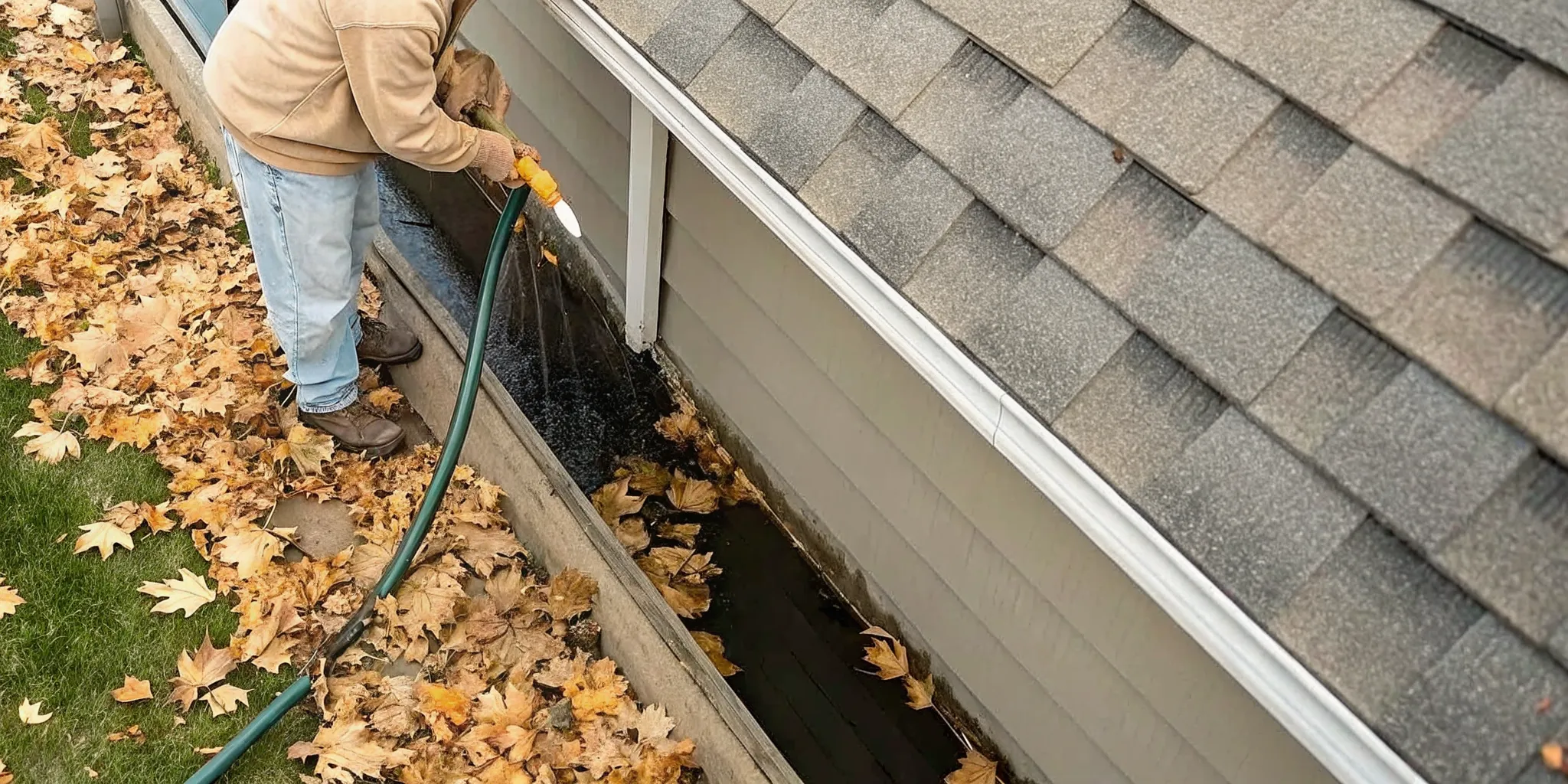
- Flush the system with a garden hose fitted with a pistol-grip nozzle. Start at the low end near the downspout and work progressively away.
- If water does not flow freely, the downspout may have an ice or debris plug. A plumber’s snake or high-pressure nozzle can clear stubborn blockages.
Check downspout extensions
- Confirm downspouts direct water at least several feet away from the foundation.
- Splash blocks are common but often release water too close to the home. Solid extensions or underground drainage pipes are more effective.
- Verify that buried drain lines are not clogged or collapsed. Poor drainage at the outlet can cause water to back up into the downspout.
Spring gutter cleaning safety
Spring cleaning involves wet surfaces, leftover ice patches, and accumulated debris. Wear heavy-duty gloves and eye protection. Use a sturdy ladder extended at least three rungs beyond the roof edge and secured at the base. Never step on the top two rungs. If your home has multiple stories or steep roof lines, professional gutter maintenance service is the safer option.
How Should You Maintain Gutters During Summer?
Summer gutter care focuses on monitoring storm damage and managing ongoing debris accumulation. Minnesota summers bring thunderstorms, high winds, and hail that can deposit leaves, branches, and granules into your gutters even after a thorough spring cleaning.
What to watch for after storms
- Take a walk around the house after any significant thunderstorm. Look for overflowing gutters or pooling water near downspouts.
- Hail can dent aluminum gutters and create low spots where water collects instead of flowing to the downspout. Inspect for new dents after hailstorms.
- Check for wind-driven debris such as twigs, seed pods, and bird nesting material that can accumulate quickly in summer.
Gutter guards as a summer strategy
Gutter guards and strainers reduce how often you need to clean by keeping larger debris out of the channel. However, they require their own maintenance. Fine particles, seeds, and pine needles still accumulate on top of guards and can eventually reduce water flow. Inspect gutter guards after major storms and clear any surface debris. If your existing system lacks guards and you are cleaning frequently, learn about gutter guard options that fit your home’s needs.
Fall Gutter Preparation: The Year’s Most Important Cleaning
Fall is the most critical gutter maintenance window for Minnesota homeowners. Leaves, pine needles, acorns, and other organic debris enter the gutter system in volume during autumn. If left in place through winter, this material traps moisture against the gutter metal, accelerates corrosion, and provides a foundation for ice dams when snow begins to accumulate.
When to clean fall gutters
- Clean after most leaves have fallen but before the first hard freeze. In the Rogers area, that is typically late October to early November.
- Properties surrounded by heavy tree cover benefit from two passes: one in mid-fall and a final cleaning after the trees are bare.
How to clean fall gutters
- Remove all debris by hand or with a scoop. Place a drop cloth below your work area to simplify cleanup and protect landscaping.
- After removing solid debris, flush gutters and downspouts with a garden hose. Watch water flow at each downspout outlet to confirm no hidden blockages remain. Slow drainage indicates a partial clog that needs clearing before winter.
- Make small repairs now. Fall is the last chance to address loose brackets, small leaks at seams, or minor sags before temperatures drop below freezing. Gutter sealant handles small leaks at joints. Tightening or replacing hangers corrects minor sagging.
Fall safety note
Fall gutters are often packed with wet, heavy debris. A full section of wet leaves can weigh 50 pounds or more. Clear gutters progressively from a stable ladder position. Never reach too far to the side. Reposition the ladder rather than overreaching.
How Do You Prevent Ice Dams in Winter?
Ice dams form when snow on the roof melts, runs down to the colder eaves, and refreezes. A backed-up gutter full of debris provides the perfect environment for ice to accumulate, trapping water behind it and forcing it under shingles. Preventing ice dams starts months earlier with thorough fall cleaning, but mid-winter monitoring matters too.
Prevention starts in fall
- The single most effective step for winter gutter health is thorough fall cleaning. Gutters that drain freely on the last warm day of November are far less likely to develop ice problems in January.
- Confirm that all downspouts drain freely and extensions are in place before the first snowfall.
What to monitor mid-winter
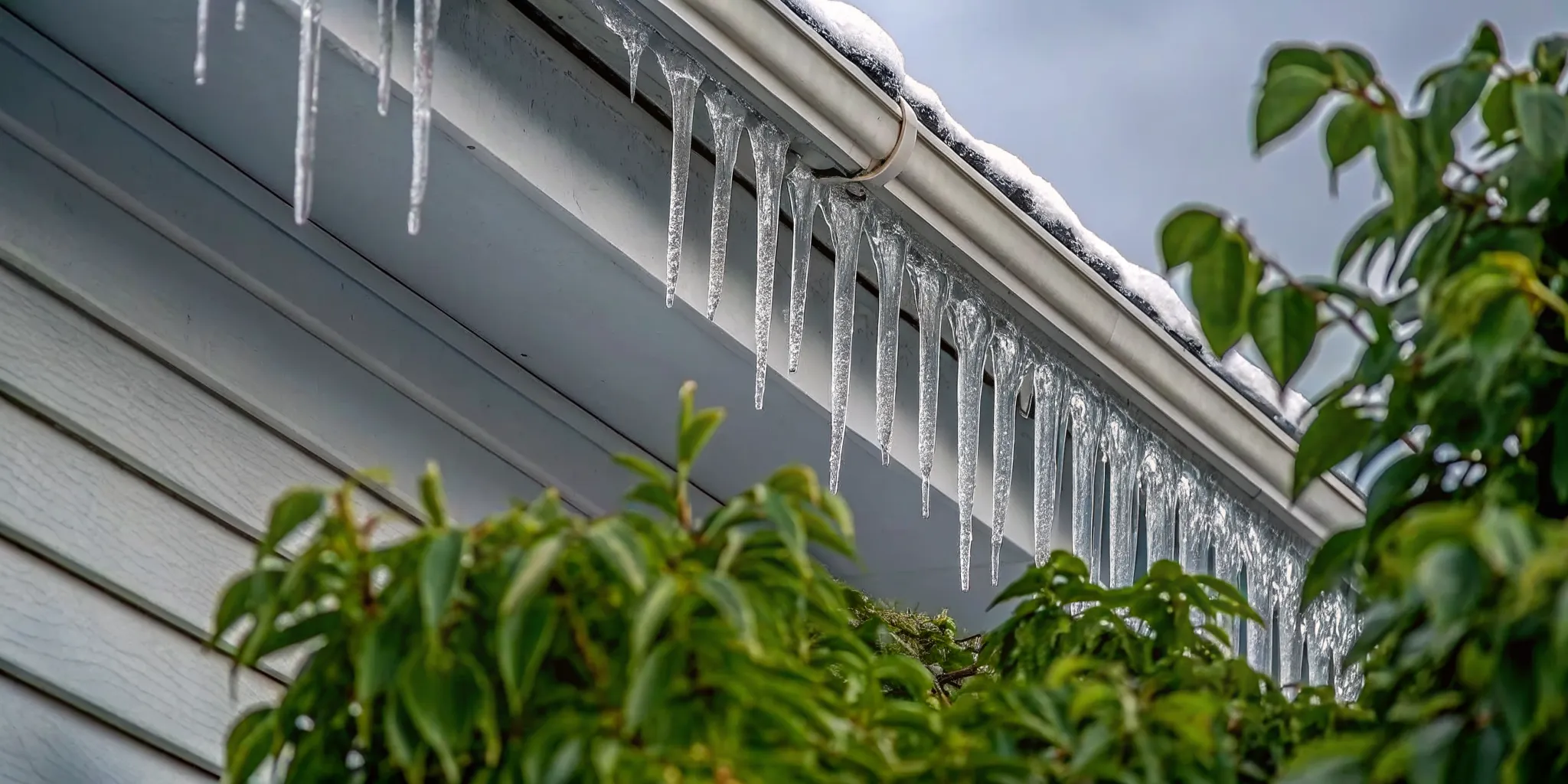
- After a heavy snowfall, check for large icicles forming along the gutter line. Icicles that connect the gutter to the ground or extend past the gutter edge suggest that melting snow is not draining properly.
- Continuous icicle growth accompanied by water stains on exterior walls warrants attention. This may indicate an ice dam is forcing water behind the gutter and down the exterior wall.
- Remove snow from the first three to four feet of the roof edge using a roof rake from the ground. This reduces the meltwater volume that reaches the gutter system during thaws.
- Never chip ice from gutters. Aggressive ice removal can dent gutters, tear downspouts loose, or damage shingles. If ice buildup is causing water to back up into the home, professional assessment is the safer path. Contact a professional for storm damage assessment if ice buildup is causing interior issues.
What Are the Signs Your Gutters Need Professional Repair?
Some gutter issues require professional attention. Knowing the difference between a DIY fix and a service call prevents minor problems from turning into expensive structural repairs.
| Gutter Issue | DIY Scope | When to Call a Professional |
|---|---|---|
| Leaf and debris clogs | Scoop or flush with hose | Multiple clogs recurring after clearing; two-story+ homes |
| Downspout blockage | Plumber’s snake or pressure nozzle | Same blockage returning or underground drain suspected damaged |
| Small seam leak | Gutter sealant application | Same joint leaking repeatedly; crack running along channel length |
| Loose hanger (single) | Tighten or replace one hanger | Multiple loose sections or gutters pulling away from fascia |
| Slight sag between hangers | Adjust single hanger tension | Sagging across multiple sections or gutter has lost slope entirely |
| Dented or corroded section | N/A | Replace affected section; multiple corroded sections suggest full replacement |
| Foundation water damage | Add downspout extension | Persistent basement moisture, cracked foundation, soil erosion |
- Sagging or separated sections. Gutters that pull away from the fascia or sag between hangers have lost proper slope. Water pools in low spots instead of flowing to downspouts, accelerating corrosion. Re-pitching gutter runs and replacing worn hangers requires precise measurement and often gutter removal and reinstallation.
- Persistent downspout clogs. If you clear a downspout only to have it clog again, the issue may be deeper. Underground drain lines can collapse, root-bound pipes can restrict flow, and improperly buried extensions can trap water. These require professional diagnosis.
- Leaking at joints or corners. Seam leaks can sometimes be patched with gutter sealant as a temporary fix, but repeated leaking at the same joint suggests the gutter section may need replacement. Continuous water dripping at a joint during a dry day indicates standing water in the gutter rather than proper drainage.
- Water damage around the foundation. Moisture in the basement, cracks in the foundation wall, or soil erosion after rain suggests your gutter system is not moving water far enough from the house. A professional free inspection can identify whether the issue is inadequate capacity, improper routing, or the need for underground drainage improvements. Water intrusion from poor drainage can also affect your siding and exterior walls over time.
Referred Restoration offers comprehensive gutter system inspection as part of every free exterior evaluation. A professional assessment identifies sagging sections, corroded components, downspout blockages, and drainage issues before they cause interior damage. After inspection, recommendations are tailored to the specific condition of your home.
Frequently Asked Questions About Gutter Maintenance
How often should I clean my gutters in Minnesota?
At least twice a year: once in late spring after the snow melts and once in late fall after leaves drop. Homes surrounded by mature trees may need additional cleanings in mid-summer and mid-fall.
Can I clean my gutters myself, or should I hire a professional?
Many homeowners can handle ground-level gutter cleaning safely with a sturdy ladder and basic tools. If your home has two or more stories, steep roof lines, or gutters that are difficult to reach, professional service is the safer option.
What is the best way to prevent ice dams?
Thorough fall gutter cleaning is the most effective preventive measure. Removing snow from the first few feet of the roof edge with a roof rake after heavy snowfalls also reduces ice dam risk.
Do gutter guards eliminate the need for cleaning?
Gutter guards reduce the frequency of cleaning but do not eliminate it. Fine debris, seeds, and windblown particles still accumulate on top of guards and require periodic clearing.
How do I know if my gutters need to be replaced instead of repaired?
Gutters with multiple corrosion spots, sections that consistently pull away from the fascia. Or visible cracks along the length of the channel are candidates for replacement rather than repair. A professional inspection can confirm whether replacement is the better long-term investment.
Schedule Your Free Gutter Inspection
Seasonal gutter maintenance protects your home from water damage, foundation issues, and costly winter repairs. Whether your gutters need a routine inspection, minor repairs, or a complete replacement. Referred Restoration provides professional exterior assessments for homeowners in Rogers, Cottage Grove, and the surrounding Minnesota communities.
Get your free inspection to have your gutter system evaluated by a local team that understands Minnesota’s unique weather demands. A thorough assessment identifies current issues and helps you plan seasonal maintenance that keeps your home protected year-round.