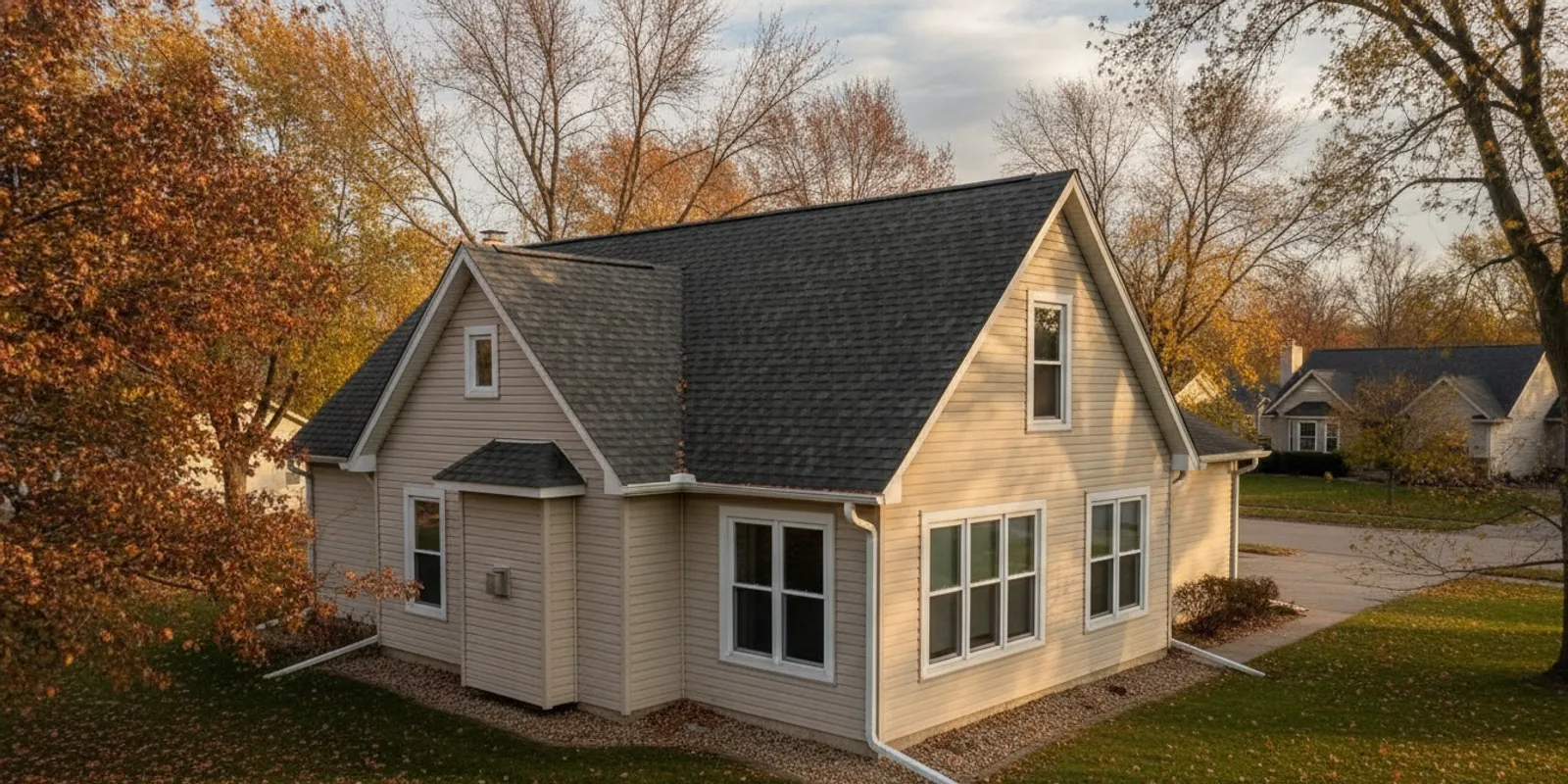
How long does a roof last in Minnesota? There is no single number that fits every home. Roof life depends on the covering, installation details, attic conditions, maintenance, and exposure to wind, snow, ice, and hail. Looking at these factors together can help you decide whether to monitor the roof, arrange a repair, or plan for a closer evaluation.
Schedule a free roof inspection
What is a realistic roof-life estimate?
Material labels and broad averages can be useful starting points, but they are not guarantees. A roof’s actual service life may be shorter or longer depending on installation and the conditions it has faced. A sheltered roof with sound attic conditions may age differently from one exposed to repeated storms or persistent ice problems.
Asphalt shingles are common on Minnesota homes, but roofs made with similar shingles can perform differently. Underlayment, flashing, slope, attic airflow, and installation quality all affect how well the complete system sheds water. The covering is only one part of the roof assembly. Two roofs installed in the same year may also have different histories: one may have had repairs after a storm, while the other has not faced the same exposure.
It helps to think of roof life as a condition range, not a date when a roof automatically becomes unusable. Age can tell you when to start paying closer attention, but a roof inspection looks for evidence: how much material is affected, whether water has reached underlying components, and whether a repair can reasonably address the problem. A roof that is older but functioning well may call for monitoring, while a younger roof with a localized leak may need timely repair.
| Factor | How it can affect roof life | Useful homeowner check |
|---|---|---|
| Roof covering | Materials differ in expected service life and care needs. | Identify the material and keep product or installation records. |
| Installation details | Weak flashing or incorrect fastening can create early trouble. | Ask how edges, valleys, vents, and penetrations were addressed. |
| Ventilation and moisture | Persistent heat or moisture in the attic can contribute to deterioration. | Look for dampness, staining, or condensation from a safe indoor vantage point. |
| Storm exposure | Wind, hail, and branches can cause damage at any age. | Note visible changes from the ground after severe weather. |
| Maintenance | Blocked drainage or ignored defects may allow water to affect nearby materials. | Observe gutters and address leaks or loose components promptly. |
How does Minnesota weather affect a roof?
A Minnesota roof faces changing conditions through the year. Snow can accumulate, and freeze-and-thaw cycles can expose weak points around edges and penetrations. Wind can lift or loosen shingles. Hail may damage roofing material, and branches can strike the surface during storms. Repeated exposure matters, but one significant event can also cause damage regardless of the roof’s age.
Weather does not affect every roof in the same way. Pitch, orientation, shade, nearby trees, and drainage details influence where snow or water collects. Areas around chimneys, skylights, vents, valleys, and roof-wall transitions deserve attention because they rely on carefully integrated flashing. A low-slope section, a valley where two roof planes meet, and an open roof plane all face different water-flow conditions. The location of a problem can therefore matter as much as its visible size.
Ice at the eaves can signal a broader heat, insulation, ventilation, or drainage issue, but its appearance alone does not establish the cause. Avoid chipping ice or climbing onto a snowy roof. Read this guide to ice dam prevention in Minnesota for winter considerations. After snow melts, check from indoors for new stains and from the ground for obvious changes, but leave roof access and ice removal to people equipped to work safely.
Which factors have the biggest influence on roof life?
Material and roof design
Different coverings have different strengths and care needs. Slope and shape matter, too. Complex roofs have more valleys and transitions, so more details must be installed and maintained correctly. A roof with many penetrations may need closer monitoring than a simple roof with broad, uninterrupted planes. Nearby trees can add shade and debris; branches over the roof may also become a concern during high winds.
When you do not know the exact material or installation date, do not guess based on appearance alone. Product records, prior invoices, or notes from a previous owner can clarify what was installed. If those records are unavailable, an inspection can describe the visible covering and current condition. For additional context about the layers beneath shingles, see the homeowner’s guide to roof underlayment. Understanding that the roof is a system helps explain why a surface-only view cannot answer every question.
Workmanship and flashing
Shingles are only one part of a roofing system. Flashing directs water away from joints, walls, and penetrations. Underlayment provides another layer beneath the covering. Poorly fitted or deteriorated details can let water enter even when much of the visible roof looks intact. Keep a record of repairs and the areas they addressed.
Details to ask about include valleys, eaves, roof edges, chimneys, plumbing vents, skylights, and places where a roof meets a wall. Water can get behind a material at one of these transitions, then travel along framing or other surfaces before appearing indoors. That is why the stain on a ceiling may not sit directly below the opening. A good explanation should connect the suspected entry point to the visible symptom, while making clear when the source is uncertain.
Attic ventilation and moisture management
Air movement and moisture control in the attic affect the roof assembly. Persistent dampness, condensation, or signs of mold deserve attention. Do not assume adding vents alone will solve an attic problem. Ventilation should be considered as part of the whole roof and attic setup. A professional can help determine whether the issue involves airflow, insulation, air leakage, or another source.
If it is safe to enter an accessible attic, look without disturbing insulation or walking on framing. Note damp sheathing, water marks, musty odors, or visible daylight. These signs can have different explanations and do not prove a roof covering has failed. If the area is cramped, poorly lit, or unsafe, do not enter it; report what you observe from the living space instead. The U.S. Department of Energy’s home-energy resources provide general background on the building envelope and energy use, but they do not diagnose a roof leak or replace an inspection.
Maintenance and prompt repairs
Routine observation can reveal changes before they become more disruptive. From the ground, look for missing or lifted shingles, debris, damaged flashing, or changes in the roofline. Inside, check ceilings and safely accessible attic areas for water marks or damp insulation. Do not walk on the roof to investigate. Prompt attention to an active leak can limit damage to interior finishes and nearby materials.
Maintenance does not mean performing roof work yourself. Keep gutters and downspouts clear where they can be checked safely, note recurring overflow, and arrange help for loose or damaged components. If you notice a symptom, record when it occurs and whether it follows rain, wind, hail, or thawing snow. That timeline may make a later assessment more useful than a one-time description such as “it leaks sometimes.”
What signs suggest the roof needs attention?
Age is useful context, but condition matters more than a calendar date alone. These signs warrant closer review:
- Water staining on ceilings or upper walls, especially after rain or melting snow.
- Shingles that appear missing, curled, lifted, cracked, or displaced from the ground.
- Loose or damaged flashing around vents, chimneys, skylights, and roof-wall connections.
- Granules collecting in gutters, particularly when the change is sudden or widespread.
- Sagging sections, visible daylight in an accessible attic, or damp roof sheathing.
- Repeated ice buildup or water intrusion near roof edges.
Some symptoms have more than one possible cause. A ceiling mark might result from a roof leak, plumbing, or condensation. Finding the source matters before choosing a repair. A sudden change after a storm differs from gradual wear that has appeared over several seasons, so include that context when asking for help. See the local roof lifespan guidance and roof repair information for a relevant next step.
One isolated sign does not automatically mean the entire roof needs replacement. For example, a small interior stain may come from a single flashing problem, while several stains in different rooms could point to a broader issue or more than one source. Conversely, a clean ceiling does not prove every roof layer is sound. Use warning signs as a reason to investigate, not as a final diagnosis.
How can you check your roof safely?
A homeowner’s check should be visual and cautious. You do not need to climb a ladder or step onto the roof. Try this sequence:
- Start inside. Look for new stains, peeling paint, dampness, or a musty smell in upper rooms and accessible attic areas. Note the room and approximate location.
- Scan from the ground. Use binoculars if available. Look for displaced shingles, debris, damaged edges, and visible changes near roof penetrations. Observe from more than one side if you can do so safely.
- Check drainage. Observe whether gutters and downspouts appear detached, blocked, or overflowing. Stay on stable ground and do not reach from a ladder.
- Record what you see. Note the date, weather, location, and whether the symptom changes after rain or snowmelt. Safe photos can help explain the concern.
- Arrange an assessment when needed. If water is entering, damage is visible, or you are unsure what a symptom means, ask for an inspection rather than attempting roof work yourself.
For active water intrusion, move belongings away and use a container to catch drips if safe. Avoid touching wet electrical fixtures or a sagging ceiling. Contact an appropriate professional if there is an immediate safety concern. If the water stops, still make a note of where it appeared and what the weather was doing; intermittent leaks can be difficult to trace after the area dries.
Should you repair the roof or plan for replacement?
A repair may make sense when damage is limited, the surrounding roof remains sound, and the source can be addressed with a durable fix. Replacement planning may deserve consideration when deterioration is broad, leaks recur in different areas, or several system components are nearing the end of their useful service. These are general considerations, not a diagnosis; the roof needs to be evaluated in context.
A practical comparison starts with four questions: Is the trouble confined to one area or spread across the roof? Is the underlying structure dry and sound? Have earlier repairs held, or has the same issue returned? Can the proposed repair address the cause, rather than only covering the symptom? Answers help frame the discussion without treating roof age as an automatic replacement trigger.
For example, imagine one shingle area appears disturbed after a windy day, with no interior water marks and no other visible changes. The next step may be to assess that location and the nearby materials before deciding on a repair. In another case, recurring stains in multiple rooms, widespread deterioration, and prior repairs that did not resolve leaks call for a broader review. These examples are not diagnoses; they show why extent and history matter alongside age.
Ask an inspector to explain what they observed, where the problem is, and what evidence supports the recommended next step. Request a clear description of affected areas and proposed work. If a repair is recommended, ask how it addresses the cause rather than only the visible symptom. If replacement is discussed, ask which components are included and why that approach is preferable to continued repairs. Referred Restoration’s page on roof replacement in Rogers is one place to review the service context, but the recommendation should still be specific to your home.
A useful comparison considers overall condition, extent and location of damage, prior repairs, and your timeline. No single age threshold should decide the matter by itself. Ask what can be monitored, what should be handled soon, and what new evidence would change the recommendation. This separates immediate concerns from longer-range planning and helps you understand the reason for each suggested action.
What should you prepare before an inspection?
Gather available installation records, product details, prior repair notes, and photographs of leaks or storm effects. Write down when a symptom first appeared and whether it follows heavy rain, wind, hail, or thawing snow. If you recently purchased the home, ask whether the previous owner left roof or repair documents. It is still useful to proceed without paperwork; uncertainty about age does not prevent someone from evaluating visible condition.
During the inspection, ask the professional to distinguish urgent concerns from routine wear. Ask whether the issue appears localized or widespread, whether moisture has reached the attic or other materials, and what should be monitored after work. If storm damage is involved, keep dated notes and photographs and contact your insurer about its documentation process. Do not assume a claim will be approved or that an inspection determines coverage.
It can help to prepare a short list instead of relying on memory during the visit. Write the first date you noticed the issue, rooms affected, weather conditions, repairs already attempted, and questions you want answered. If more than one person has observed the leak, compare notes beforehand. A concise timeline might say: “A small stain appeared in the upstairs hall after a windy rain; it grew after the next storm, then dried.” That gives the inspector a clearer starting point than “the roof is old.”
How can roof records help you understand its condition?
Records can turn a vague age estimate into a more useful history. If you know when the roof was installed, what material was used, and whether underlayment or flashing was updated, you can give an inspector a clearer starting point. Keep warranty papers, product labels, permits if available, and repair notes together. If the previous owner left no paperwork, do not guess at the installation date. An inspection may help establish visible condition even when the exact age remains unknown.
Record recurring symptoms. Note whether a stain grows after wind-driven rain, appears during thawing, or returns after a repair. That context may help distinguish a continuing leak from plumbing or condensation. Photos taken at different times can show whether a change is progressing. Record the room and approximate location, but do not remove ceiling material or enter a confined attic space.
When repair work is completed, ask for a written description of the area addressed and materials used. Keep the date and maintenance recommendations with your home records. This gives you and a future inspector a better basis for comparing later changes. If a later concern appears near the same area, the record can help determine whether the earlier work and new symptom may be related.
What should you check after a storm?
After a storm, put safety first. Wait until conditions are calm, and stay clear of downed lines, unstable branches, and damaged structures. From the ground, check for obvious changes such as shingles in the yard, a damaged gutter, fallen limbs, or a new interior leak. Do not climb up to inspect hail marks or move debris from a roof.
Make a dated record of what you can safely observe. Include the approximate time of the storm, affected rooms, and photographs from the ground or indoors. If water is entering, protect belongings where safe and arrange help to limit further damage. Ask an inspector to explain which observations indicate roof damage and which may have another cause. A branch on the lawn does not prove the roof was struck, just as the absence of visible debris does not rule out less obvious damage.
If contacting your insurer, ask what documentation it needs and what steps apply to your policy. An inspection is not a coverage decision. Keep copies of communications and avoid authorizing work you do not understand. The aim is to identify the condition and make a safe plan, not to assume every storm concern requires full replacement. For storm-related exterior concerns, you can also review the company’s storm damage restoration information.
How do roof drainage and gutters fit into roof life?
Roof coverings and drainage work together. Gutters and downspouts carry water away from the roof edge and foundation when properly positioned and clear. When drainage is blocked or a component has pulled away, water may spill near fascia, siding, or entry points. Overflow can leave stains or damp areas that deserve investigation. A gutter issue does not by itself prove the roof covering has failed.
Look for recurring overflow during rain, loose hangers, separated joints, or water discharging where it keeps soil saturated. Gutter cleaning from a ladder can be hazardous. For drainage information, see gutter installation in Rogers. A contractor can assess whether the concern is limited to drainage or connected to roof edge details.
Pay attention to what happens during a normal rain, but observe from a safe place. Does water pour over one section while other sections drain? Does a downspout direct water beside the foundation? Is debris visible from the ground? These observations do not establish the cause, but they give an inspector specific locations to examine. A roof and gutter system should be considered together when water repeatedly collects or spills at an edge.
What should a useful inspection explanation include?
A clear inspection discussion should connect the observed symptom to the proposed action. Ask the inspector to point out the area involved, explain whether the concern is isolated or widespread, and describe any limitations. If the roof could not be accessed safely because of weather or another hazard, ask what was checked instead and whether follow-up is appropriate.
These practical questions can help:
- What condition did you observe, and where is it located?
- Is there evidence of water reaching the roof deck, attic, insulation, or interior?
- Could another building component explain the symptom?
- What action is urgent, and what can be monitored?
- How will the proposed repair address the source?
- What should I watch for after the work?
- Which parts of the roof were not accessible or could not be assessed?
Take notes and ask for unfamiliar terms to be explained in plain language. When comparing contractors, use the same description of the concern and ask each to identify the work included. This makes it easier to compare the scope rather than rely on a broad verbal assurance. Referred Restoration describes its local roofing services on its Rogers roofing company page; use any consultation to ask for an explanation tied to your roof’s observed condition.
It is reasonable to ask for photographs or a written summary if those are available. A useful explanation separates what was directly observed from what is a possible cause. It should also identify the proposed next step and any uncertainty, such as hidden layers that cannot be evaluated without further work. Clear limits are more helpful than a definite answer unsupported by evidence.
Frequently asked questions
Does a roof’s age tell me when it must be replaced?
No. Age helps frame an evaluation, but material condition, installation, repairs, and exposure also matter. An assessment can help determine whether the roof needs repair, monitoring, or broader planning.
Can hail damage shorten roof life?
Hail can damage roofing materials, but the effect depends on the storm and roof condition. If you suspect impact damage, document visible changes from the ground and arrange an assessment. Avoid walking on the roof.
Why does my roof leak in only one spot?
Water may enter at one location and travel along roof or framing components before appearing indoors. The visible stain may not be directly below the opening. Tracing the source matters before deciding on a repair.
Can I estimate roof life by checking shingles from the ground?
A ground-level view can reveal obvious changes, but cannot confirm concealed layers, flashing, or attic condition. Use it as a reason to seek help, not as a complete assessment.
Should I wait for a leak before getting an inspection?
No. You can request an assessment when you see storm-related changes, recurring ice concerns, visible deterioration, or signs of moisture, even if there is no active leak. A professional can explain what is observable and whether monitoring or action is appropriate.
What is a practical next step?
If your roof has a new leak, visible damage, or repeated trouble after storms, do not let an age estimate make the decision for you. Referred Restoration offers a free inspection; share what you noticed and ask for a clear assessment of the roof’s condition and possible next steps.
Leave a Reply
You must be logged in to post a comment.