At the edge of your roof, a narrow trim component helps connect several parts of the exterior system. It sits where runoff, gutters, soffits, shingles, and siding meet, so a small problem there can become a water-management concern after heavy rain, snow, or repeated freeze-thaw cycles.
Contact Referred Restoration online to request a free inspection if you see staining, soft areas, peeling, or a gutter that is pulling away from the roof edge.
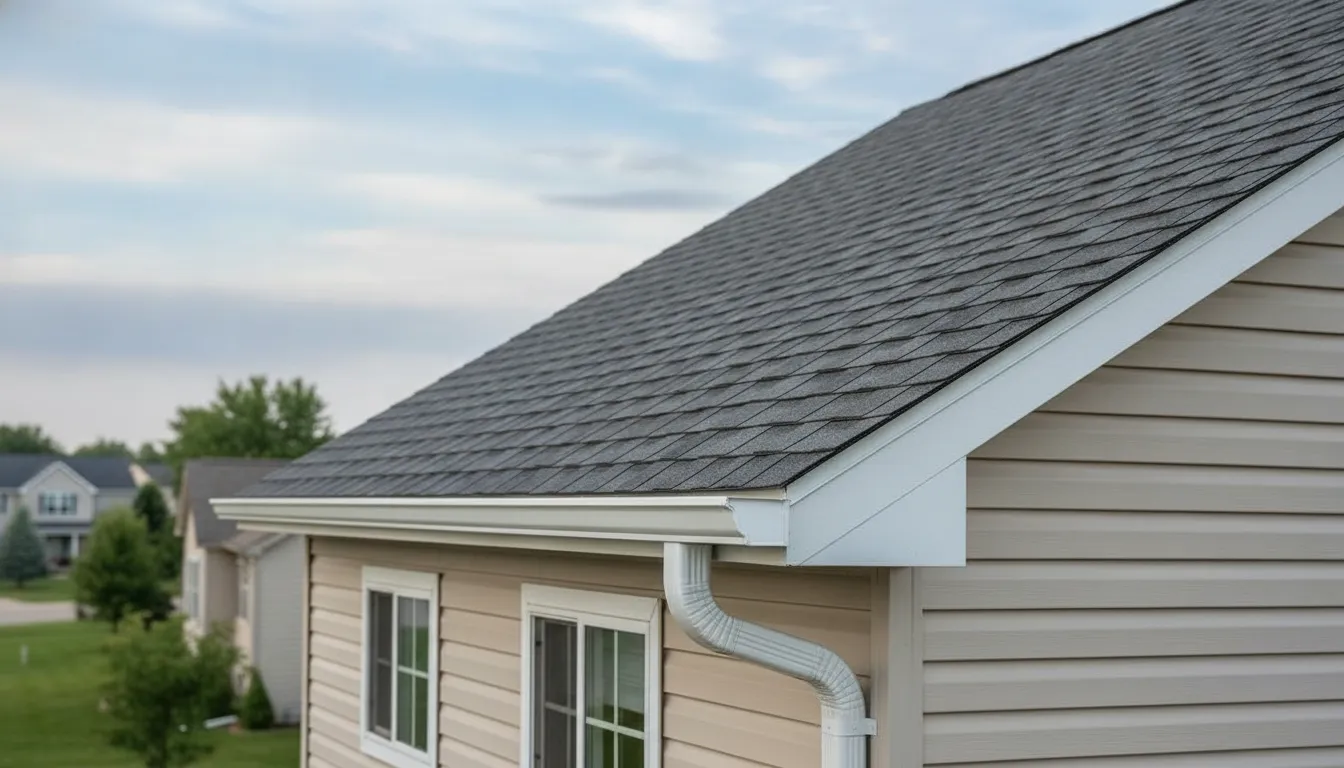
A fascia board is the trim and support surface along the roof edge. It helps protect vulnerable materials from moisture and provides an attachment point for many gutter systems. Because roofs and gutters work together to manage water, visible symptoms should be assessed as part of the same exterior system, not treated as an isolated cosmetic issue.
Understanding what this edge component does makes it easier to recognize warning signs and ask better questions during an inspection. Start with how it supports the roof edge and helps guide water away from your Minnesota home.
What Does a Fascia Board Do Along the Roof Edge?
A fascia board is the visible board that runs along the lower edge of a roof, where the roofline meets the exterior wall. It creates a finished edge, helps protect the roof structure from moisture, and provides an important attachment surface for the gutter system. Trex identifies moisture protection as one purpose of fascia boards. The board is also part of a larger roof-edge assembly that includes the roof covering, flashing, gutters, and soffit.
That assembly works as a connected path. Rain lands on the roof and flows toward the eaves. The fascia sits at the edge behind or alongside the gutter, helping support the gutter in the correct position to collect that runoff. From there, the gutter directs water to a downspout, which should carry it away from the home rather than allowing it to collect beside the foundation. The U.S. Department of Energy’s Building America Solution Center explains that gutters and downspouts help direct rainwater away from a home and reduce the chance of saturating the soil around the foundation: see this overview of roof drainage.
The soffit is the finished surface below the fascia and rafters. It closes the underside of the eave while often supporting airflow into the attic through soffit vents. A sound fascia helps keep this edge aligned and protected, while the soffit helps finish and ventilate the area beneath it. Because these components meet at the same roof edge, water damage in one area may affect the others. A loose gutter, for example, can allow water to run against the fascia or behind the edge instead of following the intended drainage path.
Water management depends on each layer directing water outward and over the layer below it. The University of Minnesota Extension describes this principle as part of a home’s drainage plane. If roof-edge details, flashing, or adjoining materials are poorly aligned, water may move into the assembly rather than away from it. That does not mean every stain or loose fastener confirms a fascia problem. In Rogers and nearby Minnesota communities, an inspection should consider the fascia, gutter attachment, soffit, roof edge, and drainage route together.
How Can You Tell if a Fascia Board Is Damaged?
Look for changes along the roof edge, but treat each one as an inspection cue rather than a diagnosis. A damaged fascia board may have a moisture problem behind it, a gutter attachment issue, or a related roof-edge defect that is not visible from the ground.
Visible changes along the roof edge
Soft, spongy, or crumbling areas are important warning signs, especially near gutter fasteners, joints, and places where water regularly collects. Rot may also appear as darkened wood, open grain, swelling, or a section that no longer holds paint. Peeling or blistered paint can indicate repeated moisture exposure, although normal aging and poor surface preparation can create similar symptoms.
Staining deserves attention as well. Brown or gray marks beneath the roof edge may point to runoff, a leaking gutter, or water moving behind the fascia. Exposed fasteners, pulled-out screws, or gaps at seams can show that the board or the attached gutter is no longer holding securely. Do not probe elevated areas or climb onto a roof to confirm a suspected problem. A close visual inspection from a safe position is enough to decide whether professional evaluation is warranted.
Gutter movement can be a related clue
Watch the gutter line during and after rain. Sagging, separation from the fascia, open end gaps, or water spilling behind the gutter can indicate a drainage or attachment problem. Referred Restoration provides gutter inspections and repairs for leaks, sagging, and damage, and its guidance treats gutter defects and roof-edge damage as one exterior system. That matters because roof and gutter systems work together to manage water. A gutter that pulls away may be contributing to moisture exposure, or the fascia behind it may no longer provide a sound attachment point.
For a focused look at related symptoms, review these gutter replacement warning signs, then keep the fascia question separate: the goal is to determine whether the roof-edge board, gutter, or both need attention.
Why an inspection matters
Repeated water exposure can contribute to mold and rot, while Minnesota homes must withstand freezing winters, precipitation, snow, wind, and hail. Those conditions can affect more than the visible trim. An inspection should trace the likely water path and check the fascia, gutter attachment, soffit, roof edge, and nearby siding together. A qualified professional can then explain whether the signs are consistent with localized damage or a broader moisture issue, without recommending work based on appearance alone.
Why Does Minnesota Weather Matter for Fascia Boards?
Minnesota weather matters because snow, wind, precipitation, and repeated freezing and thawing can expose the fascia board and connected roof-edge components to moisture and movement. The condition of the fascia should be assessed with the gutters, soffit, roof edge, and drainage details rather than as an isolated trim issue.
Snow, ice, and freeze-thaw exposure
Minnesota homes face freezing winters, snow, precipitation, wind, and hail. These conditions make weather resistance an important part of exterior durability. The University of Minnesota Extension explains that materials unable to withstand repeated water exposure need protection from another layer. A fascia board at the roof edge is therefore part of a larger water-management assembly, not simply a finished surface.
Ice dams add another winter concern. According to the National Weather Service, they can form when heavy snow melts during the day and refreezes overnight. After repeated melt-freeze cycles, water and ice may work beneath shingles. That intrusion can reach roof-edge materials and create conditions where rot or other deterioration becomes possible. Keeping gutters and downspouts clear of snow and icicles also helps maintain the intended drainage path. Homeowners who notice winter roof or ceiling symptoms can review roof repairs homeowners should not delay for related warning signs.
Why the roof edge must be reviewed as one system
Water does not stop at the first visibly damaged component. Gutters collect runoff, the fascia often supports or adjoins the gutter edge, and the soffit closes the underside of the eave. If water is not directed away correctly, moisture can contribute to mold and rot. A problem with gutter attachment, roof drainage, flashing, or adjacent trim can therefore affect the same area as a damaged fascia board.
Soffit airflow matters during winter as well. The National Weather Service identifies airflow from beneath the eaves or soffit area through the roof vents as essential for minimizing roof freeze-thaw cycles. Blocked or compromised soffit areas should be considered during a roof-edge assessment, especially when ice dams or recurring moisture are present. The right next step is an inspection that follows the water path and checks the fascia, gutter attachment, soffit airflow, roof edge, and nearby materials together. This helps separate a localized repair from a broader moisture-management issue without assuming the visible symptom identifies the source.
Should You Repair or Replace a Fascia Board?
Repair may be appropriate when damage is localized, the board remains securely attached, and the moisture source has been corrected. Replacement is more likely when the fascia board is extensively deteriorated, no longer holds its fasteners, or is part of a broader roof-edge problem. Those signs are evaluation guidelines, not a diagnosis. A qualified inspection should assess the board, gutter connection, roof edge, and nearby exterior materials together.
Start with the extent of the damage
A small, isolated area of visible damage may be repairable if the surrounding material is sound. The inspection should determine whether the affected area is limited to the surface or extends into the board and its attachment points. Softness, staining, peeling, or localized deterioration can indicate moisture exposure, but the visible symptom does not identify the full source by itself.
Replacement deserves closer consideration when deterioration extends across a longer section, when the board cannot securely support its attachments, or when the material is aged and severely damaged. A new section should be integrated with the existing roof-edge assembly rather than treated as a cosmetic patch. Referred Restoration describes repairs as an option for leaks, visible damage, and water intrusion, while replacement may be considered for aged or severely damaged exterior components.
Find and correct the moisture source
Replacing a fascia board without addressing the water path can leave the same problem in place. The inspection should consider roof-edge flashing, shingles, gutter alignment, end joints, and nearby transitions. Roof and gutter systems work together to manage water, so gutter defects and roof-edge damage should be assessed as one exterior system. The gutter may be leaking, pulling away, or directing water behind the fascia rather than carrying runoff away from the home.
The surrounding soffit also matters. Damage at the fascia-soffit transition can reflect a wider moisture issue, while restricted or damaged soffit areas may affect airflow beneath the roof. The roof itself should be checked for conditions that could continue exposing the replacement material to water. In Minnesota, freezing winters, snow, wind, hail, and heavy precipitation add repeated stress to exterior components.
Check adjoining exterior work
Fascia replacement can overlap with gutter, roof, soffit, or siding work. Where the roof edge meets siding, review the transition carefully so new trim, flashing, and siding details shed water in the intended direction. For related planning guidance, see this guide to siding for Minnesota homes.
The practical choice is the one that restores a sound roof-edge system, not simply the fastest way to cover a visible mark. Ask for an honest assessment of the damaged area, the moisture source, attachment integrity, and related components before deciding whether a fascia board repair or replacement is appropriate.
Which Fascia Board Materials Fit a Minnesota Home?
There is no single best material for every roof edge. Trex identifies composite, wood, PVC, and aluminum among the common fascia board options. The right choice depends on how the material will work with the existing roof, gutters, soffit, and siding. Minnesota homeowners should also consider maintenance needs and how well the assembly sheds water through seasonal changes.
| Material | Planning consideration |
|---|---|
| Wood | Can match existing trim, but needs careful moisture protection and maintenance. |
| Composite or PVC | May suit a lower-maintenance plan, subject to compatibility with adjacent trim and gutter attachment. |
| Aluminum | Can coordinate with aluminum gutters, while the underlying roof-edge structure still needs evaluation. |
Wood
Wood can suit a home where the existing trim and roof edge already use wood. It can be painted to coordinate with siding and other exterior details, which may matter during a partial repair. However, wood requires careful protection and ongoing attention around joints, fasteners, and exposed edges. If moisture has already affected the surrounding assembly, replacing the visible board without addressing the water path may leave the same problem in place.
Composite and PVC
Composite and PVC can be useful when a homeowner wants a lower-maintenance alternative to traditional wood. Their appearance, fastening requirements, and compatibility with adjacent trim should be reviewed before installation. The fascia board also has to connect cleanly with the soffit and provide a sound surface for gutter attachment. A material that looks appropriate on its own may not be the best fit if it conflicts with the existing roof-edge details.
Aluminum
Aluminum is commonly associated with gutter systems because it is lightweight and rust-resistant, according to Referred Restoration’s gutter guidance. Those characteristics can make aluminum an appropriate consideration for some roof-edge assemblies, particularly when matching or coordinating with aluminum gutters. The installer still needs to evaluate the underlying structure, the fascia-soffit connection, and the finish’s fit with the home’s siding.
Material selection should therefore be part of a broader exterior assessment, not a stand-alone product decision. Review the roof edge, gutter alignment, soffit, siding, and likely maintenance needs together. For related exterior planning, see this guide to siding for Minnesota homes. An inspection can help distinguish a material preference from work needed to correct moisture or attachment problems.
What Should Homeowners Check Before Fascia Work?
Good preparation helps an inspection stay focused on the roof edge rather than treating one visible symptom in isolation. Observe the area from the ground, note what changes during rain or after winter weather, and gather questions about the fascia board, gutters, soffit, siding, and roof. Do not climb onto the roof or probe suspected damage yourself.
- Record safe, visible clues. From the ground, look for staining, peeling finishes, a visibly uneven roof edge, sagging gutters, overflowing water, or gaps around the eaves. Take dated photos from several angles if you can do so safely. These signs do not confirm rot or another specific problem, but they give the inspector useful context.
- Ask how water is moving. Gutters and downspouts are intended to direct rainwater away from the home and help reduce saturated soil around the foundation, according to the Department of Energy’s building guidance. Ask whether the gutter system appears adequately sized, whether downspouts discharge effectively, and whether leaks or sagging could be affecting the fascia. Referred Restoration evaluates gutter inspections and repairs as part of the exterior system.
- Include connected components. Ask the inspector to review the soffit, roof edge, flashing, siding transition, and gutter attachment along with the fascia. Every drainage-plane layer should direct water out and over the layer below it; reversed or poorly overlapped layers can direct water into the building, as the University of Minnesota Extension explains.
- Discuss the moisture source. Ask what may be allowing water to reach the area and what should be corrected before or during fascia work. Minnesota homes face freezing winters, snow, wind, hail, and heavy precipitation, so replacing a board without addressing related drainage or roof-edge issues may leave the underlying concern unresolved.
- Bring a clear inspection list. Ask whether the recommendation is localized repair or broader replacement, which adjacent components need attention, how the gutter attachment will be supported, and how the completed work will be checked. A qualified professional should explain the evidence behind the recommendation and identify uncertainties rather than present a symptom as a diagnosis.
Frequently Asked Questions
What is a fascia board?
A fascia board is the horizontal board along the lower edge of a roof. It helps finish and protect the roof edge, provides an attachment point for gutter components, and helps connect the roof, soffit, and siding into one exterior assembly. Because roof and gutter systems work together to manage water, damage in one area should be evaluated alongside the others.
What is the difference between a fascia board and a soffit?
The fascia is the visible board facing outward along the roof edge. The soffit is the finished surface underneath the overhang, below the fascia and rafters. Soffit areas can also support airflow beneath the roof, which is important for limiting freeze-thaw problems in cold climates. Damage to either component can affect the condition of the surrounding roof edge.
Can I replace a fascia board myself?
A small, accessible repair may appear straightforward, but replacing fascia safely requires checking the moisture source, roof-edge attachment, gutter support, and nearby soffit or siding. Working from a ladder or near a roof edge adds risk. If the board is soft, stained, pulling away, or supporting a sagging gutter, an inspection can help determine whether the visible section is the full problem.
What materials are used for fascia boards?
Common options include wood, composite, PVC, and aluminum. The right choice depends on the home’s existing exterior, exposure to water, ventilation details, and how the gutter system attaches. Materials that cannot withstand repeated water exposure need protection from another layer, according to the University of Minnesota Extension: water-management guidance.
How does a fascia board support a roof and gutters?
It forms part of the roof edge and commonly provides a mounting surface for gutter hardware. A compromised board can therefore affect gutter alignment or attachment, but sagging or leaking gutters do not prove that the fascia is damaged. Have the roof edge, gutter, and drainage path assessed together so repairs address the source rather than only the most visible symptom.
Contact us for a fascia and gutter assessment
Fascia concerns can involve the roof edge, gutters, soffit, or nearby exterior materials. An inspection can help clarify what needs attention and support a practical repair or replacement plan for your Minnesota home. Referred Restoration can provide the free inspection and honest assessment described in this guide.
Contact Referred Restoration online or call (763) 726-4245 to request an inspection.