
Snow on a Rogers roof does not automatically create an ice dam, but Minnesota’s repeated freeze-thaw cycles can expose a problem quickly. When heat escapes from the house, upper roof surfaces may warm enough to melt snow while colder eaves refreeze the runoff into a ridge of ice. That trapped water can reach roofing materials, gutters, walls, ceilings, and insulation.
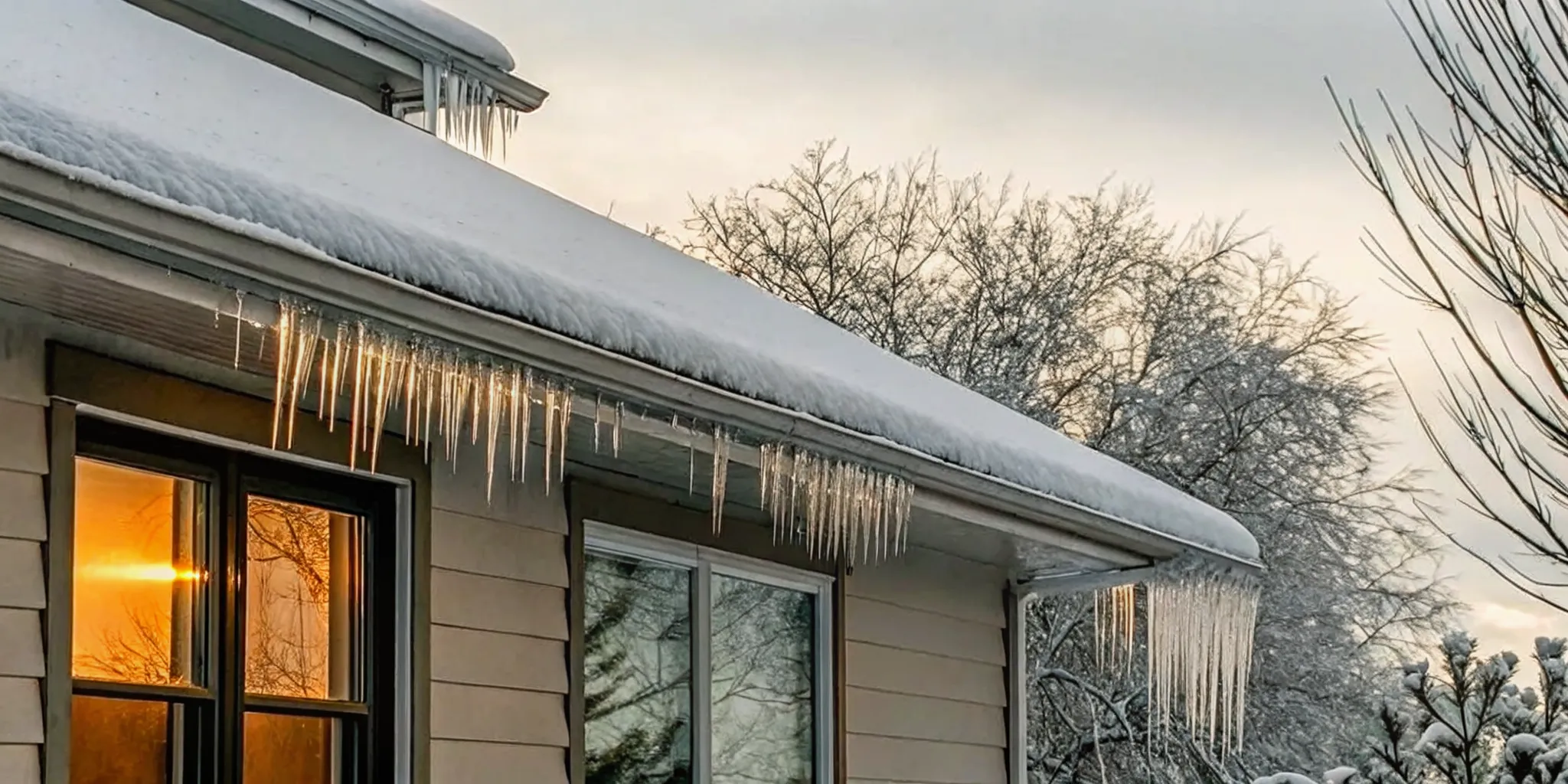
The most effective ice dam prevention Minnesota homeowners can practice starts in the attic: reduce heat loss with proper air sealing and insulation. Support balanced natural ventilation, and keep roof and gutter systems in sound condition. The University of Minnesota Extension explains that house heat is the primary source of the uneven roof temperatures that produce ice dams.
Understanding the temperature pattern behind an ice dam makes it easier to choose lasting repairs instead of reacting only after water appears indoors. The first step is seeing how snow, roof temperature, and the eaves interact during a Minnesota winter.
What Causes Ice Dams on Minnesota Roofs?
An ice dam begins as a ridge of ice along the lower edge of a roof. That ridge blocks meltwater from draining away, so water can collect behind it instead of flowing into the gutter system. The underlying problem is not simply cold weather. It is an uneven roof surface temperature that allows snow to melt in one area and freeze again in another.
In Rogers, St. Francis, and Monticello, roofs repeatedly face heavy snowfall followed by Minnesota freeze-thaw cycles. Statewide snowfall averages near 43 inches, and changing temperatures can turn a layer of roof snow into a recurring drainage problem. The risk is especially persistent when snow remains on the roof while indoor heat escapes upward. The University of Minnesota Extension identifies heat flowing from the house as the primary source of the uneven roof temperatures that lead to ice dams.
The 32-Degree Rule
For an ice dam to form, three conditions must overlap. Snow must be present on the roof. The upper roof surface must be warmer than 32 degrees Fahrenheit, allowing some of that snow to melt. At the same time, the lower roof surface and eaves must remain below 32 degrees, causing the meltwater to freeze before it reaches the edge.
This temperature split explains why a roof can look snow-covered near the ridge but have a thick band of ice above the gutters. Heat escaping through the ceiling warms the upper roof deck, while the overhanging eaves sit outside the insulated attic area and remain exposed to colder air. Meltwater travels downward, reaches the colder edge, and freezes. Each new cycle can add to the ridge until the channel for drainage is blocked. The University of Minnesota Extension’s guidance on ice dams describes this nonuniform temperature pattern as the central condition for formation.
Heat can reach the roof through several pathways, including conduction through inadequate insulation and air movement from the living space into the attic. Recessed lights, skylights, ducts, and other openings can concentrate that heat in particular areas, creating warm spots above the ceiling rather than warming the entire roof evenly. As a result, two neighboring roof sections may respond differently during the same snowfall.
Understanding that mechanism matters for prevention. Clearing visible ice may address the immediate obstruction, but it does not correct the heat loss that keeps recreating the temperature difference. A lasting approach begins by finding where indoor heat is reaching the roof and how the attic responds during Minnesota’s changing winter conditions.
How Ice Dams Damage Roofing and Gutters
An ice dam does more than hold a strip of ice along the roof edge. When melting snow reaches the frozen ridge, the dam blocks its normal path into the gutters and away from the house. The trapped water can work beneath shingles, underlayment, and flashing, then move into roof sheathing and the home’s interior. The University of Minnesota Extension explains that water backing up behind an ice dam can damage walls, ceilings, insulation, and other areas of the home. Learn more about ice dam damage and prevention from the University of Minnesota Extension.
Roofing and gutter damage may not appear in the same place where the ice is visible. Water can travel along framing or insulation before staining a ceiling, bubbling paint, or dampening a wall. Saturated insulation loses effectiveness, and repeated melting and refreezing can keep adding moisture to the same vulnerable areas. Across a winter of snow and freeze-thaw conditions. A small leak can become a wider restoration concern if the source is not found and the wet materials are not dried.
Mold and Indoor Air Quality
Moisture from an ice dam leak creates conditions where mold and mildew can grow. The University of Minnesota Extension notes that this growth may contribute to respiratory problems. That makes a damp ceiling, musty odor, or wet attic insulation more than a cosmetic concern. Wet areas should be dried immediately, and affected insulation or building materials should be evaluated before moisture remains trapped behind finished surfaces.
Gutters can also suffer when ice accumulates along the eaves. The weight of frozen water may pull on fasteners, distort the gutter line, or stress sections that were already loose. Icicles and concealed water paths can make exterior damage difficult to assess from the ground. If a winter storm has also caused wind or falling-branch damage, use this storm damage repair checklist to document visible concerns, then arrange an inspection before interior damage spreads.
Where Ice Dam Prevention Begins for Minnesota Homeowners
The most effective way to reduce ice dam risk is to control how heat moves from living space into the attic. When attic insulation is thin or uneven and air leaks around ceiling penetrations, warm air can heat portions of the roof deck while the eaves remain cold. Snow melts above the warmer areas, then refreezes near the roof edge. The University of Minnesota Extension identifies insufficient insulation and poor roof ventilation as primary contributors to ice dam formation.
Air Sealing Comes First
Adding insulation without stopping air leakage can leave a major heat path open. Warm indoor air may escape through recessed lights, skylights, chimneys, and heating ducts that pass through or terminate in the attic. Those openings can move heat and moisture into the attic, raising roof temperatures unevenly and increasing the conditions that allow ice to form at the eaves.
Air sealing should address these penetrations before insulation is added or redistributed. The work must use materials and clearances appropriate for each location, especially around recessed lighting and chimneys. Skylight framing and attic duct connections also deserve close attention because small gaps can create concentrated areas of heat loss. The goal is a tighter boundary between the home and attic, not simply more insulation spread over the existing surface. Minnesota homeowners can review the University of Minnesota Extension guidance on preventing and dealing with ice dams for the relationship between air leakage, insulation, and roof temperatures.
R-Value Targets for Minnesota Attics
Once air leakage is controlled, insulation creates a stronger barrier against heat leaving the home. University of Minnesota Extension guidance notes that increasing attic insulation toward R-60 can provide a good barrier to heat loss. While R-49 is the code minimum for new buildings in Minnesota. The code minimum is not necessarily the best target for an older home being improved. Particularly when existing insulation is compressed, missing at the eaves, or uneven across the attic floor.
Insulation improvements should preserve clear airflow at the roof edges and avoid covering soffit ventilation paths. A qualified inspection can identify thin areas, bypasses, and moisture concerns before the work begins. For homeowners in Rogers, St. Francis, and the Monticello corridor, this attic-first approach addresses the heat source behind many ice dams instead of treating only the visible ice at the gutter line.
Why Attic Ventilation Alone Won’t Stop Ice Dams
Attic ventilation has an important supporting role, but it cannot remove the heat that escapes from the living space below. Heat reaches the roof surface through conduction, convection, and radiation. Conduction moves through ceiling materials and insulation, convection carries warm air through gaps, and radiation transfers heat across open spaces. When those paths warm the upper roof while the eaves remain cold, snow melts above and refreezes at the edge. The result is a nonuniform roof temperature, not simply an attic that needs more airflow. The University of Minnesota Extension explains how this heat transfer contributes to ice dams.
Natural roof ventilation can still help when it is properly designed. Air moving through intake and exhaust openings helps keep roof temperatures more uniform and helps dry the attic during summer. That benefit is different from using fans to force cold air through the attic in winter. Mechanical attic ventilation is not recommended by the University of Minnesota Extension as an ice dam solution in Minnesota. It can create attic moisture problems and negative pressure in the home. Adding a fan may move air without correcting the heat-loss paths that are warming the roof.
The durable fix is to control heat before it reaches the attic. Air sealing should address common leakage paths around recessed lights, skylights, chimneys, and ductwork. These openings can allow heated indoor air to enter the attic directly, even when the roof has adequate vents. Insulation then adds resistance to heat flow across the ceiling plane. The University of Minnesota Extension identifies R-60 attic insulation as a strong heat-loss barrier, compared with the R-49 code minimum for new buildings. Existing homes may need a careful inspection before insulation is added, so blocked soffit vents, moisture sources, and unsafe clearances are not concealed.
| Prevention approach | What it does | Role in ice dam prevention |
|---|---|---|
| Air sealing | Closes gaps around lights, skylights, chimneys, and ducts | Stops the largest heat path into the attic; the first step |
| Attic insulation | Adds thermal resistance at the ceiling plane | Cuts heat loss by conduction; target R-60, minimum R-49 |
| Natural ventilation | Moves air through intake and exhaust openings | Supports uniform roof temperature and summer drying |
| Mechanical attic fans | Force air through the attic in winter | Not recommended in Minnesota; can add moisture and negative pressure |
For homes in Rogers, St. Francis, and the Monticello corridor, balanced natural ventilation works best as part of a larger attic assembly. It should support air sealing and sufficient insulation, not substitute for them. If ice dams continue after vent work, the remaining problem is likely a heat-loss area that needs to be located and corrected rather than more mechanical airflow.
Gutter Care and Snow Management for Rogers-Area Homes
Minnesota roofs and gutters face a demanding combination of snow and temperature swings. Statewide snowfall averages near 43 inches annually, and freeze-thaw cycles can repeatedly turn roof snow into flowing water and then solid ice. Along the Rogers, St. Francis, and Monticello corridor, that cycle can place extra weight on eaves while ice dams restrict the paths meltwater needs to reach the ground.
An ice dam is a ridge of ice at the roof edge that blocks melting snow from draining away. When gutters are packed with leaves, poorly aligned, or pulling away from the fascia, meltwater has fewer reliable routes off the roof. A clean, well-fastened system can shed water more effectively as temperatures rise. Regular inspection is especially important after storms, when snow and ice may expose loose hangers, separated joints, or damaged downspouts. A local gutter service can assess those details as part of a broader exterior review.
Gutter design also matters when ice repeatedly forms at the roof edge. Traditional systems have multiple joints, and expanding ice can pry at those connection points over time. Custom seamless gutters reduce the number of joints along each run, which can limit potential separation points while providing a continuous channel for runoff. They do not eliminate ice dams by themselves, because roof temperature and attic heat loss remain central causes. But they can make the drainage system more durable when properly installed and maintained.
Snow removal requires equal care. Do not climb onto an icy roof, chip at ice dams, or strike shingles with a shovel or other tool. Those actions can damage the roof surface and put a homeowner at serious risk. If snow is accumulating heavily or water is backing up behind an ice ridge, keep people clear of the area below the eaves and contact a trained professional. Safe removal and a review of the roof edge, gutters, and attic conditions can address the immediate concern without creating a second problem.
When to Call a Professional for Ice Dam Prevention
Call a professional before an ice dam becomes an emergency, especially when you see thick ice along the eaves. Water stains on ceilings, damp attic insulation, or repeated problems in the same roof area. Working on an icy roof is dangerous, and a homeowner can be injured while climbing, raking, chipping, or steaming ice. Those improvised methods can also damage shingles, flashing, gutters, and the underlying roof system. The University of Minnesota Extension advises homeowners not to perform winter roof work themselves and to call trained professionals for ice dam removal and related repairs. Learn more about ice dam safety from the University of Minnesota Extension.
A qualified contractor can inspect both the roof exterior and the attic instead of treating only the visible ice. The attic inspection looks for missing or uneven insulation, air leakage around recessed lights and ductwork, and ventilation conditions that allow household heat to warm the roof surface. The roof inspection checks vulnerable areas where water may collect or move beneath ice, including eaves, valleys, roof-to-wall transitions, flashing, and gutter edges. This broader view helps distinguish an isolated maintenance issue from a heat-loss pattern that will create another ice dam.
Some contractors also use an infrared camera during the inspection. Infrared imaging can reveal ceiling areas with excessive heat loss, which may map directly to the roof zones where snow melts and ice refreezes. That information gives the contractor a more precise starting point for recommending air sealing and insulation improvements rather than guessing from the driveway. The University of Minnesota Extension identifies infrared imaging as a tool professionals may use to locate these heat-loss areas. See the extension guidance on infrared ice dam inspections.
After identifying the source, a trained team can plan the right combination of attic insulation, air sealing, natural ventilation improvements, and roofing repairs. Referred Restoration serves Rogers and the surrounding Rogers-to-St. Francis-to-Monticello corridor, giving local homeowners one point of contact for exterior restoration concerns. When you need a Rogers roofing team to assess recurring ice dam conditions safely, schedule an inspection before attempting work from a ladder or roof.
Frequently Asked Questions
What causes ice dams on Minnesota roofs?
Ice dams form when snow melts on warmer upper roof areas, then refreezes along colder eaves. Heat escaping from the house creates those uneven temperatures, while snow cover supplies the water. Rogers-area freeze-thaw weather can repeat this cycle, allowing an ice ridge to block drainage. University of Minnesota Extension explains the formation process.
How do ice dams damage roofing and gutters?
An ice ridge prevents meltwater from draining normally. Water can back up beneath roofing materials and enter walls, ceilings, insulation, and other parts of the home. Persistent moisture can also support mold and mildew growth. The added ice and water can strain gutter systems, especially when snow and frozen debris prevent normal flow.
What are effective ice dam prevention methods for Minnesota homeowners?
Begin in the attic by sealing heat-leak paths around recessed lights, skylights, chimneys, and ductwork, then improve insulation and natural ventilation. University of Minnesota Extension notes that moving attic insulation toward R-60 can reduce heat loss. Compared with the R-49 code minimum, and says mechanical attic ventilation is not recommended for this purpose. See the Minnesota guidance.
How can homeowners safely avoid ice dams on a roof?
Do not climb onto an icy roof, chip at the dam, or use a roof rake from an unsafe position. Winter roof work can cause serious injury and damage roofing or the home. Arrange a professional inspection instead. A trained contractor may use infrared imaging to identify heat-loss areas that correspond with recurring ice dam formation.
Schedule a Free Inspection Before Winter
A roof and attic inspection can identify heat-loss areas and other conditions that contribute to ice dams before they become a larger restoration concern. For homeowners in Rogers and nearby Minnesota communities, schedule your free inspection with Referred Restoration.