
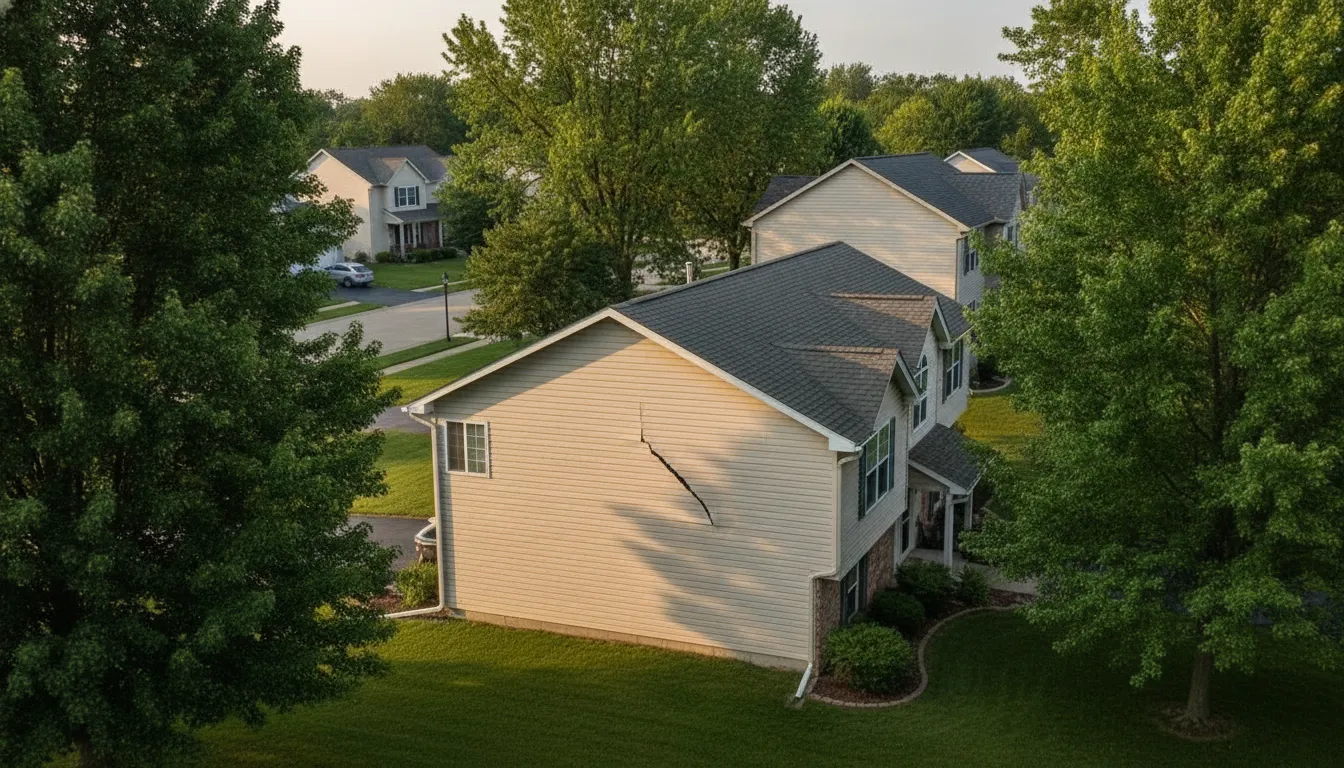
Cracks, loose panels, buckling, holes, or water-related staining can mean your home needs closer attention. They do not automatically mean full siding replacement. For homeowners researching siding repair farmington mn, the next step is an inspection. It should consider the damage location, its extent, the siding material, and any underlying conditions.
Contact Referred Restoration online to request a free siding inspection.
Farmington homes face seasonal temperature swings, precipitation, snow, and occasional hail. These conditions can reveal exterior wear over time. An assessment can separate a localized repair opportunity from a broader replacement question. It can also help protect the home’s appearance and water-shedding function. Start by looking for visible warning signs.
What Are the Signs You May Need Siding Repair in Farmington, MN?
Siding damage is not always dramatic. A careful look from the ground can help a Farmington homeowner notice changes before they become a larger exterior concern. Walk around the home and look for cracked, loose, or missing sections. Check corners, wall transitions, and areas exposed to prevailing weather. A panel that has shifted, separated, or pulled away may not provide the same protection from precipitation.
Also watch for buckling, warping, punctures, and holes. These changes can result from impact, movement, moisture exposure, or other conditions that require closer evaluation. Staining deserves attention as well. Dark marks, persistent discoloration, soft-looking areas, or sections that appear to be deteriorating may indicate water impact. You do not need to identify the cause from the yard. Document what you can see and note where it occurs.
Look for clues inside the home
Exterior siding problems can sometimes have indoor clues. Check the rooms directly behind visibly damaged areas for damp smells, discolored drywall, peeling paint, or moisture marks around windows and walls. These signs do not prove that the siding is the source, but they are worth mentioning during an inspection.
Avoid opening the wall or pulling at damaged siding yourself. Disturbing the area can make the condition harder to assess and may create additional exposure.
Consider Farmington’s weather exposure
Minnesota homes experience temperature swings, precipitation, snow, and hail. Repeated exposure can reveal weaknesses or worsen existing wear. This is especially true where water can collect or enter through a damaged section. After a significant weather event, compare new marks with earlier photos if you have them. A changed appearance, a newly loose section, or water-related staining is a reasonable reason to request an assessment.
A siding inspection is designed to identify damage, rot, or other inefficiencies. It provides an honest assessment. Referred Restoration documents repair services for damaged or cracked siding. The goal is to help restore the home’s appearance and protection. Learn more about its siding inspections and repair services. The recommendation may involve a localized repair or a broader review.
Can You Repair Damaged Siding Instead of Replacing It?
Sometimes a siding problem is limited to one damaged or cracked section. A focused repair may be worth assessing. It may help restore the home’s appearance and protection from water when the surrounding siding is stable. The underlying wall condition matters too. Not every visible defect can be handled with a small patch. The right recommendation depends on an inspection of the damaged area and its surroundings.
Damage extent is the first consideration. A single impact point, isolated crack, or limited section may be approached differently from widespread buckling or multiple broken areas. Repeated problems in the same location also deserve attention. They may indicate that the visible siding is not the only issue. Replacing one section without addressing the underlying condition may not provide a lasting solution.
Hidden moisture can change the repair decision as well. Water may enter behind damaged siding where openings or loose sections expose the wall assembly. Staining, soft areas, musty odors, or deterioration near the affected location should be reported. These observations do not prove the full scope of damage. They are useful clues that the inspection should look beyond the surface.
Material matching is another practical factor. Even when a replacement section is available, an exact match may be difficult. Existing siding may have weathered, faded, or been discontinued. Differences in profile, finish, texture, or color can make a localized repair more noticeable. A professional can evaluate whether a suitable match is realistic. They can explain the available paths without treating a full replacement as automatic.
| Situation | What it may suggest | What to ask during an assessment |
|---|---|---|
| One defined cracked or punctured section | A focused repair may be worth evaluating | Can the section be matched and repaired without disturbing sound siding? |
| Several loose, buckled, or missing areas | The damage may be broader than one repair | Are adjacent sections or underlying conditions involved? |
| Recurring moisture or deterioration | The visible siding may not be the only concern | What is causing the repeated problem, and what scope addresses it? |
Broader damage or conditions that do not support a localized repair may lead to a replacement assessment. Referred Restoration’s documented siding scope includes repair, complete replacement, and new installation. Review broader Minnesota siding repair decisions for general context. This Farmington-focused article centers on the location, extent, and cause of damage.
An inspection helps separate a repair candidate from a larger siding concern. The goal is an honest assessment and a custom recommendation, not a predetermined outcome.
How Does Minnesota Weather Affect Siding Damage?
Minnesota weather can expose siding wear gradually, then make the problem easier to see after a major change in conditions. In Farmington, homeowners may notice new cracks, loose sections, buckling, or gaps after repeated temperature swings. Materials expand and contract as temperatures change, and existing weaknesses can become more noticeable over time. That does not automatically mean the entire exterior needs replacement, but it is a reason to document what you see and consider an assessment.
Snow and precipitation create another useful observation point. Pay attention to areas that stay damp, collect runoff, or show discoloration after melting snow or rain. Water marks, soft-looking trim, or deterioration near joints and penetrations may point to more than a surface appearance issue. Siding itself may be affected by nearby drainage conditions, so note whether gutters, downspouts, roof edges, and wall sections appear to be directing water as expected.
Wind and hail can leave different clues. Wind may loosen panels, disturb trim, or expose gaps, while hail can produce localized marks or damage that is easier to identify from certain angles and in strong daylight. Look from a safe ground-level position, and avoid pulling on loose material or attempting a temporary repair that could hide the original condition. Photos taken before conditions change can help an inspector compare affected areas.
Seasonal observations are valuable because siding can look different in dry weather than after snowmelt, rain, or a storm. Keep notes about when a change appeared. Note whether it returns after wet or windy conditions. For broader guidance about materials, moisture, and storm exposure, review Minnesota siding repair decisions. This article stays focused on recognizing conditions at a Farmington home. A local inspection may clarify the next step.
What Should You Do Before a Siding Inspection?
A little preparation can make a siding inspection more useful without altering the damaged area. Document what you noticed and identify related clues inside and outside the home. This gives the inspector useful context for an honest assessment. Before the appointment, work through these steps:
- Photograph the area from ground level. Take clear photos of cracked, loose, missing, buckled, or discolored siding from several angles. Include a wider view showing where the area sits on the home. Do not climb ladders or remove panels to get a closer image.
- Write down when you first noticed the issue. Note whether the change appeared after a storm, heavy precipitation, snow, or a temperature swing. If you are unsure, say so. A timeline can help distinguish a recent observation from a longer-standing concern.
- Check nearby interior areas. Look for signs on the other side of the exterior wall, such as staining, dampness, peeling paint, or an unusual odor. Do not open walls or attempt to trace moisture. Record what you can safely observe and where it appears.
- Keep gutters and downspouts clear of visual obstructions. Move loose items away from the siding. Make sure the inspection area is accessible from the ground. Do not dismantle drainage components or change the exterior before the assessment.
- Avoid disturbing damaged material. Do not pull, cut, nail, seal, or patch cracked or loose siding before it is reviewed. Altering the area can remove useful evidence and may create additional damage.
- Prepare your questions. Ask what the inspection found and whether the affected area appears localized or broader. Ask what conditions should be monitored. Also ask whether repair, replacement, or additional evaluation is recommended. A professional assessment should lead to a custom solution.
What Happens During a Siding Repair Assessment?
A siding assessment gives you a clearer basis for deciding what your Farmington home needs. Referred Restoration begins with a free inspection of the visible siding and nearby areas. The goal is not to assume that every damaged panel needs the same response. The inspection identifies the location and extent of the problem. It also considers whether underlying conditions may affect the repair.
The inspection typically starts with a review of the sections that prompted your call. The contractor may look for damaged panels, signs of rot-like deterioration, and conditions that could affect exterior protection. You can discuss changes after a storm, recurring moisture, or damage that has gradually become more visible. Sharing when the issue appeared can provide useful context. You do not need to diagnose the cause yourself.
Looking beyond the visible section
A localized problem may be a repair candidate. Broader damage or unfavorable underlying conditions may point toward replacement or new installation. The recommendation can depend on the damaged area, the condition beneath it, the extent of wear, and whether a durable repair is practical. A siding repair assessment should be more than a quick glance at one panel. An honest review helps prevent an unnecessary repair when the surrounding system needs more attention. It can also avoid a broader project when a focused repair is appropriate.
From assessment to a custom solution
After reviewing the findings, Referred Restoration explains the available path and develops a custom solution. The documented scope includes repairs for damaged or cracked siding, complete replacement, and new siding installation. Professional installation is part of the service pathway when installation work is needed.
For Farmington homeowners, the next step is to confirm service availability and describe the areas of concern. You can contact Referred Restoration online to request an assessment. A straightforward inspection gives you information to weigh repair, replacement, or installation after the condition is understood.
When Is Siding Replacement a Better Path?
A localized repair can make sense when damage is limited to a small, defined area. Replacement deserves a closer look when the visible problem is part of a larger pattern. An inspection can clarify that pattern before anyone recommends a scope of work.
Look for damage that extends beyond one section
Widespread cracking, loose or missing panels, buckling, or deterioration around multiple openings may indicate that a small patch will not address broader needs. Extensive rot-like deterioration calls for a careful review of the siding and conditions behind it. These observations are reasons to investigate. They are not automatic proof that the entire exterior must be replaced.
Recurring water entry deserves a closer assessment
If water marks, damp areas, or related damage keep returning after a localized repair, the source may extend beyond the visible siding. Review adjacent sections, transitions, and underlying conditions. A professional can help distinguish an isolated repair issue from damage that needs a broader solution. Minnesota’s precipitation, snowfall, hail, and seasonal temperature swings can reveal wear that is easy to miss during a quick visual check.
Matching and material age can affect the recommendation
Older siding may be difficult to match when a replacement panel, trim profile, or finish is no longer readily available. A mismatch does not automatically make full replacement necessary, but it should be part of the conversation. The same is true when siding has aged across much of the home and several areas show similar deterioration. The assessment should consider the material, location, extent of damage, and surrounding conditions.
Storm impact is another signal to document, especially when damage appears across multiple elevations. Referred Restoration’s documented siding scope includes complete replacement and new installation in addition to repairs for damaged or cracked siding. The service pathway is a free inspection, an honest assessment, a custom solution, and professional installation when that scope is appropriate.
Contact Referred Restoration online to discuss siding damage and request an assessment. Call (763) 726-4245.
Frequently Asked Questions
What are the most common signs that siding needs attention?
Look for cracked, loose, missing, buckled, or punctured sections, along with peeling or deteriorated areas. Water marks or soft spots indoors near exterior walls can also justify an inspection. These signs do not confirm the full scope of damage, so an assessment is the best way to determine what needs attention.
Can a damaged section be repaired instead of replacing all the siding?
Sometimes. A localized repair may be appropriate when the damage is limited and a suitable match can be made. Replacement may be considered when damage is widespread, moisture has affected underlying areas, or repeated problems make a small repair less practical. The recommendation should follow an inspection of the material and surrounding conditions.
Does Referred Restoration provide siding repair in Farmington, MN?
Referred Restoration is based in Rogers and serves surrounding Minnesota communities. Farmington homeowners should contact the team to confirm current service availability and discuss the home’s location and siding concerns.
What should I do after a storm damages my siding?
From a safe ground-level position, document visible damage and note when it appeared. Avoid pulling off loose material or making temporary changes. A siding inspection can help distinguish storm-related damage from older wear. It can also identify whether repair or replacement assessment is appropriate.
How should I prepare for a siding inspection?
Take clear photos from the ground and note affected areas. Check nearby interior walls for related marks or moisture. Keep gutters and downspouts clear if they contribute to water contact. Do not disturb damaged siding. Bring your questions so the inspection can lead to an honest assessment and custom solution.
Ready to Discuss Siding Damage?
An inspection can clarify whether the visible issue calls for a focused repair or a broader siding plan. Referred Restoration can review your Farmington-area home’s condition. The team can explain the next practical step with an honest assessment and custom solution.
Contact Referred Restoration online to request a free siding inspection.