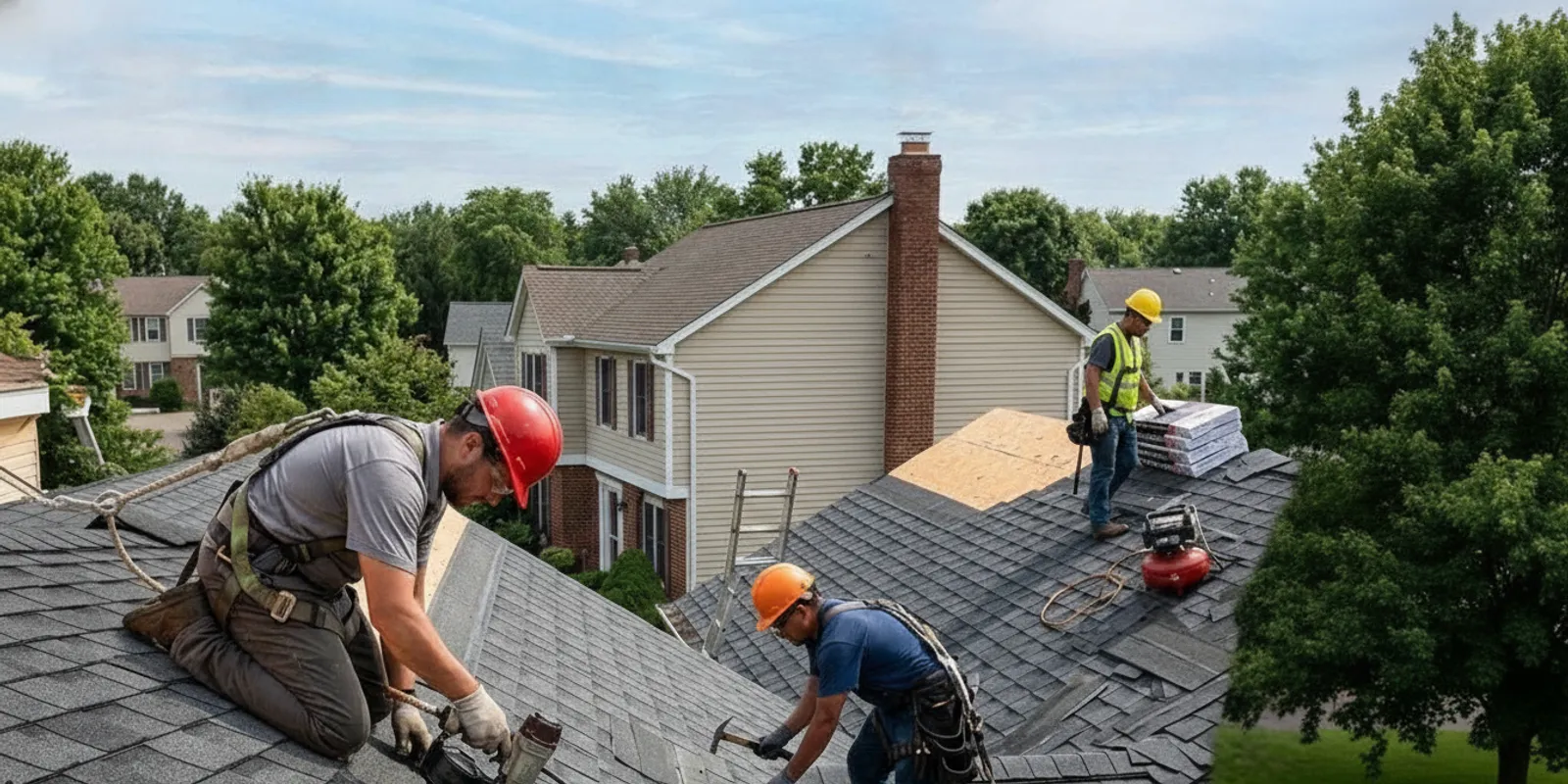
Choosing a roofing company in Sunfish Lake, MN, is about more than finding someone who can replace shingles. You need clear answers about the roof’s condition, a repair or replacement recommendation that fits the evidence, and a process you understand before work begins. Referred Restoration brings a customer-first approach to exterior restoration, with free inspections, custom solutions, and professional installation. Here is what to look for and what to ask before choosing a roofer.
Request a free roof inspection
What should a roofing company in Sunfish Lake, MN, explain?
A dependable roofer should help you understand the condition of your roof, not rush you toward a predetermined project. The inspection is the starting point. Ask what the contractor looked at, what concerns they found, and how those observations support the recommended next step.
A useful inspection discussion should cover the visible roofing materials and the areas where water can enter, such as transitions, edges, and penetrations. The contractor should explain any limits as well. A ground-level view may reveal a missing shingle, but it cannot answer every question about the roof system. If a section was not accessible or a concern needs further evaluation, you should hear that plainly.
Referred Restoration describes its process as a free inspection, a custom solution, and professional installation. That order matters: understand the roof first, consider the appropriate response next, and then decide how to proceed. Homeowners can learn more about the company’s roofing services and inspection process.
Ask the roofer to distinguish an urgent issue from routine maintenance. A small area of lifted or missing shingles may need prompt attention, while an older roof with widespread wear may call for a broader conversation. The contractor should connect observations to a recommendation instead of treating every concern as proof that you need a full replacement.
It helps to prepare a short list before the inspection. Note the rooms where you have seen staining, any changes after recent weather, and repairs made in the past. If a ceiling mark appears only during certain storms, share that timing. These details do not establish the cause, but they give the inspector useful context and make it easier to discuss what should be checked.
Ask what the inspection can and cannot confirm. A visual inspection may identify visible wear and likely entry points, while concealed layers or inaccessible areas may require additional evaluation. A careful explanation of limits is a positive sign: it keeps an initial observation from being presented as certainty when more information is needed.
How can you prepare for a roofing inspection?
A little preparation can make the visit more useful. Before the appointment, write down when you first noticed a leak or stain, which rooms are affected, and whether the issue appears during wind-driven rain, steady rain, or snowmelt. If the concern comes and goes, note the dates or weather conditions you remember. A timeline can help the roofer understand what to investigate, even though it does not prove the cause.
Gather any previous inspection notes, invoices, or descriptions of repairs if they are available. You do not need a complete project history to schedule an evaluation, but knowing that a section was repaired before can help frame follow-up questions. Take photos of indoor staining or visible exterior changes from a safe location. Do not climb a ladder or walk on the roof to get a better view.
Make access straightforward. Let the contractor know about gates, pets, or areas that should not be entered, and identify where you have noticed interior symptoms. If someone else in the household has seen the issue, ask them to share what they observed too. During the walkthrough, keep your questions focused: What did you inspect? What evidence supports the finding? What remains uncertain? What should happen next? These questions create a useful record and help you understand the recommendation without needing to interpret roofing terminology on your own.
How can you compare roofers fairly?
It is easier to compare contractors when each one responds to the same questions. Request a written proposal that identifies the planned work, materials, areas included, and what happens if the crew discovers an unexpected condition. Clarify how cleanup and communication will work. If two proposals use different scopes or assumptions, ask each roofer to explain the difference before judging them side by side.
Look for specifics, not just a confident presentation. A proposal should help you understand whether the recommendation is a repair or replacement, which roof areas are included, and what decisions remain open. Ask who will be your point of contact and how questions will be handled during installation. The clearest option is not always the longest document; it is the one that leaves the fewest important details unclear.
| What to compare | Roof repair | Roof replacement | Questions for the roofer |
|---|---|---|---|
| Typical scope | Addresses a defined damaged or leaking area | Removes and renews the roof covering across the agreed roof area | Which areas are included, and why? |
| Best fit to discuss | Damage appears limited and the surrounding roof remains serviceable | Wear or damage is widespread, or repeated repairs may not address the underlying issue | What evidence supports this recommendation? |
| Planning details | Identify the affected section, repair materials, and any limits | Confirm materials, project scope, installation sequence, and cleanup plan | What is included in writing, and what could require a change? |
| Follow-up | Ask what signs to watch for after the repair | Ask how the completed work will be reviewed and whom to contact with questions | What should I do if I notice a concern afterward? |

This comparison is a discussion guide, not a diagnosis. Roof design, age, weather exposure, and the location of damage all affect the right recommendation. A trustworthy contractor should explain uncertainty rather than promise that one option is right before inspecting the roof.
When reviewing proposals, compare like with like. Check whether each document addresses the same roof sections and materials. If one includes work that another leaves out, ask whether the difference is intentional. A lower or higher total is not meaningful by itself when the scopes differ. Ask for any clarification or revision in writing so you can refer back to the same details later.
Also ask how unforeseen conditions will be handled. The contractor should explain how you will be notified, what approval is needed before additional work, and how any scope change will be documented.
Use a simple comparison checklist for each proposal:
- Included: Mark the work, materials, and cleanup details that are clearly covered.
- Excluded: Note anything the proposal leaves out or assigns to the homeowner.
- Unclear: Ask for an explanation when the scope, material, or communication plan is vague.
- Change process: Confirm how unexpected conditions will be documented and request approval before additional work.
How can you tell whether repair or replacement makes sense?
A roof repair may be appropriate when a problem is limited and the surrounding materials still perform as intended. For example, a localized leak or a small area of storm damage may be repairable. The key is to confirm that the visible symptom does not point to a larger issue elsewhere.
Replacement is worth discussing when damage or deterioration extends across many areas, the roof has recurring problems, or a repair would leave significant concerns unresolved. Age can be part of the conversation, but it should not be the only reason for a recommendation. Ask the contractor to show you the condition that matters and explain how the proposed work addresses it.
Homeowners comparing options can review Referred Restoration’s roof repair service and roof replacement service. These pages describe the relevant services, but an on-site evaluation is needed to understand a particular roof.
Do not assume that a leak always means the roof covering itself has failed. Water may travel before it becomes visible indoors. Share where and when you noticed the problem, whether it changes during rain or snowmelt, and any recent work or storm activity. Those details can help the inspector focus the evaluation.
After the evaluation, ask the roofer to walk you through the evidence in order. What did they observe? Which finding is most important? What could happen if you wait, and what signs would make the issue more urgent? Clear answers can help you separate immediate water protection from longer-term planning. If you are not sure you understand a term, ask for a plain-language explanation rather than guessing what it means.
There may be more than one reasonable path. A contractor should be able to explain the trade-offs between addressing one area now and planning a broader project, while being clear about remaining risks. You can ask what the recommended work will resolve and what it will not resolve. That boundary is important: it prevents a limited repair from being mistaken for a complete renewal of the roof.
For instance, if a roofer recommends repairing one slope but notes aging materials elsewhere, ask what the limited work is expected to address and what conditions should prompt another inspection. If replacement is proposed after a localized leak, ask what evidence shows that a patch would not be a durable response. You are not asking the contractor to guarantee how long any roof will last; you are asking for the reasoning behind the scope. A useful answer separates what is visible today from what is a possibility that may need monitoring.
What should you ask about materials and installation?
Material choices should match the roof, the home, and the scope of work. Ask what product is being proposed and why it fits your project. A quality discussion should include more than color or appearance. It should cover compatibility with the existing roof details, the installation plan, and how the contractor will handle transitions and edges.
Ask the contractor to explain the sequence of work in plain language. When will the crew arrive? Which areas will be worked on first? How will materials and debris be managed? What should you move or protect before installation? Specific answers help you prepare and give you a clear way to raise questions if the work differs from the agreed scope.
Before signing, read the written scope carefully. Confirm that it reflects the conversation and identify any exclusions or assumptions. If a material choice or installation detail is not clear, ask for clarification in writing. Do not rely on a verbal promise to resolve an important difference later.
Building requirements can vary by project and location. For official Minnesota building code information, consult the Minnesota Department of Labor and Industry and ask your contractor which requirements apply to the planned work. Avoid assuming that a general online checklist replaces project-specific guidance.
It is also reasonable to ask how the crew will protect areas around the home and keep the work zone orderly. Confirm where equipment or materials may be placed, how debris will be collected, and what access the crew needs. If you work from home, have a planned delivery, or need a driveway clear, raise that before the start date. These practical details do not change the technical scope, but they can prevent avoidable confusion during a project.
How do storm damage and insurance questions change the process?
After hail or strong winds, start with a safe visual check from the ground. Look for obvious missing or displaced shingles, damaged gutters, debris, or signs of water inside. Do not climb onto a wet, icy, or damaged roof. A professional inspection can help document visible concerns and determine whether further action is warranted.
Make notes about when the storm occurred and where you noticed a change. Photographs from a safe location may help keep a record. If you suspect active water entry, protect belongings and contact a qualified professional about next steps. For immediate hazards, prioritize safety and avoid attempting work that requires walking on the roof.
Insurance decisions belong to your insurer and policy. A contractor can explain observed damage and may assist with the storm claim process, but no roofer can promise what an insurer will approve. Ask for a clear separation between inspection findings, proposed work, and any insurance-related discussion. Referred Restoration offers storm damage restoration information for homeowners considering an evaluation.
Be cautious if someone pressures you to sign immediately, guarantees a claim outcome, or says you do not need to read the agreement. Take time to review the scope and ask your insurer about coverage questions directly. A patient, documented process gives you a better basis for decisions.
When documenting a concern, keep the record factual. Note the date, the weather event as you understand it, the rooms or exterior areas affected, and any temporary steps taken to protect the home. Keep copies of messages and inspection notes together. This helps you describe the sequence clearly to both the contractor and insurer without treating an initial observation as a final determination of damage or coverage.
What should you expect during the project?
Before work starts, confirm the scheduled date, the areas being addressed, and how weather could affect timing. Ask how the crew will communicate if conditions change. Exterior work is affected by safe working conditions, so a delay may be necessary. You should know whom to contact for an update.
Prepare the work area by following the contractor’s instructions. This may include moving vehicles, securing items near the house, and keeping children and pets away from active work zones. If you have questions about access or outdoor belongings, raise them before the crew arrives instead of improvising during installation.
At completion, review the agreed scope with the contractor. Ask what work was done, whether any unexpected conditions came up, and what follow-up steps are recommended. Keep the proposal and any project documents together. If you notice a concern afterward, report it promptly and describe what you see.
A short pre-start check can keep everyone aligned. Compare the scheduled work with the latest written scope, confirm the best way to reach the project contact, and ask how a weather delay or unexpected finding will be communicated. If the plan changes, request an updated written description before approving a change in work. At the end, walk through the accessible areas with the contractor and ask how any remaining questions will be handled. Keep copies of project notes in one place so you can refer to the agreed details later.
What makes Referred Restoration worth considering?
Referred Restoration’s stated approach centers on a free inspection, a custom solution, and professional installation. The company also describes an emphasis on honest assessments and transparent service. Those are useful standards to test in your own conversation: do you receive a clear explanation, a scope that reflects the inspection, and room to ask questions without pressure?
The company provides exterior restoration services beyond roofing, including siding, gutters, and windows. That broader focus can be useful when an inspection raises questions about connected exterior components. It does not mean every project needs multiple services. Ask the contractor to explain which items relate directly to the roof concern and which, if any, are separate maintenance considerations.
Sunfish Lake homeowners should confirm availability and project logistics directly rather than assume a contractor serves every community in the region. Referred Restoration is based in Rogers, Minnesota, and its published information describes service in its regional market. Use the contact page to ask about an inspection, explain your property location, and find out whether the company can assist with your project.
Choosing a roofer is ultimately a fit decision. Compare the inspection, written scope, communication, and answers you receive. A company that explains what it sees and what it does not know can help you make a more informed choice, even if you decide to seek another opinion.
As you make that decision, consider whether the contractor gives you time to review information and whether answers stay consistent from the inspection through the proposal. You should be able to repeat back the basic plan: what is being repaired or replaced, why it is recommended, what is included, and how changes will be discussed. If any of those points remain vague, ask for clarification before moving forward. The goal is not to avoid every uncertainty, because some conditions only become clear as work progresses. Instead, agree on a transparent way to handle it.
Contact Referred Restoration to discuss your roof
Frequently Asked Questions
How do I choose a roofing company in Sunfish Lake, MN?
Compare inspection detail, written scope, material explanations, communication, and how the contractor answers questions. Confirm service availability for your address, and do not choose based on a slogan alone.
Does a roof leak always mean I need a replacement?
No. A leak can come from a localized issue, but water may travel from its entry point. Have the roof evaluated and ask the contractor to explain why repair or replacement is the appropriate recommendation.
Can a roofer guarantee my storm damage claim will be approved?
No contractor can guarantee an insurer’s decision. The insurer and your policy determine coverage. A roofer may explain observed damage or assist with the process, but keep those findings distinct from a coverage decision.
Should I get more than one roofing proposal?
Comparing proposals can help clarify differences in scope and materials. Ask each contractor to address the same questions, and make sure you understand what is included, excluded, and subject to change before you choose.
The best roofing decision starts with a careful inspection, clear written details, and an honest conversation about what your home needs. Take time to compare your options and choose the process that gives you confidence in the work ahead.