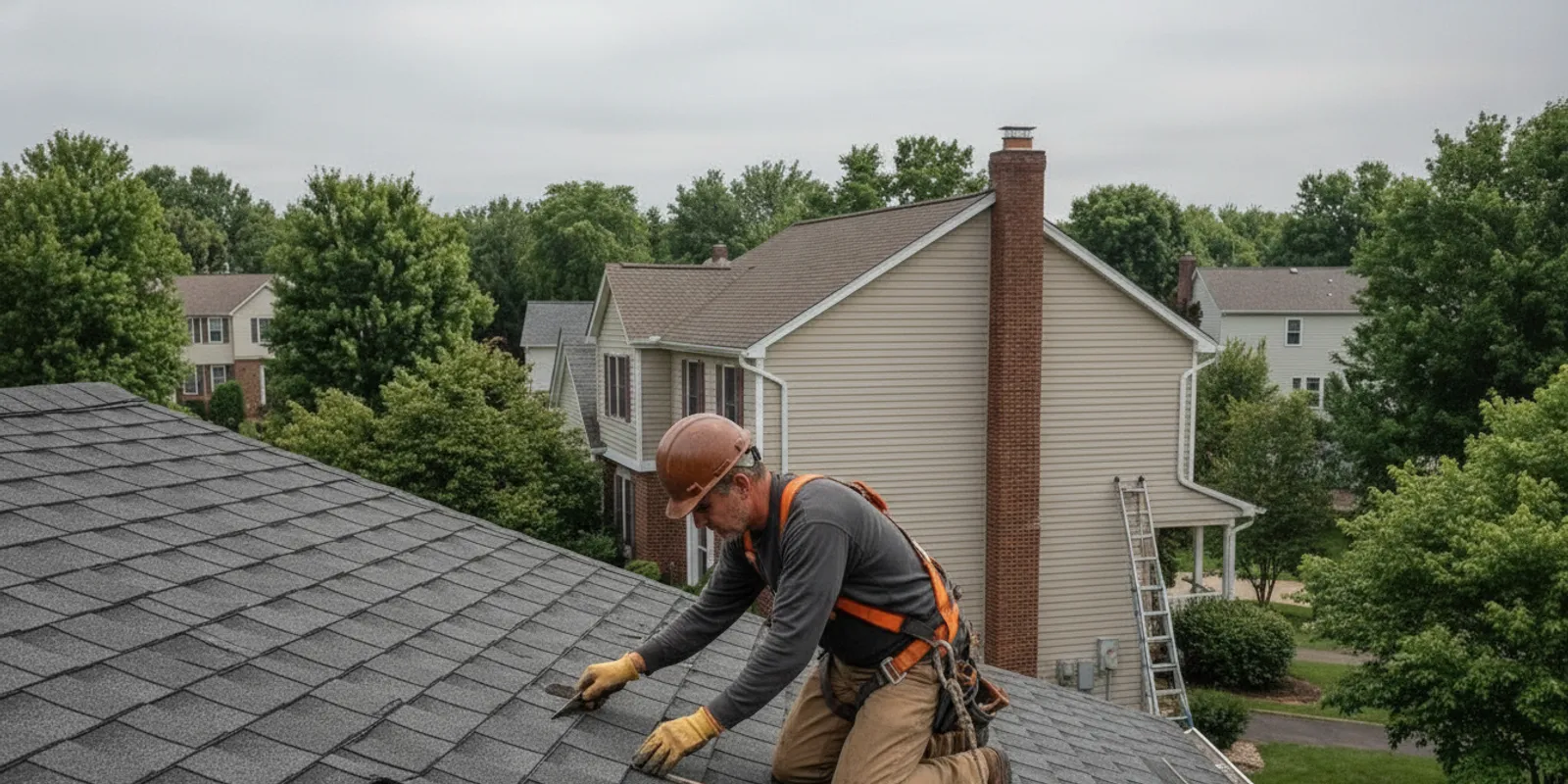
Choosing a roofing company in Vadnais Heights, MN, is about more than finding someone who can replace shingles. You need a clear inspection, a repair-or-replacement recommendation that fits the roof, and a written scope you can compare. Minnesota weather can expose weak points through wind, hail, snow, and freeze-thaw cycles, so start with evidence and questions rather than a sales pitch.
Schedule a free roof inspection
Referred Restoration is based in Rogers and serves homeowners across its documented service corridor. If you live in Vadnais Heights, ask directly whether your address is currently within the company’s service area before booking. The guidance below can also help you evaluate any roofer you consider, from the first inspection to the final cleanup.
What should a roofing company in Vadnais Heights, MN, explain?
A trustworthy roofer should make it possible to understand what they observed and why they recommend a particular next step. An inspection should not end with a vague statement that the roof is “bad.” Ask the contractor to identify the location and type of concern, explain whether it appears active or developing, and show you supporting photos when available.
Roof problems can be localized. A lifted shingle, a damaged flashing joint, or a leak around a roof penetration may call for a focused repair. Widespread wear, recurring leaks, or damage across several roof areas may lead to a replacement discussion. The right recommendation depends on the roof’s condition and construction, not on a generic rule that every roof of a certain age must be replaced.
- Ask what was inspected. Confirm that the roofer looked at the roof surface and the relevant details, such as valleys, edges, flashing, and penetrations.
- Ask what was found. Request a plain-language explanation, not only a product name or a verbal conclusion.
- Ask what happens next. Clarify whether the proposal covers a repair, a replacement, or additional investigation.
- Ask what is not included. Written exclusions help prevent confusion about related work or concealed conditions.
Referred Restoration describes its process as a free inspection followed by a custom solution and professional installation. Homeowners can review its Rogers roofing service information and ask how that process applies to their home and location.
How can you tell whether the roof needs repair or replacement?
One damaged area does not automatically mean the whole roof should be replaced. A repair may make sense when the problem is limited, the surrounding materials remain serviceable, and the repair can address the cause rather than hide a symptom. Replacement may deserve consideration when deterioration or damage is broad, when problems recur in multiple places, or when a repair would not provide a durable solution.
Look for the pattern behind the symptoms. A ceiling stain tells you that moisture reached the interior; it does not by itself identify the roof entry point. Missing or creased shingles may indicate wind impact, while loose flashing can allow water in around a chimney, wall, or vent. The visible symptom and its source may be some distance apart, so avoid assuming that the spot directly above a stain is the only area that needs attention.
Ask the roofer to lay out the alternatives and the trade-offs. For a repair recommendation, ask what area will be repaired, what materials will be used, and what signs would mean that more work is needed later. For a replacement recommendation, ask what evidence shows that a limited repair is not appropriate, what layers will be removed, and how the contractor will handle ventilation, flashing, and cleanup.
| Decision point | Repair may fit when… | Replacement may fit when… | What to ask |
|---|---|---|---|
| Extent of concern | The issue appears limited to a specific area or detail. | Wear or damage is spread across several roof areas. | Can you show me the affected areas and explain how widespread the problem is? |
| Condition around the damage | Nearby roofing and flashing appear serviceable. | Surrounding materials are also deteriorated or repeatedly failing. | How will the condition of adjacent materials affect the proposed work? |
| History of leaks | A single, traceable issue can be corrected at its source. | Leaks recur or have several suspected entry points. | What evidence connects the leak to this repair or replacement scope? |
| Scope and follow-up | A defined repair can address the cause, with clear limits. | A broader project is needed to address the roof system as a whole. | What is included, excluded, and subject to further inspection? |
This comparison is a starting point, not a substitute for an on-site assessment. If two roofers reach different conclusions, ask both to explain the evidence and the limits of their inspection. A second opinion is most useful when it gives you specific observations to compare rather than simply a different sales recommendation.
What should a roof inspection include?
A useful inspection looks beyond the most obvious shingle damage. Ask whether the contractor will evaluate the roof covering, ridges, valleys, roof edges, flashing, and areas around vents or other penetrations. Depending on the concern and safe access, the inspection may also involve looking for signs of moisture inside the home or checking related exterior details.
Before the appointment, write down when you noticed the problem and whether it changed after rain, wind, or snow. Photograph interior stains and visible exterior concerns from the ground. Do not climb onto a roof to collect evidence; a professional can decide how to inspect it safely. Move vehicles or outdoor items if the contractor asks you to clear access, and mention any known leak history or prior roof work.
At the end, try to leave with a usable record. That may include photos, a description of the observed conditions, the recommended next step, and any limits on what could be seen. If the inspection did not establish the source of moisture, ask what additional investigation would be needed before work is approved. Clear documentation makes it easier to compare proposals and to keep track of a concern over time.
How do roof details and Minnesota seasons affect the evaluation?
A roof is a system of connected surfaces and transitions, not just a field of shingles. Valleys collect runoff from adjoining slopes, while flashing protects edges where roofing meets a wall, chimney, or penetration. The contractor should explain whether a concern is limited to the covering or involves one of these details. If the recommendation includes replacing or adjusting a component, ask how it connects to the reported leak or visible damage.
Season and recent weather are useful context, but they do not establish the cause by themselves. After wind, note which side of the home appears affected and whether shingles or other materials are visible on the ground. After rain or snowmelt, record when an interior stain appears and whether it changes. Share these observations during the inspection; they can help the roofer focus on likely areas without treating a weather event as proof of a specific failure.
Ask how the inspection accounts for areas that could not be seen safely or clearly. A contractor may need to distinguish between confirmed damage and a possibility that needs further investigation. For example, if an interior mark is visible but its entry point is uncertain, ask what additional access or observation would resolve that uncertainty. This helps keep the proposed work tied to the available evidence and makes clear which questions remain open.
For a replacement, have the roofer explain how the project addresses the roof as a whole: removal and installation sequence, flashing at transitions, ventilation if it is part of the scope, and protection from weather while work is underway. These questions do not require you to diagnose the roof. They help you understand whether the plan covers the connected details that affect the recommendation and what will happen if concealed conditions are found.
How should you compare roofing proposals?
Do not compare proposals by the final figure alone. First check whether each contractor is proposing the same kind of project and addressing the same parts of the roof. If one proposal describes a specific repair and another recommends a full replacement, ask each roofer to explain the difference before treating them as equivalent bids.
- Work scope: Does the document name the roof areas and tasks? Does it describe removal, installation, and related details?
- Materials: Are the proposed roofing materials and components identified clearly enough for you to understand what is being installed?
- Water-management details: Does the scope explain how flashing and other vulnerable transitions will be handled?
- Ventilation: If ventilation work is recommended, does the proposal say what will change and why?
- Site protection: How will the crew protect landscaping and collect debris during the project?
- Schedule and communication: What is the expected sequence, and who should you contact if weather or another condition changes the schedule?
- Exclusions and changes: What is outside the scope, and how will additional work be discussed and approved?
- Closeout: What cleanup and completion review should you expect?
Ask each contractor to put important answers in writing. A clear document reduces misunderstandings and gives you a fair basis for comparing the proposed work. This kind of documented selection process is also used by public bodies; for example, the City of Eden Prairie has a policy for selecting and hiring service contractors. For your own project, request a revision or explanation before you sign if anything is unclear. For a focused repair, you can also review the company’s roof repair service page and ask how its described repair process relates to the specific issue at your home.
How do storm damage and insurance questions change the process?
After a storm, document what you can see without putting yourself at risk. Take ground-level photos of the exterior and note the date you first observed damage. If you find active water entry, protect belongings and contact the appropriate professional to limit further exposure. Avoid making a final decision from a quick glance: some roof concerns are not visible from the ground, and a storm does not prove that every roof surface needs replacement.
If you plan to contact your insurer, ask what information it needs and follow its process for documenting a claim. Keep copies of inspection notes, photos, and written proposals. A roofer can describe observed roof conditions and explain proposed work; the insurer determines coverage under the policy. Do not assume that a contractor’s inspection guarantees a claim will be approved or that every recommended task will be covered.
Referred Restoration notes that it assists homeowners with storm-damage claims. If you speak with the company, clarify what assistance means in practice, what documents it can provide, and which decisions remain between you and your insurer. Its storm damage restoration information is a place to start a conversation about inspection and next steps.
What should you expect from a roofing project?
Before work begins, review the agreed scope, anticipated timing, access needs, and how the crew will communicate changes. Weather can affect exterior work in Minnesota, so ask how a delay will be handled and how the roof will be protected if the project cannot be completed as planned that day. Move breakable items away from work areas and follow any preparation instructions provided by the contractor.
During the project, keep children and pets away from the work zone, and avoid walking near areas where materials or debris may fall. If you notice a concern, raise it with the project contact rather than trying to inspect the roof yourself. At completion, ask what work was performed, whether any unexpected conditions were addressed, and what cleanup or follow-up remains.
Keep the proposal, any written change approvals, project communications, and completion documents together. Ask the contractor to explain any product or workmanship warranty terms that apply, including who handles a future concern and what steps you should take if one appears. Do not assume that two warranties cover the same things; read the terms and keep them with your home records.
What should you expect from Referred Restoration?
Referred Restoration presents a three-step service approach: a free inspection, a custom solution, and professional installation. The company describes its approach as customer-focused and emphasizes honest assessments and transparent communication. Those statements are a useful starting point for questions, but you should still review the proposed work, exclusions, timing, and applicable warranty details for your own project.
The company is based in Rogers and its documented service area is centered on the Rogers-to-St. Francis-to-Monticello corridor, with Cottage Grove also identified as a market. Vadnais Heights is not specifically listed in the information provided here. Confirm service availability for your address before making plans. You can also explore the roof replacement information or the company’s Cottage Grove service-area page to understand its documented work and coverage context.
For a broader picture of the company’s exterior services, see its home page and homeowner resource articles. If your concern includes water drainage at the roof edge, the gutter service information can help you prepare questions about how gutters and roofing details work together. The right scope still depends on the conditions at your particular home.
What should you ask before scheduling?
Use a short question list so the conversation stays practical:
- Do you currently serve my address in Vadnais Heights?
- What will the inspection cover, and will I receive findings in writing?
- What specific evidence supports the recommended repair or replacement?
- Can you explain what is included and excluded from the proposed scope?
- How will you handle communication, weather delays, and any changes to the work?
- What cleanup and completion review should I expect?
- Which warranty terms apply, and where can I review them?
A contractor’s answers should be specific to your roof and understandable without pressure. Take time to compare the written details and confirm that the company can serve your location. For Referred Restoration, call (763) 726-4245 or use the contact page to ask about availability and request an inspection.
Contact Referred Restoration online to ask about an inspection
Frequently Asked Questions
Does Referred Restoration serve Vadnais Heights?
Vadnais Heights is not specifically identified in the service-area information provided here. The company is based in Rogers and documents a Rogers-to-St. Francis-to-Monticello corridor, as well as Cottage Grove. Contact the company to confirm whether it currently serves your address.
Should I replace my roof after a hailstorm?
Not automatically. The right next step depends on the type, extent, and location of any damage and the condition of the surrounding roof. Request an inspection that documents findings and explains whether repair or replacement is appropriate.
Can a roofer guarantee that my insurance claim will be approved?
A roofing contractor can explain observed conditions and provide project information, but the insurer decides coverage under your policy. Ask the insurer what documentation it needs, and do not treat an inspection or contractor recommendation as a coverage guarantee.
What should I bring to a roof inspection?
Bring notes about when you noticed the issue, any leak history, and photos of interior signs or exterior concerns taken safely from the ground. Share relevant information about previous repairs, and ask for written findings and next steps.
Start with a documented inspection, compare proposals that describe the same work, and confirm service availability before you commit. Those steps help you choose a roofing contractor based on your home’s needs rather than a slogan.