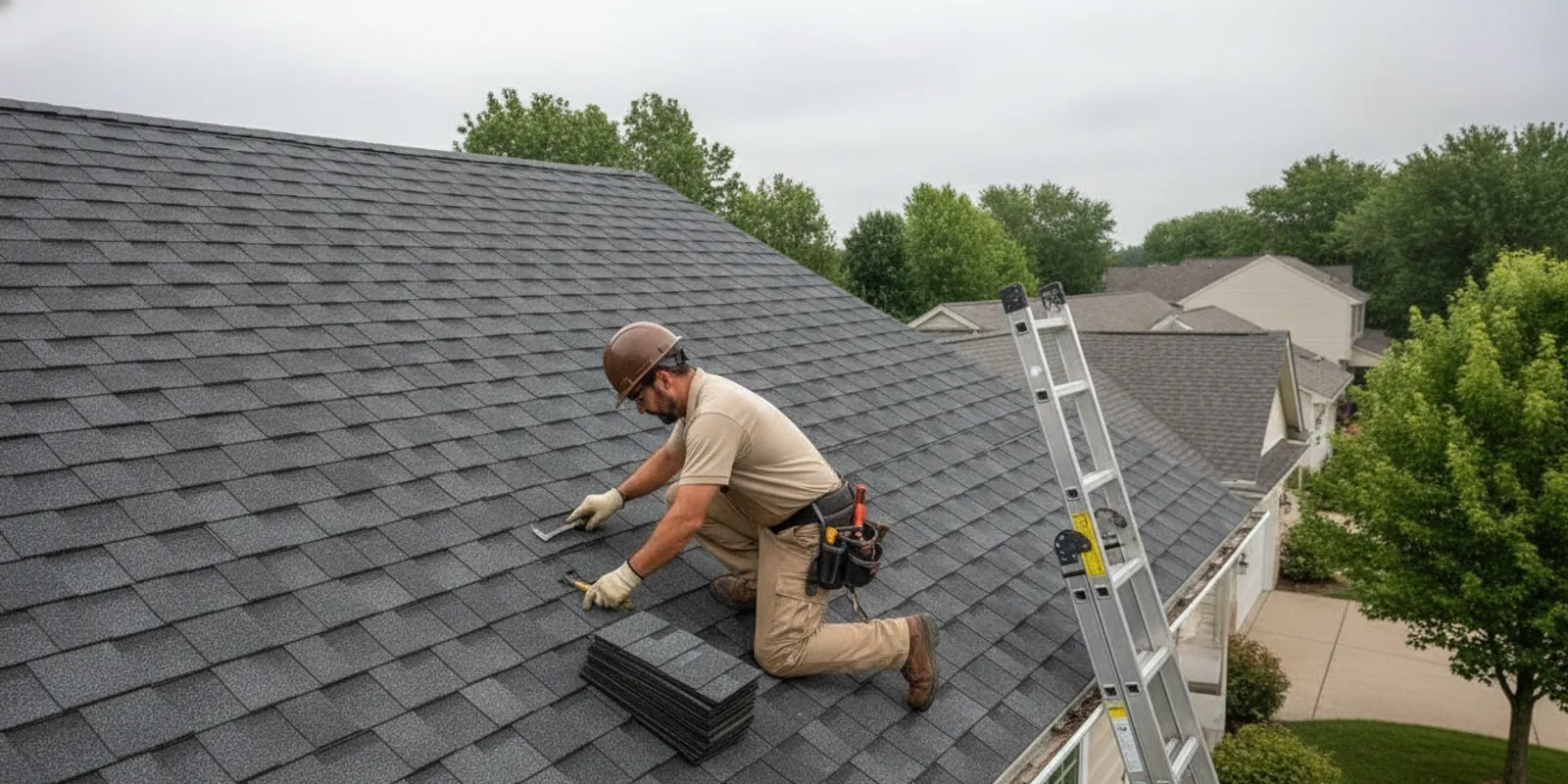
When you are looking for a roofer in Cottage Grove, a useful conversation should leave you with more than a broad recommendation. Ask how the contractor inspected the roof, what work is included, how weather and scheduling affect the plan, and what happens after the crew finishes. Clear answers help you compare proposals on the same basis and choose a service path that fits your home.
What should a roofer in Cottage Grove explain during an inspection?
Start by asking what the inspection covers. A roofer should explain which roof areas were reviewed and show you the observations that support the recommendation. Ask whether the visit included visible shingles, flashing, roof edges, penetrations, gutters, and signs of water entry inside the home when accessible. Do not assume every inspection has the same scope.
Ask for specific observations rather than a conclusion alone. For example: Where is the concern? What did the inspector see? Is it an active leak, a suspected storm impact, or wear that should be monitored? If the issue cannot be confirmed from the ground, ask what further access or inspection is needed. A responsible assessment distinguishes visible evidence from assumptions.
- Request dated photos of the areas discussed.
- Ask which findings need prompt attention and why.
- Find out whether the inspection covers the full roof or only a reported area.
- Ask what could not be inspected and how that affects the recommendation.
Keep your own notes, including when you first noticed a leak, which rooms are affected, and whether the problem changes during rain or thaw. If water is entering, protect belongings and avoid climbing onto a wet or icy roof. A professional assessment is safer than trying to investigate a steep or damaged surface yourself.
How can you tell whether the recommended work is clearly defined?
Ask for a written scope that names the work area and describes the planned tasks. For a repair, clarify what material or component is being addressed, whether nearby flashing or roof details are included, and what is outside the scope. For replacement, ask what layers will be removed, what underlayment and edge details are planned, and how the contractor will handle any concealed damage found after work begins.
Make sure the document separates confirmed conditions from possible additional work. Ask how the contractor will contact you if crews uncover a condition that changes the original plan, and whether you will approve the revised work before it proceeds. A written explanation reduces the chance that you and the crew have different expectations.
Which questions help you compare roofing proposals?
Compare the details, not just the final recommendation. Ask each contractor to describe the inspection basis, materials, work boundaries, cleanup, schedule assumptions, and follow-up. If one proposal is much broader or narrower, ask what observation explains the difference. Use the table to organize the conversation and note answers from each company in the same format.
| Topic | Question to ask | What a clear answer includes |
|---|---|---|
| Inspection | What did you inspect, and what did you find? | Areas reviewed, observations, photos, and limitations |
| Work scope | What is included and excluded? | Specific tasks, locations, and process for changes |
| Materials | Which products and components are planned? | Product details and where each will be used |
| Schedule | What could affect the start or duration? | Weather, material availability, and communication plan |
| Completion | What happens when the work is finished? | Cleanup, walkthrough, documentation, and contact for concerns |
Ask for product names and written documentation rather than relying on general terms such as “quality materials.” If two contractors describe different systems, ask them to explain the practical difference for your roof and the maintenance or care each may require. Referred Restoration offers roofing services in the area; homeowners can review its Cottage Grove service information and roofing inspection and service pathway.
What should you ask about permits, insurance, and documentation?
Ask who is responsible for determining whether a permit is needed and who will obtain it. Requirements can depend on the work and local rules, so confirm the answer for your specific project rather than relying on a general statement. You can also ask what documents you will receive before work starts and at completion.
Ask the contractor to explain what insurance documentation is available and how the company handles jobsite safety. Make sure you understand who will perform the work and who your contact is if questions come up. These are practical checks for any significant home project, not a substitute for reviewing the actual agreement.
The available BBB directory is for roofing contractors near Cottage Grove, Wisconsin, not Minnesota. Do not treat it as a list of Minnesota contractors; it is geographically relevant only if you are researching the Wisconsin community: BBB directory listing.
How should you handle a roof concern after a storm?
Record the date of the storm and any visible changes, such as displaced shingles, a damaged gutter, or a ceiling stain. Take photos from the ground where it is safe, and keep notes about interior water entry. Avoid making a conclusion about the cause based only on a quick visual check; an inspection can help distinguish storm-related damage from existing wear or another issue.
If you plan to contact your insurer, ask what documentation the roofer can provide and keep copies of your own records. A contractor can explain observed conditions and the work they recommend, but coverage decisions belong to the insurer and depend on your policy. Referred Restoration describes assistance with storm-damage claims as part of its roofing service information; see its storm restoration page for the service pathway.
What should you confirm about timing and the workday?
Minnesota weather can affect outdoor work. Ask how rain, snow, ice, or unsafe conditions could change the schedule, and how the contractor will notify you. Confirm when materials may arrive, whether vehicles need access to the driveway, and whether anything should be moved away from the home before the crew arrives.
Ask how the crew will protect landscaping and outdoor items, manage debris, and keep you informed during the work. Clarify whether you need to be home, how workers will access the site, and whom to contact if plans change. For larger work, agree on a practical check-in point before the job begins.
How should you prepare before the crew arrives?
Use the days before work to resolve practical questions that are easy to overlook. Confirm the expected arrival window, the best way to reach the site lead, where materials or equipment may be staged, and whether the driveway or a gate must remain accessible. Move vehicles, patio furniture, grills, planters, and other items away from the work zone if the contractor requests it. Ask before relocating anything fragile or difficult to move.
Inside, remove or secure items that could be disturbed by vibration, especially on upper floors directly below the work area. If you have pets, children, or a home office, ask what noise and access conditions to expect and plan accordingly. Do not assume that the house must be vacant; confirm whether anyone needs to be home and how the crew will communicate during the day.
Agree in advance on how unexpected conditions will be documented. If work cannot proceed safely because of weather, ask how the crew will leave the site protected and when you will receive an update. A simple preparation list can prevent avoidable delays and help everyone understand which decisions still need your approval.
What should happen after roofing work is complete?
Ask whether there will be a walkthrough and what completion documents you should expect. Confirm how debris and leftover materials will be handled, and ask how to report a concern if you notice one later. Review the work area from the ground and compare the completed work with the written scope. Avoid walking on the roof to inspect it yourself.
Keep the proposal, change approvals, product information, photos, and completion notes together. If an issue appears after the work, record when it occurred and share the details with the contractor. Ask about any workmanship or manufacturer documentation in writing; do not assume terms that are not stated in your agreement.
It is useful to ask the crew or project contact to identify any areas that need later observation, such as a repair near a roof transition or a location where the original condition could not be fully confirmed. Ask what signs should prompt a follow-up call and whom to contact. Keep that guidance with your project records rather than relying on memory.
How can you choose the right service path?
A focused repair may fit a limited, identifiable problem. Replacement may be worth discussing when inspection findings show broader deterioration or recurring issues, but the decision should follow a clear assessment of your roof rather than a generic rule. Ask the contractor to explain why the recommended option fits the evidence and what alternatives are reasonable.
For repair questions, review the roof repair service page. If the inspection points toward a full project, the roof replacement information can help you prepare questions. For another nearby service location, see roofing service information for Otsego.
Use the inspection and written scope to decide what to do next. Referred Restoration describes a process of inspection, a custom solution, and professional installation. Homeowners can also review its home page or request a visit to discuss their home’s specific condition.
Use these additional checks to make the recommendation easier to evaluate before committing. Ask the contractor to explain what signs would change the recommendation, what maintenance the roof may need after the work, and which parts of the home could be affected during the project. If the proposal includes several separate tasks, have each listed in sequence so you can see how the work fits together.
How can you keep the project conversation organized?
Good notes make follow-up easier, especially when you speak with more than one contractor or revisit a proposal later. Keep a single folder for the inspection summary, photographs, written scope, product information, schedule updates, and any approvals. Label photos with the date and the location they show. If a contractor refers to a roof section by a name you do not recognize, ask them to point it out on a simple sketch or photograph.
After each conversation, write down what remains uncertain and who will provide the answer. For example, note whether you are waiting for confirmation about permit responsibility, material selection, start timing, or how a newly discovered condition will be handled. Send a concise follow-up message that repeats the agreed point. This creates a shared record and reduces the chance that an important detail is lost between the inspection and the start of work.
Before approving a proposal, read it from the perspective of someone who was not part of the discussion. Could that person tell which areas will be worked on, what is excluded, how changes are approved, and who to contact? If not, ask for a clearer written explanation. A short clarification before work begins is easier to address than a disagreement after crews are on site.
How can you assess the quality of the inspection evidence?
A useful inspection record connects each recommendation to a location and an observation. When you review photos, ask the contractor to identify the roof plane or detail shown, explain what condition is visible, and note whether the image captures the whole issue or only one close-up. A close photograph can reveal a detail but may not show how extensive the condition is. A wider view gives context, while a close view can clarify a specific component. Ask for both when the distinction matters.
Look for consistency between the verbal explanation, the images, and the written scope. If the recommendation refers to several areas but the documentation shows only one, ask whether other areas were inspected and whether additional records are available. If a photo is difficult to interpret, ask for a plain-language explanation rather than trying to diagnose the roof yourself. The point is not to challenge every technical judgment; it is to understand the basis well enough to make an informed decision.
Record any uncertainty as a question to resolve, not as a confirmed defect. For example, a mark on a ceiling might be related to a roof leak, plumbing, condensation, or an earlier event. Explain when it appears and whether it changes after rainfall. Let the inspection determine what can and cannot be concluded from accessible evidence. Keeping observation separate from interpretation makes later conversations more precise.
What details should a written scope spell out?
Read the scope line by line and check that it describes the specific parts of the roof and sequence of work. For repairs, ask whether the scope names the affected slope, edge, valley, flashing, vent, or other component as applicable. For a larger replacement, ask what tear-off and preparation are included, how underlayment and roof-edge components are addressed, and how materials will be staged. The contractor can explain which details apply to your roof; not every project requires the same items.
Clarify how the crew will address adjacent components that may be disturbed during the work. Ask whether the scope includes cleanup of the work zone and how debris will be collected. If gutters, siding, windows, or landscaping could be near the work area, ask how the crew plans to protect them and what you should move. A clear boundary helps you distinguish work that is part of the roofing task from separate repairs that may need another decision.
Ask for a written process for changes. It should be clear who contacts you, what information you will receive, and how you can approve or decline the proposed change. A helpful explanation identifies the newly observed condition, why it matters, what alternatives exist, and whether the schedule will shift. Keep any revised scope or approval with the original proposal so you can see the complete project record.
How do materials and roof details affect the questions you ask?
Material names are only one part of a roofing proposal. Ask how the selected products fit the roof design, what components are included alongside the visible covering, and whether the product documentation identifies care or installation requirements. A shingle, metal panel, underlayment, flashing detail, and ventilation component each serve a different role. A contractor should be able to explain the planned system in terms you can understand without promising that any material eliminates every maintenance need.
If proposals list different products, place the names side by side and ask what differs in appearance, installation, and product documentation. Ask whether one proposal includes components that another leaves unspecified. Avoid comparing a broad label with a detailed product list as though they were equivalent; request the same level of detail from each contractor. If a specific product is important to you, ask where it will be installed and whether the written scope matches the discussion.
Also ask how roof ventilation, flashing, and transitions are considered when relevant. These details may influence how the roof assembly works as a whole, but the answer depends on the home’s design and observed conditions. A sound conversation explains the role of each relevant component and avoids turning a general rule into a diagnosis for your property. Record any proposed change to existing details in the written scope.
How should you compare repair and replacement recommendations?
Ask each contractor to explain the evidence for the recommended path and what a narrower option would address. A repair discussion should identify the localized concern, the nearby details that may be involved, and what signs could suggest the problem returns. A replacement discussion should explain why addressing a wider area is being considered and which observations support that view. Neither label alone tells you whether a recommendation fits the roof.
Consider the limits of the inspection. If a roof area could not be accessed or a condition is concealed, ask how that uncertainty affects the recommendation. You can ask whether a limited repair is reasonable while you gather more information, or whether delaying action could leave an active water-entry issue unresolved. The contractor should explain the reasoning and any assumptions, while you decide how to proceed based on the written facts and your priorities.
When recommendations differ, create a short comparison: observation, proposed work, excluded work, expected sequence, and what follow-up is suggested. Ask each contractor to respond to the same set of questions. This makes differences easier to understand and can reveal whether the disagreement is about the observed condition, the repair approach, or the amount of work included. Seek clarification before treating either proposal as directly comparable.
What should you ask about communication and site safety?
Before work starts, identify the person who will answer day-to-day questions and the best way to reach them. Ask when you should expect updates, how schedule changes are shared, and whether urgent questions go to the same contact. If a crew finds something unexpected, clarify whether the site lead will pause and contact you before moving beyond the agreed scope. Having one agreed communication route can prevent repeated calls and contradictory instructions.
Ask what areas around the house should remain clear while work is underway. Roofing work can involve people, equipment, and falling debris in the active work zone, so follow the contractor’s directions about access and keep children and pets away from that area. Ask whether you should use a different entrance or avoid a particular side of the house during the workday. Do not enter a marked or active work area to inspect progress without checking with the site contact.
Discuss practical needs such as driveway access, deliveries, outdoor outlets, and temporary placement of equipment. If you work from home or need predictable quiet periods, mention that early and ask what can reasonably be planned. These conversations do not guarantee an exact schedule, but they help set realistic expectations and allow the contractor to explain which parts of the work may change with weather or site conditions.
What can you do if a leak appears before the appointment?
Start with safety and damage control inside the home. Move belongings away from dripping water, use a container if it is safe to do so, and note which room and ceiling area are affected. If water is near electrical fixtures or the ceiling appears swollen or unstable, keep clear and contact an appropriate qualified professional for immediate guidance. Do not climb onto the roof, especially in rain, snow, ice, or wind.
Take photos from a safe indoor position and record when the leak occurs, how long it lasts, and whether it follows rain, snow melt, or another event. A stain may remain visible after the active water entry stops, so note whether it is growing or changing rather than assuming the roof is still leaking at that moment. Share those details with the contractor when scheduling or during the inspection.
If a temporary measure is proposed, ask who will perform it, what it is intended to address, and what work remains afterward. A temporary response should not be confused with a complete repair unless the written scope says so. Keep copies of any photos and notes, and ask when the condition should be reassessed if the permanent work must wait for weather or materials.
How can you plan for weather and seasonal changes?
In Minnesota, the work window can depend on conditions at the home, not simply the date on a calendar. Ask what weather conditions affect safe installation, how the contractor evaluates a forecast, and what happens if conditions change after materials arrive. A postponed start is frustrating, but working in unsafe conditions or without a suitable installation window can create different concerns. Ask for updates and a revised expectation rather than assuming the original date remains firm.
Discuss how the home will be protected if work begins and then pauses. Ask what areas will be opened at each stage, how the crew plans to protect exposed sections, and whom to contact if precipitation is forecast. The exact approach depends on the scope and weather, so request an explanation for your project rather than relying on a generic promise. Before the crew leaves for the day, ask what areas remain incomplete and what protection is in place.
Plan around deliveries and household routines as well. If snow or ice affects access, ask whether you need to clear a path or whether the contractor will reschedule. Keep a note of the updated schedule and any preparation changes. Clear communication about weather, access, and work sequencing can help you distinguish a planned delay from a missed update.
How can you prepare a fair comparison between contractors?
Give each contractor the same basic information: where you noticed a problem, when it started, whether it changes with weather, and any earlier repair history you know. Avoid presenting an unverified diagnosis as fact. Ask each person to inspect the same reported area and to state whether the review covers other accessible roof sections. This creates a more consistent starting point for comparing observations.
Use a notebook or simple worksheet with one row per topic: inspection coverage, evidence, recommended work, materials, exclusions, change process, schedule, cleanup, and follow-up. Write down exact product names and terms rather than relying on memory. When a contractor uses a phrase you do not understand, ask for a short explanation and add it to your notes. The goal is a record you can revisit without needing to reconstruct a conversation.
Do not treat a proposal with more words as automatically more complete or one with fewer lines as automatically inadequate. Check whether it answers the practical questions relevant to your roof. If a detail is missing, ask for clarification in writing. If two plans remain different, ask each contractor to identify the observation that leads to that difference. You can then compare the reasoning, scope, and assumptions rather than focusing on presentation alone.
What should you verify before approving the work?
Before you approve, confirm the property address, work area, project contact, anticipated sequence, and any responsibilities assigned to you. Make sure the written scope matches what you understood from the inspection. Check that exclusions and possible follow-on work are stated, and that the process for handling a discovery is clear. Keep a copy of the current proposal and any revisions.
Read any authorization language carefully and ask about points that are unclear. Confirm what documentation is provided, how updates will arrive, and what happens if you need to ask a question after hours or on a non-workday. If there are separate documents for products, permits, insurance, or completion, note when you should receive each one. Do not rely on a verbal assurance to replace an important written term.
Finally, make sure you know what would count as completion for the agreed work. Ask how the contractor will confirm the listed tasks are finished, whether there will be a walkthrough, and where to report a concern. Having these points settled before work starts gives both you and the contractor a shared reference if questions arise later.
How can you make the next conversation productive?
Prepare a short list of the three or four questions that matter most to your situation. A homeowner with an active leak may prioritize the immediate response, the area that can be inspected, and how the home will be protected. Someone planning replacement may focus on the full scope, material documentation, sequencing, and completion records. A list tailored to the concern makes the appointment more useful than a long, generic checklist.
During the conversation, ask one question at a time and request an example when an answer is abstract. If the contractor says a detail is included, ask where it appears in the written scope. If they describe a schedule as flexible, ask what events would cause a change and how you will hear about it. Summarize the response in your own words and invite correction so both sides know what was agreed.
At the end, identify what remains undecided and who will follow up. You might need an additional photo, a product document, a permit answer, or a revised scope. Set a reasonable check-in point and keep the result with your project notes. A conversation that ends with clear next actions is easier to continue than one that leaves every question open.
How should you choose a practical next step in Cottage Grove?
Start with the condition you can describe, not the solution you assume you need. Gather safe observations, request an inspection, and ask for findings that connect to a written plan. If the issue is limited, ask whether a focused repair addresses it and what should be monitored. If there are broader concerns, ask what evidence supports considering replacement and what details would be included. Your decision can follow a clear explanation rather than pressure or guesswork.
Referred Restoration describes its service process as an inspection, a custom solution, and professional installation. Homeowners can review the Cottage Grove roofing information or contact the company to discuss an inspection. Keep the conversation centered on your home: what was observed, what remains uncertain, and what practical choices are available.
Frequently Asked Questions
Should I get more than one roofing proposal?
Comparing proposals can help you see whether contractors agree on the condition and scope. Give each contractor the same information and compare written details, not only broad recommendations.
Can a roofer tell me whether my insurance will cover storm damage?
A roofer can document observed conditions and explain recommended work. Your insurer determines coverage under your policy, so direct coverage questions to the insurer.
Should I inspect the roof myself before hiring someone?
You can note visible concerns from the ground and take safe photos, but do not climb onto a wet, icy, steep, or damaged roof. Ask a qualified professional to inspect areas that are not safely visible.
What should I do if the written scope changes during the project?
Ask the contractor to explain the newly discovered condition, the proposed change, and its effect on the work. Review and approve any revised scope in writing before additional work proceeds.
A clear inspection, written scope, and direct answers make it easier to choose a roofing plan that suits your Cottage Grove home.