Knowing how to choose a roofing contractor starts with a clear process, not a quick decision based on a single conversation. Rogers homeowners can compare Rogers roofing contractors by looking at the quality of the inspection, the detail in each written scope, and how clearly the contractor explains options. A little preparation makes it easier to ask useful questions and choose work that fits the condition of the roof.
Schedule a free roof inspection
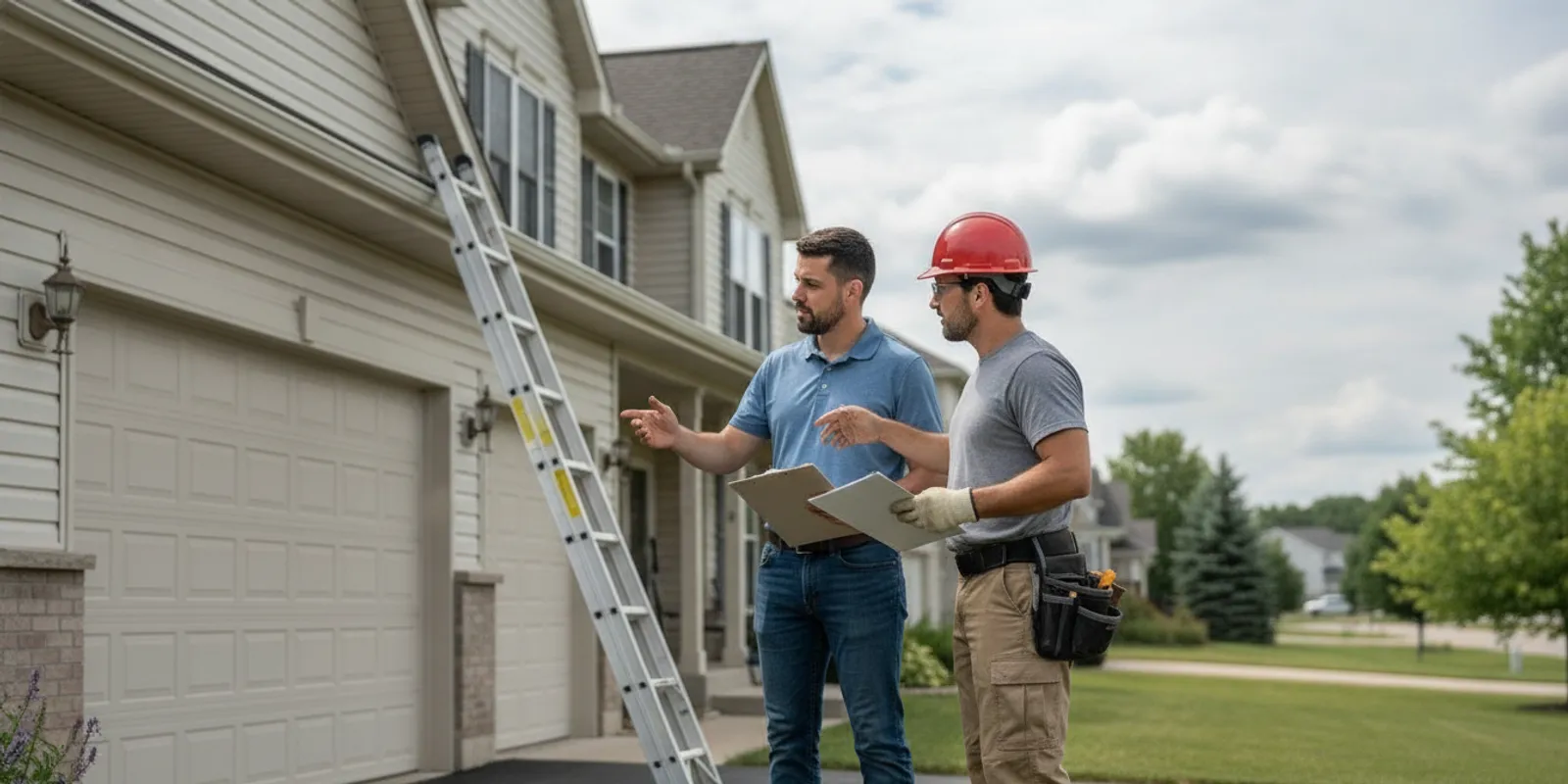
How to choose a roofing contractor for your Rogers project
Start by writing down what prompted your search. It may be a leak, missing shingles, storm damage, an aging roof, or a concern raised during other home maintenance. Record when you first noticed the issue and whether it changes during rain, wind, or snow. These observations help focus the conversation, but they do not establish the cause or prove that the roof needs replacement.
Gather documents that may help explain the roof’s history: previous repair records, warranty paperwork, installation information, or insurance correspondence. From a safe spot on the ground, you can take pictures of visible damage. Do not climb onto the roof to photograph it. If you see an interior stain or damp area, note its location and whether it appears after particular weather. Avoid cutting into ceilings or disturbing wet materials; the immediate priority is to keep people away from unsafe areas and seek qualified help.
Think through the household’s practical needs, too. Tell each contractor about pets, parking, access restrictions, landscaping you want protected, work-hour concerns, or a need to keep a particular entrance clear. These details can influence staging and communication. They belong in the project conversation before a start date is set, rather than being raised for the first time when materials arrive.
How can an inspection help you compare contractors?
A useful inspection should connect what the contractor observed with the recommendation being made. Ask what was checked: roof covering, flashing, valleys, penetrations, edges, ventilation details, and signs of water entry where accessible. The inspection will depend on the roof design, the reported concern, weather, and safe access. It is reasonable for the contractor to explain any areas that could not be checked.
Ask the inspector to distinguish observations from conclusions. “Several shingles are missing near the ridge” is an observation. “The entire roof should be replaced” is a recommendation that needs supporting explanation. Ask what other conditions were found, whether a localized repair is an option, and what limitations apply to that option. A recommendation should describe why it addresses the problem and what it cannot address.
Request a written summary or photographs when available, and take your own notes during the discussion. That record helps you compare proposals later without relying on memory. If the issue may involve a leak, ask what evidence links the visible interior symptom to the roof area. Water can travel before it appears indoors, so a stain’s position alone may not identify the entry point. A roof repair assessment in Rogers can help frame a discussion about whether a focused repair merits consideration.
If several contractors reach different conclusions, do not assume that the most extensive or least extensive recommendation is automatically right. Compare the observations, access limits, and reasoning. You can ask each contractor to identify the specific evidence that supports the work proposed and to explain what would change their recommendation. A careful answer should make uncertainty visible rather than pretending that every roof condition is obvious.
What should a written roofing scope include?
Do not compare proposals by the bottom line alone. First establish whether they describe the same work. A written scope should make clear what is included, what is excluded, and what questions remain. If a proposal uses broad labels without describing the work, ask for the details in writing before agreeing.
| Scope area | What to look for | Question to ask |
|---|---|---|
| Inspection findings | Locations, observed conditions, and any access limits | Which findings support the recommended work? |
| Removal and preparation | Whether existing material is removed and how the roof deck is reviewed | How will concealed conditions be documented and discussed? |
| Roof system materials | Covering, underlayment, flashing, edge details, and ventilation items | Which components are included, and what alternatives apply? |
| Site protection | Plan for landscaping, driveways, access, and debris | How will the crew protect and clean the work area? |
| Schedule and communication | Start window, weather contingencies, and point of contact | How will changes or delays be communicated? |
| Completion | Cleanup, final review, and documents to be provided | What will we review together when the work is finished? |
Use the table as a checklist, not a substitute for reading the whole proposal. For each contractor, mark whether each item is addressed, unclear, or excluded. If one proposal includes replacement of particular flashing and another does not mention it, ask whether that difference is intentional. The proposals may be based on different assumptions, and a direct comparison is not meaningful until those assumptions are clear.
If replacement is under consideration, ask how the contractor will handle the roof assembly as a whole rather than focusing only on the visible covering. Clarify the planned material, underlayment, flashing, ventilation-related work, removal, and cleanup. The Rogers roof replacement information can help you prepare questions about a complete project. Ask for any revised scope to be provided in writing so you can review it before making a decision.
How can you compare proposals fairly?
Make a simple side-by-side worksheet with one row for each major part of the project. Include the inspection findings, work areas, materials, removal and preparation, site protection, schedule, change process, completion review, and warranty language if applicable. For each proposal, write down the contractor’s exact answer or note that it is missing. This prevents a polished presentation from overshadowing practical differences.
Consider a fictional example: one contractor recommends repairing a limited area and documents the visible damage, while another recommends replacement but gives little detail about the remaining roof. Rather than selecting by the size of the job, ask both to explain which areas they inspected, what conditions they found, and what the proposed work is intended to solve. If the second contractor identifies additional wear or widespread concerns, ask for those locations and observations to be included in the written explanation. If the first contractor notes that a repair may not address broader deterioration, make sure that limitation is also clear.
Another common difference is whether a proposal describes work that may be needed after removal. A contractor cannot always know what concealed conditions will look like before work begins. The important point is to understand the procedure: how the condition will be photographed or otherwise documented, who will explain the options, how any change will be recorded, and when your approval is required. Avoid relying on an open-ended verbal promise to handle whatever appears.
Ask for clarification when terms are unfamiliar. A contractor should be able to describe what a material or detail does in plain language and identify whether it is included. If a specification names a product, ask whether the proposal permits substitutions and how you would be informed. The goal is not to turn a homeowner into a roofing specialist; it is to understand what you are authorizing and how the work relates to the inspection findings.
How should you assess communication and project planning?
Communication is part of the work. Notice whether the contractor listens to your concern, answers questions without pressure, uses understandable language, and explains what happens next. You should know who your contact will be, how you can reach that person, and how decisions or changes will be recorded. If you need a detail repeated, ask. A clear explanation is more useful than a fast answer filled with terms you do not recognize.
Ask how weather affects the project plan. In Minnesota, rain, snow, wind, and cold can affect scheduling and the order of work. The contractor should explain how the roof and property will be protected if conditions change, how an unfinished work area will be managed, and how you will hear about a delay. A specific communication plan is better than a promise that the crew will “keep you posted.”
Discuss access and cleanup before work begins. Confirm where materials may be staged, how vehicles or outdoor furniture should be moved, and whether the crew needs access to a particular part of the property. Ask how debris will be managed and what final cleanup includes. If you have landscaping or a surface that needs special attention, describe it and ask how protection will be handled. Add agreed details to the written plan when possible.
You can also ask how work will be supervised and how progress questions should be raised. For example, if you notice something that differs from the scope, identify the point of contact and ask how the concern will be reviewed. Do not wait until the final walkthrough to raise a discrepancy that could be clarified earlier. Keep copies of written messages and revisions with the proposal so there is one record of what was agreed.
What documents and terms should you review?
Before signing, check that the agreement identifies the contractor and homeowner, describes the work, lists the materials or specifications, and states the payment schedule and change process. Review exclusions, schedule assumptions, and any warranty terms that apply. If a warranty is mentioned, ask for the actual written terms, including what is covered, how long it applies, and what actions could affect coverage. Do not rely on a general phrase such as “fully protected” when the details are not supplied.
Make sure verbal explanations that matter to your decision appear in the paperwork. That might include a specific repair location, a promised cleanup step, a material selection, or the process for addressing concealed damage. If the written agreement differs from what you understood, pause and request a correction or explanation. Taking time to read the documents is a normal part of choosing a contractor.
For storm-related work, ask how observations and project documentation will be handled. A contractor may describe visible conditions and the work they recommend, but should not promise what an insurer will decide. Coverage depends on the policy and the insurer’s review. Keep your own records and direct coverage questions to your insurer. A Rogers storm damage restoration discussion can help you identify what to ask about documenting exterior concerns.
How can you check whether a local contractor fits your project?
Ask about experience with the type of roof and the concern you have, and ask how the proposed work will be supervised. Look for answers tied to your house rather than a generic promise. A contractor should be able to explain what makes your roof’s design or condition relevant to the recommendation. If a response leaves an important point unresolved, ask for more detail or for the explanation in writing.
Local context matters when planning around weather and access, but it does not remove the need to evaluate the actual scope. You may review a contractor’s Rogers roofing service information to understand the inspection and installation process described for the area. If you live nearby, the company also provides information about exterior restoration in Cottage Grove. This page offers local context; your own written scope should still address the specific home.
For an additional perspective on hiring and written agreements, the Minnesota Department of Labor and Industry provides contractor and remodeler information. Use government guidance as a prompt to check the requirements and documents relevant to your project, not as a substitute for reviewing the agreement you receive.
What should you expect from a consultation?
A consultation should leave you with a clear picture of the next step, even if you do not decide on work that day. Referred Restoration describes a three-step approach: a free inspection, a custom solution, and professional installation. Ask what the inspection covers, how its findings will be shared, and what information will be included in a proposed solution. You can use the same questions with any contractor to keep your comparisons consistent.
Bring your notes and documents, point out the areas that concern you, and ask the contractor to explain any recommendation. If you have questions about repair versus replacement, ask for the reasoning and the limits of each option. You may discuss other exterior concerns if they affect the project, but keep the roofing scope distinct so you understand what work is being considered and why. The Referred Restoration home page outlines the company’s exterior services and local approach.
After the meeting, take a few minutes to write down what you learned while it is fresh. Note the findings, unanswered questions, promised documents, and next steps. If another household member will help decide, share the same written information so everyone is comparing the contractor’s actual recommendation rather than a different recollection of the discussion.
Frequently asked questions
How many roofing contractors should I speak with?
There is no fixed number that fits every project. Speaking with more than one contractor can help you understand whether the findings and recommendations are consistent. The useful comparison is not simply the number of proposals; it is whether each contractor reviewed the same concern and described the work clearly enough to evaluate.
Should I choose the contractor with the shortest schedule?
Availability is one factor, but it should not replace a review of the inspection, written scope, communication plan, and project terms. Ask how the schedule could change with weather or concealed conditions. A realistic explanation is more useful than an unqualified promise about a start or finish date.
Can a contractor tell me whether insurance will cover roof damage?
A contractor can describe observed conditions, explain the work they recommend, and provide project documentation. The insurer makes coverage decisions based on the policy and its review. Do not treat a contractor’s prediction as a guarantee; discuss coverage questions with your insurer.
What if the inspection finds a problem that was not visible beforehand?
Ask the contractor to document the condition, explain its effect on the planned work, and describe the options before proceeding with a change. The agreement should explain how changes are communicated and approved. Keep the revised scope with your project records.
What is the most useful way to compare two proposals?
Compare the same items in each: findings, work areas, materials, preparation, protection, schedule, change process, and completion review. Mark unclear or missing details and ask the contractors the same follow-up questions. This helps reveal whether a difference reflects the proposed work or simply a difference in how each proposal was written.
Contact Referred Restoration to arrange an inspection
What is a practical next step?
Write down what you have noticed, gather any roof records, and request an inspection that separates findings from recommendations. Then compare the written scopes line by line, ask for unclear terms to be explained, and keep the agreed changes in writing. A clear process can help you choose a roofing contractor and plan work around your home.
Leave a Reply
You must be logged in to post a comment.