Planning roof installation in Saint Michael, MN, involves more than choosing shingles or panels. Homeowners need to understand the roof’s condition, compare complete written scopes, consider weather and access, and know what to review when the work is done. A clear process helps you ask useful questions before the roof is opened and check that the completed work matches the agreed plan.
Contact Referred Restoration online to discuss an inspection
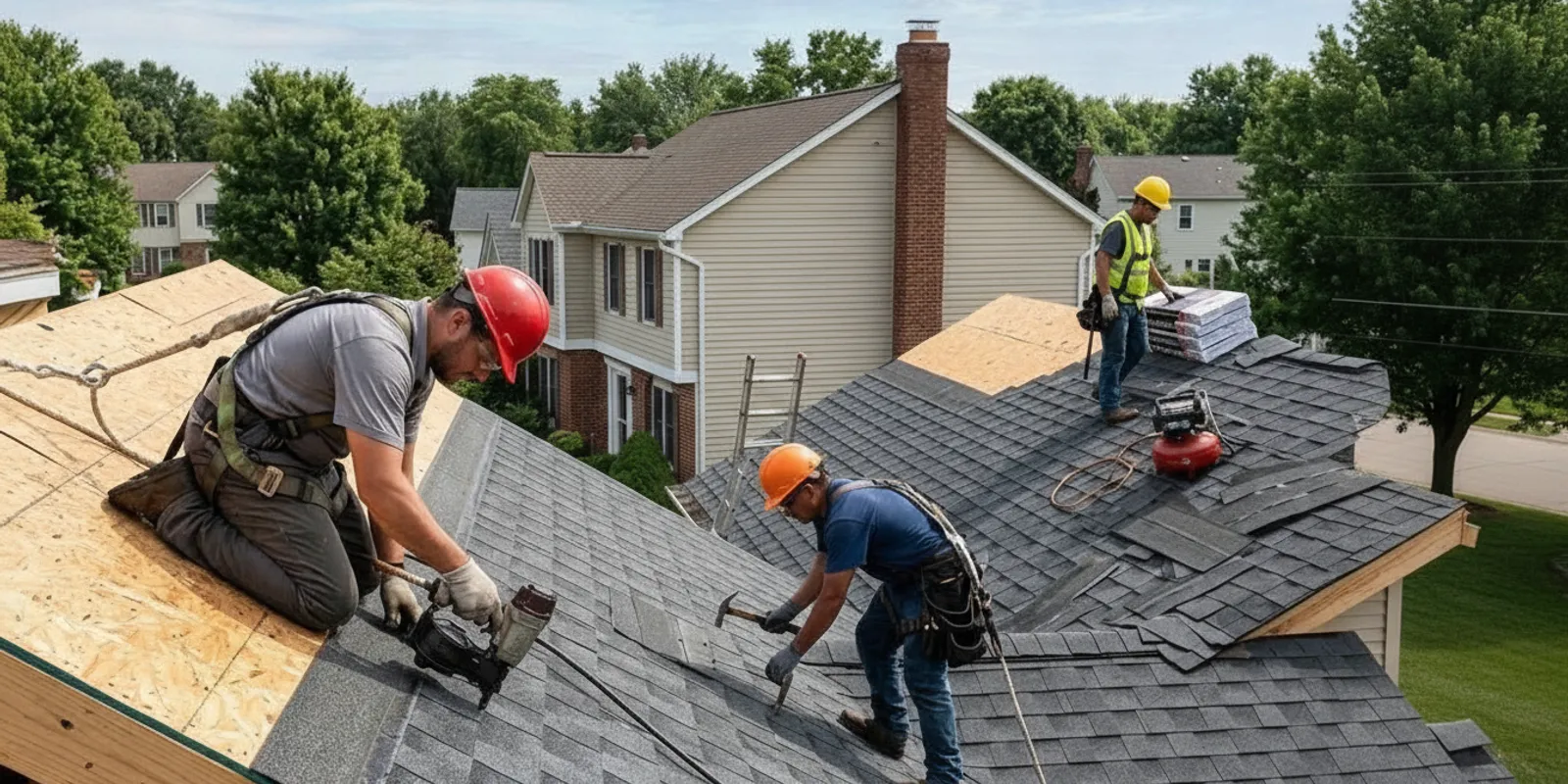
What should you assess before planning roof installation?
Start with observations you can make safely from the ground or inside the home. Note missing, curled, lifted, or visibly damaged shingles; loose material nearby; water marks on ceilings; and damp areas or daylight visible from an accessible attic space. Record where you see each concern and when it appeared. These details give an inspector useful context, but they do not establish the full condition of a roof.
Do not climb onto a roof to investigate. Slopes, loose granules, frost, hidden weak spots, and nearby power lines can make access hazardous. If you see a concern from a window or the ground, take a photo from a safe location. Include both a close view, when possible, and a wider view showing where the area sits on the home. Keep a short note of dates and weather events so you can describe whether a leak followed wind, hail, or heavy rain.
If water is entering the home, move belongings away from the affected area and use a container to catch drips if it is safe to do so. Contact a qualified professional promptly. Avoid walking on the roof or attempting a temporary repair in wet, icy, or windy conditions. If the concern appears storm-related, you can also consult the company’s storm damage restoration information to understand a relevant service pathway; an inspection is still needed to assess a particular roof.
An inspection should connect observed conditions to a recommendation. Ask the inspector to identify where damage or wear is present, explain whether the issue appears localized or widespread, and describe why repair or replacement is being considered. A useful explanation refers to evidence and the roof’s assembly, not only its age. If you hear a broad conclusion without supporting details, ask what observations led to it.
How do you compare roof installation proposals?
Compare the work included, not just the material name or a single summary line. Proposals should explain which roof planes and related details are included, what will happen to existing layers, how the deck will be checked after removal, and how transitions and openings will be handled. Ask for unclear items and exclusions to be explained in writing before choosing a contractor.
The table below is a discussion checklist, not a universal specification. The appropriate system depends on the home and the proposed materials. Use the questions to check whether each contractor is describing a comparable scope.
| Scope area | What the written plan should clarify | Question to ask |
|---|---|---|
| Existing roofing | Whether old layers will be removed, retained, and disposed of | How many existing layers are present, and what removal is included? |
| Roof deck | When the deck will be inspected and how concealed damage is handled | How will you document and discuss any damaged decking? |
| Protective layers | Underlayment and protection at vulnerable roof areas | Which materials and roof locations are specified? |
| Flashing and openings | Details around walls, chimneys, vents, valleys, and other penetrations | Which existing details will be replaced, reused, or adjusted? |
| Roof covering | Product type, color, installation method, and included components | Can I review the exact product information before selection? |
| Ventilation and edges | How ridge, eave, and ventilation details are addressed | Does the scope identify any related work or existing concerns? |
| Protection and cleanup | Work-zone protection, debris handling, and final cleanup | What areas will be protected and checked before completion? |
| Changes and closeout | How discoveries, approvals, and final documents are managed | Who contacts me if the plan needs to change? |
Read the proposal alongside the inspection findings. Check that the recommended work responds to the conditions described, and that the listed materials and labor cover the entire scope you discussed. Look for assumptions, exclusions, and items described as optional. If two proposals use different terminology, ask each contractor to explain what is included in plain language rather than guessing that similar labels mean identical work.
Also ask how concealed conditions will be handled. For example, a contractor may discover a soft or damaged section of deck once old roofing is removed. Before work begins, understand how the condition will be documented, how you will be contacted, and how any change to the plan will be approved. Written communication can help prevent different expectations after work is underway.
Homeowners can review the company’s roof replacement service information and its guide to metal roofing systems as starting points for questions about roofing approaches. The right choice depends on the structure, roof shape, product requirements, and project scope; a general guide cannot determine what suits an individual home.
How can you organize the decision before work begins?
A short decision record helps you keep inspection findings, proposals, and practical needs in one place. Start with three headings: observed conditions, work being considered, and questions still open. Under observed conditions, record locations rather than conclusions—for example, “water mark on the upstairs hallway ceiling near the north exterior wall,” not “the whole roof is failing.” This keeps your notes factual and makes it easier to ask an inspector to explain what may be connected.
Next, separate confirmed details from items that still need investigation. A proposal may describe replacing the roof covering while noting that the deck can only be assessed after removal. Write down what is known now, what will be checked later, and how the contractor will contact you if that check changes the plan. Ask who can approve a change and how you will receive its written description. Do not rely on a verbal assumption about work that is not listed.
Then compare proposals using the same questions in the same order. For each one, note the roof areas covered, removal plan, products, flashing details, protection, cleanup, weather communication, and closeout documents. Mark any item that is missing rather than filling in the gap yourself. Ask the contractor to revise or clarify the written scope so you can compare complete descriptions.
For example, imagine one proposal lists a specific shingle system and removal but says little about flashing, while another explains flashing and deck review but does not identify the exact covering. Neither short summary alone lets you understand the full work. Ask each contractor to clarify the missing information, then compare the clarified documents. You are not trying to choose the longest proposal; you are trying to understand the actual work, assumptions, and communication plan.
Finally, check that the plan fits your household schedule. Note access restrictions, pets, outdoor items, and any dates when the home will be difficult to reach. Keep the notes and final scope together, and use them to confirm expectations before materials arrive. This process turns a broad decision into a set of specific questions that can be answered before installation starts.
Which roofing materials and details should you discuss?
Asphalt shingles and metal roofing are two categories homeowners may consider. They differ in appearance, assembly, and installation details. Ask the contractor to name the specific product or system proposed rather than relying on a broad label. Review available product information and ask how the manufacturer’s installation instructions apply to the roof’s shape and details.
For shingles, discuss the product line, the planned arrangement at valleys and ridges, and how edges, vents, and other penetrations will be completed. Ask what underlayment is included and how the chosen system handles transitions. A separate guide to roof underlayment and its role can help you understand terms that may appear in a proposal, but ask the installer to explain what is specified for your home.
For a metal system, clarify the panel or product type, fastening approach, trim, and treatment of edges and openings. Different systems can use different components and installation details. Ask how the proposed design fits the roof’s pitch, intersecting planes, and existing features. Do not assume that one system’s requirements apply to another.
Color is easier to judge in context than from a small screen image. If samples are available, view them outdoors and compare them with siding, trim, and nearby exterior materials. Confirm the selected product and color in writing before materials are ordered. If additions or separate roof planes meet, ask whether the same covering is planned throughout or whether the transition needs special detailing.
How should you check local requirements and project details?
Permit and inspection requirements can depend on the work and the applicable local rules. Before scheduling, ask who will confirm what applies to the project and whether any approvals or inspections need to be coordinated. For state-level guidance, start with the Minnesota Department of Labor and Industry, then confirm project-specific questions with the appropriate local authority. Do not assume that another home’s requirements automatically apply to yours.
Keep the written scope, product details, and project communications together. If a document refers to a code requirement, permit, or inspection, ask which authority or document it relates to and how it affects the planned work. This simple step keeps conversations specific and gives you a clear record to consult if the schedule or scope changes.
How do Minnesota conditions affect the schedule?
Roofing work depends on safe working conditions and the requirements of the selected products. Rain, snow, ice, high winds, and very cold conditions may affect when work can proceed. Ask what weather conditions could pause the job, how schedule updates will be shared, and how exposed areas will be protected if the crew needs to stop. A realistic plan should account for the possibility that the expected work window may shift.
Ask how materials and equipment will be staged and whether access to the driveway or another area is needed. In Saint Michael, plan around household routines, visitors, and any access limitations. Tell the contractor about gates, pets, delicate landscaping, outdoor outlets, and areas that should remain clear. If snow or ice is present, do not try to clear roof surfaces yourself; raise access and safety questions with the project contact.
If you suspect storm damage, keep your notes and safe ground-level photos together. A contractor can explain observed conditions and the work being proposed. For an insurance question, contact your insurer about its documentation and claim process. An inspection or contractor discussion does not guarantee claim approval or a particular outcome. If the assessment suggests a localized issue rather than a full installation, the company’s roof repair information may help you frame questions about that alternative.
How can you prepare your home for installation day?
Confirm the expected start window, the work area, and the best way to contact the project representative. Roofing work can be noisy and create vibration inside the home. Move fragile items away from shelves or walls where vibration may be noticeable. If you work from home, have a call, or care for someone who needs a quiet environment, ask what parts of the day may be loudest and plan accordingly.
- Clear the driveway or agreed staging area for crew vehicles and materials.
- Move patio furniture, grills, and movable decorations away from the work zone.
- Close windows and let household members know when noisy work is expected.
- Keep children and pets indoors or safely away from workers and equipment.
- Point out gates, outdoor outlets, delicate plants, and access restrictions in advance.
- Ask how the crew will protect landscaping and collect debris around the home.
- Confirm where deliveries can be placed and which entrances should remain usable.
Ask who will be your main point of contact and how to raise a question without entering the active work area. Confirm how unexpected findings will be explained and approved. If work spans more than one day, ask how open areas will be protected at the end of each work period and what you should do if weather changes overnight. These questions set expectations without requiring you to supervise roof work yourself.
Before the crew arrives, take a few photos of the exterior and nearby areas from safe locations. These can help you remember where outdoor items were placed and make it easier to describe a concern later. Do not photograph from a ladder or enter a marked work zone. Keep the agreed scope and contact details accessible so you can refer to them when needed.
What should you check when the work is complete?
Ask for a completion discussion with the contractor. Review which roof areas and details were included, whether any concealed condition changed the plan, and how the change was resolved. Request relevant product or project documents and ask what maintenance or follow-up is appropriate for the materials installed. The discussion should help you understand what was completed and what records to keep.
- Compare the completed work with the agreed scope and included roof areas.
- Ask how any deck or concealed condition discovered during removal was addressed.
- Confirm that debris and equipment have been removed from agreed work areas.
- Ask whether there are care instructions, product documents, or other records to retain.
- Clarify whom to contact if a concern appears after the crew has left.
From the ground, look for obvious leftover materials or damage around the work zone and report concerns promptly. Do not climb onto the roof to inspect shingles or flashing. If you later notice a leak or another issue, note when it happened and where it appeared inside the home. Share that information with the contractor. Clear, timely details make it easier to discuss the concern and determine an appropriate next step.
For a local service pathway, homeowners can read Referred Restoration’s Saint Michael roofing information, its Rogers roofing service details, and its Otsego roofing page. These pages describe service options; an assessment is needed to understand a specific home’s condition and scope.
What should you ask before choosing a contractor?
Use the same basic questions with each contractor so you can compare the answers. A useful discussion should leave you understanding what the inspection found, why the work is recommended, what the written scope includes, and how updates will be handled.
- What conditions did you observe, and where are they located?
- Why do you recommend repair or replacement for this roof?
- Which exact products and system components are specified?
- What removal, deck review, flashing, protection, and cleanup are included?
- How will concealed conditions and changes be documented and approved?
- Who will communicate schedule updates, including weather delays?
- What project documents will I receive at completion?
- Which permit or inspection questions should be confirmed before work begins?
Notice whether the answers are direct and consistent with the written proposal. A contractor should be able to explain the reasoning behind the scope without asking you to decide before you understand it. Referred Restoration describes a process of inspection, a custom solution, and professional installation. Use the conversation to clarify which steps apply to your roof and what you can expect from the proposed work.
Contact Referred Restoration online to discuss your roof
Frequently asked questions
How long does roof installation take?
The schedule depends on roof size and complexity, the work included, crew availability, and weather. Ask for the expected work window and how the contractor will share updates if conditions change. Confirm whether access or preparation is needed before the crew arrives.
Should I replace my roof after a storm?
Not automatically. A storm may cause damage, but an inspection is needed to understand what is present and whether repair or replacement is appropriate. Record what you can safely see from the ground and contact your insurer about its process if you plan to file a claim.
Can a roof be installed during a Minnesota winter?
Timing depends on safe working conditions and the selected product’s requirements. Cold, ice, snow, or wind may affect scheduling or installation methods. Ask the contractor how current conditions affect the specific plan and how the home will be protected if work is delayed.
How can I tell whether repair or full installation is appropriate?
The answer depends on the roof’s condition, the extent and location of the problem, and the findings from an inspection. Ask to see the evidence behind the recommendation and request a written description of the repair or replacement work being considered.
What is a practical next step?
Gather safe ground-level photos, note any leaks or storm dates, and prepare questions about the written scope, materials, weather plan, and project closeout. A focused inspection and a clear discussion can help you understand the options for your Saint Michael home and choose a sensible next step.
Contact Referred Restoration online to discuss an inspection
A careful plan keeps the decision grounded in your roof’s observed condition and the work described in writing.
Leave a Reply
You must be logged in to post a comment.