
Minnesota winter freeze-thaw cycles can split a gutter joint and send water directly into your foundation. Small leaks in your drainage system often grow into massive water damage issues during seasonal storms.
Schedule a free gutter inspection in Rogers, MN today
A reliable gutter sealant is the best tool for fixing leaking joints, as this specialized compound fills small gaps at seams to stop active leaks. It prevents escaping water from rotting your wood fascia boards, damaging your exterior siding, and eroding the soil around your home’s basement foundation. Because Minnesota weather has big temperature changes, choosing a flexible gutter sealant is key to make your repairs last. According to the University of Minnesota Extension, winter freeze-thaw cycles cause major structural failures if water is allowed to penetrate. Using a flexible silicone or polyurethane formula ensures that these sealed joint areas remain completely watertight throughout our extremely cold and harsh Rogers winters.
To keep your home safe, you must find exactly where your gutters are losing water. If you want to spot and fix these weak areas, you should first understand the spots that fail most frequently. We will explore these vulnerable spots in the section below, starting with the points that fail most often.
Where Do Gutters Leak? Common Points on Seams and Joints
Gutters protect your home by moving water away from your roof and foundation. But as water flows through the system, it often finds weak spots. The most common areas for leaks are the seams, joints, end caps, and corners of the system. Downspout outlets are also major leak points. Over time, water wears down these areas and creates gaps where drips can start.
The Primary Leak Points in Gutter Systems
Sectional gutters are made of short metal pieces joined together. Every place where these pieces meet is a seam. End caps are placed at the ends of the runs, and joints connect gutters at the roof corners. These joints are held by screws and sealed with a special glue. When that seal fails, you must repair leaking gutter seams to stop water from spreading. This leaves tiny holes where water can drip. Downspout outlets are also quick to leak when the seal fails.
Because sectional systems have so many seams, they need a lot of care. A guide from the city of Duluth, Minnesota shows that runoff from your roof must flow smoothly to protect your yard. When seams leak, water drops right next to your home instead of flowing away. This can pool near your walls and crack your foundation. Seamless systems use one long piece of metal, so they have far fewer joints to seal.
How Minnesota Winter Weather Hurts Sectional Gutters
Minnesota winter weather makes gutter leaks much worse. During cold months, ice dams can form on your roof. This heavy ice puts stress on your gutters. Water freezes and thaws over and over, which forces small seam gaps to grow. The University of Minnesota Extension explains that these wet and dry cycles can cause wood and metal to fail. To survive these shifts, any seal you use must stay flexible. If the seal is stiff, the moving metal will tear it apart.
The Damage Caused by Leaking Seams
When you ignore leaking seams, the water does not just drip. It will splash backward onto your siding, which can lead to mold and stains. Water also runs behind the gutter. This moisture will quickly rot your wooden fascia boards and ruin your soffit. Over time, the dampness can even leak inside your walls, which attracts pests and causes major damage. If water pools near your basement, it can crack the foundation. Checking your system often will help you find these tiny leaks before they grow.
What Is the Best Gutter Sealant for Minnesota Homes?
Minnesota winters bring harsh cold and rapid weather shifts. These extreme freeze-thaw cycles can split metal joints if water gets inside. When seams fail, water leaks near your home’s foundation and siding, which leads to costly damage. To keep your home dry, you must choose the right gutter sealant for our local climate.
Silicone options for extreme temperature swings
One of the most common products used today is 100% silicone. This product stretches well and stands up to sunlight and heat. The Minnesota Department of Transportation shows that silicone sealants bend well in both heat and cold. This trait is vital in Rogers and the Twin Cities, where summer heat shifts quickly to winter ice.
High-quality silicone is also quick to dry. Some blends are rain-ready in just thirty minutes and help keep mold away for ten years. This gutter sealant meets strict ASTM C-920 rules, which proves its strength on outer joints. It works best on aluminum and vinyl gutters, but it does not stick well to wood.
Polyurethane and tripolymer options
Polyurethane is another strong option for sealing metal and wood gutters. It is very tough and can be painted to match your home’s siding. But polyurethane takes longer to dry than silicone and can become brittle in extreme cold. For this reason, many local homeowners choose tripolymer sealants instead.
Tripolymer mixes like Geocel 2320 can seal gaps up to 1/4 inch wide. This makes them ideal for older gutters that have shifted over time. But these tripolymer sealants need about five days to fully dry. You should plan your work with care around the local weather to allow for this long cure time.
A comparison of gutter sealant materials
When you prepare to fix your gutters, you must think about material match, dry time, and cold-weather flex. It is a good practice to clean and inspect your gutters twice each year to catch issues early. If you find leaks, you can apply gutter sealant to prevent leaks and protect your home.
The table below compares the main types of sealant used on home gutters. Each option has unique benefits depending on your home’s setup and the current season.
| Sealant Type. | Material Fit. | Flex Range. | Dry Time. | Best Use. |
|---|---|---|---|---|
| 100% Silicone. | Aluminum and vinyl. | Very high flex. | 30 minutes to rain. | Sealing joints and end caps. |
| Polyurethane. | Metal and wood. | High flex. | 24 to 48 hours. | Structural seams. |
| Butyl Tripolymer. | All metals and wet wood. | Good flex. | 5 days to full cure. | Narrow seams up to 1/4 inch. |
How Do You Choose the Right Gutter Sealant?
Choosing the right gutter sealant is key to keeping your home safe from water damage. Minnesota weather puts gutters under heavy stress. When water freezes inside clogged joints, it expands and forces seams apart. If you do not seal these gaps, water can leak and damage your siding or foundation. State experts at the University of Minnesota Extension stress that your drainage system must overlap properly to direct water away from the home. You should check your gutters twice a year and apply gutter sealant to prevent leaks before winter starts. To pick the best product, you must look at a few main factors.
Matching Sealant to Gutter Materials and Color
First, you must check what your gutters are made of. Most modern homes use aluminum gutters, but some older houses have wood or steel. Not every sealant works on every surface. For example, some polyurethane sealants bond well to wood and metal but do not stick to plastic. Silicone sealants are a great choice for aluminum gutters because they form a tight, watertight seal on clean metal.
You also want to think about color. Most sealants come in white, gray, black, or clear. Aluminum gutters often look best with a clear or gray sealant that matches the metal. If you plan to paint your gutters, make sure you choose a paintable sealant. Pure silicone cannot be painted, so you would need a paintable polyurethane or co-polymer sealant instead.
Weather Resistance and Local Climate Factors
Your sealant must withstand extreme cold and strong sun. Rogers, Minnesota sees big temperature swings from summer to winter. These shifts cause metal gutters to grow and shrink. Because of this, you need a flexible product. According to a Minnesota Department of Transportation report, silicone sealants stay flexible in hot and cold weather. This makes them best for sealing outdoor joints that face harsh freeze-thaw cycles.
Polyurethane is another strong option that handles physical wear well, but it can break down faster under direct sun. Silicone has a natural defense against UV rays, which helps it last longer on sunny rooflines. Choosing a high-quality silicone keeps your seal tight even when the gutter flexes during the coldest winter days.
Application Ease and Drying Time
How you apply the sealant is also important. Most gutter sealants come in a standard tube that fits a caulk gun. This tool makes it easy to apply a smooth, even bead of sealant along a clean seam. Some thicker compounds must be spread with a trowel, which is harder to guide and can leave a messy look.
Finally, look at the drying time and rain-ready time. Some sealants need a few days to cure before they can get wet. In contrast, advanced silicone sealants can meet federal standard ASTM C-920 and become rain-ready in just thirty minutes. Picking a fast-cure product is a smart move if you need to seal a leak when rain is in the forecast.
How Do You Seal a Leaking Gutter Seam?
Leaking seams can cause major water damage to your roof, fascia, and foundation. Sealing these joints is a key part of your yearly home care. You can do this work yourself if you have the right tools and take proper safety steps. Over time, water can rot your wood or crack your concrete. Good care keeps your home dry during big storms.
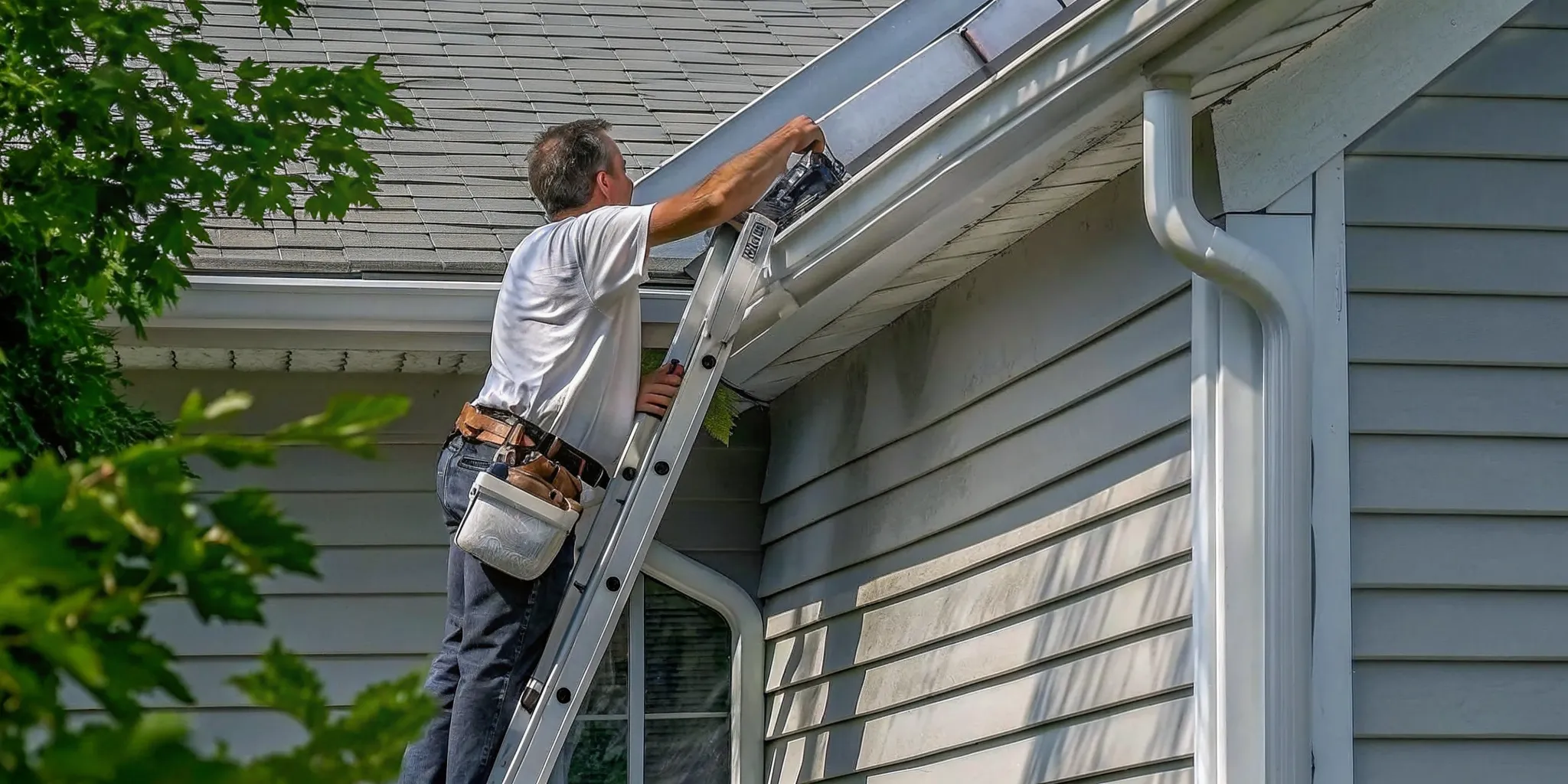
Safety on the ladder
Working on gutters means spending time on a ladder. Ladder falls are a major risk for homeowners. You must set your ladder on flat, firm ground and use a standoff stabilizer to avoid crushing the gutter. Never reach too far to the side while on a rung. It is always safer to climb down and move the ladder than to risk a bad fall. If you feel unsafe high up, seek a pro to help.
The sealing process
When you plan your home care, you can apply gutter sealant to prevent leaks at the joints. A good silicone sealant is often best because it stays flexible during cold winter weather. Based on a study on exterior joint performance, silicone sealants stay flexible across a wide temperature range. This stretch helps them withstand harsh freeze-thaw cycles. You must remove the old sealant the right way so the new product can stick.
Step-by-step application guide
Follow these key steps to apply your gutter sealant and fix your leaking seams. Taking your time will ensure a watertight bond that lasts for years.
- Inspect and clean the seam. Use a stiff brush and water to clear away all dirt, leaves, and debris from the leaking joint.
- Prep the surface. Scrape away the old caulk with a plastic scraper so the new bead bonds to the clean metal. You may need to use a special solvent to clean off the leftover gunk.
- Dry the surface fully. Use a clean rag to wipe the area dry, as moisture will prevent the sealant from sticking.
- Mask the area. Put painter’s tape on both sides of the seam to keep your work clean and neat.
- Apply a smooth bead. Cut the nozzle of your gutter sealant tube at an angle and apply a steady line across the seam. Use your finger or a tool to smooth the bead into place.
- Allow the proper dry time. Some silicone products are rain-ready in thirty minutes. Others like tripolymer sealants can take up to five days to dry fully. Refer to the product label for the exact drying rules.
Why Seamless Gutters Leak Less in Minnesota Freeze-Thaw Cycles
Minnesota winters are tough on home gutters and roofs. The constant shift from freezing to thawing puts a massive strain on your roof drainage. When snow melts on the roof, water flows into the gutters.
If that standing water freezes again at night, the ice expands. In sectional gutters, this expanding ice forces the seams apart, creating gaps where water leaks out.
How Winter Ice Damages Gutter Seams
During a normal Minnesota winter, the weather climbs above freezing during the day and drops below freezing at night. This cycle happens dozens of times each season. As ice builds up in your gutter, it forms ice dams that hold pooled water back on your roof shingles.
The expanding ice places outward pressure on your gutters, forcing joints and seams to bend. Once a seam bends, it creates a path for water to leak next spring.
Standard sectional gutters come in short pieces that workers join during setup. Every joint relies on a bead of gutter sealant to stop leaks. But as ice forms and melts, it puts constant stress on these sealed joints.
Over time, the sealant cracks and peels under the pressure of the ice. As shown by local home drainage rules, sectional gutters are more prone to seam leaks due to having many joints. This means sectional setups need frequent repairs in areas with heavy winter snow and ice.
How Seamless Gutters Limit Leaks
A seamless system solves this issue by using one long run of metal. Because the metal is formed from one single piece, it does not have seams along the straight runs. There are joints only at the very ends of the run and at the downspout holes.
This means there are far fewer spots where you need to apply gutter sealant to prevent water leaks. If you want a system that lasts through harsh winters, a professional seamless gutter installation is a smart upgrade. It cuts out the weak points where old gutters fail.
Custom Fit and Winter Strength
Custom gutters also stand up better to heavy snow loads. DIY sectional kits often sag or bend because they do not match the exact shape of your home. In contrast, expert systems are cut on-site to fit your roof perfectly.
Academic roof drainage guides show that custom-fit systems offer greater strength in cold climates. They require fewer seams, which keeps them strong when filled with winter ice.
This custom fit keeps water moving safely away from your home’s roofline. It guards your siding and foundation from costly rot and deep water damage.
Gutter Sealant or Professional Gutter Repair: When Does DIY Fail?
Choosing between a quick home fix and expert help can save you from costly water damage. While a tube of gutter sealant is helpful for small leaks, it cannot fix a failing drainage system. Homeowners often need to balance simple upkeep with long-term structural care.
When diy sealant works
If you are exploring your gutter guard options, you might find minor leaks during the process. A tube of sealant is a great tool for these small, localized issues. If you find a single leaking joint or a loose end cap, you can often clean and seal it yourself. This simple care keeps water flowing to the downspouts.
Signs you need expert help
But some problems are too big for a quick surface fix. If you see gutters that sag, pull away from the roof, or show heavy rust, sealant will fail. Major issues like gaps wider than a quarter inch need a professional exterior repair to restore proper drainage. Sagging gutters often mean the wood backing is rotting.
When water overflows from failing seams, it can cause severe damage to your fascia, soffit, and siding. This moisture can also reach your basement or wash away soil near your walls. Local rules suggest directing downspout runoff at least 6 feet from your home. This is needed to protect your foundation, as shown in homeowner drainage guidance. When gutters fail to carry water away, even a strong foundation can suffer.
Why winter breaks diy fixes
In many cases, simple surface sealant cannot withstand local winter weather. The freeze-thaw cycles in Minnesota put extreme stress on your home exterior. Water that seeps behind a loose seam will freeze, expand, and break the seal again. Academic research from the University of Minnesota Extension shows how wetting and drying cycles cause rot in wood framing. This happens when water is not kept out. An expert can fix the root cause so your system survives the winter.
Instead of risking your safety on a tall ladder, you can get an expert opinion. Referred Restoration provides honest assessments to help you make the right choice for your home. Our team can inspect your roof and gutters to find the best long-term solution. An expert inspection is free, and any work is priced after our team sees your home in person.
Call (763) 726-4245 to book your free gutter inspection
Frequently Asked Questions
What is the best way to seal a leaking gutter joint?
To seal a leaking joint, you must first clean and dry the area. Remove all old gutter sealant with a scraper. Next, apply a fresh bead of sealant inside the seam. According to the University of Minnesota Extension, each part of your roof drainage system must overlap to direct water outward. Press the seal into the joint to make a tight bond, then let it dry for at least twenty-four hours.
Can I use silicone as a gutter sealant?
Silicone is a great choice for gutters because it resists sun damage and does not crack easily. According to the Minnesota Department of Transportation, silicone sealants keep their bend across a wide range of hot and cold weather. This helps the seal survive severe Minnesota winter freeze-thaw cycles. However, silicone will not stick to wet surfaces or dirty metal. You must clean the gutter and let it dry fully before you apply the sealant.
How long does gutter sealant last?
Most high-grade gutter sealants will last between ten and fifteen years. However, harsh Minnesota weather can shorten this life. Severe winter freeze-thaw cycles and heavy snow put extra strain on gutter joints. According to a homeowner drainage guide from the City of Duluth, you should check your gutter drainage system often to find leaks early. If you see cracks or gaps in the sealant, you should scrape it away and apply a fresh layer.
Does flex seal really work on gutters?
Flex Seal can seal gutter leaks for a short time, but it is not a long-term fix. It is a thin rubber spray or paste that does not withstand the heavy weight of ice and snow. Minnesota freeze-thaw cycles will quickly cause the thin coating to crack and peel. For a lasting repair on your home’s roof drainage system, it is much better to use a heavy-duty silicone gutter sealant.
Ready to seal your gutters and stop seasonal leaks?
Water from leaky gutter joints can quickly rot your wooden siding, mold your inside walls, and ruin the soil under your home foundation. Fixing these small gaps now before the freezing Minnesota winter months arrive prevents heavy ice dams and costly water damage in the spring. Our local crew can inspect your Rogers gutters today and find any weak spots before they cause major trouble.
We believe in giving honest assessments rather than high-pressure sales to our Rogers neighbors. Our team will give you a clear and simple breakdown of what your home needs to stay safe and dry all year long.
Ready to stop water damage? Call (763) 726-4245 to schedule a free gutter inspection.