
Local siding companies in Cottage Grove should be compared by more than the material sample they bring to a consultation. The strongest questions cover material-specific installation knowledge, moisture management, storm-damage documentation, written warranty terms, communication, and whether the contractor serves your exact address. A useful comparison also separates what a company says it offers from what it can explain clearly in writing.
Contact Referred Restoration online or call (763) 726-4245.
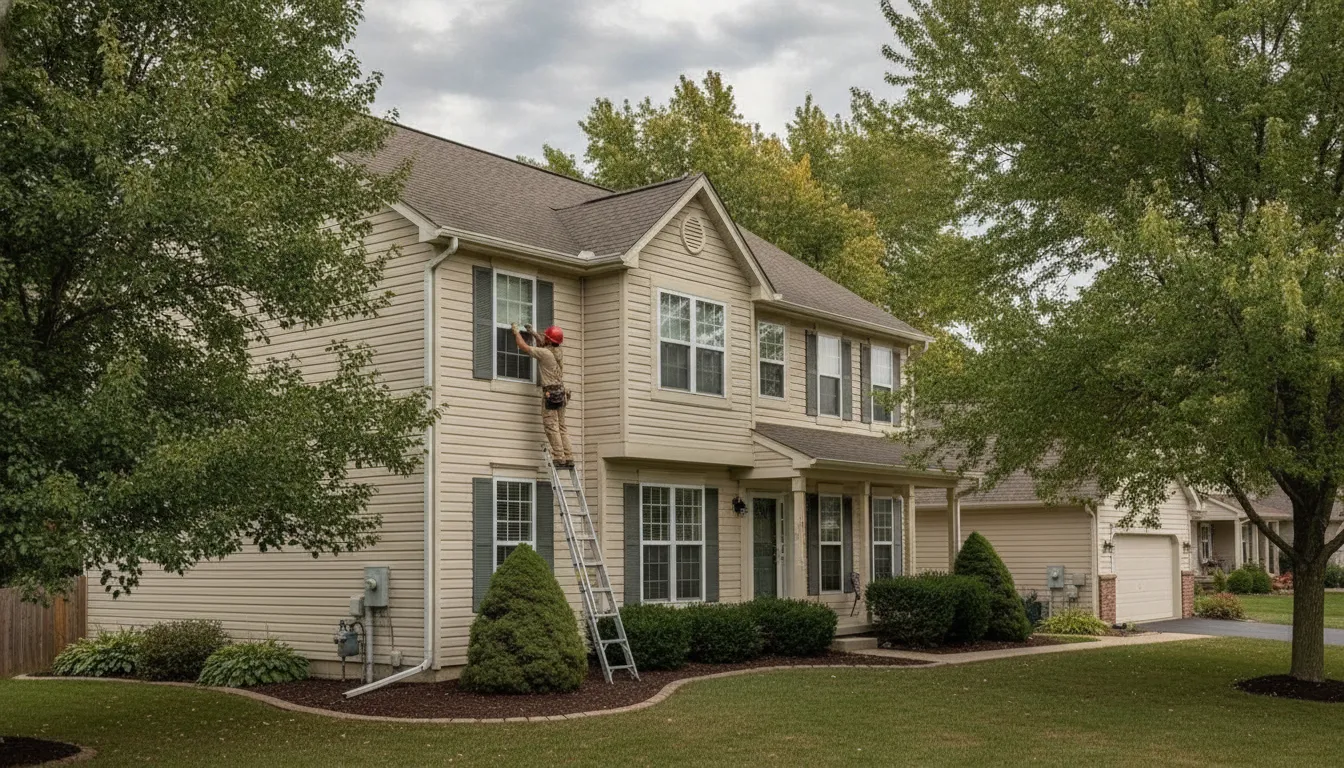
For Minnesota homes, those details matter because siding has to perform through changing weather and seasonal exposure. Start by looking at how each contractor evaluates your home, explains the siding system, and verifies the scope of service before discussing the practical differences between candidates.
What Should You Look for in Local Siding Companies in Cottage Grove?
Choosing among local siding companies in Cottage Grove starts with a comparison framework, not an unsupported ranking. The right questions help you assess whether a contractor understands your home’s exterior, communicates clearly, and can support the work at your specific address.
Begin with the inspection process. Ask what the contractor will examine before recommending repair, replacement, or installation. A useful assessment should account for visible siding damage, rot, moisture concerns, trim, flashing, and nearby exterior components. Ask how findings will be documented and which conditions would change the recommended scope. Clear explanations make it easier to compare proposals on the work itself rather than on vague promises.
Material knowledge is another practical test. A contractor should be able to explain the installation and maintenance considerations for the material being considered, whether that is vinyl, fiber cement, LP SmartSide engineered wood, or traditional wood. You can review additional guidance on siding materials for Minnesota homes, then ask each company which options fit your home’s exposure, design, and maintenance expectations.
Installation questions matter just as much as product selection. Ask how the team handles flashing, trim, clearances, seams, moisture management, cleanup, and the transition between siding and windows, doors, roofs, or gutters. The answers should be specific enough for you to understand what will happen, without relying on broad claims about superior workmanship.
Finally, verify service coverage at the address level. Cottage Grove is identified as a secondary market for Referred Restoration and has a dedicated Cottage Grove exterior services page, but homeowners should still confirm availability for their property. Ask whether the company serves your address, who will inspect the home, and how follow-up visits are handled. Referred Restoration also provides information about siding contractors in Rogers. Treat those pages as service context, then confirm the details directly before scheduling work.
How Can You Evaluate Siding Material Knowledge?
A contractor should be able to discuss more than a material’s appearance. Ask how each option fits your home’s exposure, existing wall conditions, maintenance expectations, and installation plan. Ask whether the contractor can explain options such as vinyl, fiber cement, LP SmartSide engineered wood, or traditional wood, and how each may fit the home. You can review broader considerations in this guide to siding materials for Minnesota homes.
| Comparison area | Questions to ask |
|---|---|
| Material fit | Which material options suit the home’s exposure, appearance goals, and maintenance expectations? |
| Installation | How will the crew handle substrate preparation, flashing, trim, seams, and moisture management? |
| Project accountability | Who is the main contact, what is included in writing, and how will changes be documented? |
Ask what changes from one material to another
For vinyl siding, ask how the installer evaluates the existing substrate, handles movement, and follows the product’s installation instructions. A knowledgeable answer should address how panels, trim, transitions, and penetrations will be handled rather than treating vinyl as a one-size-fits-all installation.
With fiber cement, ask about handling, cutting, fastening, clearances, and moisture management. The contractor should explain which details are product-specific and how the crew will protect nearby surfaces during installation. Avoid accepting broad performance promises without a discussion of the actual product and installation method.
For LP SmartSide engineered wood, ask how the installer will manage panel or lap-siding joints, edges, trim, and areas exposed to recurring moisture. Request an explanation of preparation and maintenance requirements in plain language. The goal is not to choose a material from a sales pitch, but to understand whether the proposed approach fits the home.
Traditional wood deserves equally specific questions. Ask how the company will assess existing rot, vulnerable joints, ventilation, drainage, and future maintenance needs. A contractor who understands wood should be willing to identify where repair may be appropriate and where replacement is necessary, without assuming every damaged area requires the same response.
Look for an inspection-based recommendation
Material knowledge should connect to the condition of your house. Ask the contractor to explain what the inspection covers, show what was observed, explain the reasoning behind the material recommendation, and identify any conditions that could affect the scope. That conversation is more useful than a generic claim that one siding type is best for every Minnesota home.
Which Installation Details Matter in Minnesota?
A siding installation should be evaluated as a moisture-management system, not just a row of finished panels. Before work begins, ask how the contractor will inspect the substrate for rot, damaged sheathing, uneven areas, or other conditions that could affect the finished wall. Those findings should appear in the written scope, along with any preparation needed before new siding is installed.
Flashing and trim deserve specific attention around windows, doors, corners, roof lines, and other transitions. These areas need a planned way to direct water away from the wall rather than relying on caulk or a tight-looking seam. Ask how the installer will handle penetrations, corner posts, starter areas, and the drainage plane behind the siding. A qualified review should also address clearances from roofs, decks, walkways, and other surfaces so the material can perform as intended and remain maintainable.
Seams and panel connections should follow the requirements of the selected product. Vinyl, fiber cement, LP SmartSide engineered wood, and traditional wood each have different handling, fastening, joint, and finishing considerations. The contractor should identify the product being installed and explain which manufacturer instructions apply. When comparing installation plans, ask how the proposed work will follow the selected product’s instructions and applicable local requirements.
Do not accept a vague answer about local requirements. Ask who will confirm applicable building requirements and whether the scope accounts for them. Requirements can depend on the project and municipality, so this is a verification question rather than a reason to assume a specific Cottage Grove rule. The contractor should also explain how adjacent roofing, gutters, windows, and vents will be protected or coordinated during the work.
Finally, clarify cleanup and the final walkthrough. The scope should cover removal of damaged material, collection of fasteners and scraps, protection of landscaping, inspection of trim and flashing, and correction of visible defects. For a broader overview of materials and weather considerations, see this guide to siding materials for Minnesota homes. The best local siding companies in Cottage Grove can describe these details clearly before installation, not only after a problem appears.
How Should a Contractor Prepare for Storm Damage?
Storm-related siding work should begin with documentation, not assumptions. Ask the contractor to photograph affected elevations, loose or missing siding, dents, cracks, exposed seams, trim, flashing, and any visible moisture entry. The inspection should also note related damage around the roof, gutters, windows, doors, and soffits. FEMA explains that damage to roof coverings, wall coverings, windows, and doors can contribute to water intrusion from wind-driven rain. So looking at siding in isolation may miss part of the problem (FEMA storm-damage guidance).
Ask what temporary protection is appropriate while the full scope is being evaluated. Depending on the observed condition, that may involve securing loose material, covering an exposed opening, or directing water away from a vulnerable area. Temporary measures are not the same as a completed repair, and a contractor should explain what has been protected, what remains exposed, and what follow-up is needed.
Repair, replacement, or coordinated work?
A useful assessment distinguishes localized repair from broader replacement. The contractor should explain which components are damaged, whether surrounding siding can be matched or safely retained, and whether hidden rot or moisture concerns require additional investigation. If roof, gutter, or window work is also involved, ask how the trades and scopes will be coordinated. Clear documentation helps prevent one contractor from treating a connected exterior problem as someone else’s responsibility.
Insurance communication should remain factual. Keep copies of photographs, inspection notes, proposed scopes, invoices, and messages. Ask the contractor to describe observed damage and recommended work without guaranteeing coverage or a claim result. Referred Restoration describes its siding services as including inspections, repairs, complete replacement, and new installation, but homeowners should still confirm the proposed scope for their address. You can also review signs that siding needs repair before comparing local contractors.
What Should a Written Siding Warranty and Scope Include?
A written agreement should make the project understandable before work begins. Homeowners comparing local siding companies in Cottage Grove should be able to see what will be installed, who is responsible for each part of the work, and how concerns will be handled after completion. Keep the signed scope and warranty terms with your project records. The Texas Department of Insurance recommends comparing written bids and retaining signed agreements and warranty terms.
Separate workmanship coverage from manufacturer coverage
Ask the contractor to explain which promises cover installation workmanship and which come from the siding manufacturer. Confirm the coverage period, the process for submitting a claim, and whether the manufacturer requires specific installation methods or maintenance. A product warranty does not automatically describe the contractor’s workmanship responsibilities. Do not rely on a verbal assurance that a warranty exists. Request the actual terms in writing and ask who will be your contact if a problem appears.
Read exclusions and maintenance duties carefully
Look for exclusions involving impact, storm damage, moisture intrusion, pre-existing rot, alterations by another contractor, or failure to follow care instructions. The scope should identify any substrate repairs, trim, flashing, vents, caulking, and accessories that are included. It should also state what is not included, such as concealed damage discovered after removal or unrelated roof and window repairs. If maintenance, cleaning, inspections, or prompt reporting are required, those duties should be easy to find.
Confirm changes, cleanup, and timing
Change orders should describe the added work and the revised amount due before the work proceeds. The agreement should also identify payment milestones, the expected start window, major completion expectations, debris removal, magnetic nail cleanup, and the final walkthrough. Ask how weather delays or hidden damage will affect the schedule. A clear scope protects both sides and gives you a practical checklist for reviewing the finished exterior. It also helps you compare contractors on communication and accountability rather than on vague promises.
How Do You Compare Communication and Local Service Fit?
Communication is part of the installation experience, not an extra. Before choosing among local siding companies in Cottage Grove, ask who will be your primary point of contact and how questions are handled when that person is unavailable. A clear answer should identify the office or project contact, expected response window, and the best way to reach them.
Ask how the schedule is set and how weather, material availability, or site conditions could affect it. You should also know whether schedule changes are communicated by phone, email, or text, and whether you will receive written updates at key stages. The same questions-to-ask-a-local-contractor approach can help you compare providers consistently.
References can be useful, but evaluate them carefully. Ask for examples of similar siding work, permission to contact recent customers, and details about how the company handled changes or concerns. Do not treat a list of references as proof of a particular result. Use it to learn how the provider communicates throughout a project.
Confirm service fit for your exact Cottage Grove address rather than relying on a broad service-area statement. Ask whether the company routinely works in your neighborhood, who handles local permit or code questions, and whether those responsibilities are explained before work begins. Referred Restoration identifies Cottage Grove as a service market through a dedicated Cottage Grove exterior services page, but address-level coverage should still be verified for your project.
Finally, ask what happens at completion. A useful process includes a final walkthrough, a review of cleanup and remaining work. Written care or warranty information, and a clear escalation path if an issue appears later. These questions do not prove that one provider is better than another. They help you compare the clarity and accountability each company is prepared to provide.
A Practical Cottage Grove Siding Company Comparison Checklist
Use this checklist to compare providers consistently. It is educational guidance, not a ranking, and the best fit depends on your home, goals, and documented scope.
- Confirm service at your exact address. Ask whether the company currently serves your Cottage Grove address, not just the broader metro area. Cottage Grove is identified as a secondary market for Referred Restoration, so verify the address directly through its Cottage Grove service page and during your first conversation.
- Compare material knowledge. Ask which installation and maintenance considerations apply to the material being discussed. A qualified conversation should distinguish among vinyl, fiber cement, LP SmartSide engineered wood, and traditional wood instead of treating every siding system alike.
- Ask how installation details are handled. Request an explanation of substrate preparation, flashing, trim, clearances, seams, drainage, and moisture management. You should understand how the proposed work will protect vulnerable transitions and how the crew will handle cleanup.
- Review storm documentation. Ask how the provider records visible damage, checks nearby roof, gutter, window, and trim components, and separates repair recommendations from replacement recommendations. Clear documentation helps you make an informed decision and communicate with your insurer without assuming a claim outcome.
- Read the written scope and warranty terms. Look for the exact materials, preparation work, installation responsibilities, exclusions, maintenance requirements, manufacturer conditions, workmanship coverage, change-order process, and project milestones. Do not rely on verbal assurances.
- Test communication before hiring. Identify your main contact, expected update frequency, scheduling process, cleanup responsibilities, and escalation path. Ask for references or examples relevant to siding work when available, while treating them as information rather than proof of a universal result.
- Plan the final walk-through. Before signing off, review trim, penetrations, flashing visibility, transitions, cleanup, and any agreed follow-up items with the provider. For a regional comparison point, you can also review information about siding contractors in Rogers and ask the same questions of every company.
Contact Referred Restoration online to discuss your Cottage Grove siding questions, or call (763) 726-4245.
Frequently Asked Questions
How can I verify that a siding company serves my Cottage Grove address?
Ask the company to confirm your full address before scheduling an inspection. Cottage Grove may be a secondary service market for some contractors, so written confirmation helps clarify availability, scheduling, and which crew will handle the project.
What siding materials should a contractor be able to discuss?
A knowledgeable contractor should explain how options such as vinyl, fiber cement, LP SmartSide engineered wood, and traditional wood differ in appearance, maintenance, installation, and suitability for your home. Ask for a recommendation tied to your goals and the home’s existing exterior.
What installation details should I ask about?
Ask how the crew will inspect the substrate, manage moisture, install flashing and trim, maintain appropriate clearances, finish seams, and protect surrounding areas. The contractor should also explain cleanup and the final walkthrough before work begins.
What should I request after a siding inspection?
Request written findings that distinguish visible damage, rot, and other exterior inefficiencies from recommended repairs or replacement. You can then compare the scope, materials, timeline, workmanship terms, and maintenance expectations across local siding companies in Cottage Grove.
Ready to Discuss Your Cottage Grove Siding?
If you want a closer look at your home’s siding condition, a conversation can help clarify what to inspect and whether service is available at your address. Contact Referred Restoration online to ask about a siding inspection and Cottage Grove service availability.
Contact Referred Restoration online
(763) 726-4245.