A useful roof repair visit in Rogers starts before anyone climbs a ladder. If you have a stain, a lifted shingle, or a drip that is not an active emergency, roof repair preparation Rogers MN homeowners can do from the ground gives the inspector a clearer starting point. Gather photos, a short timeline, and access notes, then let a professional decide what the roof actually needs.
Contact Referred Restoration online to schedule a roof inspection, or call (763) 726-4245.
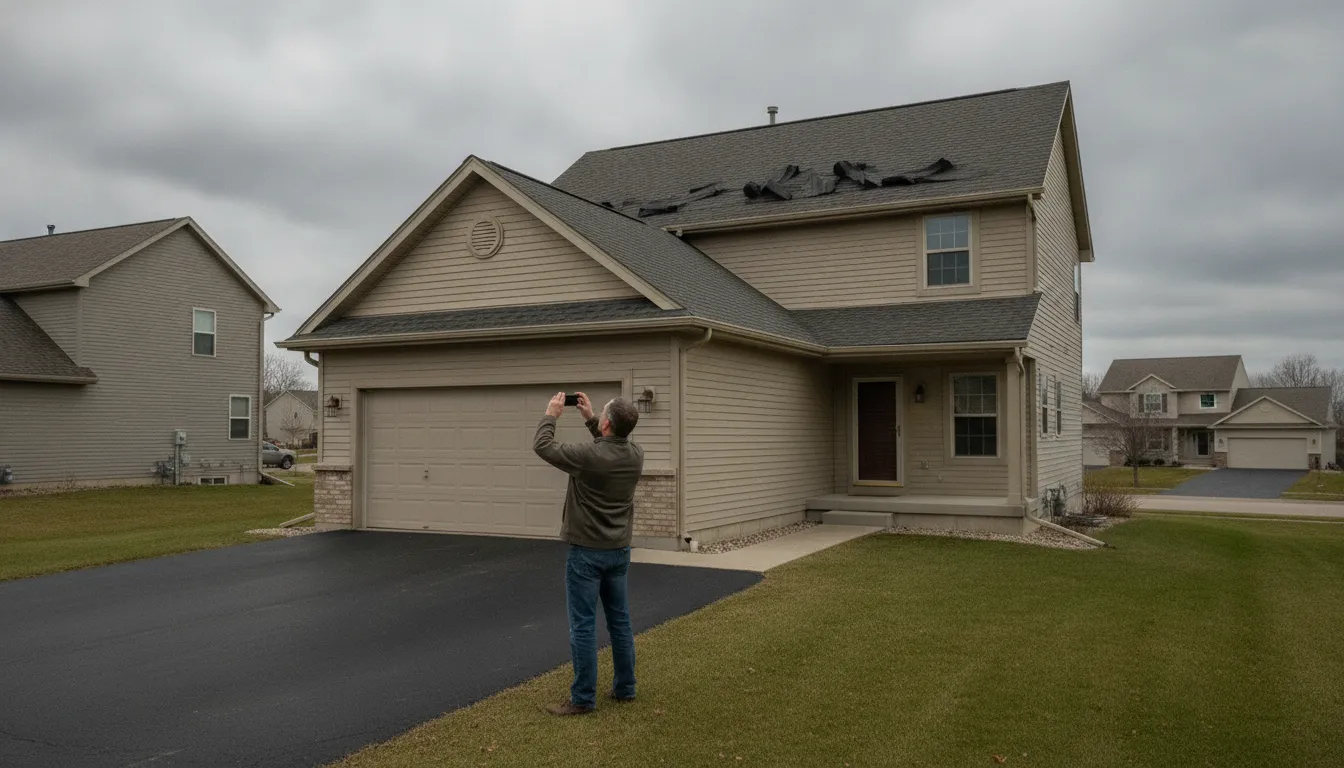
What does roof repair preparation in Rogers, MN include?
Preparation is a record, not a diagnosis. You are collecting what you can see safely so the person on the roof does not have to guess when the problem started or which room is involved. Referred Restoration’s roof repair in Rogers begins with an inspection of leaks, missing shingles, flashing, and storm damage. Your notes help that inspection focus on the right area.
Stay off the roof. Wet shingles, ice, and steep pitches are not a homeowner checkpoint. If water is pouring in, a tree is on the roof, or the ceiling is sagging, skip the checklist and ask for emergency help. The separate guide to emergency roof tarping covers temporary protection. This article is for a planned visit.
Use this order so nothing important is left in a camera roll:
- Take ground-level photos of the roof slopes you can see, plus close photos of interior stains.
- Write a dated timeline of weather, drips, and rooms affected.
- Note attic access, pets, gates, and where to park.
- List questions about scope, materials, and local permits.
- Wait for the inspection before you approve a repair or a replacement.
Which photos help a Rogers roof repair inspection?
Take photos in daylight from the driveway, the sidewalk, and a neighbor’s side of the street if you have permission. Include the whole slope, then a closer shot of anything that looks displaced. Do not zoom so far that the location on the house disappears. A wide shot and a tight shot of the same spot are more useful than one dramatic crop.
Outside, from the ground
- Each roof slope you can see, including the front, back, and any lower roof over a porch or garage.
- Missing, cracked, or lifted shingles, and any debris that landed on the roof.
- Metal flashing at chimneys, sidewalls, skylights, and roof valleys, if you can see it without climbing.
- Gutters that are bent, full of granules, or pulling away from the fascia.
- Downspouts that dump water against the foundation.
Inside the house
- Ceiling stains, bubbled paint, and any active drip, with a coin or tape measure in the frame for scale.
- The room name and the floor. A second-floor bedroom stain and a first-floor stain can have different paths.
- Attic photos only if you already have a safe walkway and lighting. Look for dark decking, damp insulation, and daylight at penetrations. Do not step off the joists.
If the stain is the main clue, use the guide on finding a roof leak from the inside before the visit. Water often travels along framing before it shows up on drywall, so the stain and the roof opening may not line up.
Name the files in the order you took them. “West slope wide,” “west slope missing tab,” and “bedroom stain May 12” are easier to follow than a camera roll. If a shingle tab is lying in the yard, photograph it next to the slope it fell from, then set it aside. Do not carry it up a ladder to press it back into place. A loose tab is evidence. A homeowner patch made with roof cement can hide the spot the inspector needed to see, and it can trap water under the shingle.
Granules in the gutter are worth a photo too, but they are not a diagnosis by themselves. Asphalt shingles shed some mineral surface as they age. A sudden pile after a hailstorm is a different clue from a light dusting on an older roof. Say what you found and when. Let the inspection decide whether the surface is worn, bruised, or both.
What should you write down before the visit?
A short timeline beats a long guess. Write dates, not impressions. “The guest room ceiling spotted after the July windstorm” is useful. “It has leaked for a while” is not.
| What to record. | Why the inspector needs it. | Example note. |
|---|---|---|
| First date you noticed a problem. | Separates a new opening from an older stain. | Brown ring appeared on May 12. |
| Weather that day and since. | Connects wind, hail, snow, or heavy rain to the symptom. | Drip only during hard north-wind rain. |
| Rooms and floors involved. | Narrows which slope and penetration to check. | Primary bedroom, second floor, near the chimney wall. |
| What you already did. | Avoids mistaking a towel or bucket for the repair. | Moved the bed and set a bucket. Did not patch the roof. |
| Past roof work. | Shows age, prior patches, and whether papers exist. | Shingles replaced about 12 years ago. No paperwork on hand. |
| Other exterior damage. | Flags a storm that also hit siding or gutters. | Dented downspout on the west side the same week. |
The National Weather Service Twin Cities office climatology shows a long severe-weather season across the region, with hail and damaging wind both common in the warm months. That history is a reason to date your notes, not a prediction for your block. If you remember hail, say so, and point the inspector to the separate hail damage roof repair steps instead of trying to score bruises from the lawn.
Keep the file simple. A notes app page plus a photo album labeled “Rogers roof, October” is enough. Bring the same set to the door so you are not scrolling through vacation pictures on the driveway.
How should you prepare the house for a roof repair visit?
The inspector needs a safe path around the house and a way to see the slopes. Clear vehicles off the driveway if a ladder will go up. Unlock side gates. Tell the crew about dogs, invisible fences, and which door to use. If a neighbor’s tree overhangs the roof, mention it. You do not need to trim it before the visit.
Inside, move furniture away from an active stain if you can do it without strain, and put a bucket under a drip. Skip attic storage cleanouts unless something is blocking the hatch. A 20-minute visit goes faster when the hatch is reachable and the light works.
Rogers winters add a practical constraint. Ice, deep snow, and freeze-thaw cycles can hide shingle edges and make a roof unsafe to walk. If the roof is iced over, say that when you book. A ground review and an interior check may be all that is responsible until the surface is clear. Do not chip ice off shingles or pour hot water on the roof.
What to have ready at the door
- The photo album and the one-page timeline, already open on your phone or printed.
- Any prior roof paperwork you can find, even if it is only a year and a product name.
- A clear path to the attic hatch if you want that space included.
- Pets secured, and a note about gates, alarms, or a locked electrical panel the crew does not need.
- One decision-maker present. A visit that ends with “I have to ask my spouse, who has the photos” usually means a second trip.
You do not need to wash the roof, blow off leaves, or stage the yard to look undamaged. Debris on a slope can be part of the story, especially after wind. If a branch is small and clearly loose on the ground, move it so nobody trips. Leave anything still caught on the roof alone.
If the same storm marked the walls or the gutters, note that too. Referred Restoration also handles siding in Rogers and gutters in Rogers. Mentioning those clues does not mean every mark needs work. It keeps related damage from being discovered only after the roof scope is already written.
Which local questions should you ask before roof repair work starts?
Ask questions that change the scope, not questions that score the company. You want to know what was seen, what will be touched, and who is allowed to do the work in Rogers.
Permit and license
The City of Rogers lists re-roofing under its residential minor-work permit. That is a city requirement for re-roofing, not a suggestion, and it is separate from a small shingle repair. Ask whether the work being proposed is a repair or a re-roof, and who will confirm the permit if one is required. The city’s building department is the authority for that answer. The permit page is on the City of Rogers residential minor work permit site.
Minnesota also licenses residential building contractors. The city’s building department tells homeowners they can verify a license with the Minnesota Department of Labor and Industry. Use the state’s license and registration lookup and ask which company name is on the license. A verbal “we’re licensed” is weaker than a name you can check.
Scope and materials
- Which slopes and details were inspected, and which could not be reached that day?
- Is the recommendation a localized repair, or is the roof aged or damaged widely enough that replacement should be discussed?
- What material will be used, and will it match the existing shingles as closely as the product line allows?
- Will flashing, pipe boots, or valley metal be part of the repair, or only the shingles?
- Who pulls any required permit, and will you get a copy?
If the answer is that repairs no longer fit the roof, read roof repair or replacement for Minnesota homes and the Rogers roof replacement page before you decide. Preparation does not lock you into a patch.
Storm and insurance boundaries
If you plan to file a claim, keep your photos and dates, then follow the Rogers storm-damage roof inspection guide. Do not treat a contractor visit as the insurance inspection. The Minnesota Department of Labor and Industry warns that contractors may not pay or rebate an insurance deductible for roof repair. A homeowner may also cancel a roofing contract if the insurer denies the claim. That rule is on the DLI homeowner page. A promise to cover your deductible is a reason to stop, not a benefit.
For a storm that hit more than the roof, the storm damage restoration in Rogers page is the right next stop. This checklist does not replace that assessment.
What should you expect on inspection day in Rogers?
Have one person home who knows the timeline. Meet at the door, hand over the photo set, and walk the interior stains first so the crew sees the symptom before they see only the shingles. Then give them the yard. You do not need to stand under the ladder.
Ask for findings in plain language: what is damaged, what is worn but still working, and what was not visible. A clear recommendation names the repair area. A vague “we should just replace it” without saying what failed is a prompt for another question, not an automatic yes.
When the visit is a true repair rather than a replacement, confirm the practical details before anyone schedules a crew:
- The date window and what weather would postpone the work.
- Where materials and a dump trailer would sit.
- Whether nails, granules, or old shingles will be cleaned up the same day.
- How you will be told if the opened area is larger than the original scope.
After the work, look from the ground again. Compare the repaired slope with your earlier photos. Inside, watch the same ceiling during the next hard rain. A repair that was aimed at the right opening should stop the drip you recorded. If a new stain shows up in a different room, save a new photo and call back with the date. That is a new clue, not a reason to climb up and add sealant.
A simple way to judge the visit
Before the truck leaves, repeat three things in your own words. Name what failed or looks worn. Name what the proposed work will touch. Name what would make the crew stop and call you. If you cannot repeat those points, ask again. Preparation is wasted when the findings stay vague.
Keep your original photos even after the repair. They are the before record if a stain returns or if you later talk with your insurer. Store them with the invoice and any permit copy. You are not building a legal file. You are saving the same facts you already gathered so you do not have to reconstruct them from memory next spring.
Neighborhood context belongs in the notes only when you saw it yourself. A hailstorm that marked a neighbor’s gutter is fair to mention. A rumor about everyone on the block getting a new roof is not something to repeat as fact, and it should not push you toward a bigger project than the inspection supports. The recommendation should match what was found on your house.
Contact Referred Restoration online when your photos and notes are ready, or call (763) 726-4245.
Frequently Asked Questions
Can I prepare for roof repair without getting on the roof?
Yes. Ground-level photos, interior stain photos, and a dated note are the preparation that matters. Climbing a Rogers roof to “get a better look” adds fall risk and can scuff shingles. Leave the surface inspection to the crew.
Does every roof repair in Rogers need a city permit?
The City of Rogers requires a residential minor-work permit for re-roofing. A small repair is not the same scope. Ask the contractor and, if you are unsure, the city building department whether your specific project needs a permit. Do not assume a patch and a full re-roof follow the same rule.
What if I only have a ceiling stain and no missing shingles I can see?
Photograph the stain, name the room, and note when it appeared or grew. Many leaks start at flashing or a penetration you cannot see from the lawn. An inspection can trace the path. Painting the ceiling before that visit hides the clue.
Should I hire anyone who offers to cover my insurance deductible?
No. Minnesota’s Department of Labor and Industry says contractors may not pay or rebate an insurance deductible for roof repair. Keep your own photos, and separate a contractor’s inspection from your insurer’s process.
How is this different from calling for an emergency roof repair?
This checklist is for a planned inspection when the house is stable. Active pouring water, a sagging ceiling, or a tree on the roof needs faster protection, including tarping when that is the right temporary step. Call (763) 726-4245 and describe what is happening now.