Planning window installation in Cottage Grove, MN involves more than selecting a replacement unit. The route to the work area, household preparation, the condition of the opening, finishing details, and the final walkthrough all shape the experience. A little advance coordination can help you understand what will happen and what decisions may arise.
Contact Referred Restoration online to discuss your window project
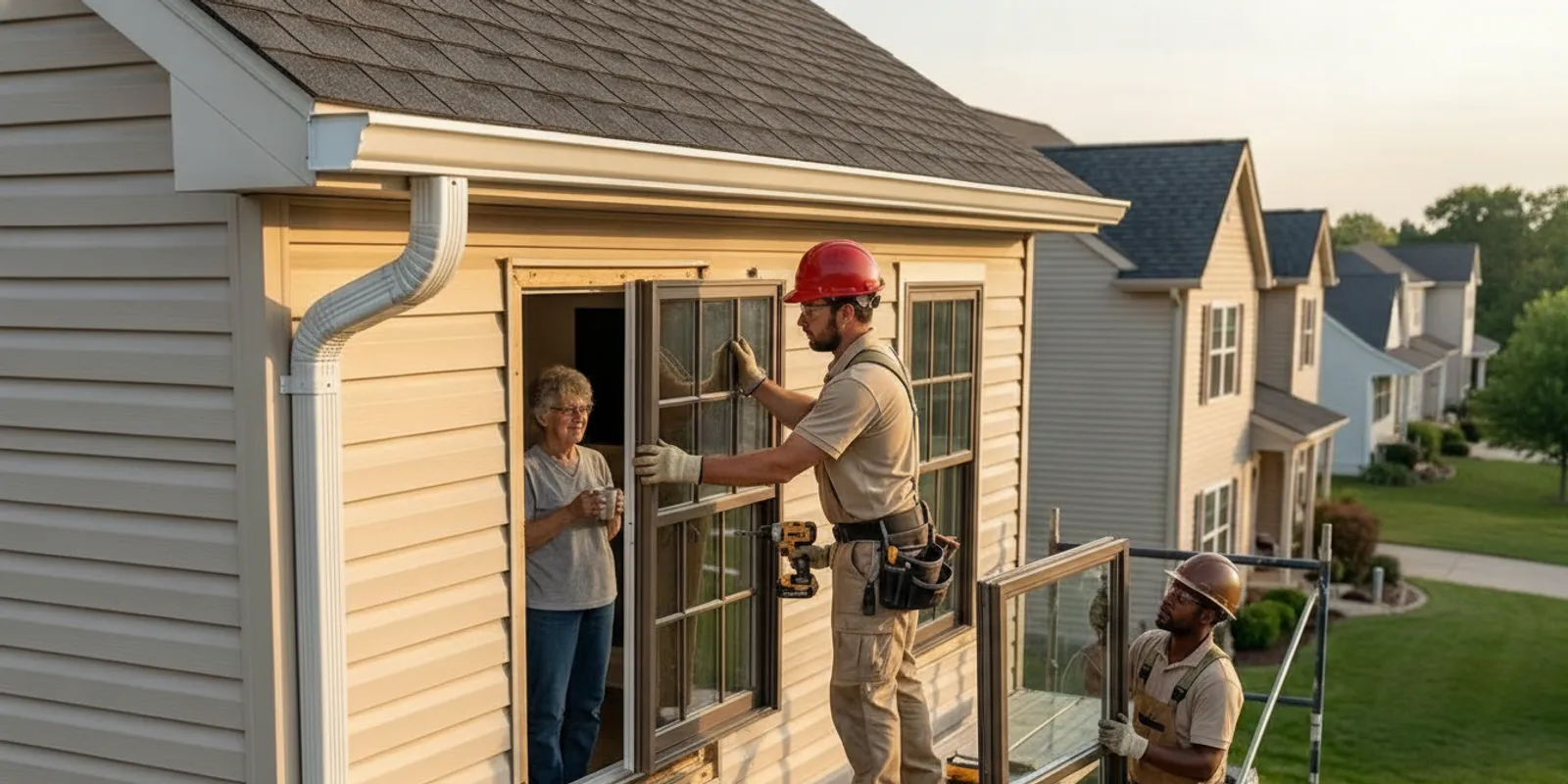
What should you confirm before setting an installation date?
Begin with a clear list of the openings included in the work. Identify each room and window, and check that the same list appears in the written scope. If you are replacing more than one unit, ask whether the work will proceed room by room, in groups, or in another order. That answer helps you plan around sleeping arrangements, work-from-home calls, children’s routines, and access to rooms.
Confirm who will be home, how the crew will enter, where tools or materials may be staged, and where vehicles can park. If access requires a gate code, a particular door, or moving a vehicle, discuss it before the scheduled day. Explain any unusual conditions such as a narrow side yard, a deck, landscaping close to the wall, or a window above a walkway. This is not a substitute for the crew’s own site assessment; it gives the team context to plan a safe approach.
Ask what preparation is expected from you and what the crew will handle. For example, clarify whether you should remove curtains and blinds, whether the installer will move a large piece of furniture, and how floor protection will be managed. Agree on a contact person for schedule changes and unexpected findings. A short written record of these answers is more useful than relying on memory after a busy planning call.
- List each opening and its room.
- Confirm entry, parking, and indoor and outdoor access.
- Ask what must be removed or moved before arrival.
- Agree how questions and changes will be communicated.
How can you prepare the rooms and exterior approach?
Clear a usable work zone around every window. Move small furniture, plants, lamps, electronics, and fragile items well away from the opening. Take down curtains, blinds, and nearby wall décor unless the written plan assigns that task to the crew. Clear the sill and nearby shelves so nothing can fall or obstruct the work. If a treatment has complicated hardware or is difficult to remove, ask for guidance instead of forcing it.
Make a clear route from the entrance to the room. Move rugs that may slide, keep hallways free of boxes, and secure pets in a separate area. Tell household members where work is happening and ask them not to enter the active zone. Tools, glass, removed materials, and open window openings call for care; keeping children and visitors away helps reduce avoidable interruptions.
Think about the outside of the same opening. Move movable items such as patio chairs, planters, hoses, or garden tools away from the wall when it is safe to do so. Point out fixed obstacles rather than attempting risky work yourself. If the window faces a shared path or a spot where people commonly walk, mention that so the access plan can account for it.
Some belongings may be too large or delicate to relocate. Ask what floor and dust protection the crew plans to use, then cover nearby furniture or electronics if appropriate. Work can produce dust and debris even when the work area is managed carefully. Decide where household members can spend time while the room is in use, especially if several openings are scheduled on the same day.
- Remove window treatments and clear the sill.
- Move breakables and small furnishings out of the room’s work zone.
- Open a clear indoor route and secure pets.
- Clear movable outdoor obstacles and flag access concerns.
- Keep the room available until cleanup and operating checks are complete.
For broader local service context, review Referred Restoration’s Cottage Grove exterior restoration page. It can help you identify the appropriate point of contact while keeping the installation discussion focused on the specific openings and preparation needs.
What should you ask about the window and its fit?
Ask how the selected unit is intended to fit the existing opening and what measurements or site checks inform that choice. Request a plain-language description of the window type, operating style, and any choices you still need to make. Confirm which details are settled and which remain open, such as finish, hardware, screens, or how the interior appearance will meet adjacent surfaces.
Fit involves more than whether the unit can be placed in the opening. The installer must address how the window connects with the surrounding assembly and existing materials. Ask what parts of the opening will be examined after the existing unit is removed. Some conditions are concealed by the window or trim and cannot be assessed fully until that point. Do not assume a hidden condition can be confirmed in advance.
Agree on how the crew will pause and explain any unexpected finding before work beyond the agreed scope proceeds. Ask what information you will receive, who will describe the available choices, and how any decision will be recorded. A useful process gives you a chance to understand the issue rather than making a rushed decision without context.
For project-specific information, see the Cottage Grove window replacement page. If you are weighing whether an existing unit may need attention rather than replacement, review the company’s window repair information. The right path depends on the specific condition and opening, so ask for an explanation based on what can be inspected.
What should the written work plan make clear?
A written plan should identify the openings, describe the general sequence, and clarify the work included for removal, installation, finishing, and cleanup. Ask whether interior and exterior trim or surface work is included, what existing materials may remain, and how the edges around the new unit will be completed. If a detail matters to the appearance of the room, make it explicit before scheduling.
Use the table below to organize questions when reviewing a proposal. It is a planning aid, not a replacement for the contractor’s actual written scope. If two proposals use different terms, ask each contractor to explain the work in everyday language so you can compare like with like.
| Topic | What to confirm | Useful follow-up |
|---|---|---|
| Openings | Rooms, locations, and units included | Does the list match every window discussed? |
| Access | Entry route, staging, parking, and exterior approach | What should be moved before arrival? |
| Fit and findings | How measurements are checked and hidden conditions handled | Who explains options if removal reveals an issue? |
| Finishing | Interior and exterior trim or surface work | Which visible materials are included or left in place? |
| Cleanup and review | Debris handling and operation checks | What will be reviewed together before completion? |
When reading the plan, separate the work into what happens before, during, and after installation. Beforehand, note preparation and access. During the work, note removal, inspection, installation, and communication about discoveries. Afterward, note finishing, cleanup, demonstration, and any follow-up. This simple sequence can expose gaps: for instance, a proposal may describe setting the window but say little about trim or debris handling.
Keep questions and answers with the scope. If the contractor clarifies a detail verbally, ask whether it should be added to the written description. This helps both sides refer to the same understanding if the schedule shifts or a question arises on installation day. Avoid assuming that a phrase such as “complete installation” explains every finish or existing material that matters to you.
Referred Restoration also provides general home exterior service information. For this project, the most useful written record is still a location-by-location explanation of the windows, work sequence, finishing, and communication plan.
How should Cottage Grove weather affect your plans?
Weather can affect scheduling, outdoor access, and how a workday is organized. Discuss the project timing with the contractor, particularly if the forecast changes near the appointment. Ask who will contact you if conditions require a change, how much notice to expect when possible, and whether you need to repeat any room-preparation steps for a new date.
For a winter or shoulder-season appointment, ask how the crew plans to manage the opening while work is underway and what household arrangements make sense for the rooms involved. Do not assume every day’s conditions are suitable or unsuitable based on the season alone. The National Weather Service’s forecasts are available at weather.gov; use current conditions as a prompt to coordinate with the contractor, not as a substitute for their job-specific plan.
Make a simple contingency plan. If the date moves, know whether coverings or furniture should remain in place, whether you need to be home for access, and how to confirm the revised arrival window. If work is split across days, ask which rooms will be unavailable and when the crew expects to leave them clear. Clear communication helps avoid last-minute confusion.
What should you expect on installation day?
The precise sequence depends on the product, opening, and written scope, but a typical project includes preparing the work area, removing the existing unit as planned, examining the opening, positioning the replacement, securing and integrating it with surrounding materials, completing agreed finishing, and cleaning the work zone. Ask the installer to explain the sequence for your home rather than treating this general outline as a promise about every project.
Before work begins, confirm the rooms being handled that day and the best way to ask questions. Keep the indoor path and outside approach clear. Avoid reaching into the active work area or moving tools and materials. If the crew finds a condition that changes the plan, ask for a pause and a clear explanation of what was found, what choices are available, and whether the change affects the written scope or schedule.
It can help to agree on a brief check-in point. For example, ask whether the crew will speak with you after removal and inspection, or when the window is positioned but before finishing is complete. That gives you a predictable opportunity to discuss an issue without interrupting work at an unsafe moment. If you are unavailable during part of the day, make decisions and contact arrangements in advance.
Stay mindful of household needs while work is underway. Keep children and pets away, avoid using the room as a passage, and relocate calls or quiet activities if needed. If you work from home, ask about the likely noisy portions of the sequence, while recognizing that the timing may depend on what the crew encounters. Do not attempt to adjust the unit or materials yourself; direct questions to the installer or project contact.
If one of the windows may need repair instead, the company’s guide to signs a home may need new windows can provide a starting point for questions. Treat general guidance as a prompt to discuss the particular unit rather than a diagnosis.
What should you check before the crew leaves?
Walk through each completed opening with the installer. Ask for a demonstration of normal operation, including opening, closing, and locking. Confirm that any included screens or accessories are present and ask how to use or remove them safely. Look at the visible interior and exterior finish where accessible, and note any agreed follow-up work or unanswered questions before the crew departs.
- Operate each window through its ordinary functions.
- Check the locks and included accessories.
- Review visible interior and exterior finishes.
- Confirm debris and protective materials were handled as agreed.
- Ask for product care and operation guidance.
- Record concerns and agree on next steps in writing.
Make observations rather than trying to diagnose a cause. If a unit seems difficult to operate, binds, or does not appear to sit as expected, do not force it or make adjustments. Show the installer what you noticed and ask them to assess it. If a concern cannot be resolved during the walkthrough, write down the location, what happens, and who will follow up.
Check the room from normal viewing positions after tools and materials are cleared. Small details may be easier to see in daylight or from the usual place you sit. The point is not to conduct a technical inspection yourself; it is to make sure you understand what was completed, how to operate the unit, and how to raise an item that needs attention.
Keep any product information and follow-up contact details with your written scope. If questions arise later, note which opening is involved, the date, and what you observed. A clear description is more useful than trying to remember how the issue first appeared.
How can you compare installation proposals fairly?
Compare the scope and the explanation, not just a short summary line. Put each proposal beside the same checklist: openings, unit details, removal, opening review, installation steps, interior and exterior finishing, cleanup, schedule assumptions, and process for unexpected findings. Mark each item as clearly included, unclear, or not described. Then ask focused questions about the unclear items.
For example, suppose one document names three openings and specifies trim work, while another refers broadly to “window replacement.” The broad description may cover the same work, but you cannot tell without asking. Request a location-by-location scope and an explanation of finishing. Likewise, if one proposal mentions how newly discovered conditions will be discussed and another does not, ask both contractors to describe their process.
Consider communication as part of the plan. Who is your contact before the appointment? Who can answer questions on site? How are changes approved and documented? A clear answer is useful because it gives you a route to resolve questions without guessing. Keep the documents, clarifications, and any updates together so you can refer to the same version.
Do not treat missing detail as proof that a task is excluded or included. Ask for clarification and request that agreed changes be recorded. This is especially important for finishing and follow-up, which can affect how the completed room looks and whom you contact if an operation question comes up later.
To see another local service page for context about the company’s work, visit its Rogers roofing information; however, window installation questions should be answered by the window-specific scope for your home.
What questions can you bring to the first appointment?
A short list helps you cover the essentials without trying to remember every concern during a conversation. Start with the windows themselves, then move to access, work sequence, finishing, and communication. If you have photos or notes about a particular opening, use them to identify what you want examined, but let the contractor assess the condition on site.
- Which openings and window details are included in the proposed work?
- What should I move or remove, and what will the crew handle?
- How will the existing opening be checked once the old unit is removed?
- How will unexpected conditions be explained and documented?
- What interior and exterior finishing is included?
- How will the work zone be protected and cleaned?
- Who should I contact about schedule changes or follow-up questions?
Write down the answers in plain language. If you do not understand a term, ask for an example tied to your opening. A useful discussion should leave you able to explain what will happen, what is still uncertain, and how you will be asked to make a decision if conditions change.
How should you prepare if you cannot be home?
If you cannot be present, resolve access and decision-making details before the work date. Ask whether an adult needs to provide entry, how the crew will reach the rooms, and how the project contact will reach you if a question arises. Decide who is authorized to discuss choices and whether that person can make decisions on your behalf.
Move belongings, remove treatments, secure pets, and clear the indoor and outdoor routes in advance. Confirm whether the crew needs access to a garage, gate, or other area. Share practical information about alarms or entry procedures through an appropriate, agreed method. Do not leave a major decision to an assumption: agree in advance whether work pauses until you can be reached if an unexpected condition appears.
Before leaving, keep the project contact information and written scope accessible to the person who will be home. Ask them to note questions and observations rather than attempting to direct technical work. If nobody can be present, confirm the contractor’s access and communication requirements before finalizing the appointment.
Frequently asked questions
Should I stay home during window installation?
Discuss this before scheduling. Someone may need to provide access or answer questions, but the arrangement depends on the work plan and household needs. If you cannot be home, confirm entry, contact, and decision-making arrangements in advance.
Do I need to remove curtains and blinds?
It is sensible to take down window treatments and clear the sill unless the written plan says otherwise. Ask for help or guidance with special hardware you are unsure how to remove.
Can the installer confirm the opening’s condition before removal?
Some conditions are hidden by the existing unit or surrounding materials and may only become visible during removal. Ask how findings will be documented and how options will be explained before work beyond the agreed scope proceeds.
What if weather changes the schedule?
Contact the project coordinator and ask whether conditions affect the planned work or access. Confirm any new date, arrival details, and preparation needed for the revised schedule.
What should I do if the new window is hard to operate?
Do not force it or attempt an adjustment. Show the installer what you notice during the walkthrough, or contact the project contact if you find the issue later. Describe the window, the action you took, and what happened.
Contact Referred Restoration online to discuss your window project
What is a practical next step?
Before installation day, make a list of the openings, access details, room preparations, and questions you want answered. Review the written work plan, then keep the final walkthrough and follow-up contact details in mind. Thoughtful preparation helps Cottage Grove homeowners approach window installation with a clearer understanding of what to expect.