
Flat roof repair is often more involved than covering the spot where a ceiling stain appears. Low-slope roofs can hide water beneath a membrane, insulation, or flashing before a leak becomes visible inside. In Minnesota, snow, ice, freeze-thaw movement, and standing water can stress seams and drainage details. Knowing what to look for helps homeowners protect the roof assembly and choose the right next step.
Contact Referred Restoration online or call (763) 726-4245.
Flat roof repair corrects a localized problem in a low-slope roof system, such as an open seam, damaged membrane, failed flashing, or puncture. The appropriate repair depends on the roof material, moisture below the surface, drainage, and the condition of the structural deck. A professional inspection determines whether a patch, detail repair, recovery, or broader replacement plan is appropriate.
This guide explains common warning signs, how a professional evaluates a low-slope roof, and when a small repair may not be enough. It also outlines safe steps for homeowners in Rogers, Cottage Grove, St. Francis, Monticello, and nearby Minnesota communities.
What Does Flat Roof Repair Address?
Flat roof repair addresses a defect in a low-slope roof assembly without automatically replacing the entire system. Most roofs called flat roofs are designed with some slope so water can move toward drains, scuppers, or roof edges. A repair may focus on the membrane, a seam, flashing, a penetration, or a drainage detail.
Low-slope systems may use built-up bitumen, modified bitumen, TPO, PVC, or EPDM. Each material has different bonding, welding, and patching requirements. A repair material that works on one membrane may not create a reliable bond on another. The roofer should identify the existing system before selecting a repair method.
Why the visible leak is not always the source
Water can travel along a roof deck, insulation layer, seam, or framing member before appearing indoors. A ceiling stain may therefore be several feet away from the exterior entry point. The area directly above the stain still matters, but the inspection should also examine nearby seams, edges, penetrations, drains, and previous patches.
The Building America Solution Center explains that low-slope roofs depend on membrane continuity, flashing, drainage, and material compatibility working together. The practical takeaway is simple: a durable repair treats the failure and the condition that allowed it to develop.
Localized damage versus a broader roof problem
A single puncture or open seam may be localized. Repeated ponding, widespread surface cracking, wet insulation, or a deteriorated deck suggests that the roof needs a broader evaluation. The repair recommendation should explain the observed condition, the limits of the proposed work, and whether concealed moisture or structural damage still needs investigation.
Which Problems Usually Need Flat Roof Repair?
Several defects appear repeatedly on low-slope roofs. Some are surface issues, while others point to drainage or concealed moisture. Use this table as a screening guide, not as a substitute for a roof inspection.
| Warning sign | What it may indicate | Why it matters |
|---|---|---|
| Ponding water | Water remains after rain or snowmelt | Repeated standing water can increase membrane and deck exposure. |
| Blisters | Raised areas in the membrane or surfacing | Air or moisture may be trapped below the surface. |
| Open seams | Membrane sections have separated | The opening can let water enter the assembly. |
| Cracks or alligatoring | Weathered bitumen or aging surfacing | Widespread cracking may exceed a simple patch. |
| Failed flashing | Damage around edges, vents, curbs, or pipes | Transitions and penetrations are common entry points. |
| Interior staining | Moisture has reached the building below | The visible mark may not identify the exterior source. |
Ponding water and drainage trouble
Ponding water is water that remains on the roof after a reasonable drainage period. A blocked drain, clogged scupper, damaged edge, or low area can allow water to collect. Clearing a blockage may be part of the answer, but recurring ponding deserves a closer look at slope, drainage capacity, membrane condition, and the deck.
Standing water can hide small punctures and make a repair area difficult to clean and dry. A roofing professional should determine whether the water is a symptom of one blocked path or a drainage pattern affecting the roof.
Blisters, cracks, and surface wear
Blisters are raised bubbles or pockets in the roof surface. They may form when air or moisture is trapped and expands as the roof warms. A blister should not be cut open casually. Opening it without understanding the surrounding material can spread damage or allow additional moisture into the assembly.
Cracking and alligatoring are surface clues associated with weathered bitumen. A few small cracks may receive localized attention, while widespread cracking may indicate that the roof surface is aging throughout. The repair plan should account for the pattern, not only the most noticeable crack.
Open seams and flashing failures
Seams join membrane sheets or layers. If a seam loses its bond, water can enter even when most of the membrane still looks intact. Flashing protects changes in direction and penetrations around vents, curbs, pipes, walls, and edges. Movement, weather exposure, and earlier repairs can weaken these details.
In Minnesota, a seam or flashing defect may become more obvious after snowmelt or a freeze-thaw cycle. Interior staining, damp insulation, peeling paint, or a musty odor should prompt an inspection rather than a surface-only patch.
How Is Flat Roof Repair Completed?
A professional repair is a sequence of diagnosis, preparation, compatible installation, and follow-up inspection. The exact steps vary by membrane and weather conditions, but the purpose stays the same: find the entry path. Prepare a sound surface, restore water resistance, and address contributing conditions.
1. Inspect the membrane, seams, and details
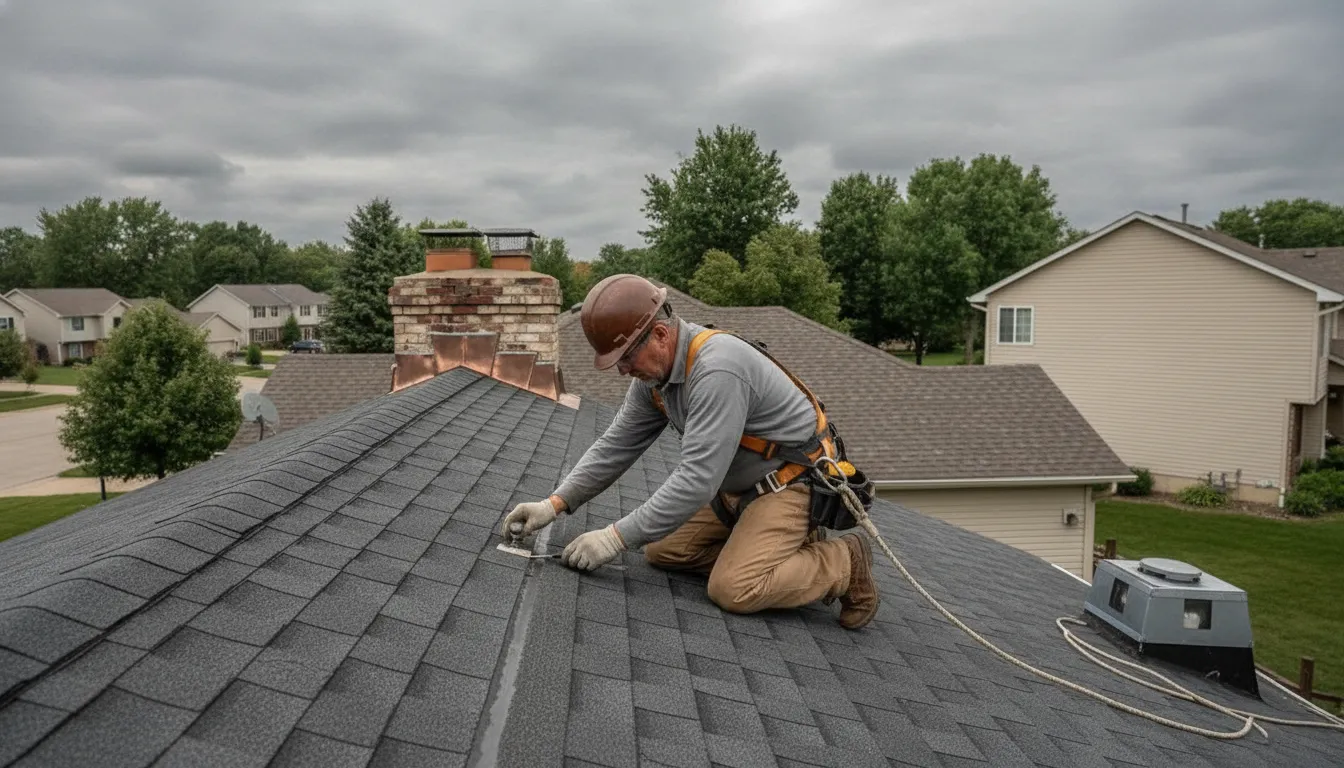
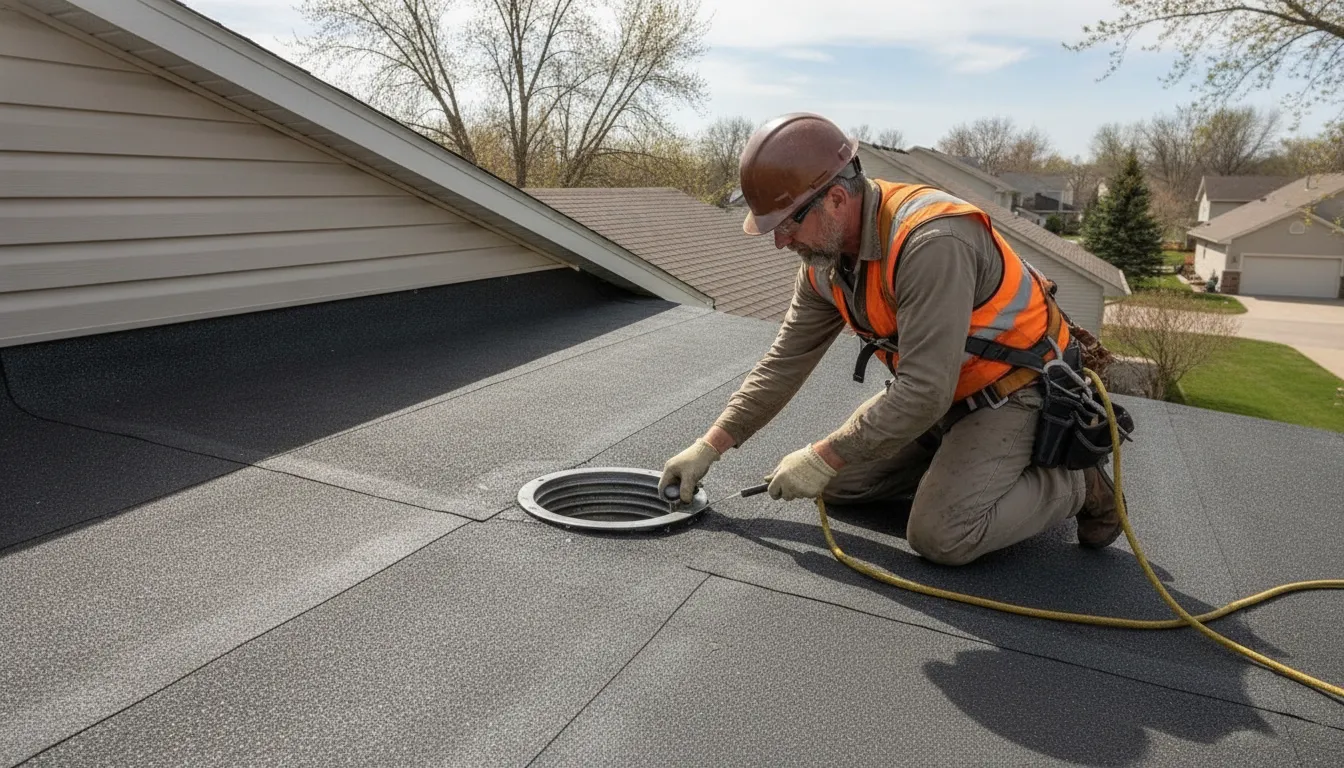
The roofer examines the membrane, seams, flashings, penetrations, drains, scuppers, edge metals, and areas near the interior symptom. A seam probe or another inspection method can reveal a weak bond that is not visible from the ground. The roofer also considers past repairs, surface wear, and whether water has moved below the membrane.
2. Evaluate moisture and the structural deck
A patch may not solve a problem if insulation is wet or the deck is deteriorated. The inspection should determine whether the visible damage is isolated and whether the underlying materials can support the planned repair. Moisture assessment helps distinguish a small membrane defect from a larger roof-assembly problem.
3. Prepare a clean, dry repair area
Loose material, contamination, and failed repair remnants are removed as appropriate. The area must be clean and dry enough for the selected material or bonding method. Work at height should be performed by trained professionals with suitable fall protection. A homeowner should not climb onto a wet, icy, or visibly damaged roof to investigate a leak.
4. Use a compatible patch or detail repair
Built-up and modified bitumen systems may require compatible bitumen materials and reinforcement. TPO and PVC membranes may be repaired with compatible patches joined by heat welding. EPDM is a thermoset membrane and typically relies on specialized adhesive bonding or compatible uncured material. Equipment, temperature, surface preparation, and overlap all affect the result.
Sealant alone is not a universal repair. It may be part of a flashing or detail treatment, but it does not correct every open seam, wet insulation area, drainage defect, or weakened deck. Material compatibility and workmanship matter more than the visible size of the leak.
5. Review drainage and surrounding conditions
After the primary defect is addressed, the roofer should review water movement around the repair. A recurring low area, blocked outlet, damaged edge, or nearby flashing failure can undermine otherwise sound work. The final assessment should identify maintenance needs and explain whether additional roof areas should be monitored.
The Oak Ridge National Laboratory overview of replacing or re-covering older roofs also emphasizes evaluating the existing roof before adding another layer. This supports a condition-based decision rather than treating age alone as the deciding factor.
How Does Minnesota Weather Affect Low-Slope Roofs?
Minnesota weather exposes flat and low-slope roofs to repeating cycles of moisture, freezing, thawing, snow, and ice. These conditions do not automatically mean a roof will fail, but they can reveal weak seams, poor drainage, and damaged flashing. Seasonal inspection helps identify changes before a small defect becomes an interior leak.
Freeze-thaw movement
Roofing materials and flashing can expand and contract as temperatures change. Repeated movement may place stress on seams, edges, and transitions. A repair completed without checking the surrounding detail may leave the nearby weakness in place. Inspectors should pay close attention to areas where different materials meet.
Snowmelt and ice
Snow and ice can obstruct drains and scuppers. Ice can also hold water against roofing details and force moisture beneath a membrane. Do not walk onto an icy roof or attempt to remove heavy snow without the right training and equipment. From the ground, note visible drainage issues and share them with the roofing professional.
Moisture below the surface
A roof can look dry after a leak stops while moisture remains in insulation or other components. Wet insulation may lose thermal performance and can complicate decisions about repair or recovery. If moisture is suspected, the inspection should address the assembly instead of treating the interior stain as the entire problem.
Seasonal maintenance
A practical maintenance rhythm is an inspection after winter conditions and another before the next cold season. Additional attention is appropriate after severe weather, unusual ponding, or interior staining. Maintenance does not guarantee that a roof will avoid damage, but it can make changes easier to identify while the repair scope is still clear.
Can Flat Roof Repair Delay a Full Replacement?
Sometimes a localized repair can extend the useful service of an otherwise stable roof system. A puncture, open seam, or failed flashing detail may be repairable when the surrounding membrane, insulation, and deck remain sound. A small patch is less likely to be durable when moisture and deterioration are widespread.
Conditions that support localized repair
- Defined damage , The damaged area can be located and separated from surrounding serviceable material.
- Sound membrane , The surrounding membrane remains attached and suitable for compatible repair work.
- Limited moisture , Moisture is not spread through the insulation or roof assembly.
- Stable deck , The structural deck provides a sound base for the planned work.
- Functional drainage , Drainage works properly or can be corrected as part of the repair.
When a broader plan may be appropriate
Recovery or replacement becomes more likely when wet insulation covers a large area, the deck is deteriorated, seams are failing throughout, or the membrane has widespread cracking. A new layer should not conceal a wet or unstable assembly. The roof professional should explain which observations support the recommendation and which areas remain uncertain.
Roof coatings can be useful in the right system and condition, but a coating does not dry concealed moisture, rebuild a weakened deck, or correct every drainage problem. The roof’s actual condition matters more than its age alone. A clear inspection report helps the property owner compare the repair scope with the condition of the full assembly.
What Should Homeowners Do Before an Inspection?
Start inside and from the ground. Do not climb onto a wet, icy, sagging, or visibly damaged roof. Instead, document what you can see safely and give the roofer specific information about when the problem appeared.
Document interior symptoms
- Photograph symptoms , Record ceiling stains, peeling paint, damp drywall, or visible drips.
- Mark locations , Note the room and approximate location of each symptom.
- Record timing , Note whether the issue followed rain, snowmelt, or a freeze-thaw period.
- Protect belongings , Move furniture and electronics away from an active leak.
- Contain drips , Place a container below a drip, but avoid opening ceilings or walls.
An interior stain does not prove that the roof defect is directly above it. The information is still useful because it helps the roofer correlate timing and location with exterior conditions.
Look for safe ground-level clues
From the ground, note visible sagging, ponding, damaged edge metal, overflowing drainage, or debris near an outlet. Do not use a ladder or step onto the roof to get a closer view. Share photographs and observations during the inspection so the professional can evaluate them alongside the roof surface.
For more detail about tracking an interior symptom, read how to find a roof leak from the inside. Homeowners can also review the Referred Restoration roofing and exterior restoration services available in the local service area.
How Can Rogers-Area Homeowners Choose the Next Step?
The next step should match the evidence, not just the most visible symptom. Ask the roofing professional to identify the roof system and show where water is entering. Describe whether moisture is present below the membrane, and ask how drainage and flashing affect the recommendation.
A useful inspection conversation covers four questions:
- What defect is allowing water to enter?
- Is the problem localized, or are nearby areas showing the same pattern?
- Is the insulation or structural deck affected?
- What maintenance or follow-up inspection should happen after the repair?
For homeowners in Rogers, Cottage Grove, St. Francis, Monticello, and surrounding communities, local weather exposure is relevant, but the roof’s current condition remains the deciding factor. Referred Restoration can assess the membrane and details, explain the repair path, and identify when a wider roof evaluation is warranted. Homeowners considering related exterior work can also review Rogers siding services or Rogers gutter services when drainage and exterior protection overlap.
Contact Referred Restoration online to discuss a flat roof concern in Minnesota.
Frequently Asked Questions About Flat Roof Repair
Can a homeowner patch a flat roof?
A homeowner can document an interior leak and protect belongings, but roof access and membrane repairs are safety- and material-sensitive tasks. A temporary interior measure does not identify the exterior entry point. A qualified roofer should inspect the membrane, seams, flashing, drainage, and roof assembly before a permanent repair.
How quickly should ponding water be checked?
Recurring ponding should be evaluated rather than ignored, especially when it appears after ordinary rain or snowmelt. Standing water may be connected to a blocked drain, a low area, a membrane defect, or a broader drainage issue. From the ground, document where water collects and tell the roofing professional when it occurs.
Are blisters always a sign that the roof must be replaced?
No. A blister’s significance depends on its size, location, cause, surrounding membrane, and whether moisture is present below it. Do not cut into a blister without knowing the system and repair method. An inspection can determine whether the defect is localized or part of more widespread surface or assembly deterioration.
What is the difference between a roof repair and a roof recovery?
A repair corrects a localized defect or detail. A recovery, sometimes called a re-cover, adds a new roofing layer over an existing system when the existing assembly is dry, stable, and suitable for the proposed materials. Deck condition, moisture, drainage, and compatibility must be evaluated before recovery is considered.
Does a ceiling stain show exactly where the roof leaks?
Not necessarily. Water can travel through the roof assembly or building framing before it becomes visible indoors. The stain is an important clue, but the roofer should also inspect nearby seams, penetrations, flashings, drains, and low areas to locate the actual entry path.
Contact Referred Restoration online or call (763) 726-4245 to request the next step for your roof.