Minnesota roofs face more than one season at a time. Snow, freeze-thaw cycles, wind, hail, summer heat, and ice-dam conditions can all affect how a new roof performs. That makes the shingle label only one part of the decision.
Contact Referred Restoration online or call (763) 726-4245 for a free roof inspection.
For homeowners comparing owens corning shingles, the right choice depends on the product line, the roof’s ventilation and moisture-control details, and the quality of installation. Owens Corning offers architectural asphalt options with features such as SureNail Technology, algae-resistant granules, and product-specific wind-performance claims. Those features can be useful, but they do not replace sound decking, balanced airflow, correct flashing, or proper fastening.
A practical evaluation starts by separating what the manufacturer builds into the shingle from what the contractor must build into the complete roof assembly. Understanding the product families makes that comparison clearer.
What Are Owens Corning Shingles?
Owens Corning shingles are asphalt roofing shingles made for residential steep-slope roofs. Like other architectural shingles, they combine a fiberglass mat with asphalt and mineral granules, creating a layered surface that sheds water and gives a home a dimensional roofline. The brand offers several product families, so the name alone does not identify one universal level of performance.
For a Minnesota homeowner, the useful question is how a specific shingle line fits the roof system, installation plan, and exposure to snow, wind, hail, and freeze-thaw cycles. Product selection matters, but decking condition, underlayment, flashing, ventilation, and fastening also influence how the finished roof performs.
How the main product lines differ
Owens Corning’s TruDefinition Duration line uses the manufacturer’s SureNail Technology. Owens Corning describes this feature as part of the shingle’s design for adhesion and performance. The line also includes a range of color options, which can help homeowners coordinate a roof with siding, brick, trim, and the home’s architectural style.
The Oakridge line is a separate architectural shingle family. Its traditional design may suit homeowners who want a straightforward dimensional appearance. Comparing Oakridge with Duration should involve more than color samples. Ask which specifications apply to the selected product, how it will be installed, and whether the roof’s slope and existing assembly are appropriate.
Owens Corning also identifies Duration FLEX as a polymer-modified asphalt product. That construction can make it a product line worth discussing for certain projects, but it should not be treated as a guaranteed solution for every Minnesota roof. A qualified evaluation should consider the home’s design, local weather exposure, ventilation, and the manufacturer’s current installation requirements.
What the brand name does not tell you
Many Owens Corning shingles are tested for fire resistance, and manufacturer materials describe eligible products and installation conditions in detail. Those claims should be read alongside the applicable product documentation and warranty terms. A warranty is not a promise that every roof will avoid damage, and it does not replace correct installation or ongoing inspection.
In short, Owens Corning is a manufacturer with multiple asphalt shingle options, not a single roofing system. The best choice depends on the specific line, the roof assembly, and the workmanship supporting it.
Which Owens Corning Shingles Fit a Minnesota Home?
There is no single shingle line that fits every Minnesota roof. The right choice depends on the home’s roof slope, exposure to wind and hail, attic conditions, existing decking, desired appearance, and the installation details that complete the roof system. Start by comparing the product families, then have the roof evaluated as a whole.
Owens Corning’s Oakridge and TruDefinition Duration lines are architectural asphalt shingles, but they are positioned differently. The Duration family features SureNail Technology, while Oakridge offers a traditional architectural design. Owens Corning also describes Duration FLEX as a polymer-modified asphalt product. These manufacturer descriptions are useful starting points, not a substitute for checking whether a specific roof assembly is appropriate for local conditions.
| Shingle line | What it may offer | Questions for your roof |
|---|---|---|
| Oakridge | Traditional architectural styling and a broad range of color choices. | Does the roof’s exposure, slope, and overall condition support this product family? |
| Duration | Architectural styling with SureNail Technology and a design focused on wind performance. | Will the installer follow the specified nail placement and use the compatible system components? |
| Duration FLEX | Polymer-modified asphalt construction intended for homeowners considering a more specialized option. | Is this line suitable for the roof design and installation conditions, and what do the current product documents require? |
| Decision lens | Match the shingle to the complete roof system, not just the color or product name. | Check decking, slope, flashing, underlayment, ventilation, weather exposure, and documented installation requirements. |
Look beyond the shingle package
In Rogers, Cottage Grove, St. Francis, Monticello, and nearby communities, a roof may face snow accumulation, freeze-thaw cycles, wind-driven rain, hail, and summer heat. Those conditions make the supporting details important. Damaged decking can affect fastening and water shedding. Incorrect overlap, missed nail zones, weak flashing, or inadequate underlayment can undermine a well-chosen shingle.
Ventilation deserves the same attention. Balanced intake and exhaust airflow, together with appropriate insulation and air sealing, helps manage attic moisture and roof-system performance. It also addresses conditions that can contribute to ice dams, although ventilation alone is not a guarantee against them. Homeowners planning broader exterior improvements can also review our window replacement services in Rogers.
Color is a practical decision as well as an aesthetic one. Lighter roofing materials generally reflect more solar heat than darker materials, so color can be discussed alongside the home’s design and summer comfort goals. Ask for the current manufacturer documentation, confirm the roof system components, and compare the installer’s plan with the needs of your specific Minnesota home. See Owens Corning’s Oakridge product information, Duration details, and Duration FLEX information before making a final selection.
Are Owens Corning Shingles Good Quality for Minnesota Weather?
Yes, Owens Corning shingles can be a sound choice for a Minnesota home, but the brand alone does not determine roof performance. The specific shingle line, roof assembly, installation quality, ventilation, flashing, and maintenance all matter. A product designed for wind performance may still fail when nails are misplaced, decking is compromised, or water backs up behind an ice dam.
Wind, hail, and snow performance
The TruDefinition Duration line is designed for wind resistance up to 130 mph, according to Owens Corning’s product information. That is a manufacturer design rating, not a promise that every installed roof will withstand every storm. Proper nail placement and the correct installation method are essential to achieving the intended wind performance. See the Owens Corning Duration specifications for the product’s stated requirements.
Minnesota roofs also face hail, heavy snow, and repeated movement as temperatures rise and fall. A quality shingle can be part of a durable system, but no asphalt shingle should be described as hail-proof. After a significant storm, look for missing or lifted shingles, exposed mat, damaged flashing, and loose granules. Snow load and drifting also make the condition of the roof deck, slope, and supporting structure important considerations before replacement.
Algae resistance and freeze-thaw cycles
Some Owens Corning shingle materials use algae-inhibiting granules intended to help limit dark streaks and visible algae growth. The underlying technology is described in this technical patent record. Algae resistance is primarily an appearance and maintenance benefit. It does not replace proper drainage, cleaning practices, or an evaluation of the roof’s overall condition.
Freeze-thaw weather tests every layer of a roof. Water can enter small weaknesses, freeze, expand, and expose problems in shingles, underlayment, flashing, or decking. Durable results depend on a complete water-shedding assembly, including sound decking and correctly overlapped shingles. At the eaves, an appropriate ice and water barrier can help protect against leakage caused by ice-dam backup, but it cannot correct excessive attic heat loss by itself.
What the warranty does not cover
Owens Corning offers limited lifetime warranties on many eligible residential shingle installations. The word “limited” matters because coverage can depend on the product, installation conditions, transfer rules, maintenance, and the specific warranty document. A warranty is not a guarantee against hail, storm damage, ice dams, poor workmanship, or every cause of premature aging. Read the manufacturer warranty terms and ask the installer which responsibilities remain with the contractor.
How Do Roof Airflow and Ventilation Affect Shingle Performance?
Shingles are the visible weather layer, but the attic and roof assembly behind them also affect how the system performs. A sound ventilation plan moves air through the attic without allowing uncontrolled outdoor air to enter the living space. That balance matters in Rogers, Cottage Grove, and other Minnesota communities where roofs face humid summers, cold winters, and repeated freeze-thaw conditions.
Intake and exhaust must work together
Balanced ventilation uses properly sized intake vents, commonly at the soffits or eaves, and exhaust vents near the roof peak or upper roof area. Intake air enters low, warms as it moves through the attic, and exits high. The exact vent type and sizing depend on the roof design. Adding an exhaust vent without enough intake air can limit the intended airflow rather than solve the problem. The University of Central Florida describes balanced attic ventilation as a system with properly sized intake and exhaust vents. Review the UCF attic insulation and ventilation guidance for additional context.
Moisture control starts above the ceiling
Warm, moist air from bathrooms, kitchens, and the living area can migrate into an attic through gaps around light fixtures, wiring, ductwork, and other penetrations. If that moisture remains trapped, it can contribute to condensation, wet insulation, wood deterioration, and damage to the roof deck. Ventilation helps remove attic moisture, but it is not a substitute for properly vented bathroom fans or careful air sealing at the ceiling plane.
Insulation and air sealing therefore belong in the same conversation as shingle selection. Insulation helps limit heat transfer from the home into the attic. Air sealing reduces the movement of conditioned, moisture-laden air through gaps. Ventilation then supports the removal of heat and residual moisture that enters the space. The U.S. Department of Energy explains how attic insulation and ventilation work together to support roof performance and moisture management: see the DOE guide to durable attics.
Why this matters during Minnesota winters
Ice dams form when heat escaping into the attic warms portions of the roof while the eaves remain cold. Snow can melt higher on the roof, then refreeze at the colder edge. Insulation and air sealing help reduce the uneven heating that contributes to this cycle, while ventilation can help keep the roof deck temperature more consistent. Ventilation alone cannot guarantee that ice dams will not form. Properly installed ice and water protection at vulnerable eaves is another important part of the system.
During an inspection, ask how the proposed work addresses soffit intake, exhaust capacity, attic insulation, air leaks, and eave protection together. That system-level review is more useful than choosing a shingle color or product line in isolation.
What Should Homeowners Check Before Choosing a Shingle Line?
The right shingle line depends on more than color or a product label. Before choosing Owens Corning shingles, look at the roof assembly, the home’s exposure, and the installation plan. A careful review can identify conditions that affect water shedding, wind performance, attic moisture, and long-term appearance.
Use these questions during an inspection or contractor consultation:
- Is the roof decking sound? Ask whether the wood beneath the existing shingles shows rot, delamination, soft spots, or water staining. Damaged decking should be repaired or replaced before new shingles are installed so fasteners have a reliable base and the roof can shed water properly. The Owens Corning asphalt shingles replacement guide provides additional context on what a Minnesota roof replacement involves.
- Does the roof slope suit the planned material? Roof pitch affects how quickly water drains and which products can be used safely. Confirm that the proposed shingle line and installation method are appropriate for each roof plane, including lower-slope sections and additions.
- Is attic ventilation balanced? Ask where intake air enters and where exhaust air leaves. Intake and exhaust should work together, while insulation and air sealing help limit heat and moisture movement into the attic. Ventilation alone is not a guarantee against ice dams, but it is an important part of a sound roof system.
- Are flashing details being addressed? Review the flashing around chimneys, skylights, walls, valleys, vents, and other penetrations. New shingles cannot correct failed or poorly integrated flashing.
- What underlayment and ice-barrier plan will be used? In Minnesota, ask how the contractor will protect eaves, valleys, and other vulnerable areas from water backing up behind ice. The answer should identify the underlayment and ice-and-water barrier, not just say that a membrane is included.
- Will the color fit the home and local conditions? Compare samples outside, where daylight changes their appearance. Lighter and darker roofing surfaces can absorb different amounts of solar heat, so consider the home’s design, attic performance, and summer comfort together. Learn more about professional shingle installation before making a final selection.
- What exactly does the warranty cover? Read the manufacturer and contractor warranty terms. Confirm required installation practices, limitations, maintenance expectations, and who handles a claim. A limited lifetime warranty is not a promise that every roof will perform the same way under every condition.
- Who will install the roof, and what will be documented? Ask about the crew, nail placement, starter and ridge components, cleanup, ventilation work, photos, and final inspection. Clear documentation makes it easier to verify that the selected system was installed as specified.
For a Rogers-area homeowner, these answers are more useful than choosing a shingle from a sample board alone. They reveal whether the product, roof structure, and installation plan work together for the property’s actual conditions. A broader exterior review can also include gutter services in Rogers when drainage affects the roof edge.
How Does Installation Change the Result?
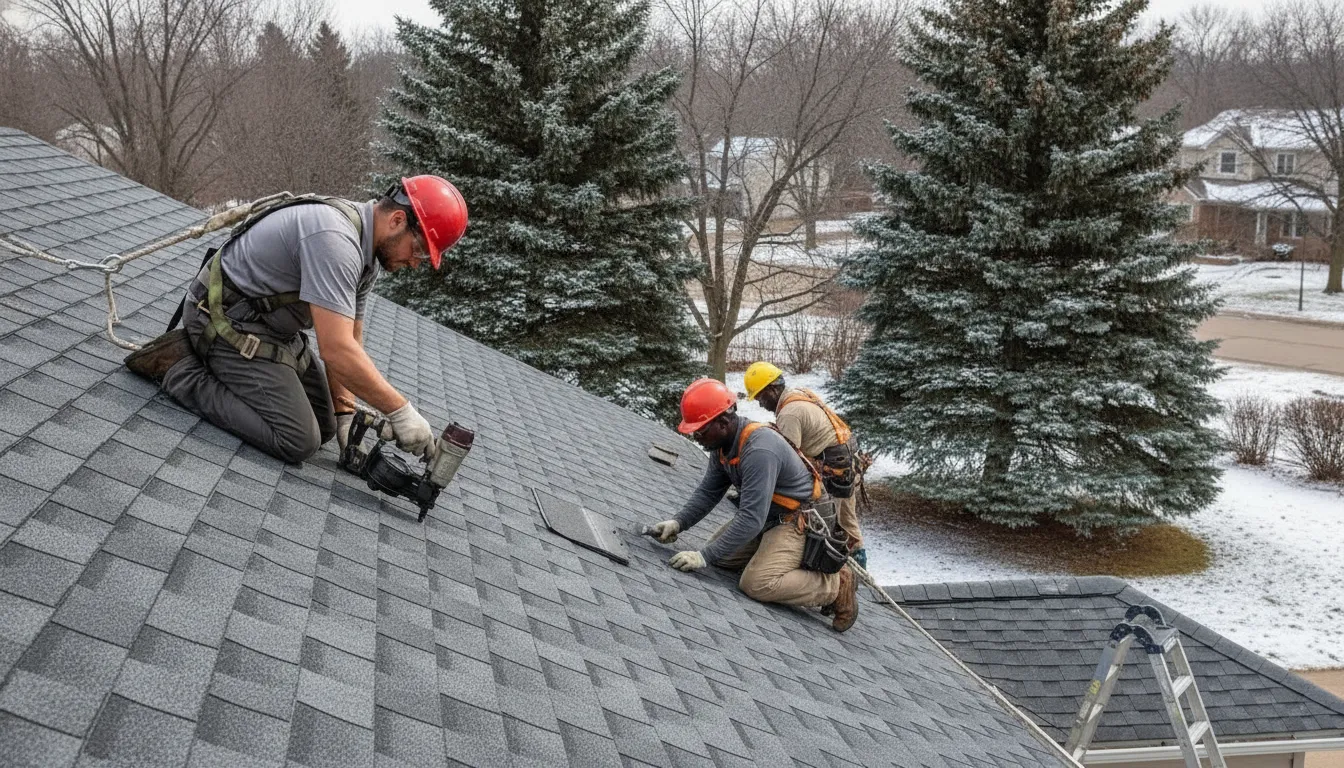
Even well-designed shingles depend on the roof system beneath and the workmanship above it. The same Owens Corning shingles can perform very differently when a crew misses key installation details. In Minnesota, that matters because roofs face wind, snow, freeze-thaw movement, and ice-dam conditions throughout the year.
Nail placement and shingle alignment
Fasteners must be placed in the manufacturer’s specified nail zone, driven flush rather than overdriven, and kept out of the seal strip. Correct placement helps the shingle resist wind uplift. Each course also needs the specified exposure and overlap so water sheds across the surface instead of finding gaps between rows. The Owens Corning installation guidance explains why these installation fundamentals affect water-shedding performance.
Complete the roof system, not just the field shingles
A durable installation includes more than the visible field shingles. Starter shingles help secure the first course and direct water at the eaves. Matching hip and ridge components finish roof transitions and protect the ridgeline. Underlayment and ice-and-water protection add another line of defense where wind-driven rain and ice dams can create backup, especially along eaves and valleys.
Ventilation also needs to be considered before the roof is closed in. Balanced intake and exhaust airflow helps manage attic moisture and supports roof-system performance. Ventilation alone does not guarantee that ice dams will not form, so insulation and air sealing should be reviewed as part of the same assessment.
Flashing, cleanup, and documentation
Flashing around chimneys, walls, skylights, plumbing penetrations, and roof valleys must be integrated correctly. Reusing damaged flashing or covering hidden deck problems can leave a new roof vulnerable despite its new shingles. Before installation, the deck should be checked for water damage and weak areas, then repaired where needed.
After the work, a professional crew should remove loose nails and debris, inspect penetrations and transitions, and document the products and installation details. Keep records of the shingle line, accessories, permits when applicable, photographs, and warranty information. Those details make future maintenance and warranty questions easier to resolve. Homeowners in Rogers can review Rogers roofing services when comparing local inspection and installation support.
Contact Referred Restoration online or call (763) 726-4245 for a free roof inspection and a clear review of your roof system.
Frequently Asked Questions
Are Owens Corning shingles good quality for Minnesota weather?
They can be a strong choice when the shingle line matches the roof and the installation is done correctly. Owens Corning’s Duration line is designed for wind performance, while the complete roof system also needs sound decking, appropriate underlayment, flashing, and correct nail placement. No shingle brand can eliminate every risk from hail, snow, ice dams, or freeze-thaw cycling. Review the manufacturer’s product and warranty terms rather than treating a limited warranty as a promise of damage-free performance. See the official Duration information for product-specific details.
Which Owens Corning shingle line is best for cold weather?
There is no universal best line for every Minnesota home. Oakridge, Duration, and Duration FLEX have different product designs and should be compared with the roof’s slope, exposure, ventilation, existing deck, and project requirements. Owens Corning identifies Duration FLEX as a polymer-modified asphalt product, which makes it an option to discuss with a qualified roofer rather than an automatic solution for every cold-weather roof. A site inspection should guide the selection.
Do Owens Corning shingles resist algae?
Some Owens Corning shingle products use algae-resistant granules intended to help limit dark streaks and algae growth. That feature supports appearance, but it is not a guarantee that a roof will never develop discoloration. Roof orientation, moisture, nearby trees, and local conditions still matter. Confirm the specific algae-resistance language for the product being considered, including any limitations in its warranty or installation requirements. Product materials describe the use of algae-inhibiting granules in roofing shingles: technical patent record.
Does attic ventilation matter with new shingles?
Yes. Balanced intake and exhaust ventilation helps manage attic moisture and supports roof-system performance, but ventilation alone does not prevent ice dams. Attic insulation and air sealing are also important because heat loss can warm the roof unevenly in winter. The U.S. Department of Energy explains the relationship between attic insulation, ventilation, and ice-dam conditions in its attic guidance. Ask the roofer to evaluate the entire attic system before installation.
Contact us to plan the right roofing system
A shingle choice is only one part of dependable Minnesota roof performance. A roof inspection can help clarify the condition of your decking, ventilation, flashing, and other system components before you choose a product line. Referred Restoration can help you evaluate the next step for your home, with practical guidance rather than a one-size-fits-all recommendation. Call (763) 726-4245 or reach out online.
Contact Referred Restoration online for a free roof inspection