Choosing composite siding is not just a matter of picking a color. Minnesota homeowners should compare the exact product, its appearance, care instructions, and how the installation plan addresses water at openings and edges. Before choosing, ask for the product documentation and a written scope that explains what will happen on your home.
Contact Referred Restoration online
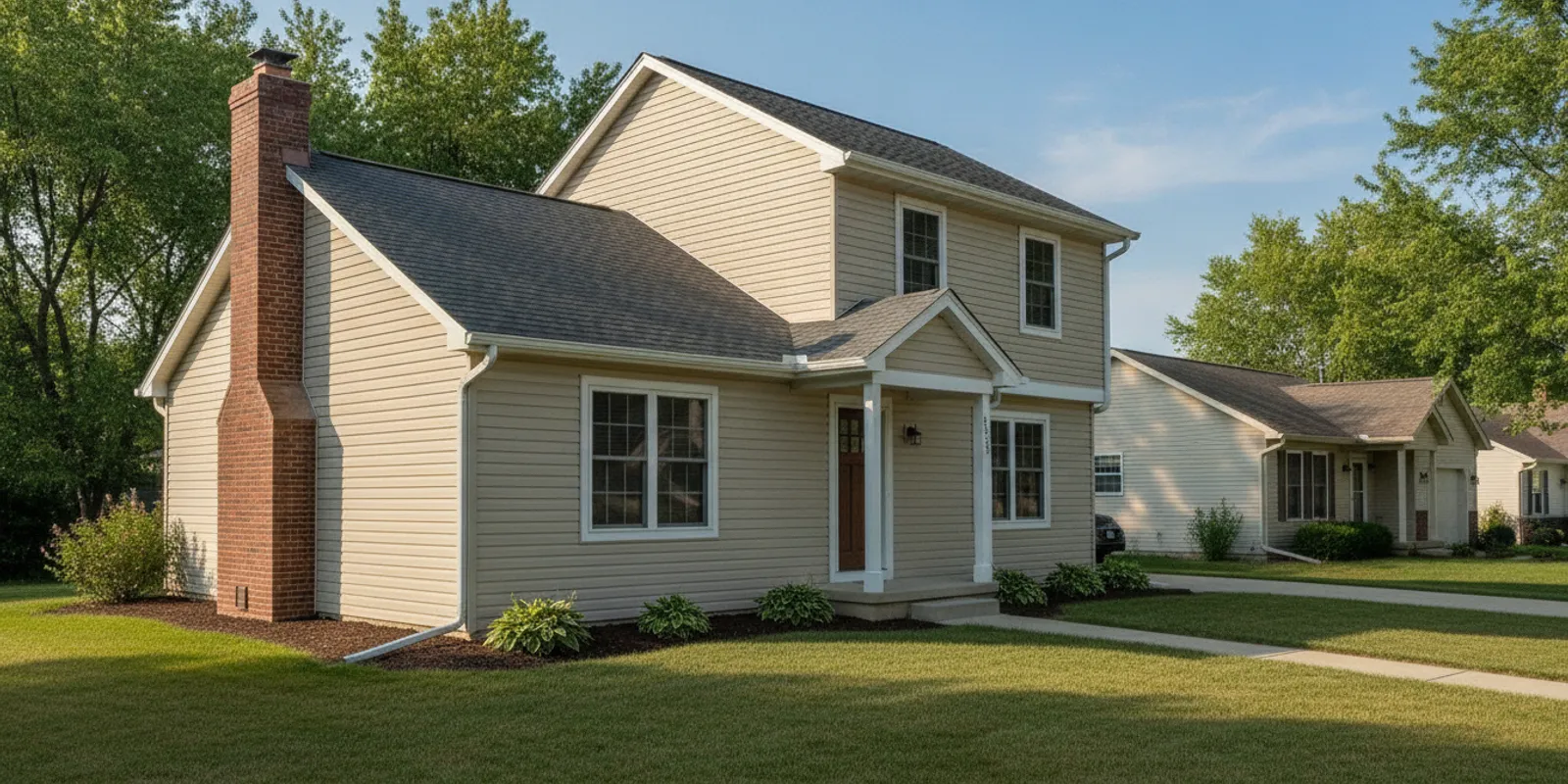
Bring photographs of the exterior and note any areas that concern you. A discussion is most useful when you can compare the same product and scope details across options, rather than relying on general descriptions. The sections below provide a practical way to do that.
What does composite siding mean?
Composite siding is a broad label for exterior cladding made by combining materials. Construction differs by product. Some products use wood fibers and binders; others use different combinations. That means two products called composite siding may not share the same installation requirements, finish, or maintenance instructions.
Start by writing down the exact manufacturer and product line, not just the general material category. Ask for the current installation guide, care instructions, and warranty documents for that product. These documents help you distinguish a product-specific requirement from a general assumption about composite materials.
It also helps to compare a particular composite product with the other materials you are considering rather than treating all composite boards as interchangeable. A Rogers siding contractor can review the exterior and discuss a project scope. The manufacturer’s documents remain the reference for product-specific requirements. You can also review this overview of new siding decisions for broader context.
Which appearance details should you compare?
Look at how the siding will read across the whole exterior. A small sample may not show the effect of board width, texture, shadows, trim, or the home’s fixed features. Consider the roof, windows, masonry, entry, and the amount of wall visible from the street.
- Color: View samples outdoors beside roofing, masonry, and window frames. Check them in more than one light condition if possible.
- Profile: Compare horizontal, vertical, and shingle-style profiles if they are available for the product. The lines and board width can change how the home’s proportions appear.
- Texture: Examine a full-size sample from close up and at a normal viewing distance. Ask whether surface variation is expected across pieces.
- Trim: Confirm which trim components are included and how outside corners, windows, doors, and transitions will look.
- Joints and edges: Ask where seams will fall and how exposed edges will be finished. These details can affect the finished appearance as much as the field boards.
- Future matching: Record the product name, color, profile, and finish. Ask how a later repair would identify matching materials.
For a practical comparison, place the sample next to a photo of your home or view it against a larger exterior area. Look at the siding and trim together, not as separate choices. If you have a strong preference for a particular profile, make sure the written proposal names it rather than leaving the selection open.
Photographs of installed products can help you understand scale, but do not assume a photo shows the exact color or finish you will receive. Ask whether the example uses the same product line and trim details. Your own sample and the product documentation are more useful than a generic image when making the final selection.
Consider how choices work together. For example, a broad horizontal profile can create a different visual rhythm from narrow vertical boards. A dark sample may appear more prominent beside pale trim, while a close color match can make edges less noticeable. These are visual observations, not guarantees about the final result; check a sample and confirm how the installer plans to treat corners and transitions.
How should Minnesota moisture details affect your choice?
Rain, snow, freeze-thaw cycles, and seasonal changes make water management an important part of a Minnesota siding project. The siding is the visible cladding, but the wall assembly and the way openings are detailed also matter. Water needs a planned route away from vulnerable areas, including windows, doors, roof-to-wall transitions, penetrations, corners, and the bottom edge.
Ask the contractor to explain how the proposed work will address the existing wall condition. The method should reflect the selected product’s instructions and the actual home, rather than a one-size-fits-all assumption. The U.S. Department of Energy provides general information about buildings and energy at its official website; product installation details should still be checked against the manufacturer’s guide and applicable local requirements.
Before comparing proposals, ask each contractor the same questions:
- How will visible damage or soft areas be identified during preparation or after removal?
- What flashing and water-management details are planned at windows and doors?
- How will the bottom edge, corners, penetrations, and roof-to-wall transitions be finished?
- What is the plan if concealed conditions require additional work or a change in scope?
- Which product instructions or written details will guide installation?
- How will the work connect to existing trim or adjacent exterior materials?
The point is to understand whether the water-management plan has been considered, not to prescribe one detail for every house. If the answer is vague, ask for the relevant detail to be explained in the proposal. A useful follow-up is to pick one opening, such as a front window, and ask the contractor to describe the sequence of preparation, flashing, and finish work in plain language.
Also discuss what is already on the house. Existing trim, older repairs, or layers of siding can affect what is visible before work begins and what might be found during removal. Ask how the crew will document conditions and pause to discuss any change that affects the plan. This is more useful than assuming hidden areas are sound or assuming that a particular repair will be necessary.
For a broader overview of siding decisions, see the company’s guide to new siding. Keep the focus here on the particular product and house: the question is whether the proposed details are clear and consistent with the product guidance.
What maintenance should you expect?
Care varies by product, finish, and exposure. Request the written maintenance guidance before choosing. Compare instructions for routine cleaning, periodic inspection, touch-ups, and repair. Avoid relying on a general claim that any siding material is maintenance-free.
Ask what cleaning methods are allowed. Some products may have restrictions on pressure washing, abrasive tools, or particular cleaners. Do not assume a cleaning method that works for another siding type is suitable for the product you are considering. Follow the product documentation, especially when cleaning near joints and trim.
It is also useful to know what the manufacturer considers damage and how to respond. Ask whether surface marks can be addressed locally, whether a damaged piece can be replaced, and how repairs should be finished. These questions are about understanding the care process, not predicting that a particular problem will occur.
Build a simple seasonal inspection routine around the manufacturer’s guidance. From the ground, look for loose or displaced pieces, visible gaps, damaged trim, or signs that water is not draining away as expected. Do not climb or pull at panels to investigate. Record what you see, when it appeared, and the location so that a professional can understand the concern. This is a practical record, not a substitute for product-specific maintenance instructions.
Keep a project folder with the product name, finish, installation guide, warranty documents, care instructions, and any approved changes to the scope. If you later need a repair or have a question, these details can help identify the correct material. If your home has existing damage, the Rogers siding repair guide discusses vinyl siding decisions; its product-specific advice should not be assumed to apply to composite siding.
How can you compare composite siding options side by side?
Use the same checklist for each product and proposal. Record specific answers instead of relying on general descriptions. If one proposal names a product and explains preparation while another does not, the difference is important even if both use the phrase composite siding.
| Comparison area | What to review | Question to ask |
|---|---|---|
| Product identity | Manufacturer, product line, profile, finish, and documents | Can I review the current installation and care instructions? |
| Appearance | Color, texture, board dimensions, trim, and transitions | Can I see a sample with the proposed trim? |
| Moisture planning | Openings, edges, transitions, and wall condition | How will the written plan address water-management details? |
| Maintenance | Cleaning, inspection, touch-ups, and repairs | What does the manufacturer recommend? |
| Scope | Removal, preparation, installation, cleanup, and concealed conditions | What is included, and how will a change be discussed? |
| Closeout | Product records, care guidance, and remaining questions | What documentation will I receive when work is complete? |
When you compare proposals, mark each item as clearly stated, needs clarification, or not included. This simple method helps you spot missing information without assuming that every project needs the same scope. If a detail matters to your decision, ask for it in writing before you approve the plan.
For example, imagine Proposal A names a product and color but says little about openings, while Proposal B includes a different product and a description of the installation sequence. Neither should be judged on its label alone. Ask both contractors to answer the same questions: what is included at windows and corners, what preparation is planned, and what happens if removal reveals an unexpected condition? Add the responses to your comparison notes so the difference is visible.
A second example: you prefer the appearance of one product, but its care instructions are not yet available. Mark maintenance as unresolved instead of assuming it will be easy to maintain. Request the document, then compare the actual cleaning and inspection steps with the alternative. A fair choice uses confirmed details, not a guess based on a material name.
What should the written installation plan make clear?
A useful proposal should identify the product, profile, color, trim approach, and the areas included. It should describe the preparation and installation being proposed, as well as what is excluded. Confirm whether removal of existing siding is part of the work and how nearby landscaping, paths, and exterior fixtures will be protected.
Ask how the crew will handle the discovery of concealed damage. The plan should explain how an unexpected condition will be documented, communicated, and approved before the work scope changes. You should understand who will contact you, what information you will receive, and how the decision will be recorded.
Clarify what cleanup and closeout mean. Ask how debris will be handled, what condition the work area should be in when the crew leaves, and whether you will receive the product and care documents. These points help you understand the full process rather than focusing only on the visible material.
It can help to read a proposal in three passes. First, underline the exact material and finish so the chosen product cannot be confused with a similar option. Second, circle every location that needs a transition, such as a window, door, corner, or meeting with another exterior material. Third, list any phrase that leaves room for interpretation, such as “as needed” or “repair where required,” and ask how that item will be assessed and approved. This method turns a broad document into specific questions.
Compare the actual work descriptions, not only the product labels. Two proposals may use different products or describe different preparation, so they are not necessarily equivalent. The engineered wood siding guide offers a related material overview, while manufacturer documentation should be used for requirements specific to the product selected.
How can you make a fair comparison if proposals differ?
First, separate product differences from scope differences. One proposal may specify a different profile, trim system, or finish. Another may include different preparation or a different approach to opening details. Ask for the exact product names and a description of the included work before drawing conclusions.
Next, make a short list of the questions that affect your decision most. For example, if appearance is your priority, ask for matching samples and clarification about trim. If you are concerned about water entry, ask how the proposal addresses openings and transitions. If you want to understand upkeep, compare written care instructions rather than broad claims.
Then ask for unanswered items to be resolved in writing. This creates a clearer basis for comparing plans and helps prevent misunderstandings about what was discussed. If the scope changes after work begins because a hidden condition is uncovered, ask that the change and your approval be documented.
Use a simple decision sequence. Eliminate any option for which the product identity is unclear. Then resolve questions about the wall condition and water details. Next, compare samples and trim combinations, followed by care and repair instructions. Finally, read the scope and closeout provisions. This order prevents a strong first impression from distracting from unanswered installation questions.
If two options remain close, write down the trade-off plainly. You might prefer one finish but find its care documentation less familiar, or prefer a proposal with clearer scope while still needing to confirm a color. Ask for the missing detail rather than treating the choice as settled. Keep your comparison factual: “sample viewed,” “document received,” or “opening detail explained” is more useful than a vague note such as “seems better.”
What questions can you bring to a siding consultation?
A consultation is more useful when you bring a few priorities and describe what you already know about the exterior. Note any past leaks, loose or damaged panels, previous repairs, or places where water collects near the home. Photos can help explain a concern, though an on-site review is needed to understand the actual condition.
- Which exact product, profile, color, and finish are being considered?
- How will the selected color and trim work with the roof, windows, and other fixed features?
- What preparation and water-management details are included in the proposed scope?
- What cleaning and inspection guidance does the manufacturer provide?
- How will concealed damage or a scope change be documented and discussed?
- What product and installation documents will I receive?
- What parts of the project are not included in the proposal?
Bring the checklist from the table and use it to keep the conversation focused. If you are comparing more than one product, write down the same information for each one. That makes it easier to notice where a selection is clear and where you still need an answer.
Referred Restoration serves homeowners in Rogers and surrounding communities with exterior restoration services, including siding. You can review the local siding service overview and identify the details you want discussed.
Before the conversation, organize your notes by topic rather than by contractor. Put product questions together, then appearance, water details, care, and scope. This makes it easier to ask the same question of each proposal and record the answer immediately. If a term is unfamiliar, ask for a plain-language explanation and, when it concerns installation, ask where the requirement appears in the manufacturer’s guide.
For a home in Rogers or Cottage Grove, also note the sides of the house that receive different exposure or have more complex transitions. A shaded wall, a frequently wet area, or a wall with many windows may raise different questions than a simple uninterrupted elevation. Do not infer a defect from exposure alone; use those observations to guide the review and ask how the product instructions apply.
Frequently asked questions
Is composite siding the same as engineered wood siding?
Not necessarily. Composite is a broad category and product construction varies. Ask for the exact product name and its documentation instead of assuming that two material labels mean the same thing.
Can composite siding be used on any Minnesota home?
Suitability depends on the specific product, the condition of the wall, and the manufacturer’s installation requirements. Have the exterior reviewed and confirm that the proposed product and installation plan fit the project.
What matters most when comparing maintenance?
Compare the written instructions for cleaning, inspection, touch-ups, and repair. Requirements can differ by product and finish, so use the guidance for the specific product you select.
Should I choose based on a sample alone?
A sample helps you evaluate color and texture, but consider it with trim, roofing, and windows. Also review the written scope and water-management details before deciding.
What if the proposals describe different work?
Ask each contractor to clarify the product and included scope. Compare preparation, opening details, removal, and handling of concealed conditions, and request written answers for points that affect your decision.
Contact Referred Restoration online
What is a practical next step?
Gather your preferred appearance, product questions, and notes about any known exterior concerns. Then compare named products and written installation plans using the same checklist, so your decision reflects both the visible finish and the work behind it.