Vinyl siding repair Rogers homeowners can rely on begins with understanding what failed, how far the damage extends, and whether the wall behind the siding remains protected. A cracked panel after hail, a loose section after wind, or a warped area that appeared over time may seem cosmetic. But openings at seams and transitions deserve attention because siding is part of an exterior system that sheds water.
Schedule a free siding inspection
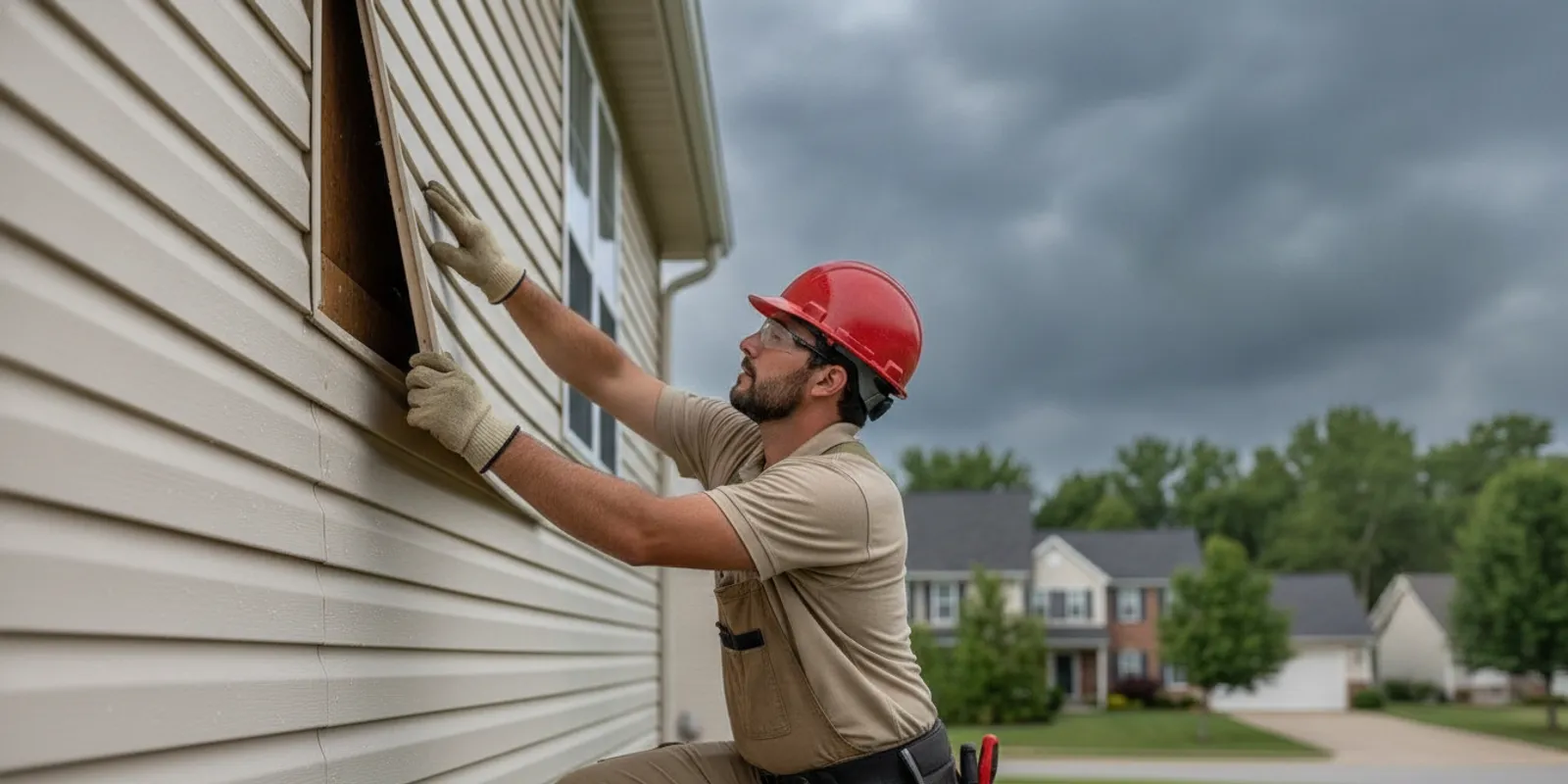
A full replacement is not automatically necessary when one panel is damaged. A limited repair may be a sensible answer when the surrounding siding is secure and matching material is available. Broader work may be worth discussing when damage repeats, panels are brittle, or trim and attachment points are also failing. This guide shows how to assess the situation and prepare for a useful inspection in Rogers, Minnesota.
What should you check first when vinyl siding is damaged?
Start with a visual check from the ground. Do not climb onto a roof or ladder to inspect a wall. Note the affected area and look for changes nearby, rather than focusing only on the most obvious crack.
- Cracked, split, punctured, or missing panels.
- Loose, bowed, buckled, or displaced sections.
- Open seams around corners, windows, doors, or utility penetrations.
- Damaged trim, corner posts, starter strips, or channels.
- Warping, bubbling, or discoloration that may reflect heat or moisture exposure.
- Interior staining, peeling paint, dampness, or a musty odor near the same wall.
Take photographs from several angles, including a wider view that shows where the damage sits on the wall. Record when you noticed it and whether it followed hail, strong wind, a fallen branch, or routine activity. Avoid pulling on loose pieces or trying to push them back into place. Those details help a contractor distinguish a local impact from a problem that may affect connected panels.
What causes vinyl siding damage in Rogers?
Rogers homes experience cold winters, freeze-thaw movement, seasonal wind, snow, and occasional hail. Siding must move with temperature changes while remaining attached and shedding water. Damage can happen at once after an impact or emerge gradually as materials age and connections loosen.
Storm impact and wind
Hail can crack or mark panels, while wind may lift an edge or pull connected sections out of alignment. A branch can puncture one area, but a storm can also affect trim, roof edges, windows, and gutters. After severe weather, document what you can see without disturbing loose material. If several exterior surfaces appear affected, an inspection of storm damage restoration in Rogers can help put the siding concern in context.
Seasonal movement and installation details
Vinyl expands in warmth and contracts in cold weather. The fastening system needs to allow that movement. A panel that was fastened too tightly or caught in a channel may ripple, buckle, or shift as temperatures change. Replacing the visible piece without correcting a restrictive attachment can leave the same symptom in place.
Water paths and everyday impacts
Open seams and damaged trim can be more concerning near a window, door, corner, or lower wall where runoff reaches the surface. Lawn equipment, stored materials, and branches may also strike panels. Consider the location: a small puncture in an exposed field panel is not the same inspection question as a gap beside a window head or roof-wall transition.
Age, fading, and brittle material
Older vinyl may become less flexible, and years of sun can change its color. Manufacturers may also update product lines. A new panel with a similar color name can still look different beside weathered siding. Material availability and appearance should be discussed before deciding that a single-panel repair will blend acceptably.
When is a focused repair a reasonable option?
A focused repair may fit when damage is limited, adjacent panels remain straight and secure, trim and channels are sound, and there is no indication that moisture has reached the wall. A contractor can replace a damaged panel or correct a limited loose section while retaining the rest of the exterior.
Repair is worth discussing when:
- One panel or a small, clearly defined group has a defect.
- The surrounding siding remains flexible and attached.
- A compatible profile and color can be sourced.
- Trim, flashing, and attachment points remain usable.
- The problem followed a localized impact rather than recurring across the wall.
- The wall appears dry and protected once the affected area is assessed.
Ask what caused the failure and how the repair will address it. A replacement piece alone may not solve a movement problem, a damaged channel, or an open transition. The scope should say which components will be adjusted or replaced and how the new section will connect to the existing system.
When should you consider replacing a larger area?
A wider scope can make sense when there are repeated failures, broad brittleness, widespread fading, or damage across more than one elevation. If several panels break during ordinary handling or trim and corner posts are deteriorating, a series of isolated fixes may not address the condition of the system. Repeated repairs at the same location are also a reason to investigate the underlying cause.
Broader replacement deserves evaluation when:
- Damage appears in multiple areas or on several walls.
- Panels are brittle, warped, or repeatedly separating.
- Replacement material cannot be matched closely enough for the chosen location.
- Trim, corners, or attachment channels are failing along with the panels.
- Moisture concerns extend beyond one visible opening.
- Previous repairs have not stopped the same problem from returning.
That does not mean every older exterior must be removed. Separate appearance concerns from performance concerns. If the siding is faded but remains attached and sheds water, a homeowner may decide to monitor it or plan a future update. If panels no longer stay connected or openings expose the wall to water, protecting the assembly should take priority.
How do repair and replacement compare?
Use the comparison below to organize questions for an inspection. It is a planning aid, not a diagnosis; the appropriate scope depends on what is visible and what is found around the affected area.
| Consideration | Focused repair | Larger replacement |
|---|---|---|
| Typical scope | One panel, a small group, or limited trim | One elevation, connected areas, or broader exterior sections |
| Best fit | Isolated damage with sound surrounding siding | Widespread wear, repeated failures, or damage in multiple areas |
| Appearance | Depends on available profile, color, and weathering match | Can create a more consistent appearance across the selected scope |
| Inspection focus | Panel connection, channel, trim, and moisture at the defect | Wall protection, transitions, trim, and condition across the area |
| Planning | Access to a contained work area and review of the repaired section | Material selection, removal, installation, access, and cleanup |
| Key uncertainty | Whether adjacent pieces are sound and matching material is available | What concealed conditions may appear as work proceeds |
Ask the contractor to explain why the recommended scope is proportionate to the evidence. A proposal should distinguish observed conditions from assumptions about concealed materials and describe how any change in scope would be communicated.
What should a siding inspection include?
A useful inspection looks beyond the most noticeable crack. It should consider the panel, how it is held, the transitions around it, and signs that water may have traveled behind the exterior.
Panel connections and attachment
The inspector should check whether panels are engaged with one another, whether fasteners and channels allow movement, and whether the starter strip or corner components are damaged. A single loose panel may be local. A line of loose panels can point to a wider attachment or movement issue. Ask for the reasoning behind the conclusion, not just a recommendation to replace material.
Windows, doors, corners, and roof edges
These transitions need a clear path for water to move away from the wall. The contractor should note gaps, damaged trim, and any detail that appears to direct runoff behind the siding. A defect near an opening may require a different repair sequence from a crack in the middle of a wall.
Nearby exterior systems
Gutters and downspouts influence runoff around lower walls, while roof edges and flashing affect upper sections. If drainage appears related, homeowners can review seamless gutter installation in Rogers and learn about downspout placement around the home. These are connected considerations, not a reason to assume every siding defect is caused by gutters.
Interior clues
Staining, soft drywall, peeling paint, or a musty smell near the exterior wall can help identify where additional investigation may be needed. These signs do not prove that siding caused the issue. Share their location and when they appeared so the inspector can consider other possible water paths as well.
How can you prepare for vinyl siding repair in Rogers?
Good preparation gives the contractor useful context and makes the affected wall easier to access. You do not need to diagnose the siding yourself. Collect observations and let the inspection determine what should be opened or repaired.
- Photograph the damage. Take close and wide views in daylight. Include a reference point, such as a window or corner, without climbing to reach the area.
- Write down the timeline. Note when you first saw the defect and whether it appeared after a storm, yard work, or a temperature change.
- Clear access. Move furniture, planters, stored materials, and decorations away from the wall where work may take place.
- Share relevant history. If you know when the siding was installed or repaired, or have product records, have them available.
- Describe related symptoms. Point out interior staining, gutter overflow, roof concerns, drafts, or water pooling near the wall.
- Leave the siding undisturbed. Do not nail, tape, paint, caulk, or force a loose piece into place before inspection.
- Raise appearance expectations early. Ask whether the existing material can be identified and what a close match might look like beside weathered panels.
Homeowners can review siding services in Rogers and collect questions before contacting a contractor. Referred Restoration describes its process as a free inspection, a custom solution, and professional installation. If storm damage may involve other surfaces, keep photographs and notes together so the inspection can consider the exterior as a whole.
What should a repair proposal explain?
A written scope should make the recommendation understandable before work begins. It should identify the area, the observed issue, the work included, and any assumptions. If the affected panel is removed and concealed damage appears, the homeowner should know how the contractor will pause, explain the finding, and discuss next steps.
- Which panels, trim pieces, channels, or other components are included?
- What evidence suggests the damage is isolated or more widespread?
- How will the wall and adjacent materials be checked for moisture concerns?
- What profile and color are proposed, and how close is the match expected to be?
- How will the replacement connect to existing siding and allow normal movement?
- Are nearby windows, roof edges, or drainage details part of the work or excluded?
- What preparation, removal, cleanup, and final review are included?
- What conditions could change the scope, and how will those changes be approved?
For another perspective on choosing a contractor, the Better Business Bureau siding contractor directory can provide general contractor information. Its listed Rogers market is Arkansas, not Minnesota, so do not treat it as a local directory for Rogers, Minnesota. Confirm service area and relevant project experience directly with any contractor you consider.
How do you compare proposals fairly?
When two recommendations differ, compare the reasoning and scope rather than relying on the headline description. One proposal may cover only replacement panels; another may include damaged trim or an inspection of a transition. Ask each contractor to identify the same affected boundaries and explain what is excluded.
For example, imagine one cracked panel below a window and a nearby interior stain. A narrow panel-only proposal may not address the stain, while a broader proposal may investigate the opening and the wall behind it. The stain does not establish that siding caused moisture, but it is a reason to ask how the inspection will distinguish among possible sources. In a different case, a single puncture on an otherwise sound wall with no nearby interior symptoms may support a more contained repair after the panel connection and wall are checked.
Keep the comparison practical: materials and profile, area included, treatment of trim, inspection of concealed conditions, cleanup, and the process for approving additional work. Ask for unclear terms to be explained in writing. The aim is not simply to choose the smallest or largest scope, but to understand how the proposed work answers the problem you can observe.
What should you check after siding work is complete?
Walk around the repaired area with the contractor and compare it with the agreed scope. Panels should be seated and aligned, trim should be complete around the relevant openings and corners, and there should be no obvious exposed gap or loose edge. Look at nearby surfaces for unintended damage and check that debris has been removed from landscaping and drainage paths.
Ask how to report a concern and request any product details or care instructions relevant to the work. Keep photographs, the written scope, and correspondence with your home records. If the repair followed a storm, confirm whether roof or gutter concerns were also noted. For roof-related follow-up, homeowners can review roof repair in Rogers as part of a coordinated exterior plan.
Frequently asked questions
Can one cracked vinyl siding panel be replaced?
Often, a single panel can be replaced when adjacent siding and attachment components remain sound. The decision depends on the full extent of damage, access to compatible material, and the condition of the wall behind it.
Should siding be checked after hail or strong wind?
Yes. Hail may leave more than one mark, and wind can loosen connected panels. A ground-level visual check can document concerns, while an inspection can review siding and related exterior surfaces.
Why might a new panel look different?
Sun exposure changes the appearance of older vinyl, and product lines can change. Even a replacement with a similar named color may stand out next to weathered material, so discuss the expected match before work.
Can loose siding allow water behind the wall?
An open seam or displaced panel can create a possible path for water, especially near a transition or during wind-driven rain. Have the area assessed instead of sealing or fastening it without understanding how it is intended to shed water.
How do I choose between repair and replacement?
Consider how many panels are affected, whether the surrounding siding is sound, whether matching material is available, and whether there are signs of moisture or repeated failure. An inspection should explain why the proposed scope fits those findings.
Contact Referred Restoration online
With clear observations and a written scope, Rogers homeowners can make an informed decision about repairing a limited siding defect or addressing a broader exterior concern.