
Gutters do more than catch rain at the roof edge: the system needs to move runoff safely away from the house. If water spills over, drains poorly, or collects beside the foundation, the right next step is to understand where the flow is failing before choosing a fix.
A practical plan for gutters solutions in elk river mn starts with checking the roofline, gutter condition, downspout route, and where water ends up around the home. Those details help distinguish a repair from a broader system change; confirm service availability for your address before arranging an assessment.
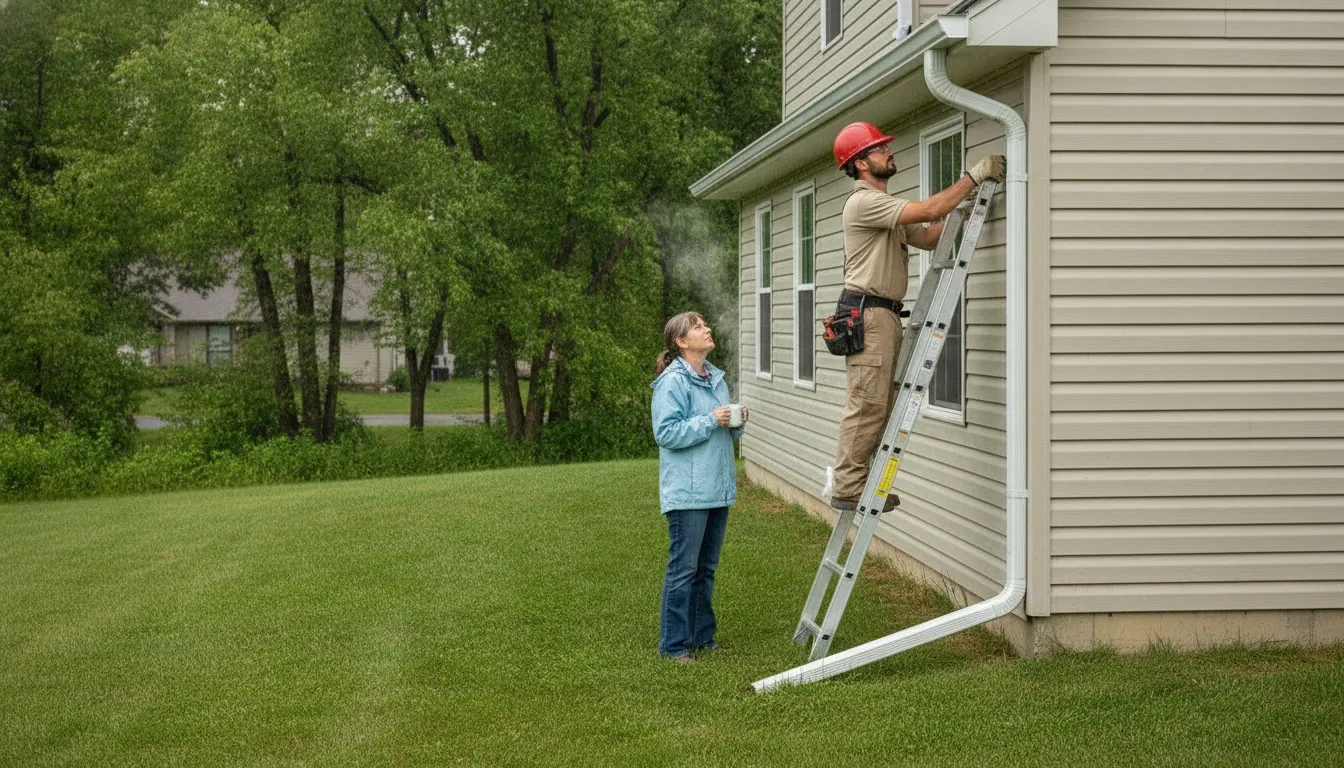
Building America guidance likewise emphasizes directing roof water away from the foundation with gutters and downspouts (source). A careful assessment begins by tracing the water’s path and looking for the points where it backs up, leaks, or discharges too close to the house.
Contact Referred Restoration online to ask whether your address is within the service area.
How Gutter Solutions in Elk River MN Start With an Assessment
A useful assessment follows water from the roof edge to the point where it leaves the property. Looking at the gutter alone can miss the source of a recurring leak or overflow. The goal is to understand how the parts work together. Then decide whether a focused repair or a broader change makes sense.
Start at the roofline. Check whether the gutters are firmly attached and appear to follow a consistent slope toward their outlets. Look for separated joints, visible gaps, dents, or sections pulling away from the fascia. Staining on siding or trim, peeling paint, or damp areas below the eaves can help identify where water may be escaping. Assess those signs in context rather than treating them as a diagnosis.
Next, look for debris or blockages that could restrict water flow, and note whether water spills over during rain. Pay attention to sagging sections, standing water after rainfall, and loose or disconnected downspouts. An inspection should also trace where each downspout releases water. A clear gutter cannot manage runoff well if its outlet is blocked or discharges beside the foundation. Guidance from the U.S. Department of Energy’s Building America Solution Center recommends directing roof runoff away from the home and reducing soil saturation around the foundation (gutter and downspout guidance).
Finally, consider the roof edge and nearby materials as part of the same system. If the fascia looks soft, damaged, or persistently damp, that may need attention alongside the gutter rather than a patch to the channel alone. Referred Restoration describes its gutter inspection and repair services for identifying leaks, clogs, and damage. The company also lists repairs for leaks, sagging sections, and blockages. That page covers Rogers. Confirm directly whether service is available for your Elk River address before arranging an inspection.
A clear assessment should explain what was observed, where water is being held or released, and which parts need attention. That gives a homeowner a practical basis for comparing next steps without assuming every symptom calls for the same solution.
When Is Gutter Repair Enough?
A repair may be a reasonable next step when the problem is limited to one section. The rest of the system should still carry water as intended. Examples include a localized leak, a sagging section, or a blockage that can be cleared without uncovering wider damage. These are among the issues Referred Restoration lists for gutter repair, alongside inspections to identify leaks, clogs, and damage. That does not mean every instance can be resolved with a repair. The underlying cause and condition of the surrounding gutter still matter.
For example, water spilling over one area may be connected to a blockage, while a section that pulls away or sags may need closer evaluation. Clearing visible debris or addressing one weak point may help. It is important to see whether water then flows through the full run and reaches a suitable discharge point. A repair that treats only the visible symptom may not address a continuing drainage problem.
Look for a pattern, not just one symptom
Repeated leaks in the same place, sagging that returns, or blockages that keep causing overflow are reasons to have the system assessed. Do not assume another small repair will be enough. Recurrence does not automatically mean the whole gutter system needs replacement. It does mean the inspection should consider the section’s condition and how water moves through the system. The recommendation should address the cause, not just the latest sign.
If water continues to spill over after a blockage is removed, or drainage problems appear in several areas, ask for a broader look. The gutter may need a focused repair, attention to another part of the drainage path, or a different scope of work. An inspection can distinguish those possibilities. Referred Restoration describes its gutter inspections as a way to identify leaks, clogs, and damage, followed by a recommendation based on the home’s needs.
For more context on when a wider change may be appropriate, see this guide to gutter replacement signs for Minnesota homes. It covers replacement indicators in more detail. It should not be read as a conclusion that every leak or sagging section requires replacement. Referred Restoration’s gutter inspection and repair services page describes the company’s Rogers-area offerings. Homeowners in Elk River should confirm service availability for their address before making an enquiry.
When Should You Consider Gutter Replacement?
Replacement is worth assessing when the gutter system no longer reliably carries roof runoff away from the home, or when the same trouble returns after repairs. A single loose section or isolated leak may have a limited fix. Recurring problems can point to a broader issue with the system’s condition, layout, or ability to handle runoff from the roof. An inspection can help distinguish a repairable defect from a system that needs more extensive work.
Look at how the gutters function as a whole, not just at one visible spot. During rain, note whether water is spilling over, escaping at joints, or reaching the ground near the foundation instead of moving through the downspouts. Also pay attention to sagging or sections that seem difficult to keep secure. These observations are useful clues, not a diagnosis. A blockage, loose connection, or discharge issue may contribute, so identify the cause before deciding on replacement.
Replacement may also be a sensible option to discuss if repairs have become repetitive, several areas need attention, or the existing setup does not suit the roof and drainage pattern. The right recommendation depends on the home’s conditions. An assessment should consider the roofline, existing gutters and downspouts, and where water is directed after it leaves the system. Federal building guidance emphasizes appropriately sized gutters and downspouts, rather than treating one configuration as right for every home: guidance on foundation drainage.
If a broader replacement is being considered, ask what type of system is appropriate for the home’s layout. Referred Restoration’s Rogers service page describes seamless gutter installation. Its Minnesota gutter system planning guide explains the planning side without requiring a homeowner to choose based on appearance alone. The available information does not establish that one gutter style is best for every home. Confirm the options during an assessment. Verify whether service is available for your Elk River address before arranging work.
A clear recommendation should explain what is failing, whether targeted repair remains practical, and how the proposed system will direct water away from the home. That gives you a useful basis to decide without treating every leak or overflow as proof that the entire system must be replaced.
How Do Downspouts and Site Drainage Protect a Home?
Gutters collect runoff from the roof, but the drainage system only works when downspouts carry that water to a suitable discharge point. If roof water spills beside the house or repeatedly saturates the same patch of soil, moisture can move toward the foundation. The U.S. Department of Energy’s Building America guidance explains that roof runoff can saturate surrounding soil and enter the home through the foundation when it is not drained away (foundation drainage guidance).
Capacity matters, too. Gutters and downspouts should be appropriately sized for the roof and the water they need to manage, rather than selected by appearance alone. Roof shape, the amount of runoff each section collects, and how water moves through the property all affect whether a system can direct water reliably. The Building America Solution Center describes gutters and downspouts as a way to direct rainwater away from the foundation and reduce soil saturation (gutter and downspout guidance).
The discharge route needs to suit the actual site. A downspout extension, a route toward a sloping area, or another drainage method may be appropriate, but not every option fits every property. Nearby walkways, neighboring lots, landscaping, soil conditions, and existing drains can affect where water can go. Sending runoff toward a low spot beside the house, across a path, or onto a neighbor’s property can shift the problem rather than solve it.
That is why grading and drainage should be assessed together with the gutter system. The ground’s slope, soil, and surrounding landscape influence how water flows and soaks in. University of Maryland Extension’s downspout redirection guidance offers ways to manage discharge. Homeowners should consider property conditions before choosing a route. Avoid assuming one extension length or layout is right for every home; local conditions and applicable requirements may differ.
Notice whether water spills over the gutter during rain, a downspout empties beside the foundation, or the ground stays wet or collects water after runoff. These clues do not identify a cause on their own: a blockage, undersized section, poor discharge route, or site grading may produce similar symptoms. Note where water appears and how it moves. Then have the full path assessed from roof edge to discharge area. A site-specific assessment can help determine whether the issue involves capacity, downspout placement, grading, or a combination.
What Should Homeowners Check Through Minnesota Seasons?
Gutter checks are most useful when they follow what is happening around the roof and yard. Look from the ground for sections that appear loose or out of line, visible debris at the edges, and water marks or damp areas below the eaves. During a safe rain, notice whether water spills over the gutter or whether downspouts carry it away from the house. Do not climb onto a roof or reach into a gutter unless you have the right equipment and experience.
Spring: look for winter and thaw-season changes
After snow and ice have cleared, check for displaced sections, loose fasteners, bent downspouts, and debris left in the channels. Look at the ground near the foundation for places where runoff has collected or washed soil away. Ice dams form through a combination of snow cover, outdoor temperatures, and uneven roof-surface temperatures, not simply because a gutter is dirty. The University of Minnesota Extension explains that water backing up behind an ice dam can enter the home and damage interior materials. If you see staining, dampness, or signs of a leak, investigate the source rather than assuming the gutter alone is responsible (UMN Extension’s guidance on ice dams).
Fall: watch leaves and keep water moving
As leaves accumulate, check whether they are covering the gutter opening or blocking the downspout inlet. Clear debris safely, or arrange help if the roofline is difficult to reach. After cleanup, observe water flow during rain and confirm that discharge does not pool beside the foundation. Minnesota’s homeowner flooding checklist also recommends cleaning gutters and positioning downspouts so water flows away from the foundation (UMN’s homeowner checklist).
Gutter guards can reduce the amount of leaves and other debris that enters a system, but they do not remove the need to inspect gutters and downspouts. The roofline, guard surface, and outlets still need periodic attention, especially after nearby trees shed leaves or a storm moves debris. Compare the Minnesota gutter guard options if you are considering a barrier, and use the Minnesota gutter maintenance calendar for a broader seasonal schedule. These checks help identify when routine clearing is enough and when drainage needs a closer look.
How Do You Choose a Gutter Solution for Your Home?
Start with what happens during and after rain, rather than choosing a product first. Note where water spills over the gutter and whether it reaches the ground near the foundation. Look for pooling or erosion, too. These observations can point to different parts of the drainage system, but they do not establish the cause on their own.
Check the route from roof edge to discharge point. Look for visible debris or damage from the ground, and observe whether downspouts carry water away from the house. The U.S. Department of Energy’s Building America guidance recommends appropriately sized gutters and downspouts. PNNL explains that they help direct roof runoff away from the foundation and reduce soil saturation (Building America guidance; PNNL resource guide).
| What you notice | What to check | Possible next step |
|---|---|---|
| Overflow or slow flow. | Debris. Blocked outlets. | Clear debris safely. Arrange inspection. |
| Loose or leaking section. | Connections. Nearby gutter condition. | Ask about a focused repair. |
| Water near the home. | Downspout route. Ground slope. | Assess a suitable drainage route. |
| Several recurring failures. | Overall system condition. | Compare repair and replacement. |
For water beside the foundation, federal guidance describes discharge to sloping grade more than five feet away or a separate underground catchment more than ten feet away. Those are guidance examples, not one-size-fits-all directions. Site conditions should be considered before choosing a route (guidance on foundation drainage).
A useful evaluation should connect what you observe with a practical recommendation. Next steps might include maintenance, targeted repair, improved downspout routing, or considering a new system. Gutters and downspouts should be sized for the home, not selected by appearance alone. Consider roof layout, discharge locations, and the home’s grading together.
Referred Restoration’s gutter inspection and repair services are described on its Rogers-area page. That page does not confirm service availability in Elk River. Ask whether your address is within the service area and whether an inspection can evaluate the drainage issue before arranging work.
Contact Referred Restoration online or call (763) 726-4245 to confirm whether your Elk River address is served.
Frequently Asked Questions
How often should I inspect my gutters?
Check them at least in spring and fall, and after a major storm if you notice water spilling over or debris collecting. Look for loose or sagging sections, leaks, blocked outlets, and water pooling near the home. The right cleaning schedule depends on nearby trees and what you observe, so reassess if clogs return between checks.
How can I tell whether a gutter needs repair or replacement?
A localized leak, loose hanger, or isolated blockage may be repairable when the surrounding system remains secure and drains properly. Widespread deterioration, repeated failures, or several sections that sag or leak call for a full assessment. Have the condition and water flow checked before deciding; a symptom alone does not establish that the whole system needs replacement.
Where should downspouts release roof water?
They should carry water away from the foundation to a route that drains safely across your property, rather than leaving it beside the house. Building America guidance describes discharge to sloping ground at least five feet from the foundation, or to a separate underground catchment at least ten feet away. Site slope and drainage conditions matter (PNNL Building America guidance).
Do gutter guards mean I will never need to clean gutters?
No. Guards can help limit leaves and other debris entering the gutter, but they do not guarantee that water will flow freely in every condition. Debris can collect on top of a guard or block an outlet. Inspect the system periodically and confirm that water moves through the gutter and downspouts after rain.
Does Referred Restoration provide gutter service in Elk River?
The available company information confirms gutter services in Rogers, but does not confirm coverage in Elk River. Service availability can depend on the property’s address, so contact the company and ask them to verify your location before arranging an inspection. Do not assume that a nearby service page means your home is within the service area.
Contact us to check coverage for your address
Gutter concerns can have different causes, so an address-specific conversation can help clarify whether an assessment or repair is available. It can also help identify next steps that may fit your home. Service availability in Elk River should be confirmed for your address.
Contact Referred Restoration online to ask about coverage and discuss your gutter concerns. You can also call (763) 726-4245.