
When a roofing project covers only 90 square feet, the first estimate looks simple. That area is just under one roofing square, but the bundle count still depends on the shingles you choose and how the roof is laid out.
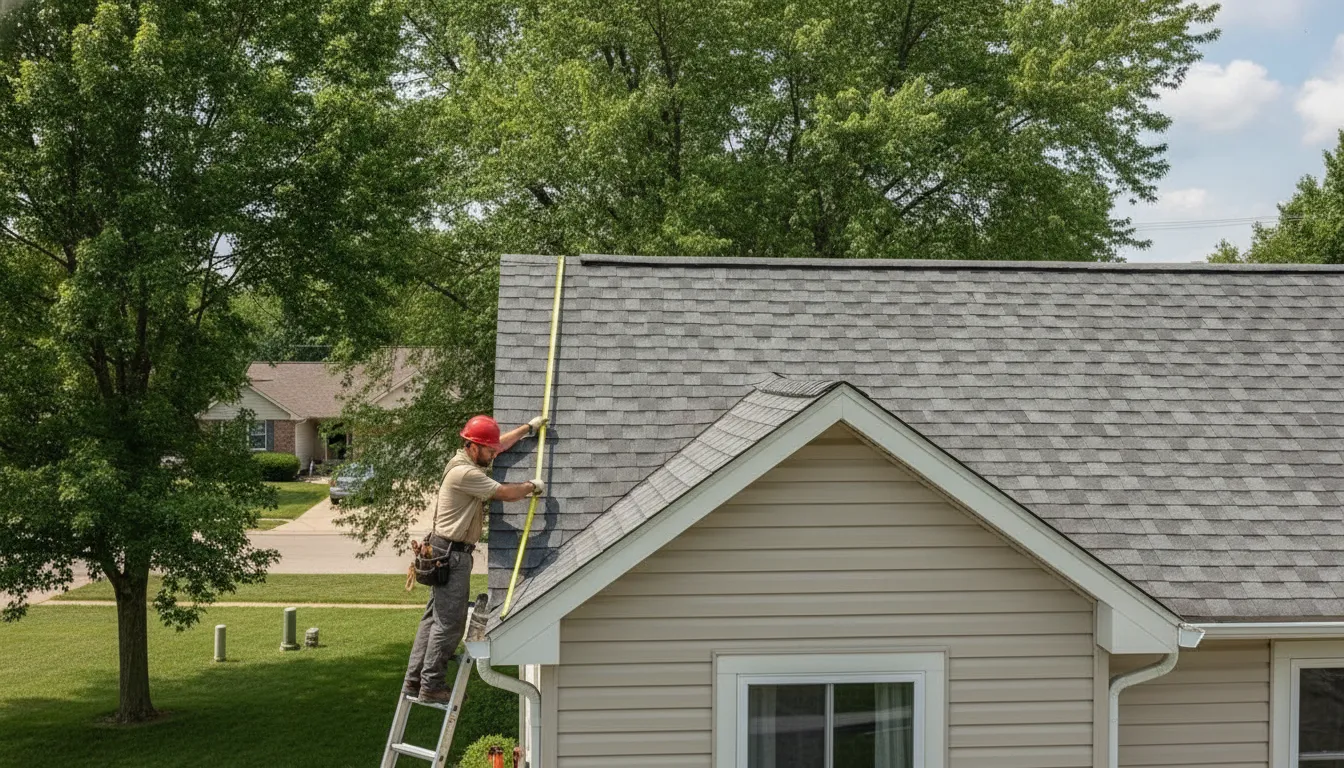
For how many bundles of shingles for 90sq ft, the usual baseline is about 2.7 standard asphalt-shingle bundle equivalents. That means 3 bundles when the product label supports roughly 33.3 square feet per bundle. Treat that as a starting point, not a final order.
Contact Referred Restoration online
Before buying materials, confirm the manufacturer’s coverage information and consider cuts, valleys, hips, penetrations, pitch, and any damaged areas. A small roof section can need more careful planning than the square-foot number suggests. The calculation below shows how to check the baseline, then adjust it responsibly for the roof itself.
How do you estimate how many bundles of shingles for 90 sq ft?
For a simple 90-square-foot area, the baseline answer is about 2.7 standard-bundle equivalents. Because shingles are sold in whole bundles, that usually rounds to three bundles. But only when the product label confirms similar coverage and the 90 square feet represents the actual shingle area.
Here is the calculation:
90 square feet divided by approximately 33.3 square feet per standard asphalt shingle bundle equals about 2.7 bundles. A roofing square is 100 square feet, so the same calculation can be shown as 90 divided by 100, multiplied by three bundles per square. Both methods produce the same planning figure. The three-bundle result is a baseline, not a universal order quantity.
Why three bundles may not be the final answer
Bundle coverage is not identical for every shingle product. Shingle style, dimensions, and the manufacturer’s packaging can change how much roof area one bundle covers. Before purchasing, read the product label or manufacturer specifications and use its stated coverage. If that coverage differs from 33.3 square feet, recalculate rather than relying on the standard shortcut.
The calculation also assumes that 90 square feet is a flat, measured shingle area. It does not automatically represent the amount of material needed for a sloped roof section. Roof measurement uses length, width, and pitch. A sloped surface can contain more actual roofing area than its footprint, and the shape of the roof can create additional cuts. Valleys, hips, penetrations, and other details may also affect the material allowance.
That distinction matters even for a small section. If 90 square feet is the footprint of a roof plane rather than its measured surface area, do not treat three bundles as a complete order. Confirm the pitch and measure the plane itself first. For a simple area calculation, three bundles may be a reasonable starting point when the label supports it. For an actual repair or replacement, the complete measurement should account for the roof’s geometry, product coverage, and installation details.
For a broader explanation of how shingle bundles are measured, see the related guide on this site. This 90-square-foot example is narrower: it shows the arithmetic, then identifies the assumptions that must be checked before turning a baseline into a roofing-material order.
How do you calculate shingle bundles from roof area?
A reliable bundle estimate starts with roof area, not the number of shingles visible from the ground. Roofing professionals use a square as a standard area unit. One roofing square equals 100 square feet. From there, convert the measured roof area into squares, check the coverage listed for the specific shingle product, and then account for the roof’s layout.
Use this repeatable process for a small, simple roof section or as a starting point for a larger estimate:
- Measure the roof footprint. Measure each roof plane’s length and width at the base, then multiply length by width to find its footprint area. If the roof has multiple planes, calculate each plane separately and add the results. A roof measurement also needs pitch, which describes how steeply the roof rises. Avoid treating a building’s floor area as the roof area, because overhangs and separate roof planes can change the measurement. The basic length-and-width method is a useful starting point for planning.
- Convert square feet to roofing squares. Divide the roof area in square feet by 100. For example, 90 square feet divided by 100 equals 0.9 roofing squares. This conversion keeps the calculation consistent with roofing material terminology. Do not round this result automatically. Keep the decimal until you have checked the product’s coverage and the roof conditions.
- Apply the product’s bundle coverage. Use the manufacturer label or product data to confirm how many square feet one bundle covers. A commonly used shortcut is three bundles per roofing square, based on roughly 33.3 square feet per bundle, but coverage is not universal. Three-tab, architectural, and specialty products can use different packaging and coverage. For the 90-square-foot example, the shortcut produces 0.9 x 3 = 2.7 bundles before waste, but the label takes priority. For more background, see our guide to how shingle bundles are measured.
- Adjust for pitch, layout, and waste, then round up. Roof pitch changes the sloped surface area, so a steep roof may cover more actual surface than its footprint suggests. Valleys, hips, dormers, penetrations, and cut pieces can also affect the usable coverage. Apply those adjustments only after measuring the roof and reviewing the product instructions. Then round the final bundle quantity up to a whole bundle. Rounding the initial 90-square-foot result to three bundles may be reasonable for a simple section with a product label that supports the shortcut. But it is not a universal order quantity for every roof.
For a steep, irregular, damaged, or multi-plane roof, a professional measurement is safer and more dependable than relying on a footprint alone. The calculation gives you a useful baseline; the roof’s actual geometry and the selected product determine the final material list.
Does roof pitch change the number of bundles?
Yes. A footprint measures the roof’s horizontal outline, but shingles cover the sloped surfaces. As pitch increases, each roof plane covers more actual surface area than the same-length-and-width footprint suggests. That extra surface area can change the number of bundles needed before you account for cuts, valleys, hips, or other details.
Pitch is commonly written as a ratio such as 4:12. The first number describes how many inches the roof rises for every 12 inches of horizontal run. In a quantity estimate, the pitch becomes a multiplier applied to the footprint. A 4:12 roof uses an illustrative multiplier of about 1.05, while a 12:12 roof uses about 1.42. Those examples show why two roofs with the same footprint can require different amounts of shingle material. Sources differ slightly in how they present rounded multipliers, so treat these as illustrations, not a universal ordering rule.
For example, suppose a simple footprint is 90 square feet. Applying a 1.05 illustration produces about 94.5 square feet of sloped surface before any waste or rounding. Applying a 1.42 illustration produces about 127.8 square feet. The underlying footprint did not change, but the surface that must receive shingles did. The final bundle count would then depend on the product’s stated coverage and the roof’s layout.
That is also why a footprint alone is not enough for a reliable answer to how many bundles of shingles for 90sq ft. A useful measurement includes the roof length, width, and pitch. A calculator may accept pitch in the x:12 format and use a pitch multiplier to estimate the sloped area. When the result is converted into roofing squares, remember that one square represents 100 square feet, and partial squares may need to be rounded up.
Product selection matters too. Bundle coverage is not universal, and the label for the exact shingle should control the calculation. Architectural and specialty products can have different dimensions, thicknesses, and bundle contents. Confirm the manufacturer’s coverage before translating the adjusted area into bundles.
For more context on how pitch fits into the roof’s layers and drainage design, see our guide to residential roofing systems.
Do not climb onto a roof to check its pitch or measure a small section. From the ground, you can gather exterior dimensions and look for the roof plan or prior construction records. But a professional can verify the pitch and account for planes, penetrations, and transitions safely. The exact pitch, product label, and roof shape should be confirmed before treating any bundle count as final.
How much extra should you allow for cuts and roof waste?
The coverage math for a small roof area is only a starting point. Shingles are installed in courses, cut around edges and roof details, and fitted across separate planes. Some pieces cannot be reused after they are trimmed. That is why the amount needed for a real roof is usually higher than the bare square-foot calculation.
Published roofing guidance commonly places the waste allowance in a broad range of 5% to 15%, depending on the roof’s complexity. Treat that range as a planning reference, not a universal order quantity. The correct allowance depends on the roof layout, the shingle product, and how the installer handles cuts.
Simple gable roofs usually create fewer cuts
A simple gable roof has two primary slopes and relatively straight edges. With fewer changes in direction, there are generally fewer offcuts. One published planning breakdown places simple gable roofs at about 5% to 7% waste. That does not mean every gable roof should receive the same allowance, but it illustrates why a straightforward layout may stay near the lower end of the range.
Hip roofs require more fitting around the edges
A hip roof slopes on all sides rather than ending in two gable walls. Shingles must be fitted along more angled edges and brought together at additional ridges and hips. The same planning guidance describes hip roofs in the approximate 7% to 10% range. The actual quantity still needs to follow the measured roof area and the product label, because bundle coverage is not identical for every shingle.
Valleys, dormers, and penetrations increase the variables
Roofs with valleys, dormers, unusual shapes, or many penetrations can require more cutting and fitting. A planning range of roughly 10% to 15% is often used for complex layouts. Chimneys, plumbing vents, skylights, sidewalls, and other penetrations also interrupt the shingle pattern. They can create additional offcuts and require careful detailing around flashing. A roof with many valleys, hips, and penetrations may exceed the commonly cited range, so a generic percentage should not replace a measurement.
Also separate the field-shingle calculation from other roofing materials. Starter shingles and ridge caps are distinct scope items, not simply extra field shingles added to the same number. Underlayment, fasteners, flashing, and sealants may also be needed depending on the work. Confirm each product’s coverage and packaging before ordering. For a damaged, steep, or irregular roof, a professional measurement is the safer way to turn a planning range into a complete material list.
What else should be included in a shingle-material estimate?
A bundle calculation covers only the main shingle field. A useful estimate also checks the product packaging and the supporting materials needed to complete the roof. That distinction matters even for a small 90-square-foot area. Coverage is not universal, so confirm the manufacturer data before treating a bundle estimate as an order quantity. A standard asphalt bundle often covers about 33.3 square feet, but the product type and packaging can change the result.
| Estimate area | What to verify | Why it matters |
|---|---|---|
| Shingle field baseline | Roof area, pitch, layout, and waste from cuts | The visible field is only the starting point. Valleys, hips, dormers, and penetrations can change the amount needed. |
| Product packaging check | Coverage per bundle and shingle type | Three-tab shingles are commonly around 12 by 36 inches, while architectural shingles are often about 14 by 39 inches. Bundle contents and coverage can differ. |
| Supporting materials | Underlayment, fasteners, sealant, starter shingles, and ridge caps | These items protect, secure, and finish the installation. They should be included in the scope rather than treated as optional extras. |
Three-tab and architectural coverage are not interchangeable
Three-tab shingles are commonly packaged at roughly three bundles per roofing square, or 100 square feet. Architectural shingles may have a different size, thickness, or bundle count. Specialty products can require still more bundles per square. Do not infer coverage from the number of pieces in a bundle alone. Check the product label or technical data for the exact coverage, then apply the roof’s measured area and appropriate waste allowance.
Include the materials beneath and around the shingles
Underlayment should be planned for the roof area, while fasteners and sealant support installation details and weather protection. Starter shingles cover the first course, and ridge caps finish the roof’s peak. Their coverage is separate from the field-shingle calculation, so simply multiplying 90 square feet by a bundle shortcut will not produce a complete materials list.
For a simple calculation, the product label may be enough. If the roof has multiple planes, steep sections, storm damage, or uncertain edges and penetrations, a professional measurement is safer. Referred Restoration provides free inspections and honest assessments for Minnesota homeowners before recommending a scope of work.
When should a Minnesota homeowner ask a roofer to measure?
A quick bundle calculation can be useful for a small, simple area. It becomes less reliable when the number is meant to guide an actual repair or replacement. Ask a roofer to measure when the roof has multiple planes, a steep slope, valleys, dormers, or several penetrations for vents, chimneys, or other equipment. Each feature changes the surface area, the cuts, or the materials needed to finish the work properly.
Visible damage is another reason to move beyond a calculator. Missing shingles, leaks, lifted edges, damaged flashing, or storm-related damage may affect more than the area you can see from the ground. A measurement visit can help identify whether the work is limited to a repair or whether a larger section needs attention. Referred Restoration provides free roof inspections and honest assessments before recommending a solution.
Get the product and coverage details first
Do not assume every bundle covers the same area. Three-tab, architectural, and specialty shingles can have different packaging and coverage instructions. If you are unsure which product is already on the roof, or which product is appropriate for a repair, bring the package information to the inspection when possible. The manufacturer label or product data should be the final reference for coverage, not a generic three-bundles-per-square shortcut.
This is especially important when a small repair must match an existing roof. A roofer can look at the roof layout, identify the affected areas, and account for supporting materials rather than estimating only the visible shingle field.
Measure before a full replacement
For a complete replacement, professional measurement is the safer starting point. The estimate should account for roof pitch, waste from cuts, valleys and hips, penetrations, and the scope of the existing roof work. Roof complexity and project scope affect the required work, so a 90-square-foot footprint does not automatically translate into a final order quantity.
For more context on the larger decision, see this asphalt shingle replacement guide. If installation is next, the Minnesota roof installation guide explains what homeowners can expect from the process.
Contact Referred Restoration online
Frequently Asked Questions
How many square feet do three bundles of shingles cover?
Three standard asphalt shingle bundles typically cover about 100 square feet, also called one roofing square. For a 90-square-foot area, that makes three bundles a reasonable starting point only when the product label confirms similar coverage and the roof is simple. Check the manufacturer’s stated coverage before relying on the shortcut.
How do I calculate bundles for a 20-by-20 roof?
A 20-by-20 roof area is 400 square feet before accounting for pitch, which equals four roofing squares. A common planning shortcut is three bundles per square, but the actual quantity depends on the roof’s measured surface area, shingle type, packaging, and waste. A sloped roof is not measured like a flat rectangle.
Does roof pitch change the number of bundles I need?
Yes. A steeper roof has more surface area than its footprint suggests, and complex layouts create more cuts. Valleys, hips, dormers, and roof penetrations can also increase waste. If you are unsure of the pitch or the roof has several planes, a professional measurement is safer than applying a flat-area estimate.
What should I check before buying shingles?
Read the product label for coverage per bundle and confirm whether the package is for three-tab or architectural shingles. A complete material plan may also need underlayment, fasteners, sealant, starter materials, and ridge caps. For a damaged or replacement roof, an inspection can identify hidden work that a bundle calculation cannot show.
Get started with a more accurate roof assessment
Bundle math gives you a useful starting point, but roof pitch, layout, product coverage, and waste can change the final material needs. A professional measurement can help you move forward with clearer information, especially when the roof is complex or you are unsure what the existing system requires. Referred Restoration offers free roof inspections and honest assessments for Minnesota homeowners.
Contact Referred Restoration online or call (763) 726-4245 to schedule an inspection or request an assessment.