A Minnesota roof does more than keep rain out. It must manage snow, ice, wind, freeze-thaw cycles, and water moving through multiple connected layers. That is why residential roofing should be evaluated as a complete system, not only as a choice between shingle colors.
Contact Referred Restoration online to discuss your Minnesota roofing questions. Call (763) 726-4245 to connect with the team.
Residential roofing is the complete roof assembly that protects a home. It includes the roof deck, underlayment, roof covering, flashing, ventilation, insulation, and drainage components. In Minnesota, the right assembly depends on the home’s design, location, weather exposure, and how well each part directs water and manages moisture.
Understanding these components helps homeowners compare asphalt shingles and metal roofing, recognize warning signs, and ask better questions before repair or replacement work. The key is to look at how the layers work together from the roof deck outward.
What Is a Residential Roofing System?
A residential roofing system is a coordinated set of structural, water-shedding, weather-sealing, and ventilation components. The visible roof covering is important, but it is only one part of the assembly. A roof can have apparently sound shingles and still experience problems if the deck, flashing, underlayment, attic conditions, or drainage path is compromised.
The roof deck is the structural surface attached to the home’s framing. It supports the layers above it and must be sound before new materials are installed. Underlayment sits above the deck and provides a secondary water-shedding layer beneath shingles or metal panels. It can help limit intrusion when wind-driven rain or melting snow gets below the outer covering.
The roof covering sheds most of the weather. Asphalt shingles suit many home styles, while metal roofing offers a different appearance and service-life expectation. Neither material works alone. Valleys, roof-to-wall intersections, chimneys, vents, and other penetrations need carefully planned flashing to guide water around vulnerable transitions.
The University of Minnesota Extension explains that every element of a drainage plane should direct water out and over the layer below it. Its guidance also notes that more complex roof designs require flashing in more locations than simpler designs. This layered approach is central to reliable residential roofing in a wet, snowy climate.
What Components Make Up a Residential Roofing System?
Each roof component has a distinct job, but its performance depends on the connection to the components around it. A damaged deck can weaken the surface above it. Poorly integrated flashing can direct water behind otherwise sound shingles. Inadequate attic ventilation can contribute to moisture and temperature problems.
Roof Deck
The deck provides the base for the underlayment and roof covering. During an inspection or replacement, a contractor may look for soft, stained, sagging, or otherwise damaged areas. Installing a new covering over a weak section does not correct the underlying structural or moisture issue. The deck also needs proper fastening and preparation for the planned roof assembly.
Water-Shedding Layers
Shingles, metal panels, and underlayment should overlap so water continues moving downward and outward. The outer covering handles most exposure, while the underlayment provides added protection below it. Correct sequencing matters. Each layer should work with the next layer rather than create a pocket where moisture can collect.
Flashing and Penetrations
Flashing protects places where the roof changes direction or meets another surface. Common locations include valleys, chimneys, skylights, plumbing vents, wall intersections, roof edges, and dormers. These details deserve close attention because a small opening at a transition can allow water to reach the deck or interior. The University of Minnesota Extension roof and wall drainage guidance explains why drainage-plane sequencing and flashing placement matter.
Ventilation and Insulation
Insulation helps limit heat transfer between the living space and attic. Ventilation helps manage air movement and moisture when the roof assembly is designed for balanced airflow. Blocked vents, gaps, or uneven insulation can affect attic conditions. These factors can be relevant when homeowners see recurring condensation, frost, or ice-dam concerns.
Drainage and Gutters
Water management continues beyond the roof surface. Valleys, eaves, gutters, downspouts, and the grade around the home should move runoff away from walls and the foundation. A clogged gutter or poorly directed downspout can leave water at the roof edge, where it may affect fascia, siding, or flashing. A complete inspection looks at the path water takes from the roof to the ground.
How Does Minnesota Weather Affect Residential Roofing?
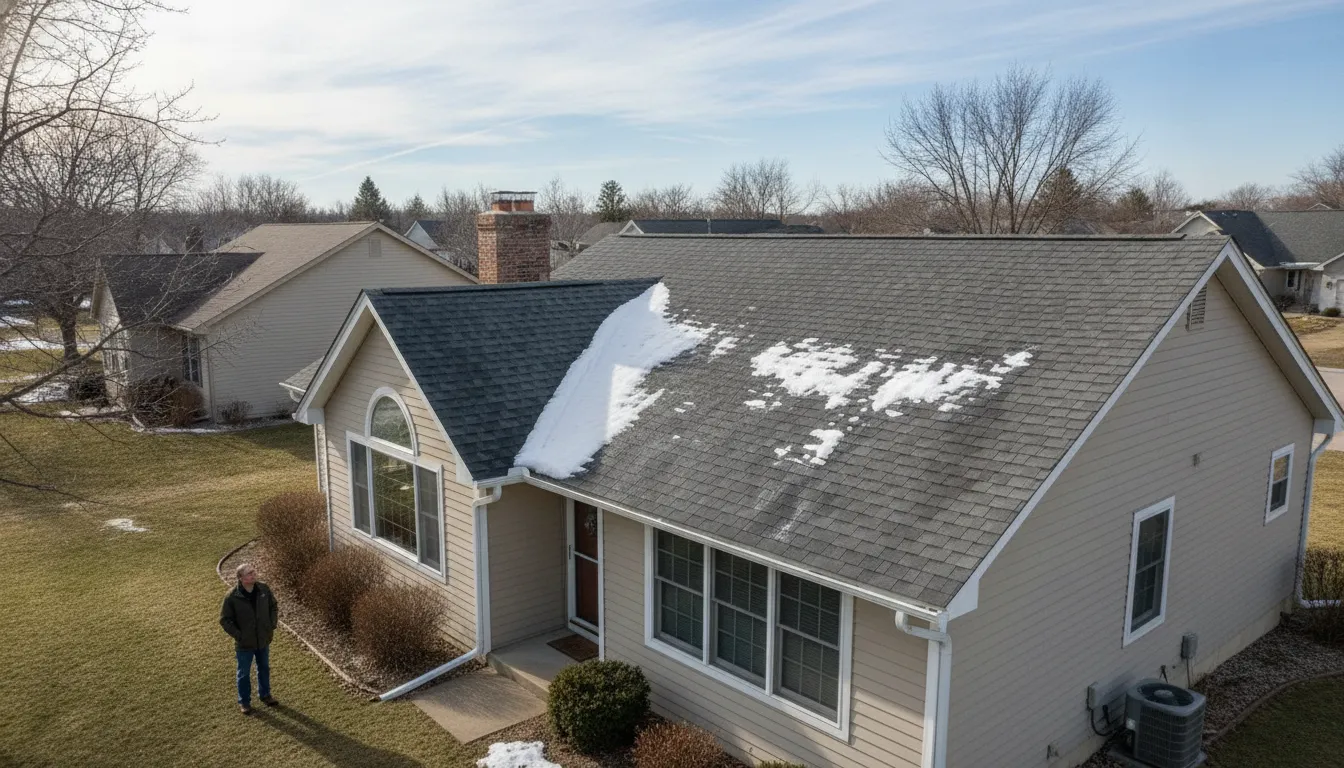
Minnesota weather tests a roof in several ways at once. Snow adds weight, melting snow can contribute to ice dams, and repeated freezing and thawing can move water into small openings. Wind and hail can damage shingles or exposed flashing. Heavy runoff can reveal weaknesses in valleys, gutters, and downspouts.
Snow-load requirements are not identical throughout Minnesota. The Minnesota Department of Labor and Industry roof snow-load map illustrates regional differences. The map is not a universal rating for every home. Applicable requirements depend on location, the project, and the building’s design, so a homeowner should not apply one statewide assumption to a specific roof.
Snow and attic conditions can also affect ice-dam risk. When heat escapes into a cold roof area, snow may melt and refreeze near the eaves. Ice can interfere with drainage and allow water to move beneath roofing materials. Insulation, ventilation, air sealing, roof geometry, and edge detailing all influence how the roof handles this cycle. Homeowners can also review Referred Restoration’s guide to ice dam prevention.
Freeze-thaw movement can stress flashing, penetrations, joints, and sealants. After hail or high winds, a roof review should look beyond the center field. Valleys, wall intersections, chimneys, vents, and drip edges deserve attention because they must shed water while accommodating the roof’s shape.
Which Residential Roofing Materials Work Well in Minnesota?
There is no single best roofing material for every Minnesota home. The right choice depends on the roof design, weather exposure, ventilation, supporting structure, desired appearance, and installation details. Asphalt shingles and metal roofing can both perform well when they are selected and installed as part of a complete system.
| Material | Potential fit | Planning considerations |
|---|---|---|
| Asphalt shingles | Versatile appearance and compatibility with many residential roof designs | Review roof slope, ventilation, flashing, ice-management details, and exposure to wind and hail |
| Metal roofing | Distinct appearance and a long service-life expectation when appropriately selected | Review structural support, fastening, seams, penetrations, ventilation, and compatibility with the home’s design |
Asphalt shingles are familiar and work with a wide range of architectural styles. Customer guidance describes asphalt shingles as lasting about 20 to 30 years, depending on conditions and maintenance. That wording is a general expectation, not a guarantee for every roof. Installation quality, attic conditions, weather exposure, and maintenance all affect performance. Read the asphalt shingle replacement guide for related planning information.
Metal roofing may appeal to homeowners who value its appearance and long service-life expectation. Customer guidance describes metal roofing as lasting 40 years or more, but the roof still needs compatible flashing, ventilation, fastening, and penetration details. For a closer comparison, see the article on metal roofing versus shingles in Minnesota.
The quality of the installation often matters as much as the product category. A material should fit the home’s structure and drainage plan rather than compensate for problems below the surface.
How Should Homeowners Compare Roofing Options?
Start by considering the home’s exposure. A roof with strong wind exposure, limited shade, or areas where snow drifts collect may have different needs from a sheltered roof. Ask how the proposed assembly will handle snow, ice, wind, hail, rain, and seasonal temperature changes.
Next, review the roof geometry. Valleys, dormers, wall intersections, chimneys, skylights, and other penetrations create more places where water must be directed and sealed. Ask how each transition will be flashed and how the planned layers will overlap. Do not evaluate only the field shingles or panels.
Drainage and ventilation deserve equal attention. Gutters, downspouts, valleys, eaves, underlayment, and flashing should function as one water-management system. Each drainage-plane layer should direct water out and over the layer below instead of trapping moisture inside the assembly. Balanced attic conditions also depend on the home’s insulation, air sealing, and ventilation details.
Compare materials based on appearance, maintenance, serviceability, roof structure, and compatibility with the existing home. Ask who will perform the work, how inspection findings will be documented, how ventilation will be checked, and what details are included around valleys and penetrations. A clear explanation of the complete assembly is more useful than a material recommendation without context.
For a local evaluation, homeowners can review Rogers roofing services. Referred Restoration’s process begins with an inspection, then moves to a custom solution and professional installation. The team also works with homeowners on storm-damage restoration and insurance-claim questions.
When Does a Residential Roof Need Inspection or Replacement?
A roof does not always fail in one obvious event. Small changes in the shingles, flashing, attic, ceiling, or drainage path can indicate that water is no longer moving through the system as intended. Minnesota weather makes regular attention useful because snow, ice, wind, hail, and freeze-thaw cycles can expose weaknesses that are easy to miss from the ground.
- Look from the ground and inside the home. From a safe location, look for missing, lifted, cracked, or visibly damaged shingles; exposed underlayment; sagging areas; and displaced flashing. Inside, check for damp insulation, daylight through the roof deck, staining, bubbling paint, or peeling surfaces. These clues do not identify the exact leak source by themselves.
- Check the roof after severe weather. After hail, high winds, or a heavy snow and ice event, document visible changes from the ground when practical. Pay attention to gutters, downspouts, roof edges, and flashing. If there is active leaking, contain interior water safely and arrange an evaluation.
- Schedule a professional inspection. A qualified roofer can assess valleys, penetrations, transitions, ventilation, and areas that are difficult or unsafe for a homeowner to reach. Referred Restoration offers inspections as part of its consultative process for Rogers and nearby Minnesota communities.
- Compare repair with replacement based on system condition. A localized defect with sound surrounding materials may be a repair candidate. Widespread damage, recurring leaks, sagging, deteriorated flashing, or multiple failing components may justify a replacement discussion. The decision should account for the deck, drainage, ventilation, and installation details, not only the surface covering.
Keep inspection notes and photographs with your home-maintenance records. Clear documentation can help track changes over time and explain storm-related concerns to a contractor or insurer. For related leak questions, read the roof shingle leak repair guide.
Contact Referred Restoration online before a small roofing concern becomes a larger system problem. Call (763) 726-4245 for the next step.
Frequently Asked Questions
What is residential roofing?
Residential roofing is the complete roof system protecting a home, not only the visible shingles or metal panels. It includes the roof deck, underlayment, flashing, ventilation, insulation, drainage features, and roof covering. These parts must work together to shed water, manage moisture, and handle local weather.
What is the best roofing material for a Minnesota home?
There is no universal best material. Asphalt shingles and metal roofing can both be appropriate, depending on the home’s structure, roof shape, weather exposure, desired appearance, ventilation, and installation details. A professional evaluation should consider the complete assembly before recommending a material.
What makes a roof suitable for Minnesota weather?
A suitable roof assembly manages snow, ice, wind, hail, rain, and freeze-thaw cycles. It needs sound decking, correctly overlapped water-shedding layers, well-integrated flashing, healthy attic conditions, and drainage that moves water away from the home. Local design requirements and site exposure also matter.
Why are flashing and drainage important on a residential roof?
Flashing protects transitions and penetrations where water could otherwise enter. Drainage components move water from the roof surface through valleys, eaves, gutters, and downspouts. If either path is poorly installed or blocked, water can reach the deck, walls, fascia, siding, or foundation.
How often should a Minnesota roof be inspected?
Inspection timing depends on the roof’s age, condition, weather exposure, and recent storms. A review after significant hail, wind, snow, or ice events is sensible. Homeowners should also arrange an evaluation when they notice leaks, staining, damaged shingles, sagging, recurring ice-dam concerns, or other changes.
Contact us to plan your next roofing step
A complete roof evaluation can clarify whether a concern calls for observation, repair, or a broader replacement discussion. Referred Restoration serves Rogers and nearby Minnesota communities with a consultative process built around inspection, a custom solution, and professional installation.
Contact Referred Restoration online to request the next step for your home. Call (763) 726-4245 with questions about residential roofing.