
Drafty windows can make a Minnesota home feel uncomfortable even when the furnace or air conditioner is running normally. Glass, frames, and worn seals all affect how quickly heated or cooled air escapes, especially during sharp winter cold and hot summer weather.
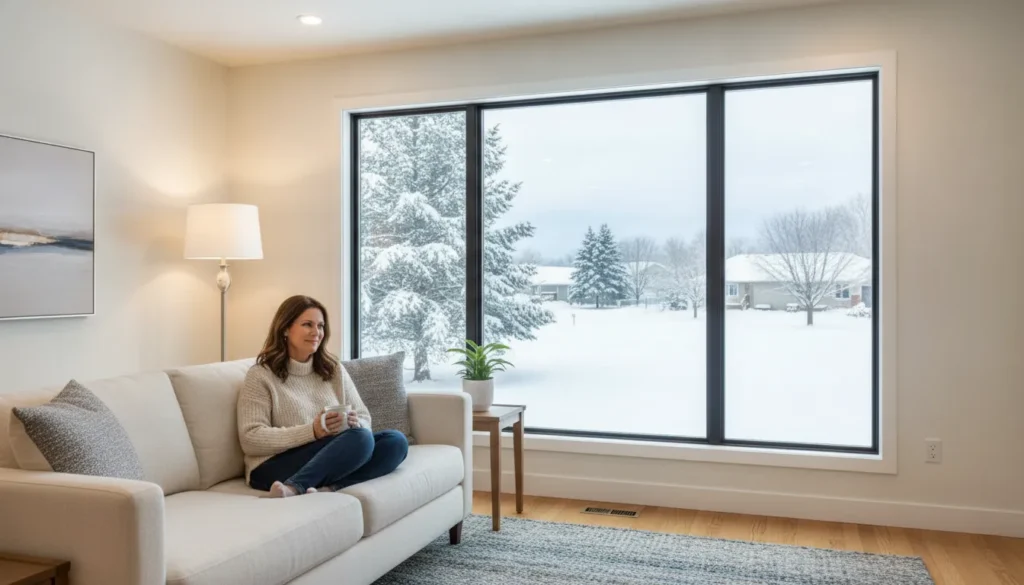
So, how much do energy efficient windows save? They can reduce the energy lost through your windows and make heating and cooling more consistent. But the result depends on your home’s existing windows, insulation, local utility rates, and the products selected. The U.S. Department of Energy reports that windows account for roughly 25% to 30% of residential heating and cooling energy use, which shows why upgrades can make a meaningful difference.
There is no single savings figure that applies to every Minnesota homeowner. A useful evaluation starts with the condition of your current windows, the severity of air leakage, and the performance ratings of a replacement. From there, climate-specific guidance can help you set realistic expectations for comfort and energy use.
How Much Do Energy Efficient Windows Save in Minnesota?
The honest answer is that how much do energy efficient windows save depends on the home, the existing windows, and the way the house uses energy. In Minnesota, however, the opportunity is meaningful because windows must perform through bitter winter temperatures, summer heat, and rapid changes between the two seasons.
Heat gain and heat loss through windows account for roughly 25% to 30% of residential heating and cooling energy use, according to the U.S. Department of Energy. That means improved windows can affect a substantial part of the utility bill, especially when older units have single-pane glass, deteriorated seals, or air leaks around the frame. The savings generally appear as a reduction in the heating and cooling portion of household energy use, rather than as a fixed amount every homeowner can expect.
In winter, efficient glazing and tighter construction help slow the movement of indoor heat toward the cold outdoors. Rooms near the glass can feel more comfortable, and the furnace may not need to run as often to maintain the thermostat setting. During summer, improved windows can reduce unwanted solar heat gain and help keep conditioned air inside. That can make bedrooms, living areas, and sun-facing rooms easier to keep comfortable.
Actual results vary with local climate conditions, utility rates, home size, window orientation, insulation, HVAC equipment, and the condition of the existing frames. A home with failing seals may see a more noticeable comfort improvement than a home that already has modern double-pane windows. Likewise, replacing only a few problem windows produces a different result from upgrading the entire house. ENERGY STAR explains that its Version 7.0 windows are designed for performance across extreme climate zones, making climate-appropriate ratings especially relevant for Minnesota homeowners. See the ENERGY STAR residential windows guidance and its window and storm-window recommendations for additional selection information.
For a clearer comparison, review the window energy efficiency ratings before choosing a product. A professional assessment can also separate window-related energy loss from issues such as insulation gaps, weatherstripping, or ventilation. That helps you invest in the improvement most likely to deliver comfort and efficiency for your home.
Contact Referred Restoration online to discuss your Minnesota window replacement options.
Why Old Windows Waste Energy in Minnesota
Minnesota puts windows through demanding conditions. Homes in the Rogers and Cottage Grove area may face deep winter freezes, heavy snowfall, frequent hail, and hot summer weather. A window that performs reasonably in a mild climate can become a major source of discomfort and energy loss when outdoor temperatures swing sharply.
Heat gain and heat loss through windows account for approximately 25% to 30% of residential heating and cooling energy use, according to the U.S. Department of Energy’s ENERGY STAR guidance. That does not mean every home will see the same result from replacement. It does show why window condition and design deserve attention during an energy-efficiency review.
Air leakage makes your HVAC system work harder
Gaps around an aging frame, deteriorated caulk, worn weatherstripping, or damaged trim can allow outdoor air to move around the window assembly. In winter, heated indoor air escapes while cold air enters. The furnace then runs longer to maintain the thermostat setting, while rooms near the affected window can still feel chilly. Air leakage can also create drafts along floors and walls, making a comfortable temperature harder to maintain.
In summer, the same weaknesses allow warm outdoor air into the home. Your air conditioner must remove that added heat and humidity, even when the rest of the house is well insulated. Repairing failed caulk or deteriorated trim may help when the window itself remains in good condition. Referred Restoration’s window trim repair guidance covers how these surrounding components can affect leaks and efficiency.
Older glass transfers heat and signals seal failure
Single-pane glass offers little resistance to outdoor temperatures. Heat moves through it readily, so the interior surface can become very cold during a Minnesota winter and intensely warm in direct summer sun. Older double-pane windows generally provide better insulation, but the sealed space between panes can fail over time. When that happens, fogging or condensation between the panes is a visible warning that the insulating seal is no longer performing as intended.
Persistent interior condensation can also indicate excessive indoor humidity, cold glass, or inadequate air movement. It should not be ignored, especially when moisture reaches wood, trim, or surrounding insulation. A careful inspection can distinguish a repairable air-sealing issue from a failed window unit. The goal is not simply to install new glass. It is to reduce uncontrolled air movement, improve thermal comfort, and help your heating and cooling equipment operate under less strain.
What Makes Energy Efficient Windows Save Energy
Energy-efficient windows work as a system. The glass, coatings, spaces between panes, spacers, seals, and frame all influence how easily heat moves through the unit. The U.S. Department of Energy identifies frame types, glazing, gas fills, and spacers as key window choices, rather than treating the glass alone as the full measure of performance. In Minnesota, that complete design matters because a window must help retain indoor heat during cold weather while limiting unwanted solar heat during warmer months.
Glass coatings and multiple panes
Low-emissivity, or low-E, coatings are thin layers applied to glass to manage radiant heat. Depending on the window design, the coating helps reflect indoor heat back into the room during winter and reduce solar heat entering during summer. Two or more panes also create insulating spaces that slow heat transfer compared with a single sheet of glass.
Those spaces can be filled with an inert gas such as argon or krypton. These gases conduct less heat than ordinary air, so the sealed space between panes can improve the window’s insulating performance. The result is not just a warmer pane. It can also reduce drafts caused by a colder interior glass surface and help rooms feel more consistent from one side of the house to another.
Spacers and frames complete the system
Warm-edge spacers separate the panes while reducing heat transfer around the perimeter of the glass. Frame construction matters too. A well-designed frame helps limit conduction and air leakage, while a poorly matched or deteriorated frame can undermine otherwise efficient glazing. The overall U-factor therefore reflects more than the center of the glass. Frame materials, gas fills, and spacers all contribute to the finished window’s performance.
| Window type | Panes | Low-E coating | Gas fill | Typical heat transfer |
|---|---|---|---|---|
| Single-Pane | One | Usually none | None | High |
| Double-Pane Clear | Two | Usually none | Air or none | Moderate |
| ENERGY STAR certified | Usually two or more | Typically included as part of an efficient design | Often argon or krypton | Low, when properly selected and installed |
ENERGY STAR certification and NFRC labeling make these differences easier to compare. The label provides standardized performance information instead of relying on a single marketing claim. Review the product’s full ratings, including U-factor and air leakage, and consider installation quality before choosing a replacement. ENERGY STAR provides additional guidance on certified residential windows and doors at its residential windows resource.
How U-Factor and Air Leakage Ratings Affect Your Energy Bill
Window labels make it easier to compare products without relying on broad claims such as “high performance” or “maximum efficiency.” Start by looking for the ENERGY STAR label. Then review the detailed ratings from the National Fenestration Rating Council (NFRC). The U.S. Department of Energy recommends this process because NFRC ratings provide a consistent way to evaluate a window’s energy properties across different manufacturers. You can find a broader explanation in this guide to window energy efficiency ratings.
U-factor: the key winter rating
U-factor measures how readily heat passes through a window. Lower is better because a lower-rated window resists heat transfer more effectively. This rating deserves special attention in Minnesota, where keeping indoor heat inside is a major concern during a long heating season. A window’s U-factor is influenced by more than the glass alone. Frame material, the number of panes, gas fills between panes, spacers, and the overall construction can all affect performance.
That is why comparing only “double pane” or “triple pane” descriptions can be misleading. Two windows with the same basic glazing description may have different U-factors because their frames, coatings, edge spacers, or gas-filled cavities are different. The NFRC label gives you a more useful basis for comparison than a sales phrase by itself.
Air leakage and solar heat gain
Air leakage, shown as AL on the NFRC label, indicates how much air passes through the window assembly when it is closed. A lower AL rating generally means less uncontrolled air movement around the sash and frame. This matters for drafts and comfort, especially when winter wind exposes weak seals or installation gaps. AL is not the same as U-factor: U-factor describes heat transfer through the assembly, while AL describes air movement through it.
Solar heat gain coefficient, or SHGC, describes how much solar heat enters through the window. A lower SHGC can help limit unwanted summer heat, while a higher value can allow more winter sunlight to warm a home. The right balance depends on orientation, shading, glass design, and the home’s heating and cooling needs. Visible transmittance, also included on many labels, describes how much daylight passes through the glass, but it is not a direct measure of insulation.
Use the full label rather than chasing one impressive number. In a heating-dominated Minnesota climate, U-factor and air leakage often deserve priority, while SHGC helps fine-tune comfort on sunny exposures. Ratings are most useful when matched to the home, and the installation must preserve the window’s intended seal and alignment.
Is Replacing Windows Worth It? How to Decide
Window replacement is not automatically the best answer for every home. A clear decision starts with the condition of the existing units, the comfort problems they create, and the energy loss you may continue to experience. Use this process to compare repair and replacement without relying on a generic promise about how much do energy efficient windows save.
- Inspect the frame, sash, glass, and surrounding trim. Look for soft or damaged wood, water staining, deteriorated seals, cracked glass, and frames that no longer operate correctly. If the window is structurally sound, targeted improvements may restore comfort without a full replacement. Caulking and weatherstripping can be more cost-effective when the window itself remains in good condition. Storm windows or panels can also add another layer of thermal insulation to a well-maintained window. ENERGY STAR’s guidance on windows and storm windows describes these options alongside replacement considerations.
- Check for drafts, fogging, and uneven temperatures. On a windy day, feel around the sash and frame for moving air. Condensation between panes can indicate a failed insulating seal. While persistent cold spots or rooms that are difficult to heat may point to air leakage or poor glass performance. Also check whether damaged trim or gaps around the opening are contributing to the problem. These observations help separate a repairable sealing issue from a window that has reached the end of its useful performance.
- Consider the window’s age and repair history. Older units may have inefficient glass, worn hardware, or frames that require repeated maintenance. However, age alone does not prove replacement is necessary. Compare the expected future energy loss and ongoing repair needs with the upfront investment of new windows. The right choice depends on the home’s condition, climate exposure, and how long you expect to remain in the property.
- Review ENERGY STAR and NFRC information. If replacement is under consideration, do not compare products by glass description alone. Look for the ENERGY STAR label, then review the National Fenestration Rating Council ratings for the complete window. NFRC labels provide a consistent way to compare energy properties, including the effects of frame construction, gas fills, and spacers.
- Compare repair, insert replacement, and full-unit replacement. A new insert may fit into an existing frame and provide a less invasive path when the frame is sound. A full-unit replacement may be more appropriate when the frame, opening, or surrounding materials are damaged. Ask a professional installer to evaluate both approaches rather than assuming one method fits every opening.
- Get a site-specific recommendation. A qualified installer can assess drafts, moisture, trim, operation, and installation conditions together. That review helps you choose the least disruptive option that addresses the actual source of energy loss and improves comfort through Minnesota’s changing seasons.
Other Ways to Cut Energy Loss From Windows
Full window replacement is not the only way to improve comfort and reduce unwanted heat transfer. If your existing frames and glass are in good condition, targeted improvements can address drafts, summer heat, and weak insulation without changing every window in the home. The right choice depends on where energy is being lost and whether the window has a repairable seal, an aging frame, or a more serious defect.
Start by checking the perimeter of each window for visible gaps, cracked caulk, or worn weatherstripping. Fresh caulk can close small stationary gaps, while replacement weatherstripping can improve the seal around an operable sash. These measures are most useful when the window itself opens, closes, and locks properly. If trim or surrounding materials are damaged, repairing that area may also help protect the seal from Minnesota’s snow, ice, and changing temperatures. Learn more about window trim repair when leaks or deteriorated trim are part of the problem.
For windows that receive strong afternoon sun, solar control film can reduce summer heat gain while allowing the existing unit to remain in place. This approach may be especially useful in rooms that become uncomfortable during the cooling season. It should be selected carefully for the specific glass and window construction, since not every film is appropriate for every unit.
Exterior shading addresses the same seasonal challenge from outside the glass. Awnings, exterior blinds, and overhangs can block direct sunlight before it reaches the window. Reducing the amount of solar heat that enters the room and the work required from the air conditioner. Shading can also improve comfort near large south- or west-facing windows without changing the home’s interior appearance.
Storm windows or panels add another layer between the interior and exterior. When installed over well-maintained existing windows, they can provide additional thermal insulation and reduce drafts. The U.S. Department of Energy identifies caulking, weatherstripping, solar control film, exterior shading, and storm windows as options for improving existing windows when replacement is not necessary. ENERGY STAR’s window and storm window guidance provides additional information about these approaches.
- Seal small gaps and replace worn weatherstripping.
- Use solar control film or exterior shading where summer sun is the main issue.
- Consider storm windows or panels when the original units remain sound.
- Inspect trim and surrounding materials before assuming the glass must be replaced.
These upgrades can be practical first steps, but they will not correct failed seals, warped frames, or persistent water intrusion. A careful inspection can help separate a manageable efficiency improvement from a window that has reached the end of its useful service life.
Why Professional Installation Matters for Energy Savings
Even a high-performance window can underdeliver if it is installed with gaps, uneven pressure, or inadequate weather protection. In Minnesota, installation quality matters as much as the window selected. The assembly must create an air-tight boundary between the home and the outdoors. While allowing the frame and surrounding materials to perform through bitter cold, summer heat, snow, and heavy rain. The U.S. Department of Energy identifies proper installation as a key consideration alongside window design, energy use, labeling, and warranties. And ENERGY STAR confirms that selecting the right product matters as much as how it is put in. See ENERGY STAR’s residential windows guidance for its discussion of design, labeling, and installation.
Air sealing protects comfort and efficiency
A professional installer checks the opening, sets the unit square and level, and seals the connection between the frame and wall. That work helps limit drafts that can make rooms feel cold even when the glass itself has strong efficiency ratings. Correct flashing directs water away from the opening, while sealed trim and properly fitted weatherstripping help prevent air leaks and water intrusion when snow melts around the window. Referred Restoration’s window trim repair and replacement guide explains why this surrounding work is part of protecting efficiency, not merely a cosmetic finishing step.
Installation also affects durability. Small gaps can allow moisture into the wall assembly, where repeated freeze-and-thaw cycles may contribute to swelling, rot, or damage around the opening. A careful crew evaluates the existing sill, flashing, trim, and exterior transitions before closing everything up. If the surrounding structure needs attention, addressing it at the same time is usually more reliable than covering a problem and hoping the new window compensates for it.
Choose the replacement approach with an installer
Not every project needs the same scope. A frame-replace or insert installation may work when the existing frame is sound and the opening is properly sized. A full-unit replacement can be more appropriate when the frame, sill, flashing, or surrounding materials are deteriorated. Discussing both options with an experienced installer helps match the approach to the home’s condition, rather than selecting a method based only on the product brochure. The Department of Energy recommends discussing replacement-in-frame options with a window retailer and installer because suitability depends on the individual opening.
That assessment also gives homeowners a clearer view of warranty requirements and maintenance needs. Ask what the installation warranty covers, how water management is handled, and how the crew will verify the seal before trim is finished. Homeowners considering a broader project can review window repair and replacement services for a local starting point. If replacement is the right fit, window replacement financing may provide a qualitative path to discuss with a participating lender, subject to qualification and applicable terms.
Contact Referred Restoration online to discuss your window project with a local team serving Minnesota homeowners.
Frequently Asked Questions
How much money can energy-efficient windows save you?
There is no single savings amount for every Minnesota home. Results depend on the condition and number of existing windows, local utility rates, the home’s insulation, and the selected window’s ratings. The U.S. Department of Energy reports that heat gain and heat loss through windows account for 25% to 30% of residential heating and cooling energy use. So reducing drafts and unwanted heat transfer can make a meaningful difference. Learn more from ENERGY STAR.
Are energy efficient windows worth the cost in Minnesota?
They can be, particularly when existing windows are drafty, damaged, difficult to operate, or poorly suited to Minnesota’s seasonal temperature swings. Besides helping control heating and cooling demand, better windows can improve indoor comfort and reduce cold spots near the glass. If the existing units are in good condition, caulking, weatherstripping, storm panels, or exterior shading may be a more practical first step than full replacement.
What are the benefits of energy efficient windows?
Energy-efficient windows can reduce air leakage, limit winter heat loss, control summer heat gain, and make rooms feel more consistent. They may also reduce condensation concerns and improve day-to-day comfort. Compare the ENERGY STAR label and NFRC ratings rather than relying only on a product’s general efficiency claims. Frame materials, glazing, gas fills, spacers, and installation quality all affect performance.
Is it worth replacing 20-year-old windows?
Age alone does not determine the right choice. Inspect the windows for drafts, failed seals, rot, water intrusion, stuck sashes, and recurring repairs. A professional can help determine whether weatherization, an insert replacement, or a full-unit replacement best fits the frame and the home’s condition. Proper installation and sealed trim matter as much as the window selection for long-term performance.
If you are ready to cut energy loss and improve comfort in your Minnesota home, get a clear. No-pressure assessment of your windows from a local team that treats every home as its own. Contact Referred Restoration online today to schedule a free window inspection and talk through the energy-efficient options that fit your home and your budget. You can also reach us by phone at (763) 726-4245.