
When harsh weather leaves several parts of your home looking different, rogers home exterior damage repair starts with careful observation, not climbing onto the roof or guessing at the scope. Roof edges, siding, gutters, windows, and interior finishes can be affected together. A clear record helps you discuss the right next steps. Start from a safe place and note what you can see.
Schedule a free exterior inspection
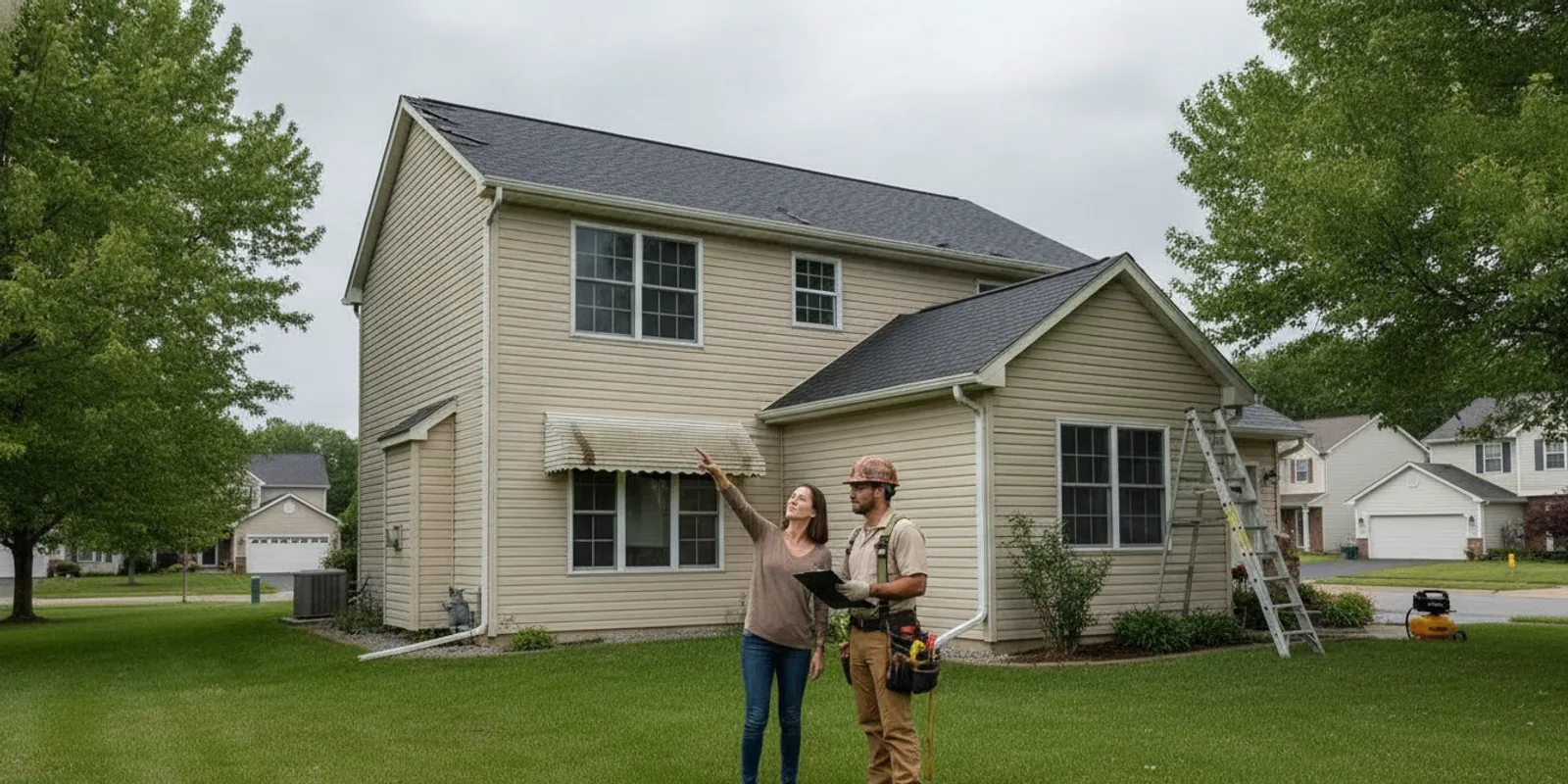
What should you check first for rogers home exterior damage repair?
Begin with safety. Stay off a wet, icy, or visibly damaged roof. Do not handle loose wires, broken glass, or unstable materials. If there is an immediate hazard, keep people away and contact the appropriate emergency service. From the ground or a secure indoor vantage point, note visible conditions without trying to prove their cause.
- Look for missing, lifted, curled, or displaced roofing materials visible from the ground.
- Check siding for cracks, holes, loosened sections, or panels that no longer lie flat.
- Observe gutters and downspouts for sections that appear detached, bent, blocked, or out of alignment.
- Look at window glass, frames, and nearby trim for visible damage or water marks.
- Inside, note new ceiling or wall stains and the room and time you noticed them.
These observations do not establish the cause or extent of damage. A stain may appear some distance from where water enters, and a small visible defect can have a larger area behind it. Record facts without making a repair diagnosis.
How do roof, siding, and gutters affect one another?
Exterior components meet at edges and transitions. Roof runoff reaches gutters, gutters direct water to downspouts, and siding and trim protect wall surfaces around openings. Damage or a loose connection in one place may make it useful to inspect adjacent areas as well. That does not mean every nearby component needs replacement. It means the assessment should consider how the parts meet and where water may travel.
After wind, you might notice a gutter has pulled away at one corner while a siding panel below looks loose. Photograph both from a safe distance and note whether the concerns appeared at the same time. An inspector can assess the connection and determine whether the visible concerns are related or separate. Referred Restoration provides roofing, siding, gutter, and window services. Homeowners can review its exterior restoration services, Rogers roofing information, and window repair information.
How can you document damage without taking risks?
Good documentation is clear, dated, and taken from safe locations. Do not walk on a roof, climb a ladder to reach a gutter, or move debris that could be unstable. Use your phone camera from the yard, driveway, or inside the home. Include a wider view to show where the issue is, then take a closer view only if you can do so safely.
- Make a location list. Note the side of the home and a simple landmark, such as the garage corner or a bedroom ceiling.
- Take a wide photo first. This gives context and helps distinguish one elevation from another.
- Capture visible details. Photograph a loose panel, bent gutter, or stain without touching it.
- Write down timing. Record when you noticed the issue and any weather event you associate with it, without assuming that event caused it.
- Keep documents together. Save photographs, inspection notes, and correspondence in one folder.
Use consistent file names if you take many photographs. A label identifying the wall, area, and date is easier to follow than a camera sequence. Keep original files and make a separate copy before sending anything to an insurer or contractor. Written notes should distinguish what you observed from what someone later suggested.
If you contact an insurer, ask what documentation and reporting steps apply to your policy. Keep your own records and avoid authorizing work based on an unverified assumption about coverage. A Better Business Bureau business profile is an example of background information that should supplement, not replace, an on-site assessment and your policy documents.
Which issue should be addressed first?
Priorities depend on safety, active water entry, and the condition of affected areas. This table organizes observations for an assessment. It is not a substitute for a professional inspection or diagnosis.
| What you observe | What to do now | What to ask during assessment |
|---|---|---|
| Loose material or a potentially unsafe area | Keep people clear; do not climb or handle it. | Is temporary stabilization needed, and what safety steps apply? |
| Active water appearing indoors | Move belongings if safe, place a container if appropriate, and document the location. | Where may water be entering, and which exterior areas need review? |
| Visible roof or flashing concern | Photograph from the ground and note the nearest room or wall. | Should the roof and adjoining edges be inspected together? |
| Loose siding or damaged trim | Record the elevation and take a safe contextual photo. | Are nearby openings or transitions affected? |
| Gutter or downspout out of place | Do not attempt ladder work; note where water appears to discharge. | Does the connection or drainage path need attention? |
How can you tell whether the concern is limited or connected?
Map each observation to an exterior elevation and an interior room. A roof concern above a stained ceiling deserves attention to the roof surface, flashing, penetrations, and the path water may take before it becomes visible. A detached gutter below a roof edge deserves a look at the attachment points and discharge route. A loose siding panel near a window may call for review of the panel, trim, and opening rather than an automatic decision about the entire wall.
Ask the inspector to separate three things: what is visibly damaged, what may be contributing to the issue, and what work is recommended. This distinction prevents a broad list of possible concerns from becoming an unclear work scope. It also gives you a better basis for comparing proposals. If the source cannot be determined without opening or removing material, ask what evidence would resolve the uncertainty and how that step would be documented.
For drainage questions, review gutter installation in Rogers and seamless gutter information. Those resources can help you prepare questions, but they do not replace a property-specific inspection.
How can you prepare for a coordinated inspection?
Gather photos and notes before the visit. Make a short list of questions, including which areas will be inspected and whether connected exterior components should be considered together.
- Point out each visible concern and the date you first noticed it.
- Share indoor signs such as stains, dampness, or changes in a room without guessing where they began.
- Identify areas that are difficult to access or where you have noticed recurring trouble.
- Ask what the inspection found, what remains uncertain, and what the recommended next step is.
- Request a written scope that identifies affected components and items not included.
- Ask whether photos, measurements, or additional inspection steps will be included.
For a roof concern, see roof repair in Rogers. For a siding issue, review siding services in Rogers. Homeowners in nearby areas can also consult the Cottage Grove service page.
What should you clarify before work begins?
Before approving a repair, make sure you understand what was observed and how the proposed work addresses it. Ask for a written description of the work, the materials or components involved, the order of work, and any preparation expected from you. If more than one exterior area is involved, ask how transitions and adjacent parts will be checked.
Clarify what happens if concealed damage is discovered after work starts, how changes will be documented, and who to contact with questions. If the concern may involve an insurance claim, coordinate with your insurer. Referred Restoration describes assistance with storm-damage claims, but the insurer determines coverage under the policy. Keep contractor observations, insurer communications, and your own photos distinct and organized.
Ask whether the crew will protect landscaping, outdoor equipment, and walkways. Confirm how removed materials will be handled and whether you need to move items away from the walls. Discussing these practical details early can reduce confusion on installation day.
How do you compare exterior repair proposals?
Compare the scope rather than relying on a single line item. A useful proposal should identify the affected elevation, components included, sequence of work, and exclusions. If one document is broad and another is specific, ask questions before assuming they describe the same repair.
- Does the proposal identify repair, replacement, or inspection work for each component?
- Does it explain how roof edges, wall transitions, windows, and drainage connections will be handled?
- Does it list preparation, cleanup, and follow-up responsibilities?
- Does it describe how an unexpected condition or requested change will be approved?
- Does it give you a clear contact for questions during the project?
For a broader service pathway, visit the Rogers storm damage restoration page. A clear conversation about scope is more useful than making a decision from a short description alone.
How do you check the work afterward?
When work is complete, review the agreed scope with the contractor. From safe locations, check that the identified areas have been addressed and that the surrounding area is orderly. Ask about any item that differs from the original plan. Do not climb to inspect roof work; request photos or a ground-level walkthrough instead.
After the next rainfall, observe from indoors and from the ground for signs that prompted the repair, such as water appearing in the same area or runoff behaving unexpectedly. If a concern continues, document when and where it occurs and contact the contractor. Avoid assuming that one observation proves the source.
When comparing the written scope with the completed work, review the same landmarks you used in your original notes. If the proposal listed a specific elevation, roof edge, or window, confirm that the closeout discussion addresses that location. Ask which items were completed, whether any planned item changed, and what prompted the change. Keep the final scope and any completion photos with your original record; doing so makes a later question easier to explain without relying on memory.
It can help to distinguish an appearance check from a performance observation. A ground-level view may show that a panel sits flat or that debris has been removed, but it cannot confirm every concealed detail. For roof areas, ask for documentation rather than attempting a ladder inspection. For a gutter, observe the system from the ground during ordinary rain only if conditions are safe; do not stand near overflow or climb to adjust a component. If water appears where it did not before, note the time, weather, and location and request guidance.
What details are useful when water appears indoors?
Water marks, dampness, or drips can be worrying, but location alone does not identify the entry point. Water may travel along framing or other surfaces before it becomes visible. Describe the symptom precisely: which room, which wall or ceiling area, whether the mark is new or changed, and whether it appears during or after precipitation. A dated photo taken from a safe position can show whether the mark grows or changes over time.
If water is actively entering, protect people first. Move electronics, furniture, and other belongings only when it is safe. A container can catch a drip if it can be placed without entering a hazardous area. Avoid touching wet electrical fixtures or standing water near electrical equipment; keep clear and contact the appropriate qualified help. Do not cut into a ceiling or remove wet materials simply to trace the path. Share the observations with the contractor and insurer, and ask what immediate steps are appropriate for the particular situation.
Keep a simple event log rather than trying to interpret each mark. For example: “Oct. 22, upstairs hallway, small ceiling mark near the closet, first noticed after evening rain.” Add a second entry if the mark grows or another area becomes damp. This precise description is more useful than labeling the condition as a roof leak before it has been assessed.
How does Minnesota weather shape the inspection conversation?
In Rogers and nearby communities, a home may face rain, wind, snow, ice, and temperature swings over a year. Different conditions can expose different weaknesses, but a weather event by itself does not prove the cause of a particular defect. Use the timing as context: note when you noticed a change and what conditions preceded it, then let the inspection determine what can be established.
After wind, look for displaced material, loose trim, or a changed gutter position from the ground. After heavy rain, note where water collects or discharges and whether an indoor stain changes. In winter, do not chip ice from roof edges or attempt to clear a high gutter from a ladder. If snow or ice makes access unsafe, postpone non-urgent observations and ask a qualified professional how to proceed. Seasonal context helps focus questions; it should not substitute for examination.
For a home with several visible concerns, give the inspector a simple map or a list organized by side: front, rear, and each side elevation. Include nearby landmarks such as a porch, garage, or downspout. A short record lets the assessment move systematically instead of relying on memory while walking around the property. It can also reveal that two observations are on separate sides and may not share a source.
What should a written work scope make clear?
A written scope is easier to review when it describes locations and tasks in plain language. “Repair exterior damage” may be too broad to show what is included. Ask for the affected area, component, intended repair or replacement, and any related work that is specifically excluded. If the work includes more than one trade or part of the exterior, ask how the sequence will be coordinated and who will explain changes.
Before signing or approving, check that the document reflects what you discussed. Confirm any access arrangements, preparation, protection of outdoor items, cleanup, and how questions will be handled during the work. If hidden conditions may change the plan, ask how you will be notified and how an added task will be described before it proceeds. Keep a copy of the agreed version so both sides can refer to the same scope.
For insurance-related work, ask the insurer which documents it needs and who should receive them. A contractor’s observations can inform the conversation, but they do not determine policy coverage. Keep dates, photos, written findings, and messages organized by topic. Avoid treating a preliminary observation or an estimate as a guarantee of what an insurer will approve.
How can you keep the repair process organized?
Use one folder, digital or paper, for the full sequence. Start with your location list and original photographs. Add inspection notes, written recommendations, insurer correspondence, the accepted scope, and completion records. Naming files by date and location helps you find the relevant item later. If several people are involved in decisions, share the same current documents so each person refers to the same information.
A compact tracking list can include the question, who will answer it, and whether the answer is written down. For example, if the proposal mentions checking a window perimeter, record whether that check is included in the work or merely an observation. If a gutter is listed for adjustment, note which section and what outcome is expected. This does not need to be elaborate; the goal is to prevent an important detail from disappearing among calls and photographs.
Keep observations separate from conclusions. “Panel is lifted near the back door” is an observation. “The roof failure caused it” is a conclusion that requires evidence. This distinction is especially useful when discussing multiple components or speaking with an insurer. Ask questions whenever a recommendation is unclear, and request plain-language explanations of what is known, what is uncertain, and what would happen next.
Frequently asked questions
Can I inspect roof damage myself?
You can make ground-level observations and take photographs from a safe location, but do not walk on the roof or climb to inspect damage. An inspection can assess areas that are not safely visible from the ground.
Should roof, siding, and gutter concerns be assessed together?
When several nearby components show concerns, ask whether they should be reviewed during the same inspection. The assessment can determine whether issues are related and which, if any, need work.
Does storm damage mean my insurance will cover repairs?
Not necessarily. Coverage depends on your policy and the insurer review. Contact your insurer for claim requirements and keep photographs and records.
What information should I provide when requesting an inspection?
Share the property location, areas where you noticed concerns, when you first saw them, and whether there are indoor signs such as water marks. Safe photographs can help.
What if I see damage on only one part of the exterior?
Describe the visible issue and ask whether nearby transitions or connected components should also be checked. A focused inspection can confirm whether the concern is isolated.
Contact Referred Restoration online to discuss an inspection
Careful notes and a coordinated inspection can help Rogers homeowners understand which exterior areas need attention and plan the next steps without taking unnecessary risks.