Choosing a roofing contractor after wear, leaks, or storm damage can feel urgent, but the first conversation should give you clarity rather than pressure. A dependable evaluation starts with service-area confirmation, verifiable credentials, a careful roof assessment, and a written scope that explains what the work includes.
When comparing a roofing company in St. Louis Park MN, confirm the contractor can work in your area, verify licensing and insurance, and ask how the roof and materials will be assessed, and compare proposals for clear responsibilities, permits, and follow-up.
Those checks help separate a thoughtful fit from a rushed decision. Before comparing proposals or material recommendations, look closely at the contractor’s qualifications, communication, and approach to protecting your home.
Contact Referred Restoration online or call (763) 726-4245 to ask about your project and confirm service-area availability.
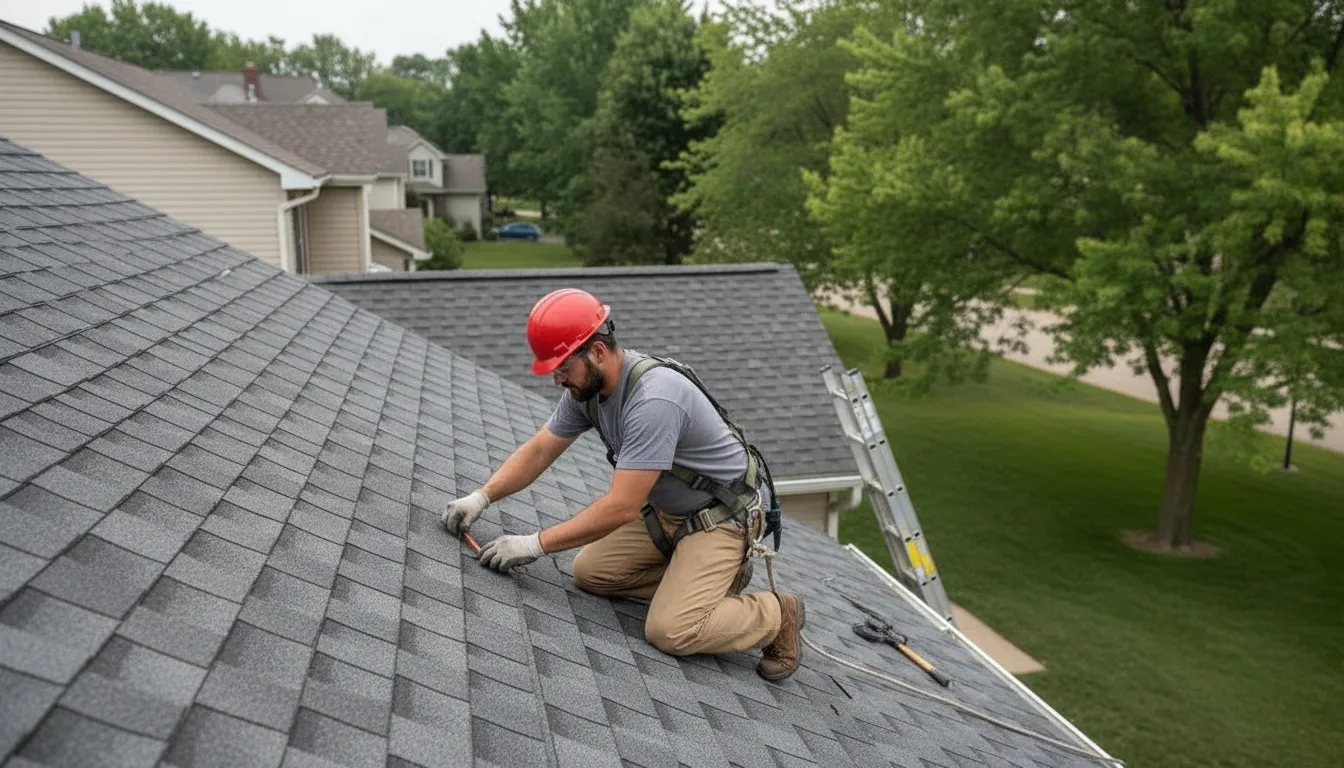
What Should You Look For in a Roofing Company in St. Louis Park MN?
Start with fit, not a ranking claim. A roofing company in St. Louis Park MN should be able to explain whether it currently works in your neighborhood, how quickly it can inspect the property, and who will be your point of contact. Confirm the service area before sharing detailed property information or scheduling an onsite visit. Coverage can change by project type and season, so a direct answer is more useful than assuming a company serves every Twin Cities suburb.
Ask for an inspection that distinguishes active damage from normal wear and explains what the contractor observed. Photos, clear descriptions, and a practical explanation of repair versus replacement can help you compare recommendations. Be cautious if an inspection relies on urgency or broad promises without showing the conditions that support the conclusion.
Look for a clear written scope
A useful proposal should identify the work area, preparation, materials, ventilation or flashing work when applicable, cleanup, and responsibilities for permits or inspections. It should also explain what is excluded and identify the warranty terms offered for labor and materials. Do not rely on verbal assurances. The Minnesota Department of Labor and Industry recommends that homeowners check contractor information, ask for references, and verify licensing details independently.
Storm response is another practical test. Ask how the company documents hail or wind damage, whether it coordinates with your insurer without promising claim approval, and how it protects the home if work cannot begin immediately. You should be able to review the scope without pressure and have time to ask questions.
Finally, consider communication and project fit. Compare how each contractor handles scheduling, cleanup, updates, and changes to the plan. For broader context, you can also review how Minnesota homeowners compare roofers and how to choose roofers in Minnesota. For a related framework, you can compare roofing company proposals while keeping your own property’s condition and location at the center of the decision.
How Can You Verify a Roofer’s License and Insurance?
Before discussing materials or scheduling, ask each contractor for the legal details behind the business. Minnesota roofing work may fall under a residential roofer, building contractor, or remodeler license, depending on the work being performed. Ask for the contractor’s Minnesota license number, then verify its status and any disciplinary history through the Minnesota Department of Labor and Industry (DLI). The state also recommends checking references and asking how long the contractor has been in business. See the Minnesota DLI guidance for hiring a contractor for its homeowner checklist.
Insurance deserves the same direct approach. Ask what liability and property-damage insurance the contractor carries and request current documentation from the insurer or agent, rather than relying only on a verbal assurance. DLI identifies liability and property-damage insurance among the requirements associated with its contractor licensing guidance. Confirm that the named business matches the company preparing your proposal and that the documentation is current.
Use references to test the working relationship
References can help you evaluate communication and follow-through, not just the finished roof. Ask whether the contractor arrived when promised, explained changes clearly, protected the property during work, and responded after completion. If possible, request references for projects similar to yours in scope and roof type. A contractor who cannot explain what kind of work a reference represents gives you less useful information for comparison.
Check more than a license number
A license search is one screening step, not a complete hiring decision. Compare the legal business name, license details, insurance documentation, references, and written scope as one record. If any detail conflicts, ask for clarification before moving forward. This process helps a homeowner evaluate any roofing company in St. Louis Park MN on verifiable information, without treating a general checklist as a credential for any particular contractor.
Which Questions Should You Ask Before Signing a Roofing Proposal?
A proposal should make the work understandable before you authorize anything. Ask the contractor to walk through the findings, the recommended repair or replacement, and the limits of the work in plain language. If you are comparing several contractors, use the same questions for each one so the answers are easier to evaluate.
- Who will perform the work? Ask whether the contractor’s own crew or subcontractors will be on site, who supervises them, and how subcontractor roles are documented. Confirm who you should contact if the crew changes.
- What exactly is included? Ask how the contractor will address roof penetrations, flashing, ventilation, underlayment, trim, and damaged decking if those items are discovered. The proposal should explain what is included and what would require your written approval before work changes.
- What is the schedule? Ask when preparation and installation are expected to begin, what could delay the work, and how weather-related changes will be communicated. Also confirm how long the site should remain active and when cleanup will occur.
- Who handles permits and inspections? Ask whether a permit is required for the planned work, which party obtains it, and how you will receive documentation. Minnesota guidance describes a building permit as municipal permission for specified construction or repair work, and permitted work is typically inspected after completion. Review Minnesota building-permit guidance if the answer is unclear.
- What documentation will you receive? Request the written scope, material information, warranty terms, cleanup responsibilities, change-order process, and proof of completion. Ask for references and how long the business has operated, recommendations also included in Minnesota Department of Labor and Industry homeowner guidance.
- Where can you verify the business? Confirm a Minnesota business address other than a post office box, and consider checking available litigation history through the state court system, as DLI suggests. You can also read more about questions to ask Minnesota roofers.
Do not sign while important answers remain verbal or vague. Ask for the proposal to be revised, then compare the revised documents rather than relying on promises made during a sales visit.
How Do Minnesota Weather and Roof Materials Affect the Decision?
Minnesota weather exposure should be part of the inspection conversation, not an afterthought after a material is selected. Ask the contractor to explain what they found on the existing roof, including damaged or aging shingles, exposed decking, flashing concerns, and areas where water may collect. The goal is to connect the recommended work to observed conditions rather than choosing a material from a generic menu.
How should the material fit the roof and home?
Asphalt shingles and metal roofing are both options, but the right fit depends on the roof’s design, existing layers, ventilation, drainage, appearance, and the homeowner’s maintenance expectations. Ask which material is appropriate for the roof slope and details, how it will integrate with flashing and penetrations, and what installation requirements the crew will follow. For a focused overview of one common option, review this Minnesota asphalt shingle replacement guide.
Ventilation and drainage deserve specific attention. A proposal should identify how intake and exhaust ventilation will be handled, whether gutters and downspouts affect water movement, and how valleys, eaves, and roof edges will be protected. These details can matter as much as the visible covering because moisture management depends on the complete roof assembly.
Plan around inspections and seasonal conditions
After wind, hail, or heavy precipitation, request a documented inspection and keep photographs of visible damage. Avoid treating a storm visit as proof that replacement is necessary. Ask the roofer to separate urgent protection from recommended repairs and explain what evidence supports each item.
Scheduling should account for site conditions, material availability, and the work needed to protect the home during installation. Ask how weather interruptions will be handled, what temporary protection is used if work pauses, and when ventilation and drainage components will be checked. Clear answers help you compare a roofing company in St. Louis Park MN on preparation and communication, not just on the material name.
What Should a Written Roofing Proposal Include?
A written proposal should make the planned work easy to understand before anyone schedules the project. It should connect the contractor’s inspection findings to a defined scope, identify the materials and responsibilities involved, and give you clear questions to resolve. A polished layout matters less than specific language. If important details remain vague, ask for a revision rather than relying on a verbal promise.
| Proposal element | What to confirm | Warning signs |
|---|---|---|
| Inspection findings | Does the document explain the observed roof conditions and why the recommended work addresses them? | Urgent conclusions with no written observations, photos, or explanation. |
| Work scope | Are removal, preparation, installation, cleanup, ventilation, flashing, and related repairs described clearly? | Broad phrases such as “complete roof work” without defining what is included. |
| Materials and installation | Does it identify the proposed roofing material, product line when applicable, underlayment, flashing approach, and installation method? | Only a color or general material name appears, with no explanation of the assembly. |
| Project responsibilities | Who handles debris removal, site protection, permits when required, inspections, and communication during the work? | The homeowner is expected to coordinate key steps, but the document never says so. |
| Warranty and follow-up | Are workmanship and manufacturer warranty terms provided in writing, including exclusions and the process for raising a concern? | Verbal guarantees or undefined “lifetime” language with no terms to review. |
| Schedule and changes | Does the proposal explain the expected start window, weather-related delays, and how any scope change must be approved? | Pressure to sign immediately or permission to add work without written approval. |
Minnesota Department of Labor and Industry guidance encourages homeowners to verify a contractor’s license and insurance, ask for references, and investigate relevant business history. Those checks complement the proposal; a detailed document does not replace contractor due diligence. You can review more context in this guide to compare roofing company proposals, then compare each proposal using the same checklist.
Also ask how permit responsibilities will be handled. Minnesota consumer guidance describes a building permit as municipal permission for specified construction or repair work, and permitted work is typically inspected after completion. Include the responsible party and expected documentation in writing when a permit may apply. Finally, keep the signed proposal, approved changes, warranty terms, and inspection records together so the agreement remains clear throughout the project.
Minnesota DLI homeowner contractor guidance
What Should You Do After Hail or Wind Damage?
Storm damage can make a roofing decision feel urgent, but a careful process helps you separate visible damage from assumptions. Start with safety, preserve useful evidence, and ask clear questions before authorizing repair work. A reputable contractor should be willing to explain what the inspection found without pressuring you into an immediate decision.
- Document the condition safely. Take exterior photos from the ground when conditions are safe, including fallen branches, missing shingles, dented vents, damaged flashing, and interior signs such as stains or active leaks. Do not climb onto the roof after a storm or disturb damaged areas unnecessarily. Keep notes about when the storm occurred and save relevant communication. Avoid making a coverage decision based only on a contractor’s initial impression.
- Request an inspection. Ask a qualified roofing professional to inspect the roof and explain which observations indicate hail or wind damage. Request a written summary with photos and a clear distinction between urgent temporary protection, repair recommendations, and possible replacement work. Be cautious with storm-related solicitations. The Minnesota Attorney General warns that storm scams may request full or partial payment up front and then disappear without completing the work.
- Confirm the scope and permits. Ask what work is proposed, which party will coordinate subcontractors, and whether the municipality requires a building permit. Minnesota defines a building permit as municipal permission for specified construction or repair work, and permitted work is typically inspected and approved after completion. Review the Minnesota building-permit guidance and confirm who will apply for any required permit rather than assuming it is covered.
- Review everything before signing. Read the written scope, materials, cleanup responsibilities, schedule, payment milestones, and warranty language. Ask about anything you do not understand and keep a copy of the signed agreement. Do not sign a blank document or accept pressure to decide before you have had time to review the proposal and compare the inspection findings.
This process lets you respond promptly while keeping the decision grounded in documented conditions, municipal requirements, and a clearly defined scope.
How Can You Confirm Service-Area Fit Before You Hire?
A contractor may advertise a broad region, but service-area fit is more than a city name on a website. Before scheduling an inspection, ask where the crew or project manager is based, how quickly the company typically responds to calls in your area, and whether the team regularly works in St. Louis Park. Clear answers can help you avoid delays when a roof needs prompt attention.
Ask who will handle local requirements for the project. The contractor should explain whether the homeowner or company will pull any required permits, coordinate municipal inspections, and provide documentation when the work is complete. Also ask who will inspect the roof, whether that person will be involved in the project, and how you will receive the findings. A defined point of contact is useful if weather changes the schedule or concealed damage is discovered.
Referred Restoration is based in Rogers, Minnesota, with documented geography that includes Rogers, surrounding communities, and Cottage Grove. Its Rogers roofing page describes inspections, repairs, replacements, and storm restoration. That documented geography does not establish St. Louis Park availability, so review its roofing inspections and storm restoration services, then confirm directly whether the company currently accepts projects at your address.
When you contact any roofing company in St. Louis Park MN, provide the property address and describe whether you need routine evaluation, repair, replacement, or storm-related help. Ask about the expected response window, the inspection process, permit responsibility, and who will communicate updates. Written answers give you a practical basis for comparing contractor fit before you hire.
Contact Referred Restoration online or call (763) 726-4245 before scheduling work, so you can confirm project fit and service-area availability.
Frequently Asked Questions
How can I compare roofing companies without relying on rankings?
Use the same checklist for each contractor: verify licensing and insurance, request references, review the written scope, confirm materials, and ask who will handle permits and inspections. Minnesota’s Department of Labor and Industry recommends requesting a license number and checking its status and disciplinary history before hiring. Read the DLI hiring guidance.
What should a roofing proposal explain?
A useful proposal should identify the work area, preparation, materials, ventilation or flashing details, cleanup, project responsibilities, warranty terms, and any permit needs. Ask questions about anything vague, especially who will perform the work and how changes will be documented before you sign.
How do I verify a roofer’s license in Minnesota?
Ask the contractor for the applicable license number, then verify its status and disciplinary history with the Minnesota Department of Labor and Industry. DLI also recommends asking for references and how long the contractor has been in business. Treat those checks as a starting point, not a substitute for reviewing the proposal and insurance information.
What should I do after storm damage?
Document visible damage from a safe location, contact your insurer if appropriate, and request an inspection from a contractor you are considering. Be cautious about anyone demanding full or partial payment up front. The Minnesota Attorney General warns that storm-related scammers may take payment and disappear without beginning or completing the work. Review Minnesota storm-scam guidance.
Contact us to confirm the next step
If you are evaluating a roofing company in St. Louis Park MN, a direct conversation can help you clarify whether the contractor is a fit for your home, project needs, and location. Ask about your questions and confirm service-area availability before scheduling work. You can also review the documented roofing services available through Referred Restoration, then decide whether to continue.
Contact Referred Restoration online or call (763) 726-4245 to confirm availability.