Choosing a roofing company in North Oaks MN is about more than finding someone who can install shingles. The right contractor should explain what the roof needs, show how the proposed work addresses those needs, and communicate clearly from inspection through cleanup. Use this guide to compare your options and decide what to verify before work begins.
Schedule a free roof inspection with Referred Restoration
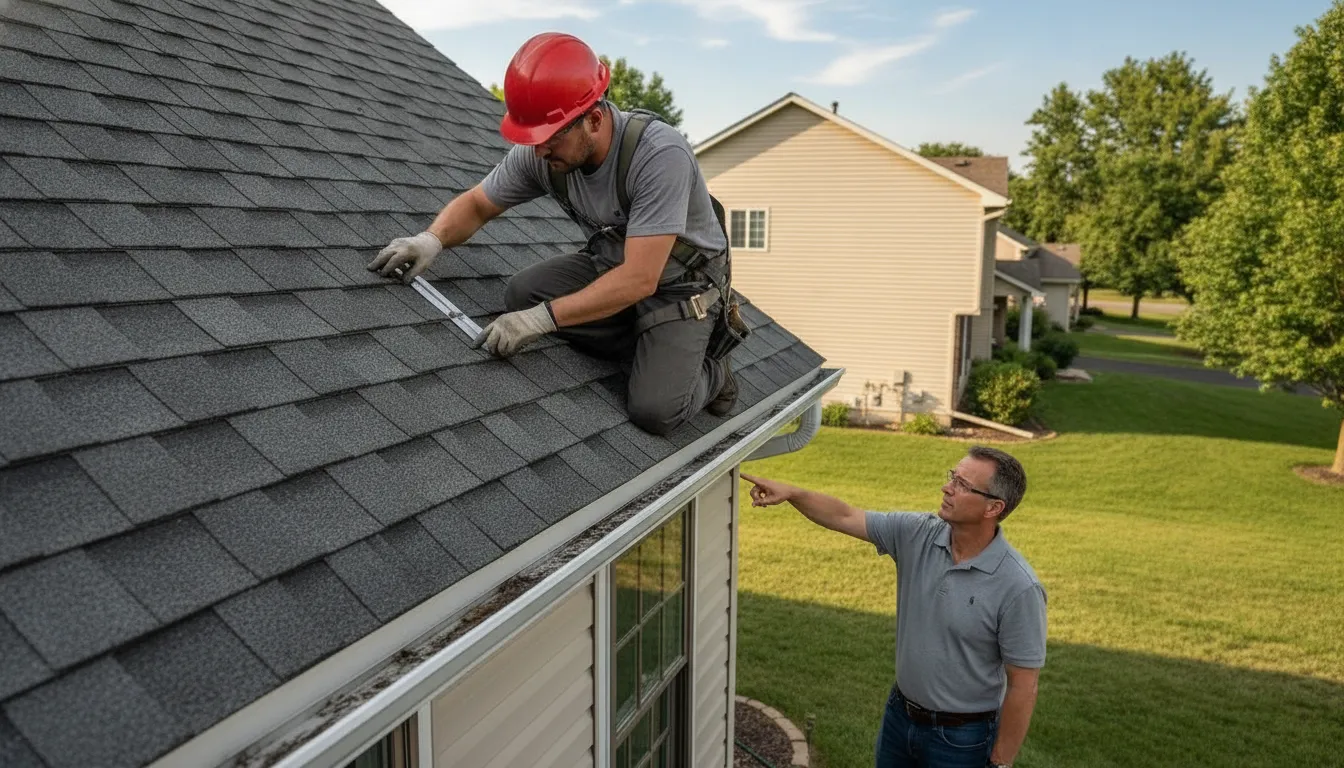
What should a roofing company in North Oaks MN help you evaluate?
A roof inspection should help you understand the condition of the whole roofing system, not just the visible shingles. Ask the contractor to explain what they observed and distinguish urgent concerns from items that can be monitored. You should leave the conversation with a clear account of the recommended work and why it fits the roof.
Useful inspection questions include:
- Which areas of the roof show wear, damage, or signs of moisture?
- Are the concerns limited to a small area, or do they affect multiple roof sections?
- What evidence supports repair, replacement, or continued monitoring?
- Were flashing, roof edges, valleys, vents, and other transitions reviewed?
- What could not be inspected safely or observed from the available access?
Ask for photographs or another clear way to review the findings. A good explanation connects each recommendation to an observed condition. Be cautious if you are urged to approve broad work without a description of the problem, or if the inspection leaves you unsure about what is included.
To make the inspection useful, prepare a short list of what you have noticed before the appointment. Include the room or exterior location, when the problem first appeared, and whether it changes after rain, snow, or a thaw. If a ceiling mark grows or a drip appears only during certain conditions, that timing may help the contractor focus the assessment. Keep your notes factual; a stain indoors can indicate moisture, but it does not by itself identify the entry point or prove that the roof needs replacement.
Ask how the contractor assessed areas that are hard to see, such as roof-to-wall intersections or surfaces blocked from ground view. If access is limited, request that the report say so instead of treating an unseen area as confirmed damage or as confirmed sound. This helps you understand both the evidence and its limits. You can then decide whether to request a closer assessment or seek another opinion.
Referred Restoration offers roof inspections and roofing services in its Minnesota service area. Its Rogers roofing service information describes the inspection and restoration process. Since service coverage can vary by location, North Oaks homeowners should confirm availability directly rather than assume a contractor serves every nearby community.
How can you tell whether you need a repair or replacement?
A single symptom does not automatically mean the entire roof needs replacement. Missing or lifted shingles, a leak near a roof opening, damaged flashing, or a small area affected by a branch may call for a focused repair. Widespread aging, recurring leaks in different locations, or deterioration across several sections may lead a contractor to discuss replacement. The roof’s age is only one piece of the assessment.
Ask the contractor to compare the realistic options. A repair recommendation should identify the affected area, the work needed to address it, and any related conditions that could limit the repair. A replacement recommendation should explain why localized work would not adequately address the roof’s condition. If the evidence is not clear, ask for photos and an explanation before making a decision.
When the recommendation is for repair, ask how the contractor will locate the likely entry point and assess nearby components. The visible indoor stain may be some distance from where water entered, so ask what observations support the proposed repair location. Clarify whether the work includes only the damaged material or also the flashing, seal, or adjacent surface connected to the issue. Find out what signs should prompt a follow-up call if moisture returns.
When replacement is proposed, ask the contractor to walk through the roof sections and conditions that make a small repair unsuitable. Ask whether the recommendation applies to the entire roof or only certain planes, and what practical limits would apply to a partial replacement. The answer should connect the scope to observed conditions rather than rely on age alone. If the distinction is still unclear, use the inspection notes to get a second written assessment that addresses the same locations.
Use the table below as a starting point for that conversation. It is not a diagnosis: the inspection findings and the roof’s construction determine which option makes sense.
| Option | When it may fit | What to clarify | What to document |
|---|---|---|---|
| Monitor | No active leak or major damage is found, and the observed condition can be checked over time. | Which areas need attention, and when should they be reviewed again? | Inspection notes, photos, and any recommended follow-up. |
| Repair | A defined area or component is damaged while the rest of the roof remains serviceable. | What materials and locations are included? How will the repaired area be checked? | The affected area, agreed scope, and completion notes. |
| Replace | Wear or damage is widespread, or a repair would not adequately address the conditions found. | What layers and components are included, and how will unexpected findings be handled? | Written scope, material selections, schedule, and completion records. |
If you want another perspective focused on a specific roof concern, Referred Restoration also provides roof repair information and details about roof replacement in Rogers. Those pages can help you understand the types of service offered, but an inspection is needed to determine what applies to your home.
How should you compare roofing proposals fairly?
Do not compare proposals by looking only at the total or the shingle brand. The documents may describe different work. One might include removal of existing materials, new flashing, ventilation details, and cleanup, while another covers a narrower scope. Ask every contractor to describe the same roof areas and work so that you can make a useful comparison.
Look for these details in writing:
- Work area: Which roof sections are included, and are any excluded?
- Removal and preparation: Does the plan explain what happens to existing roofing materials and how the surface is prepared?
- Materials: Are the product type, relevant components, and selected colors recorded?
- Water-shedding details: How will valleys, edges, penetrations, and flashing transitions be addressed?
- Ventilation: Does the contractor describe any ventilation work, or explain why changes are not proposed?
- Site protection: What precautions will protect landscaping, driveways, and areas around the home?
- Cleanup: How will debris be collected, and what will the final walkthrough cover?
- Schedule and communication: Who will provide updates, and how will weather or an unexpected condition affect the plan?
Ask what is not included as well as what is. Written exclusions and assumptions help you understand where additional decisions could arise. If two proposals use different terms, request plain-language explanations rather than guessing. Keep copies of the versions you considered and the final agreed scope.
A practical way to compare proposals is to make a side-by-side checklist before choosing. Start with the same roof sketch or list of roof sections for each contractor. Mark whether each document addresses removal, underlayment, flashing, ventilation, disposal, protection, and closeout. Then note any item that is missing or described as an allowance, assumption, or possible extra. A blank entry does not necessarily mean the work is excluded, but it is a reason to ask for clarification in writing.
Also compare how changes are handled. Ask who can approve an adjustment, how the contractor will explain a newly discovered condition, and whether you will receive the revised scope before the work proceeds. For example, if concealed decking damage is found after old material is removed, you should know how the location will be shown. How the proposed response will be documented, and how the change affects the work plan. This is more useful than relying on a verbal summary after the crew has moved on.
Material selection deserves a separate discussion. Ask how the proposed roofing product is suited to your home’s design and local weather exposure. What compatible components are part of the system, and what care or limitations the manufacturer describes. Referred Restoration notes its use of Malarkey roofing products in its company information; homeowners can ask which specific product and components are being considered for their roof.
What should you ask about materials and installation?
Roof performance depends on more than the visible shingle. Underlayment, flashing, ventilation details, fastening, and installation all matter. Have the contractor explain the planned assembly and how the parts work together. Ask for the product documentation and installation details relevant to the selected system.
For example, find out how the crew will handle roof openings, valleys, wall intersections, and the roof edge. These are places where materials meet and where careful installation is important. Ask how the crew will address any damaged decking discovered after removal, whether that work requires your approval, and how changes will be recorded before proceeding.
It is also reasonable to ask who will supervise the work, how questions will be answered during the project, and what workmanship or manufacturer documentation will be provided. Do not assume that every warranty or product term is identical. Read the actual documents, understand their stated limits, and keep them with your home records.
Before selecting a product, gather the names of the proposed shingle and related components and review their written product information. Ask whether the proposal identifies the same system throughout, including any starter, ridge, or underlayment products that are part of the planned installation. If options are offered, ask what changes between them and why one is recommended for your roof. Keep the final selection in the signed scope so there is a record of what the crew is expected to install.
Ask the contractor to explain the installation sequence in ordinary language. A homeowner does not need to direct the crew, but understanding the sequence can make progress updates easier to follow: preparation and removal. Inspection of the exposed surface, any agreed repair, installation of the roofing components, and cleanup. Ask what may not be visible once the work is complete and what records or photographs can document those portions. This is especially helpful if you will not be home during the work.
Homeowners researching different systems can also review Referred Restoration’s overview of metal roofing versus shingles and its guide to roof underlayment. The best choice depends on the home, the roof design, and the scope under consideration.
How should you handle storm damage and insurance questions?
After hail, strong wind, or falling debris, first focus on immediate safety. Do not climb onto a wet, damaged, or steep roof. From the ground, note visible damage and any water entering the home. If there is active interior water, protect belongings where it is safe to do so and arrange appropriate help to limit further exposure.
Record what you can without putting yourself at risk. Take dated photos from safe locations, note when the storm occurred, and keep a list of affected rooms or exterior areas. Save any correspondence and inspection notes. Avoid discarding relevant records before you understand what documentation may be needed.
If you plan to contact your insurer, review your policy and ask the insurer about its process, deadlines, documentation, and next steps. A contractor can describe observed roof conditions and provide information about proposed work, but the insurer determines coverage under the policy. For consumer information about insurance in Minnesota, homeowners can also consult the Minnesota Department of Commerce. Do not treat a contractor’s inspection as a guarantee that a claim will be approved. And do not agree to work based on a promise about the outcome of a claim.
When you contact the insurer, organize the information in a simple order: the date you noticed the damage. The areas affected, any immediate steps taken to protect the home, and the records you have collected. Ask what the insurer wants you to submit and how it will arrange any inspection. Keep a copy of what you send and note the date of each conversation. This makes it easier to distinguish the insurer’s instructions from the contractor’s observations and proposed work.
If a contractor and insurer describe the damage differently, ask each to explain the basis for their assessment and the next step available to you. Keep the discussion factual and preserve photos, written reports, and correspondence. You remain responsible for decisions about authorization and work at your home. Ask your insurer how to proceed if there is an urgent leak while a coverage question is still being reviewed.
Referred Restoration describes assistance with storm-damage claims as part of its roofing services. Its storm damage restoration information is a starting point for questions about the contractor’s process. Keep the insurance conversation direct with your insurer, and ask the contractor to separate observations, proposed work, and claim-related assumptions.
What should happen during a roofing project?
Before work begins, confirm the agreed scope, selected materials, expected start window, access needs, and the best way to contact the project lead. Ask what conditions could change the schedule. Weather can interrupt exterior work, so it helps to understand how updates will be shared and how the crew will protect the home if work pauses.
On installation day, move vehicles away from the work area if requested, secure outdoor items, and keep children and pets clear of the active site. Ask whether the crew needs access to power or specific parts of the property. If you work from home or have sensitive outdoor spaces, discuss that ahead of time rather than during active work.
During the project, raise questions promptly with the designated contact. If the crew finds an unexpected condition, ask for an explanation and a written description of any proposed change before approving it. That record should make clear what changed, why it changed, and how it affects the agreed work or schedule.
For major work, ask how materials will be delivered and staged, how the crew will protect landscaping, and how debris will be handled. Roofing work can produce noise and temporary disruption. A clear plan helps you prepare household members and reduces confusion about where people can safely walk or park.
Before the scheduled start, do a brief walk around the property and note fragile plants, outdoor furniture, lights, gates, or areas where access is difficult. Ask the contractor whether these should be moved or protected and who will handle that preparation. Take a few reference photos of nearby landscaping or hard surfaces if you want a record of their condition before work. Do not place yourself beneath active roof work to check progress.
Agree on a simple update routine. You might ask for a message when the crew arrives, when removal reveals the roof surface, and when the work is complete. The exact schedule depends on the project, but knowing when to expect information prevents you from interpreting a quiet period as a problem. If the weather changes, ask whether the roof is secured and what condition should be expected until work resumes.
What should you check before the roofing project is complete?
Walk through the completed work with the contractor or project contact, where it is safe to do so. Do not climb onto the roof to inspect it yourself. Ask the contractor to point out the work completed and explain any areas that could not be seen from the ground.
Use a simple closeout checklist:
- Confirm that the agreed roof sections and related work were addressed.
- Ask whether any conditions discovered during installation changed the scope, and collect the written record.
- Review cleanup around the home, including the paths used for access and material handling.
- Ask what documentation is available for products, installation, and any applicable warranty terms.
- Find out whom to contact if you notice a concern after the crew leaves.
- Keep the proposal, change records, photos, inspection notes, and closeout documents together.
Ask the project contact to describe any limits on the ground-level review. A roof surface may not be fully visible from the driveway, and a homeowner should not be encouraged to climb up for a closer look. Instead, request available completion photos or a walkthrough that points out key details. Confirm that any agreed follow-up item has an owner and a next step, rather than leaving it as an informal promise.
If you notice a concern later, document it and contact the contractor rather than attempting a roof-level inspection or repair. A clear record of the location and what you observed can help the contractor understand what follow-up may be appropriate.
What should you confirm before hiring a contractor?
Before signing, make sure the contractor has explained the proposed scope and answered your questions in language you understand. Confirm who is responsible for communication, how changes are approved, how the site will be protected, and what documents you will receive. Ask for the company’s current information about applicable licensing, insurance, and project terms, and verify details with the relevant sources where appropriate.
Talk with more than one contractor if you need a clearer view of the options. Use the same questions and request comparable written scopes. Pay attention to how each person responds when you ask for evidence or clarification. A careful explanation is more useful than pressure to decide before you understand the work.
Before committing, review the agreement slowly and check that it matches the proposal you evaluated. Confirm the property address, roof sections, selected materials, work sequence, communication contact, and process for recording changes. Make sure you know what happens if the start date shifts or if work cannot continue because of weather. Keep a complete copy of the signed documents and any later amendments in one place. If a clause or technical term is unclear, ask for a plain-language explanation before you sign.
You can also use the first conversation to assess communication. Notice whether the representative answers the question asked, separates known facts from assumptions, and is willing to identify what needs further inspection. A respectful contractor should give you time to compare options and understand the scope. You do not need to decide while a representative is still at your home; ask for the written information and a clear way to follow up with questions.
Referred Restoration serves homeowners from its Rogers-area base and describes a process built around inspection, a custom solution, and installation. You can review its Rogers-area roofing and exterior services, check its Cottage Grove service information, and contact the company to ask whether your North Oaks property is within its current service area. Its other exterior offerings include gutter installation and siding services, which may be useful to discuss if an inspection identifies related exterior concerns.
Ask Referred Restoration about a roof inspection
Frequently Asked Questions
Does Referred Restoration serve North Oaks?
The company serves the Rogers area and surrounding communities, but service availability should be confirmed for your address. Contact the company before scheduling to verify whether it can inspect your North Oaks home.
Should I replace a roof as soon as I find a leak?
Not necessarily. A leak needs prompt attention, but the right scope depends on its source and the condition of the rest of the roof. Ask for an inspection that identifies the entry point and explains whether a repair can address it.
What should I compare in roofing proposals?
Compare the written work areas, material details, preparation, flashing and ventilation plans, cleanup, schedule, exclusions, and process for approving changes. Similar scopes make proposals easier to understand side by side.
Can a roofing contractor guarantee an insurance claim will be approved?
No contractor can determine coverage on behalf of your insurer. Ask your insurer about the policy and claim process, and ask the contractor to document roof observations and proposed work separately from any coverage decision.
How can I prepare my home for roof work?
Confirm access and communication plans, move vehicles or outdoor items as requested, and keep people and pets away from active work areas. Ask the contractor what else is needed for your property before the scheduled start.
A careful inspection, a clear written scope, and a documented closeout give you a practical basis for making a roofing decision and understanding the work on your home.