A roof can look acceptable from the driveway while weather exposure, missing shingles, or aging materials create questions that only a careful inspection can answer. For Rogers homeowners, choosing a contractor is less about a polished slogan and more about finding clear evidence of local service coverage. Minnesota roofing knowledge, and a practical plan for the home’s actual condition.
Contact Referred Restoration online or call (763) 726-4245 to discuss a Rogers roofing inspection.
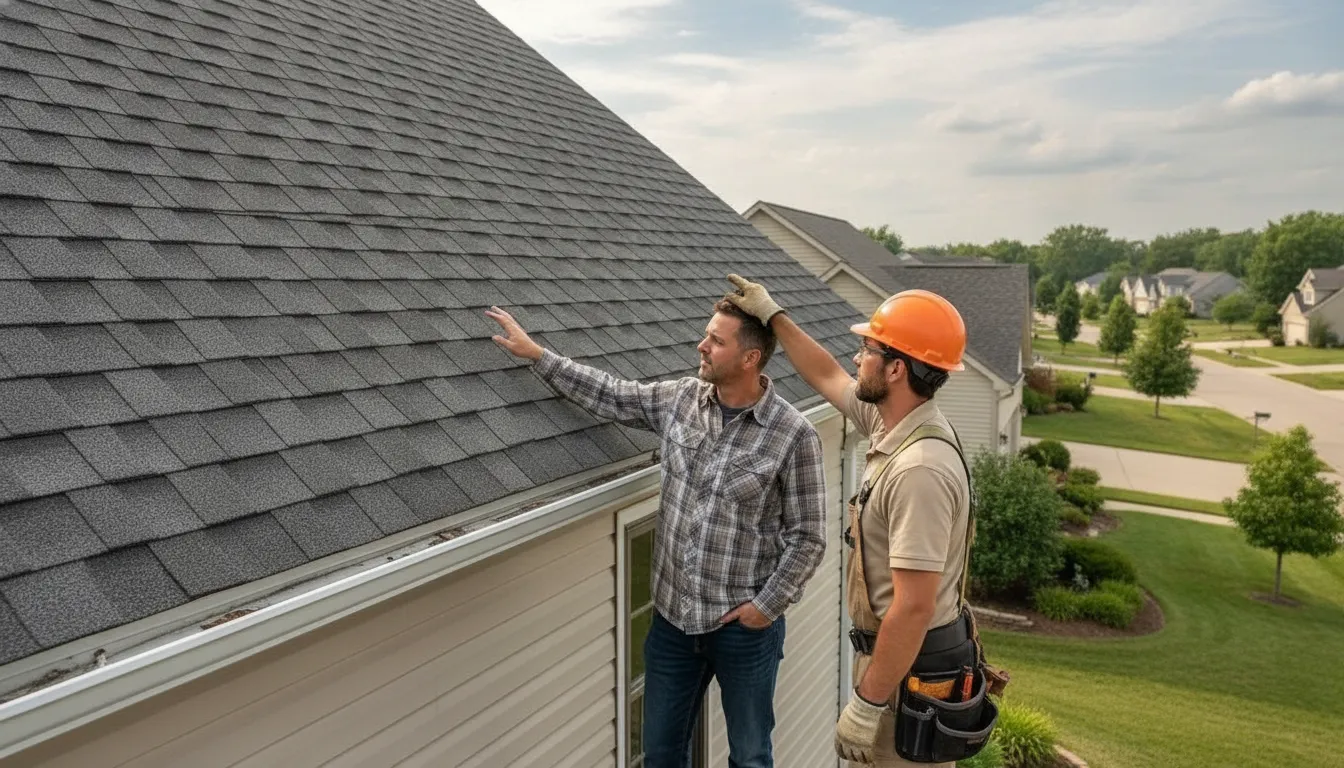
A roofing contractor rogers mn homeowner can trust should explain what was observed, identify the limits of the inspection, document recommended next steps. And connect the work to the right pathway, whether that means inspection, repair, replacement, new installation, or storm-damage restoration.
Referred Restoration is based in Rogers and serves nearby communities along the Rogers-to-St. Francis-to-Monticello corridor. Before you compare service options, start by identifying the concrete proof a locally experienced contractor should be able to provide.
What Local Roofing Expertise Should a Rogers Homeowner Be Able to Demonstrate?
Local expertise should be something a homeowner can verify during a conversation, not just a slogan on a truck or website. A qualified team should be able to explain how its service area fits your property. How Minnesota weather affects roofing decisions, what evidence supports its recommendations, and who will communicate with you throughout the work.
Service-area fit should be specific
Start by asking whether the contractor regularly serves your part of the Rogers area and understands the practical needs of nearby communities. Referred Restoration is based in Rogers and serves Rogers and surrounding communities along the Rogers-to-St. Francis-to-Monticello corridor. Its documented roofing pathway includes inspections, repairs, replacements, new installations, and storm-damage restoration. You can review the available Rogers roofing services before contacting a contractor and identify whether the offered pathway matches your situation.
That range matters because local expertise is not limited to one type of project. A contractor should be able to explain whether the next step is an inspection. Targeted repair, replacement planning, or storm-damage assessment without forcing every homeowner into the same recommendation.
Minnesota context should shape the explanation
Snow, hail, and seasonal storms are relevant conditions for Minnesota roofs. Ask how the contractor will look for weather-related wear, moisture entry, vulnerable flashing, or other visible concerns during an inspection. The answer should connect observations to your roof rather than rely on broad claims about local weather. It should also distinguish what can be confirmed from the ground, what requires closer examination, and what remains uncertain until the roof system is assessed.
Evidence and communication should be easy to follow
A useful inspection conversation should identify the visible evidence, explain why it matters, and outline practical next steps in plain language. Referred Restoration describes a process built around a free inspection, an honest assessment, expert recommendations, a custom solution, and professional installation. Homeowners should leave with enough information to understand the recommendation, record unanswered questions, and decide what follow-up is appropriate. Clear communication is part of workmanship because it helps prevent surprises before work begins.
How Can You Evaluate a Roofing Contractor Rogers MN Homeowners Are Considering?
Before inviting a roofing contractor Rogers MN homeowners are considering to inspect the property, create a short verification record. The goal is not to collect impressive-sounding claims. It is to confirm that the business understands the service requested. Can explain who is responsible for the work, and gives you enough information to make a documented decision.
Use this sequence before the inspection or initial consultation:
- Define the request and the property. Write down the address, the reason for calling, and what you have observed. Note whether the concern is a leak, missing shingles, visible damage, age-related wear, or possible storm damage. Ask the contractor to confirm that the appointment and proposed scope are tied to the correct property. This keeps a general conversation from becoming an unclear recommendation.
- Request the legal business details. Ask for the company name that will appear on the paperwork, the contact person, and the name of the business responsible for the work. Request the applicable Minnesota license information and ask whether any subcontractors will be involved. The Minnesota Department of Labor and Industry says residential contractors performing roofing work must hold an eligible state license. Relevant categories include residential roofer, residential building contractor, and residential remodeler. Review the DLI roofing-license guidance rather than relying on an informal credential claim.
- Check the license path and qualifying person. Compare the details you receive with the state information. Each licensed company designates a qualifying person, who is responsible for the required examination and continuing-education requirements. If the proposed roofer is a subcontractor, ask how that company is registered. Because Minnesota uses the Contractor Registration Program for roofing subcontractors rather than the same license path. These distinctions help you ask a precise follow-up instead of assuming every worker has identical credentials.
- Ask for current coverage documents. Request documentation for general liability and property-damage insurance, along with evidence of workers compensation compliance where applicable. Minnesota DLI application materials identify both types of documentation. Do not treat a verbal assurance as a substitute for reviewing the document, and ask which business entity and work scope the coverage applies to.
- Check the local permitting pathway. Use the City of Rogers Licenses and Permits page and Building Department page to understand which city process may apply. Ask who will identify required permits, submit them, and arrange inspections. The contractor should explain what is known and what still needs confirmation, rather than promising a result before the scope is reviewed.
- Ask who supervises the work. Identify the person who will oversee installation, who handles questions in the field, and how changes or newly discovered conditions will be documented. If subcontractors are expected, ask when their names and responsibilities will be shared. Clear ownership matters as much as the initial sales conversation.
- Record open questions before scheduling. Keep copies of license and coverage information, links you checked, unanswered questions, and any statements that need verification. If a contractor cannot answer something immediately, note who will follow up and when. A careful record gives you a useful basis for comparing scope and communication after the inspection.
What Evidence Should a Local Roofing Inspection and Conversation Provide?
A useful inspection should leave you with more than a general statement about your roof. Referred Restoration describes its process as a free inspection, an honest assessment, a custom solution, and professional installation. The conversation should help you understand what was observed, what could not be confirmed, and what the next decision requires.
Ask for evidence you can review
Request clear photographs or written notes tied to specific roof areas. A photo of a missing shingle, flashing detail, exposed material. Or visible storm impact is more useful when the inspector explains where it was taken and why it matters. Ask whether the image shows active damage, ordinary wear, or a condition that needs monitoring. The goal is not to collect pictures for their own sake. It is to connect observations to a recommendation you can follow.
The notes should also identify access limits. Weather, roof height, slope, unsafe surfaces, or blocked areas may prevent a complete visual review. A careful inspector should say which areas were not reached or could not be evaluated rather than implying that every part of the roof was confirmed. If a concealed condition cannot be established without additional work, ask how that uncertainty will be documented and discussed before the scope changes.
Expect plain-language answers
You should be able to ask, “What did you find, and how do you know?” without needing specialized roofing knowledge. Ask the inspector to distinguish the visible symptom from the suspected source and to explain why the recommended pathway fits the evidence. If you noticed an interior stain or recurring leak, share when it appears and what weather seems to affect it. Those details provide context, but they do not replace an on-site assessment.
Also ask who will perform and supervise the work, who will answer questions, and how discoveries will be recorded. A written summary should make clear the areas reviewed, findings, exclusions, proposed next step, and any follow-up needed. If the discussion points toward a limited repair, you can review the roof repair in Rogers pathway as a starting point for questions. Keep the focus on evidence specific to your home, not a generic conclusion based only on age or appearance.
How Should You Compare Contractor Scope and Communication?
A useful proposal should help you understand what will happen at your home, how the work will be managed, and what evidence you will receive afterward. When comparing a roofing contractor in Rogers, MN, look beyond a short list of materials. Ask whether each contractor has documented the same conditions and is describing the same work.
| What to compare | Questions to ask | What a clear response includes |
|---|---|---|
| Inspection evidence | What did you observe, and where? | Photos or notes identifying affected roof areas, visible damage, and the reasoning behind the recommendation. |
| Included areas | Which roof sections and related details are covered? | A defined work area, with attention to penetrations, flashing, ventilation, edging, and cleanup where relevant. |
| Site protection | How will the home and property be protected? | A practical plan for protecting landscaping, siding, windows, walkways, and other surfaces during the work. |
| Change handling | What happens if concealed conditions appear? | A pause for explanation, updated documentation, and homeowner approval before the added work proceeds. |
| Communication | Who answers questions and how will updates be shared? | A clear contact person, understandable updates, and a process for discussing concerns without pressure. |
| Completion records | What will be reviewed when the work is finished? | A final walkthrough or written record showing completed areas, cleanup, and any recommended follow-up. |
This comparison also helps you distinguish a repair conversation from a replacement conversation without assuming the answer in advance. Referred Restoration documents a process built around a free inspection, an honest assessment, a custom solution, and professional installation. Ask for the findings in plain language and keep the records with your home documents.
Contact Referred Restoration online or call (763) 726-4245 to discuss an inspection or roofing service question.
Which Minnesota License and Rogers Permit Checks Matter?
A trustworthy hiring process includes checking the contractor’s business information against current public sources. Minnesota Department of Labor and Industry (DLI) says residential contractors who perform roofing work must hold an eligible state license. The state identifies residential roofer, residential building contractor, and residential remodeler as relevant categories. You can review those distinctions on the Minnesota DLI roofing license guidance.
That check should match the work being discussed. If a company plans to use roofing subcontractors, ask who will perform the work and how that team is registered. DLI explains that roofing subcontractors follow the state’s Contractor Registration Program rather than the same license path. This does not tell you whether a particular contractor is suitable, but it gives you a useful question to ask before work begins.
Ask who is responsible for the license
Minnesota’s roofer license page explains that each licensed company designates a qualifying person. That person is responsible for the required examination and continuing-education requirements. Ask the company to identify the legal business name associated with its license and who will supervise the roofing work. If the name on a proposal, certificate, or contract differs from the name you are checking, ask for an explanation before moving forward.
Request current insurance documents
It is reasonable to ask for documentation rather than relying on a verbal assurance. Minnesota’s roofer-license application materials reference a certificate of insurance covering general liability and property damage, along with a certificate of compliance with Minnesota workers’ compensation law. Ask whether the documents are current, which business entity they cover, and whether the people performing the work are included under the stated arrangement. You do not need to interpret the documents as a legal professional. If anything is unclear, ask your insurance adviser or another qualified professional what the document means for your situation.
Check the Rogers permit process
License verification and local permit questions are separate checks. Rogers maintains official Licenses & Permits information and a Building Department page. Review those pages for current instructions, then ask the contractor whether the planned scope requires a city permit. Who will apply for it, and how approval will be documented. Permit requirements can depend on the work and local rules. So avoid relying on an old proposal or a general statement that every roofing project follows the same process.
Keep copies of the license details, insurance questions, permit correspondence, and the written scope together. This simple record makes it easier to resolve unanswered questions before an inspection or installation is scheduled.
How Do You Match the Right Roofing Service Pathway to Your Rogers Home?
The right next step depends on what you have observed, not on a remote diagnosis. Referred Restoration’s documented roofing pathway includes inspection, repair, replacement, new installation, and storm-damage restoration for Rogers and nearby communities. That range makes an inspection a useful starting point when the situation is unclear.
When an inspection is the best first step
Choose an inspection when you notice a change but cannot tell what caused it. A ceiling mark, loose-looking shingle, exposed area, or aging roof may require different responses. Before the appointment, note when you first noticed the issue, take exterior photos from ground level, and gather any recent repair or installation records. Do not climb onto the roof or disturb damaged materials to investigate.
Minnesota roofs must handle changing conditions, including snow, hail, wind, and seasonal storms. Tell the inspector about any recent weather event and point out areas where water enters or debris collects. A documented inspection should help separate observed conditions from assumptions and explain what should be reviewed next.
When repair, replacement, or new installation may fit
A repair conversation may be appropriate when the concern involves a leak, missing shingles, or visible localized damage. You can review the roof repair in Rogers pathway for context, but the inspection should determine the practical scope.
Replacement is a separate pathway for an aged or severely damaged roofing system. If you are comparing that direction, the roof replacement information page can help you prepare questions about system condition, materials, site protection, and installation. New installation applies to a new build or an addition where roofing has not yet been installed. In each case, ask what was observed, what remains uncertain, and how the recommended work addresses the home’s condition.
When storm assessment needs its own path
After suspected hail or wind damage, preserve photos, note the date of the weather event. And avoid making temporary changes that could obscure evidence unless needed to protect the home. A storm assessment can document visible conditions and identify whether restoration support is appropriate. The storm-damage restoration in Rogers pathway covers that service direction without assuming an insurance outcome.
Related exterior signs can matter too. Damaged gutters or siding may deserve a separate look, so review Rogers gutter services or Rogers siding services when those systems show possible weather impact. Referred Restoration is based in Rogers and serves surrounding communities along the Rogers-to-St. Francis-to-Monticello corridor. Its stated process is a free inspection, a custom solution, and professional installation, giving homeowners a clear way to move from observed concern to an appropriate service pathway.
Frequently Asked Questions
How can I verify a roofing contractor’s license and insurance in Minnesota?
Ask for the company’s legal business name and license details, then check the Minnesota Department of Labor and Industry guidance on roofer licensing and the license application requirements. Minnesota residential contractors performing roofing work must hold an eligible state license. Request current proof of general liability and property-damage insurance, along with workers’ compensation compliance documentation, and confirm who will supervise the work.
What should I ask a roofing contractor before hiring them?
Ask whether the contractor has evaluated the specific roof issue, what evidence supports the recommendation. Who will perform and supervise the work, and how changes or unexpected conditions will be documented. Also ask how the crew will protect the property, communicate updates, and record completion details. Clear answers help you compare the quality and completeness of each contractor’s proposed process.
What should a roofing estimate include?
A useful written estimate should explain the observed scope, areas included, proposed materials, site-protection steps, cleanup, completion records, and how any changes will be handled. It should also identify the contractor, describe the next steps, and distinguish an inspection finding from an item that still requires confirmation. If important details are vague or only discussed verbally, ask for clarification before approving the work.
What should I do if my roof has storm damage?
Document visible damage from a safe location, avoid climbing onto the roof, and arrange an inspection before deciding on repairs. Hail, wind, and seasonal storms can affect roofing and other exterior components, so note related concerns around siding, gutters, or windows. A storm-damage assessment can help determine the appropriate restoration pathway and organize the information needed for your next conversation.
Ready to Choose Your Rogers Roofing Service Pathway?
Contact Referred Restoration online or call (763) 726-4245 to discuss a Rogers roofing inspection or service pathway.