
Minnesota weather can turn a small roofing concern into a larger home-protection problem. Hail, high winds, heavy snow loads, and ice-related moisture all test the condition of asphalt shingles over time.
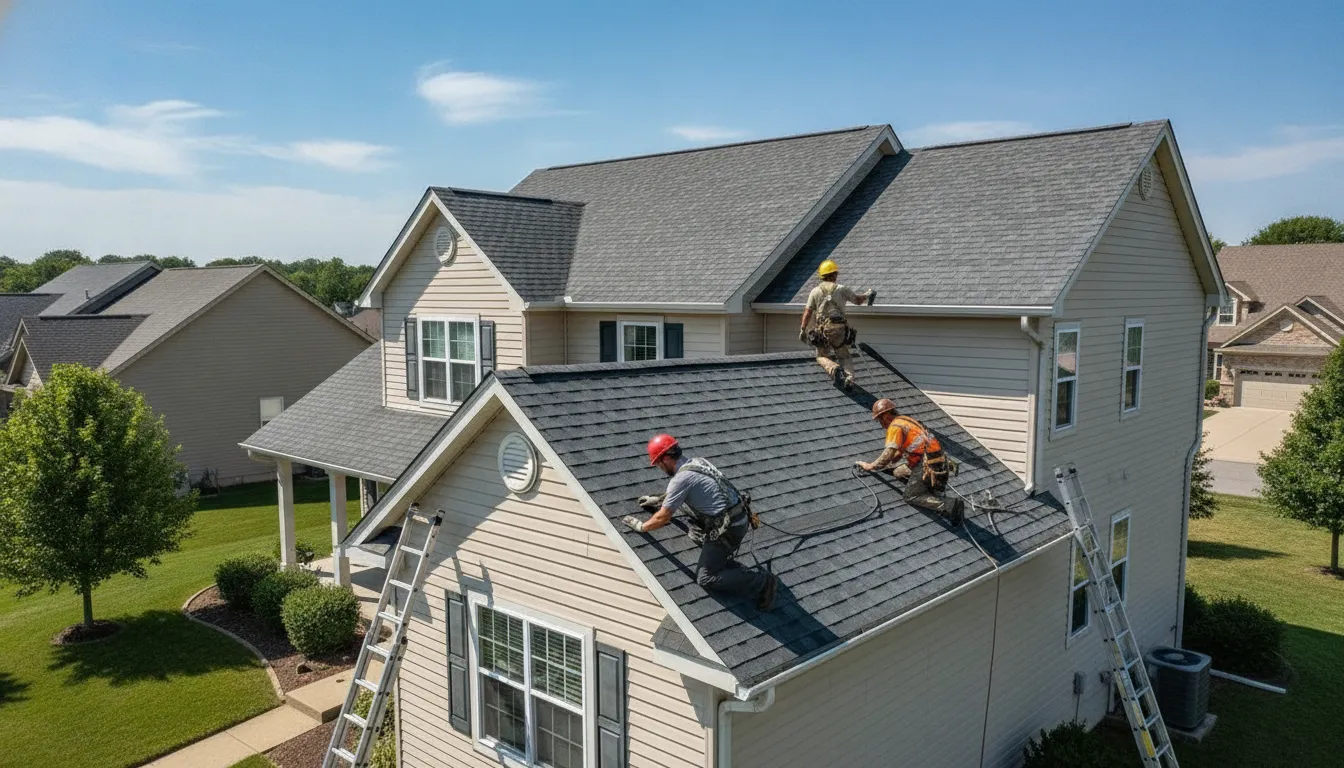
Asphalt shingle roof replacement is usually the right path when a roof is beyond its service life, has widespread storm damage, or cannot be reliably repaired. A professional evaluation can distinguish isolated damage from underlying issues, identify whether local code permits another covering, and help document storm damage for an insurance claim.
The right decision also depends on the shingle type, roof assembly, ventilation, flashing, and installation conditions. Understanding what happens during the work makes it easier to compare options and prepare for a durable result in Minnesota’s changing seasons.
Contact Referred Restoration online to plan your asphalt shingle roof replacement.
What Asphalt Shingle Roof Replacement Involves
For a broader overview, see the complete residential roofing systems guide.
Asphalt shingle roof replacement means removing or covering an existing roof system and installing a new protective assembly. For a Minnesota home, the work involves more than laying new shingles over the old ones. A complete project evaluates the roof deck, removes failed materials when needed, installs underlayment and flashing, and seals the new shingles against changing weather.
Roofing professionals generally describe two approaches. Reroofing can mean either replacing the existing roof covering or recovering it with another layer. Recovering, also called an overlay, leaves the old shingles in place. Most jurisdictions allow no more than two roof coverings on a building, and local code may require full replacement rather than an overlay. Check the applicable permit and code requirements before work begins. The Asphalt Roofing Manufacturers Association explains the difference between reroofing and replacement.
An overlay may appear simpler, but it can add weight and trap heat between layers. Those conditions may shorten the service life of the new shingles. In Minnesota, a full tear-off is often the more dependable choice because it exposes the roof deck for inspection. The installer can identify rot, moisture damage, uneven surfaces, or old fasteners before they become hidden beneath the new roof.
The watertight layer beneath the shingles
Shingles are the visible weather surface, but the underlayment is a critical secondary water-resistant barrier. It sits between the shingles and roof deck, helping protect the structure if wind-driven rain or melting snow gets beneath the shingle courses. Correct installation matters at every transition, especially around penetrations and changes in roof direction.
Flashing is equally important. Valleys, chimneys, and vents concentrate water and create areas where leaks can develop if metal flashing is damaged, poorly fitted, or reused when it should be replaced. A proper replacement includes inspecting these components and integrating them with the new underlayment and shingles. This is why a roof replacement should be treated as a system, not a surface upgrade. Learn more about our asphalt shingle roof replacement services and the components included in a professionally installed roof.
Once the deck, underlayment, and flashing are ready, the crew installs the new asphalt shingles according to the selected product’s instructions. Proper alignment, fastening, and sealing help the roof withstand Minnesota’s snow, wind, hail, and freeze-thaw conditions. The result should be a coordinated roof system that sheds water reliably from the ridge to the gutters.
Architectural vs. Standard Asphalt Shingles: Which Is Right for Minnesota?
Choosing shingles is more than selecting a color. Minnesota roofs face snow loads, freeze-thaw cycles, strong wind, and occasional hail, so the right material should fit your home’s design and exposure. The two common options are standard three-tab shingles and architectural shingles, also called laminated or dimensional shingles. Both can form a dependable roof when installed correctly, but they differ in construction, appearance, and performance.
| Factor | Architectural shingles | Standard three-tab shingles |
|---|---|---|
| Appearance | Layered, dimensional profile with varied shadow lines and a more substantial look. | Flat, uniform profile with a repeating tab pattern and a simpler appearance. |
| Durability | Multiple layers generally provide a more robust shingle design and enhanced durability. | Single-layer construction can perform well, but offers a simpler level of material depth. |
| Wind and hail resistance | Often available in higher-performance products, but the rating depends on the specific shingle and installation. | Can resist wind when properly installed, with performance determined by the product rating and roof installation. |
| Weight | Usually heavier than three-tab shingles because of the additional laminated material. | Usually lighter, which may matter when reviewing the existing roof structure and layers. |
| Cold-weather performance | Quality products can remain flexible through temperature changes, but installation conditions and ventilation still matter. | Can perform in Minnesota when selected and installed for local conditions, with attention to sealing and weather exposure. |
The Asphalt Roofing Manufacturers Association identifies 3-tab, architectural, and luxury designer shingles as standard asphalt shingle styles. Its comparison of architectural and three-tab products also notes that architectural shingles have a multilayered construction that creates a three-dimensional look and can provide enhanced durability. Those differences make architectural shingles a practical fit when appearance and added material depth are priorities.
Why sealant strips matter in Minnesota wind
Shingle performance depends on more than the label on the bundle. Many asphalt shingles use an adhesive sealant strip that bonds neighboring shingles as the roof warms in the sun. This seal helps improve wind resistance, but it cannot compensate for poor fastening, damaged decking, inadequate flashing, or installation during unsuitable conditions.
Referred Restoration partners with Malarkey Roofing Products, whose NEX polymer-modified asphalt is designed to provide increased flexibility and weather resistance in cold temperatures. That type of material consideration can be useful for Minnesota homeowners who want a roof system suited to seasonal temperature swings. The best choice still depends on the roof’s slope, ventilation, structural condition, local code requirements, and the product’s documented ratings. A professional evaluation can connect those details to your asphalt shingle roof replacement plan without treating one shingle style as right for every home.
How Long Do Asphalt Shingle Roofs Last in Minnesota?
In Minnesota, a properly installed and ventilated asphalt shingle roof that has not suffered significant damage can last 20 years or more. That is a useful planning range, not a guarantee. The roof’s age, installation quality, attic conditions, exposure, and storm history all affect when replacement becomes necessary.
Minnesota’s climate places unusual demands on every roofing system. Heavy snow loads stress roof components during winter. Ice dams can allow melting snow to back up beneath shingles and enter vulnerable areas. Summer hail and high winds can bruise, loosen, or remove shingles. Repeated freeze-thaw cycles also contribute to gradual weathering. Research from the National Institute of Standards and Technology identifies heat, ultraviolet exposure, thermal cycling, and freeze-thaw events as stresses that can degrade asphalt shingles.
Why roof ventilation affects service life
Attic ventilation is one of the less visible factors in asphalt shingle roof durability. Proper ventilation allows heat to escape instead of allowing excessive heat buildup beneath the roof deck. That helps protect the roofing system through hot summers and reduces conditions that can contribute to winter ice dams. Insulation and ventilation should be evaluated together, because correcting one without addressing the other may leave the underlying problem unresolved.
For winter preparation, homeowners can review practical guidance on ice dam prevention in Minnesota. Keeping attic air movement and moisture conditions under control supports the roof, insulation, and interior ceilings below it.
When age becomes a replacement concern
Once an asphalt shingle roof passes the 20-year mark, schedule a professional inspection even if it appears acceptable from the ground. Consumer Reports advises replacing an out-of-warranty roof that is more than 20 years old, even when obvious damage is not visible. Older shingles may have reduced flexibility and less protection against wind uplift or hail after years of weather exposure.
Look for warning signs such as missing or exposed granules, cracked or curled shingles, exposed fasteners, repeated repairs, stains in the attic, or leaks around roof penetrations. A roof can also have concealed damage after a severe storm without showing an obvious interior leak. Inspection findings help distinguish isolated repairs from a broader need for asphalt shingle roof replacement.
Do not wait for the first interior leak to evaluate an aging roof. A timely inspection can clarify whether ventilation, flashing, storm damage, or general wear is shortening its remaining service life.
The Asphalt Shingle Replacement Process, Step by Step
Replacing one damaged shingle and replacing an entire roof are different projects. The basic repair sequence is systematic, but full asphalt shingle roof replacement also involves tear-off, roof-deck inspection, flashing, ventilation, weather planning, and safe work at height. The seven-step shingle sequence below explains how an individual shingle is removed and replaced. It is useful for understanding the work, even when a licensed roofing professional handles the project.
- Break the seal on the target shingle. Carefully loosen the adhesive seal that holds the damaged shingle to the course below it. A roofing tool can separate the seal without unnecessarily disturbing nearby shingles. Work patiently, because forcing the material can create additional damage.
- Break the adjacent seals. Loosen the seal strips around the neighboring shingles. Asphalt shingles overlap one another, so the target shingle cannot be removed cleanly until the adjoining pieces release. Limit the disturbance to the immediate work area.
- Remove the nails. Lift the target shingle enough to expose its fasteners, then remove the nails without tearing the underlayment or damaging the roof deck. Any damaged sheathing or underlayment should be evaluated before new shingles are installed.
- Remove the adjacent nails. Take out the nails that secure the overlapping neighboring shingles where necessary. This creates enough access to remove the old shingle and gives the replacement a proper fastening surface.
- Take out the old shingle. Slide the damaged shingle free and clear away loose debris. The exposed area should be checked for moisture, deteriorated wood, or other conditions that could prevent the new shingle from lying flat.
- Install the new shingle. Position a matching replacement so its edges and exposure align with the surrounding course. Fasten it according to the shingle manufacturer’s instructions. Correct placement matters for water shedding, appearance, and wind performance.
- Reseal the repair. Press the surrounding shingles back into position and apply compatible roofing sealant where required by the installation instructions. Sun and normal weather help activate adhesive strips, but the repair should be secure before the next storm.
For a full replacement, the same attention to installation details applies across the entire roof. The crew must remove the existing covering as needed, inspect the deck, install underlayment and flashing, place the new shingles, and protect exposed work from changing weather. Minnesota requires building permits for re-roofing existing dwellings, so homeowners should confirm the permit process with the local authority before work begins. The Minnesota roofing guidance also requires materials to follow the 2020 Minnesota Residential Code and the manufacturer’s installation instructions, which can affect warranty coverage.
A capable homeowner may complete a limited repair when familiar with roofing procedures, equipped for safe access, and able to plan around dry weather. Full replacement is usually a professional job. Walking a sloped roof, handling tear-off debris, identifying hidden moisture, and installing flashing safely all require experience. Call a state-licensed roofing contractor when damage is widespread, the roof deck may be compromised, multiple layers are present, or you are not comfortable working at height. Professional evaluation can also prevent a small repair from masking a larger roof-system problem.
Sources: IKO’s seven-step shingle replacement guidance and the Minnesota roofing guidance.
Does Homeowners Insurance Cover Asphalt Shingle Roof Replacement?
Homeowners insurance may help cover asphalt shingle roof replacement when a covered event, such as wind or hail, causes sudden damage. Coverage depends on the policy, the cause of loss, the roof’s condition, and the deductible that applies. Normal aging, deferred maintenance, and wear are generally treated differently from storm damage.
After a severe Minnesota storm, do not assume that visible damage is minor. Missing granules, curled shingles, and bruised areas can indicate wind or hail impact. Document the condition promptly with clear photos, including close-ups and wider views that show where the damage appears on the roof. Photograph related damage to siding, gutters, windows, or other exterior features as well.
What to document before filing a claim
Keep a simple record of the storm date, the damage you observed, and any temporary steps taken to prevent additional water intrusion. Save inspection notes, receipts for emergency measures, and correspondence with your insurer. Avoid making permanent repairs before the damage has been properly inspected unless immediate action is needed to protect the home.
An insurer may send an adjuster to assess whether the damage resulted from a covered storm event and whether repair or full replacement is appropriate. Your contractor can provide a detailed inspection, explain the visible roof conditions, and help organize documentation for the claim. A local contractor familiar with Minnesota hail and wind patterns can also identify damage that is easy to miss from the ground.
Where a local roofing contractor can help
Referred Restoration helps Minnesota homeowners navigate the insurance claims process after storm damage. The contractor does not decide what your policy covers, but can help you understand the construction scope. Document affected areas, and communicate the work needed to restore the roof correctly. That support can be especially useful when a storm affects several exterior systems at once.
For a broader overview, read this guide to navigate the asphalt shingle roof replacement insurance claim. If hail or wind affected more than the roof, learn how to coordinate asphalt shingle roof replacement as part of exterior storm repairs.
Before authorizing work, review your policy, ask questions about the claim decision, and confirm the contractor’s inspection findings. A careful process protects your home while keeping the insurance discussion grounded in documented damage rather than guesswork.
When Is It Time for an Asphalt Shingle Roof Replacement in Minnesota?
Roof problems rarely begin with a dramatic collapse. More often, asphalt shingles show small changes that signal the roof is losing its ability to shed water. In Minnesota, acting on those signs matters because summer storms, freeze-thaw cycles, snow, and ice dams can turn a weakened roof into a larger home repair problem.
Start with a careful visual inspection from the ground, then have a qualified professional examine areas that are difficult or unsafe to reach. Look for cracked, curled, or cupped shingles, worn mineral coatings, exposed nails, old patches, holes, or visible underlayment and roof sheathing. These are recognized signs of roof damage in Minnesota roofing guidance.
Watch for granule loss and exposed roofing materials
Granules protect the shingle surface from weather exposure. When they disappear, the underlying shingle base is exposed to the elements, which can accelerate deterioration. You may notice bare-looking areas on individual shingles or an unusual amount of granule debris in gutters and downspouts. Missing granules do not automatically determine that the entire roof needs replacement, but they warrant a professional assessment.
Also check for water stains or damp insulation in the attic, especially near vents, chimneys, and walls where flashing may fail. A roof can look acceptable from the yard while allowing moisture into the structure. Delaying action can give a small leak time to damage decking, insulation, drywall, or framing. Winter ice dams can make that risk more urgent by forcing meltwater beneath shingles and into vulnerable areas.
Age is a reason to investigate, not a reason to wait
Roof age should be considered alongside its condition, installation quality, ventilation, and storm history. Consumer Reports advises replacing an out-of-warranty roof that is more than 20 years old, even when obvious damage is not visible. That does not replace an on-site evaluation, but it is a useful planning threshold for Minnesota homeowners.
Schedule periodic inspections rather than waiting for a ceiling stain or active leak. A professional can identify widespread wear, repeated patching, exposed fasteners, and decking concerns before they become emergency issues. If several warning signs appear together, planning an asphalt shingle roof replacement is usually safer than treating each symptom as an isolated repair. Early evaluation gives you time to understand the roof’s condition and prepare for the work before the next major storm or winter weather event.
Frequently Asked Questions
What does replacing asphalt shingles involve?
Replacement usually means removing the existing shingles, checking the roof deck and flashing, installing the new roofing system, and sealing the shingles. The condition of the underlying materials and local code requirements determine whether the roof can be recovered or needs a full tear-off.
Can you replace just one shingle on a roof?
Yes, a single missing or damaged shingle can often be replaced when the surrounding roof is still sound. The replacement should match the existing material as closely as possible, and the roofer should check nearby shingles for storm damage, loose seals, or water intrusion.
How often does an asphalt shingle roof need to be replaced?
There is no single schedule for every Minnesota roof. Installation quality, ventilation, hail, wind, snow, ice dams, and maintenance all affect service life. A properly installed and ventilated roof without damage can last 20 years or more, according to the City of Robbinsdale roofing guidance. Consumer Reports advises replacing an out-of-warranty roof more than 20 years old, even without obvious damage.
Is a permit required for asphalt shingle roof replacement in Minnesota?
Permit requirements are handled locally, but Minnesota homeowner guidance states that building permits are required for re-roofing existing dwellings. Your roofing contractor should confirm the requirements with the local building department and coordinate the permit before work begins. Robbinsdale’s roofing guidance is one Minnesota example.
Ready to plan your asphalt shingle roof replacement?
Minnesota weather can make roof decisions feel complicated, especially when you are weighing wear, storm damage, and the right next step. A professional inspection can help clarify whether your asphalt shingles need repair or full replacement and what to address first.
Contact Referred Restoration online for a free inspection of your asphalt shingle roof.