
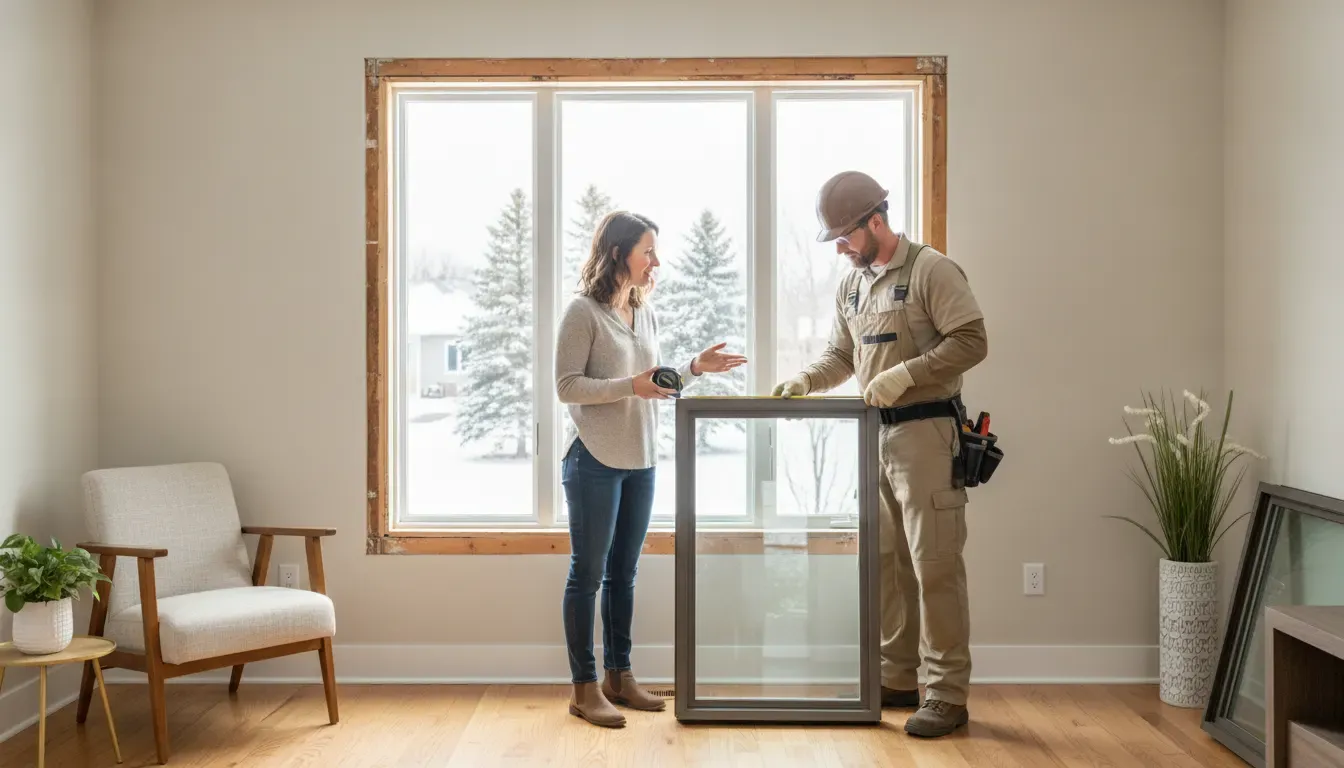
The cost of new window installation is shaped by the home, the opening, the window selected, and the work required to install it correctly. A per-window estimate can be misleading when it does not account for frame condition, access, finishing, or the installation method. A better planning conversation starts with the questions below.
Contact Referred Restoration online or call (763) 726-4245 to discuss your window project.
This guide does not replace an on-site assessment. It explains why two homes with similar-looking windows may need different scopes of work. So you can prepare useful questions before requesting a project-specific recommendation in Rogers or the surrounding Minnesota service area.
Short answer: New window installation planning depends on window type and material, the size and condition of each opening, and whether an insert or full-frame method is appropriate. Access, energy-performance goals, removal and disposal, and interior or exterior finishing also affect the scope. The most reliable next step is to have each opening measured and inspected before a contractor recommends a scope.
Which Factors Shape the Cost of New Window Installation?
Window installation is a project rather than a single product purchase. The final scope reflects what must be supplied, removed, prepared, installed, sealed, and finished at each opening. The same home may even contain several different conditions, especially if windows were replaced at different times.
- Window style, size, material, glazing, and operating hardware.
- Whether the existing frame can be retained or a full-frame replacement is safer.
- Opening condition, including moisture damage, rot, uneven surfaces, or previous repairs.
- Access, story height, landscaping, interior furnishings, and site protection.
- Energy goals, climate performance, orientation, and glass specifications.
- Removal of the existing unit, disposal, trim work, insulation, sealing, and cleanup.
These factors are why a responsible contractor should ask about the home and inspect representative openings instead of treating every window as an identical unit. The goal is not to make the project seem complicated. It is to prevent a plan that leaves out work needed for a dry, square, operable, and durable installation.
How Does Window Type Affect the Installation Plan?
Window type affects more than appearance. It changes the size and weight of the unit, the way it opens, the clearance needed around it, and the details an installer checks after setting it. A fixed picture window, casement window, double-hung window, bay window, and sliding window each place different demands on the opening and surrounding trim.
Consider these questions before comparing options:
- Does the room need ventilation, or is a fixed view window suitable?
- Will furniture, a counter, or a walkway limit how the window can open?
- Does the opening need a replacement that fits an existing frame?
- Will a larger or heavier unit require additional planning for delivery and safe handling?
- Do the window’s dimensions and operating style work with existing screens, trim, and locks?
Homeowners can review common styles and selection considerations in this Minnesota house-windows selection guide. That article focuses on choosing among window options. For local help with repair or replacement, see Rogers window repair and replacement services. This guide stays focused on the project conditions that influence installation scope after a replacement direction is being considered.
Material and glass choices matter too
Frame material, glazing, spacer systems, coatings, and hardware can change the product specification. A homeowner focused on durability may prioritize a different combination than someone focused on low maintenance, daylight, ventilation, or cold-weather comfort. Ask for the exact product and performance details rather than relying on a broad label such as energy efficient.
Performance information is especially useful when comparing similar-looking units. The U-factor describes how well the window resists heat transfer, while the solar heat gain coefficient describes how much solar heat passes through the window. The ENERGY STAR replacement-window buying guidance explains why climate zone, orientation, and documented product specifications should be part of the discussion.
Does the Existing Opening Need Repair Before Installation?
The condition behind the existing trim can be one of the most important variables in a window project. A window may look worn from the room side while the opening remains sound. Or it may look acceptable while hidden moisture has affected the sill, jamb, framing, or surrounding wall assembly.
During an assessment, look for questions such as:
- Is there staining, softness, swelling, or a musty odor near the sill?
- Does the existing frame show movement, gaps, failed sealant, or evidence of water entry?
- Are the sill and head level enough for the chosen replacement method?
- Are the opening dimensions consistent from top to bottom and side to side?
- Has previous work left extra layers of trim, shims, or materials that affect fit?
- Does the surrounding wall need limited repair before the weather barrier can be sealed?
Not every irregularity requires the same response. Some openings can be prepared with minor adjustments, while others call for more extensive exposure and repair. The important planning step is to identify the condition before ordering a unit, not after the old window has been removed.
For a closer look at the homeowner measurements that help an installer plan, see how to measure for replacement windows. Measurements are useful planning information, but they do not replace a professional check of the frame, sill, moisture condition, and wall connection.
What Is the Difference Between Insert and Full-Frame Replacement?
The installation method can change the amount of removal, preparation, and finishing required. An insert or pocket replacement generally keeps more of the existing frame in place. A full-frame replacement exposes more of the opening and may include removal of the old frame, exterior trim, or other surrounding materials.
| Planning question | Insert or pocket approach | Full-frame approach |
|---|---|---|
| What stays in place? | More of the existing frame and surrounding finish may remain. | More of the old assembly may be removed to expose the opening. |
| When is it considered? | When the retained frame is sound, compatible, and appropriately sized. | When condition, fit, water management, or a new configuration calls for greater access. |
| What should be checked? | Frame condition, clear dimensions, drainage, and how the new unit seals to the retained frame. | Rough opening condition, flashing, insulation, trim, and the connection to the wall system. |
| What can change? | Interior and exterior finishing may be more limited, but existing details still need inspection. | Trim, siding interfaces, interior casing, and paint or patching may require more planning. |
Neither method is automatically better for every opening. The correct choice depends on the existing assembly and the result the homeowner needs. A full-frame approach may provide more visibility into the opening, while an insert approach may preserve sound finishes when the retained frame is suitable. The installation decision should follow the condition assessment, not a one-size-fits-all rule.
For the installation sequence, including the relationship between the sill, flashing, insulation, and seal, read this safe window replacement process guide. It covers installation mechanics in more detail than this planning article.
How Do Access and Home Layout Affect the Work?
Access influences how the crew protects the home, moves materials, reaches each opening, and completes the work safely. A first-floor window with a clear path is different from a second-story opening above a porch, a tight side yard, or a room filled with furniture.
Tell the contractor about conditions such as:
- Second-story or hard-to-reach windows.
- Porches, decks, roofs, steep grades, or narrow side yards near the opening.
- Landscaping, fencing, or exterior features that limit equipment placement.
- Interior furniture, built-ins, window treatments, or flooring that needs protection.
- Pets, children, security needs, and rooms that cannot remain open during the work.
- Seasonal weather concerns that may affect scheduling and temporary enclosure.
Access does not determine product quality, but it can change the preparation and protection plan. A clear conversation helps the installer plan for safe handling, dust control, weather exposure, and cleanup. It also helps the homeowner understand which rooms and exterior areas need to be ready before work begins.
What Energy Goals Should You Discuss Before Choosing Windows?
Energy performance is not only a product label. It is a combination of the window specification, the opening condition, installation quality, air sealing, and the home’s broader envelope. A homeowner who wants warmer rooms in winter may ask different questions than one who is mainly trying to reduce glare. Improve ventilation, or protect furnishings from ultraviolet light.
Discuss the following:
- Which rooms feel drafty, cold, overheated, or uncomfortable?
- Which windows receive strong morning, afternoon, or direct summer sun?
- Are condensation, air leakage, or difficulty operating the window recurring issues?
- What U-factor and solar heat gain coefficient are appropriate for the home’s climate and orientation?
- Would air sealing or insulation work elsewhere in the room or wall assembly affect the result?
- Which product labels, warranty terms, and performance records should be retained?
The U.S. Department of Energy’s consumer guide to energy-efficient windows explains how insulation, air sealing, climate, orientation, and installation work together. Better performance begins with matching the product and installation approach to the actual home rather than choosing a window from a single feature in isolation.
Contact Referred Restoration online or call (763) 726-4245 if you want help evaluating window replacement options in Rogers.
Which Parts of the Project Should Be Included in the Scope?
A clear scope describes more than the new window itself. Ask the contractor to explain what happens before installation, during removal, and after the unit is set. This makes it easier to compare proposals based on the work included rather than on a single line item.
- Assessment and measurement: Confirm which openings were inspected, which dimensions were taken, and whether any conditions need further review.
- Product specification: Record the window style, frame material, glass configuration, operating hardware, color, screens, and other selected options.
- Removal: Clarify how the existing units, trim, fasteners, and debris will be removed and handled.
- Opening preparation: Ask how the crew will address uneven surfaces, moisture damage, framing concerns, insulation, and sill preparation if discovered.
- Water management and air sealing: Confirm how the new unit will connect to the surrounding weather barrier and how gaps will be sealed.
- Finishing: Identify interior casing, exterior trim, cladding, siding interfaces, caulking, paint, patching, and cleanup responsibilities.
- Testing and handoff: Ask how each window will be checked for operation, locking, alignment, draft control, drainage, and visible finish quality.
The more precisely the scope describes these items, the fewer assumptions remain. If a proposal says installation is included, ask what that phrase includes for removal, preparation, trim, sealing, disposal, and final inspection.
How Can Homeowners Prepare for a Window Installation Consultation?
Preparation helps a contractor spend the visit evaluating the right conditions. Make a list of windows that are difficult to open, drafty, fogged, damaged, noisy, or uncomfortable. Note any history of leaks, storm damage, repairs, condensation, or previous replacement work.
Bring these questions:
- Is repair, insert replacement, or full-frame replacement appropriate for each opening?
- What conditions could change the recommended scope after removal?
- Which window specifications fit the home’s climate, orientation, and comfort goals?
- What interior and exterior finishing work is included?
- How will the crew protect the home and manage weather exposure?
- What should be documented for product records, warranty support, and future maintenance?
Move curtains, blinds, furniture, and objects away from the window area when practical. Keep access paths clear and identify security, pet, or child-safety concerns before the crew arrives. Do not remove trim or disturb a questionable opening simply to collect more measurements. If you see moisture or damage, document it and let the professional assess the assembly safely.
What Should You Look for During the Final Walkthrough?
The final walkthrough is the opportunity to confirm that the installed windows function as expected and that the surrounding work is complete. Each unit should open, close, lock, and remain aligned. Operable windows should not require unusual force, and visible gaps in caulking or trim should be discussed before the crew leaves.
Check that:
- Each window matches the selected style, color, glass, and operating direction.
- Sashes, panels, locks, and screens operate smoothly.
- Interior and exterior sealant lines are continuous and neatly finished.
- Trim, casing, siding interfaces, and patched areas are addressed in the agreed scope.
- Work areas are clean and removed materials are handled as planned.
- You receive product, warranty, care, and maintenance information.
ENERGY STAR also recommends checking the installed product and operation before the installer leaves. A careful walkthrough does not replace a warranty, but it creates a clear record of what was completed and what questions still need an answer.
Contact Referred Restoration online or call (763) 726-4245 to schedule a window inspection and discuss the right next step for your home.
Frequently Asked Questions
What is included in new window installation?
New window installation may include measuring, product delivery, removal of existing units, opening preparation. Setting and fastening the new window, insulation, air sealing, water-management connections, trim or casing, cleanup, and a final operation check. The exact scope should be written clearly for each opening.
Why can two windows in the same home need different installation work?
Openings can differ because of age, previous repairs, moisture exposure, framing movement, size, access, and retained trim. One window may be suitable for an insert approach while another needs more exposure and preparation. A room-by-room assessment helps identify those differences before installation begins.
Should I choose insert or full-frame window replacement?
That choice depends on the condition of the existing frame, the available dimensions, water-management needs, desired appearance, and the amount of surrounding finish that should be replaced. An installer should assess the opening and explain the tradeoffs instead of recommending one method for every window.
Do energy-efficient windows require professional installation?
High-performing windows still need a properly prepared and sealed opening. Incorrect installation can lead to drafts, moisture problems, poor operation, or reduced comfort. Ask about the product’s performance documentation and how the installation will connect to the home’s weather barrier.
How should I compare window installation proposals?
Compare the product specification and the complete scope, not just a single line item. Confirm removal, opening preparation, insulation, sealing, trim, disposal, cleanup, warranty documentation, and final testing. Ask which conditions could change the scope and how those changes would be communicated.
What is the first step if I am planning window replacement in Rogers?
Start with an inspection and measurement of the openings that need attention. Referred Restoration can review window condition, discuss repair or replacement options, and help you understand the installation plan for your home before you make a decision.
Contact Referred Restoration online or call (763) 726-4245 to get started.