
.
Water spilling over a gutter or a damp mark beneath the eaves can be easy to dismiss as a nuisance. Minnesota freeze-thaw cycles, snow, and summer storms make it useful to check whether the gutter system directs water as intended. One symptom alone does not mean the whole system needs replacing.
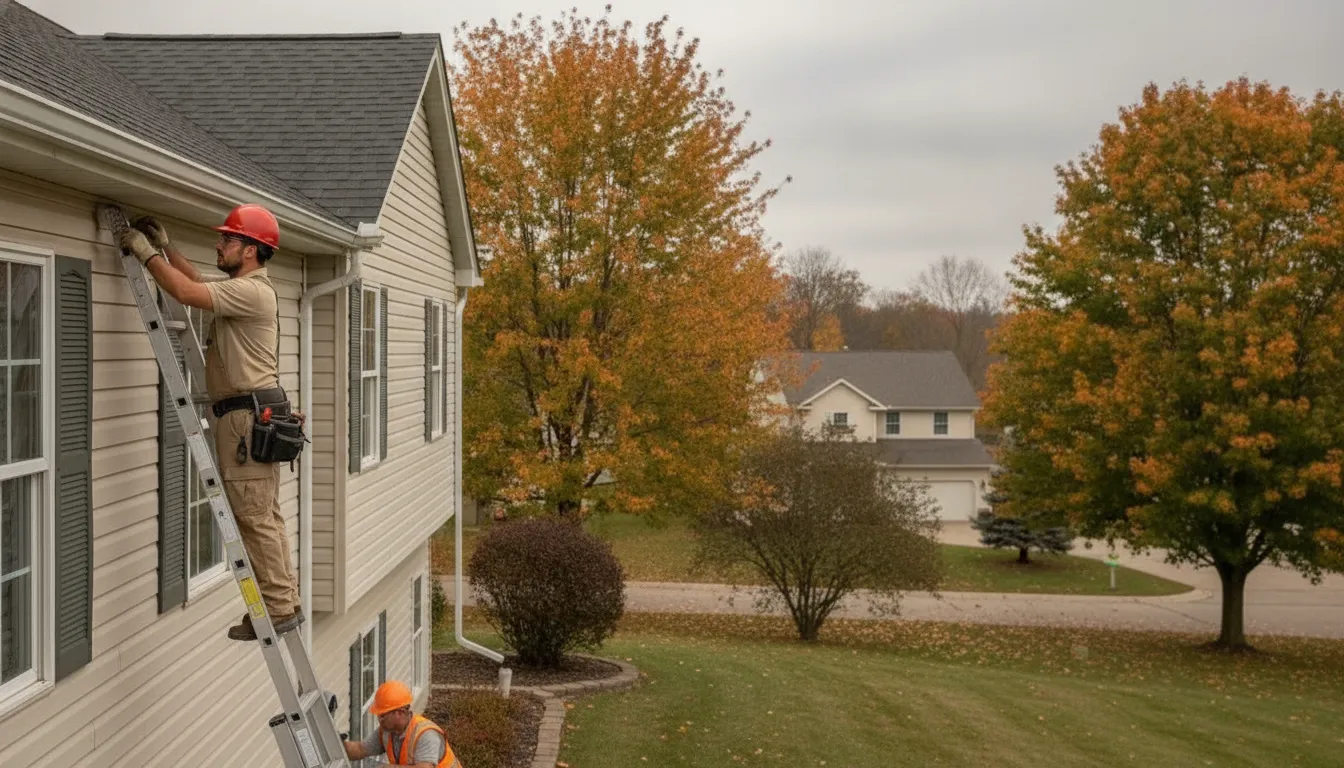
Expert gutter inspections mn help homeowners understand the visible condition of gutters and downspouts, assess concerns such as leaks, sagging or overflow, and identify sensible next steps. An inspection is an assessment, not routine cleaning or an automatic recommendation to replace the system.
The right scope depends on what can be safely observed and what you have noticed at home. Knowing which parts may be reviewed and what questions to ask can help turn an inspection into a practical plan.
Contact Referred Restoration online to ask about gutter inspection options in your area.
What Expert Gutter Inspections in MN Can Cover
A useful inspection looks beyond whether the gutter appears clean from the ground. It can consider the visible condition of the system and how its parts work together to move roof runoff toward the downspouts and away from the home. The scope depends on the property and what can be viewed safely. This is general guidance, not a guaranteed contractor checklist.
Typical areas to discuss may include whether gutter runs appear straight and securely attached, whether joints or end caps show gaps, and whether there are visible signs of overflow or leaking. An inspector may also look at outlets and downspouts for apparent blockage, disconnection, damage, or a discharge direction that sends water toward the foundation. Water marks near the eaves, fascia, soffit, or siding can provide useful context, though they do not by themselves identify the cause. Ask what was observed directly and what may need a closer evaluation.
These observations help connect a symptom to a practical next step. A damp mark, loose section, or overflow pattern may point to a localized issue, but it does not automatically mean the entire system needs replacement. If the inspection cannot establish the source from visible conditions, ask whether further assessment is appropriate. Access, roof design, debris, and weather may affect what is visible.
Referred Restoration confirms gutter-system inspections and services that include repair of leaks, sagging, and damage; downspout installation and repair; seamless gutter installation; and gutter-guard installation. These are service capabilities, not items promised on every inspection. Findings should guide which, if any, work fits the home’s condition.
For homeowners in Rogers and nearby communities, these visible clues can frame a focused inspection conversation without assuming every property has the same drainage needs. Rogers gutter services describes the company’s gutter offerings. When arranging an assessment, mention where water appears, what happens during rain, and whether a gutter or downspout has shifted. Those details give the conversation a starting point without assuming the problem or solution.
What Signs Suggest a Professional Gutter Check Is Worthwhile?
Water showing up where it should not, or a gutter section that looks different than before, can be a good reason to arrange an assessment. These observations do not identify the cause on their own. A leak, for example, may call for a closer look at a seam or another part of the system, but the visible drip alone cannot show what repair is needed.
Pay attention during or after rain, but observe from the ground rather than climbing a ladder or walking on the roof. Signs worth noting include:
- Drips or leaks: Water escaping from a joint or gutter section, or damp marks beneath the roof edge, may warrant follow-up. Note where it appears and whether it happens during particular weather.
- Sagging or uneven alignment: A section that visibly dips, pulls away, or no longer follows a consistent line should be assessed. Appearance can point to a concern, but it does not establish whether the attachment, gutter, or another component needs attention.
- Visible damage: Cracks, bent sections, separated joints, or impact marks are useful details to report. The extent and location matter. A visible defect does not automatically mean the whole system needs replacement.
- Overflow or runoff in unexpected places: Water spilling over an edge, collecting below the eaves, or flowing close to the home during rain may prompt a check of the gutter and downspout arrangement. Debris, flow restrictions, and weather may matter. Avoid assuming a single cause.
It can help to record which side of the home is affected, when you noticed the issue, and whether it followed a storm or another change. Photos taken safely from the ground can also help explain what you saw. Share observations rather than trying to diagnose the system yourself.
This is different from deciding that gutters need to be replaced. A professional check can clarify whether a concern appears isolated, needs repair, or calls for further evaluation. Replacement is not automatic, and one symptom is not enough to settle that decision. For more about replacement warning signs, see gutter replacement warning signs.
When Should Minnesota Homeowners Schedule a Gutter Inspection?
There is no single inspection date that fits every Minnesota home. Tree cover, roof layout, past drainage problems, and recent weather all affect when a closer look may be useful. Two practical checkpoints are after winter, once a safe assessment is possible, and in fall before freezing weather. These are general windows, not a fixed schedule for every property.
A spring review can identify changes that became visible through winter, such as a shifted section, loose connection, or water marks near the eaves. It can also help assess whether runoff moves through the gutters and downspouts as intended before spring and summer rain. Wait until snow and ice have cleared enough for a safe assessment.
Fall is a useful time to look ahead to colder weather and check for visible debris, drainage concerns, or damage that could affect how the system handles rain. Nearby trees and changing leaf conditions may influence when attention is needed, but you do not have to wait for a calendar date if an issue is already apparent. A seasonal routine for basic upkeep is covered in this Minnesota gutter maintenance calendar.
Do not wait for spring or fall if a storm is followed by new sagging, a leak, water spilling over an edge, or a downspout that no longer appears to discharge properly. A visible change can prompt an assessment when weather and access are safe. If the concern appears only during rain, note where and when water escapes. That context helps an inspector understand what to look at.
Gutters are only one part of exterior water management. They are not the sole cause of winter ice dams and cannot prevent them by themselves. University of Minnesota Extension explains that uneven roof temperatures can melt snow, then cause water to refreeze at colder roof edges. An ice dam or indoor moisture calls for attention to roof and building-envelope conditions as well as nearby drainage. A gutter inspection can inform that discussion, but it cannot diagnose the roof conditions behind an ice dam.
How Are Gutter Flow and Downspouts Assessed?
A gutter system must collect roof runoff and carry it through outlets and downspouts toward the ground. When discussing flow, a professional may consider visible signs along that route, including seams, outlet openings, downspout connections, and the discharge point. The assessment depends on access and the homeowner’s observations. Do not assume every home follows one fixed test.
At the gutter run, visible gaps, separated joints, sagging sections, or water marks can help identify places that may deserve a closer look. At an outlet, debris or damage may interfere with the path into the downspout. The discharge point matters because the system should direct roof runoff away from the home. The U.S. Department of Energy’s Building America Solution Center explains that gutters and downspouts help direct rainwater away from the foundation in its guidance on gutters and downspouts.
Downspout outlets and discharge direction matter too. Note whether a downspout appears disconnected, damaged, or blocked, and whether water flows toward an area where it pools or erodes soil. Snohomish County advises against directing drainage toward the uphill side of a structure. Where safe, it recommends directing water away from hard surfaces and toward vegetation. Site grading and other features affect what suits a home, so discuss the layout rather than treating one arrangement as universal.
Joints are also relevant when comparing system designs. Referred Restoration offers seamless gutters, which have fewer joints along a run and can reduce potential leak points. That design does not remove the need to assess outlets, corners, connections, or downspouts. For a closer look at seamless and sectional gutters, see the related guide.
| What you notice | What to ask | Possible next step |
|---|---|---|
| Drip or gap at a joint. | Where is water escaping? | Discuss a closer check or targeted repair. |
| Sagging or loose section. | What appears to be shifting? | Ask whether attachment or alignment needs attention. |
| Overflow near an outlet. | Is the path into the downspout clear? | Discuss maintenance or further assessment. |
| Water collects near the home. | Where does the downspout discharge? | Review drainage direction for this site. |
Use the table as a prompt for discussion, not as a diagnosis. A clear assessment connects a flow concern to its location and explains whether follow-up is appropriate. One symptom alone does not prove the whole system needs replacement.
How Should You Use the Inspection Findings?
An inspection should help you decide what to do next, not turn every observation into a replacement recommendation. Ask what the inspector saw, where it is, and how it affects the gutter system. Distinguishing an active issue from a condition to monitor can help you choose a sensible response.
Some findings may call for routine maintenance. Debris or a localized obstruction may point to cleaning, not gutter repair. For a leak, loose or sagging section, or visible damage, ask whether a targeted repair could help. Referred Restoration provides gutter inspection and repair for leaks, sagging, and damage, along with downspout work. Review its Rogers gutter service options to see the available services.
Not every observation requires immediate work. If a condition is not clearly causing a problem, ask what changes would make it more urgent and whether to monitor it. If the source of water or extent of damage is uncertain, further evaluation may be more appropriate than guessing at a repair. Ask which areas were accessible and what remains unconfirmed.
Consider replacement when overall condition or recurring problems make repair unsuitable, not just because one section has a defect. Ask why repair is or is not practical, whether the recommendation covers one section or the full system, and what supports that conclusion. If you want to understand the distinction between repair concerns and broader deterioration, see these gutter replacement warning signs.
A recommendation should fit the home’s observed condition and leave room for an informed decision. Referred Restoration describes its approach as an honest assessment and a solution tailored to the home. Whether the finding points to maintenance, repair, monitoring, further evaluation, or replacement, ask for the reasoning in plain language. The next step should address the issue actually observed.
How Can You Prepare for a Gutter Inspection?
A few observations can make an inspection more useful. Note where water has spilled over, dripped, or collected near the home. Record when it happens, such as during rain, snowmelt, or after a storm. Mention ice or water marks too, but do not inspect the roof or gutters yourself.
Write down known gutter repairs or changes, such as a reattached section or moved downspout. Photos taken safely from the ground can show where a symptom appeared, even if it is not visible at the visit. Include enough of the home to identify the location. These are preparation tips, not a Referred Restoration protocol. Do not climb a ladder, walk on the roof, or reach into a gutter.
You do not need to diagnose the cause. A drip may appear in one spot, while overflow may occur only in certain rain. Describe what you saw, where it happened, and whether it has recurred. Your notes can help explain the concern even if it is not visible during the visit.
Ask the inspector to explain what they observed and where. If there is a concern, ask whether it needs attention now, should be monitored, or calls for closer evaluation. This separates a visible symptom from a confirmed problem and clarifies what to do next.
Ask how water leaves the gutter system and where the downspout discharges. If a repair is recommended, ask what it addresses and whether alternatives make sense. Replacement should fit the system’s condition, not be an automatic answer to every leak or overflow.
If debris repeatedly builds up, ask whether a guard is worth considering for your home and what maintenance it would still require. The right choice depends on the situation; this overview of Minnesota gutter guard options can help you prepare questions without assuming a guard is needed.
Bring your notes and ask for plain-language recommendations. Knowing what was seen, what can wait, and what action is proposed can help you choose a next step for your home.
Contact Referred Restoration online to discuss gutter inspection options in your area.
Frequently Asked Questions
Do gutters need to be inspected?
A check can help when you notice leaks, sagging, visible damage, overflow, or changed drainage. It assesses the system and possible next steps, but does not automatically mean cleaning or replacement is needed.
When is a good time to inspect gutters in Minnesota?
Many homeowners consider a check after winter and before freezing weather. Timing depends on the home and what you observe. Overflow after a storm, a new drip, or a recent repair may also prompt an assessment.
Can an inspection tell me whether gutters need repair or replacement?
An inspection can identify visible issues such as leaks, sagging, or damage and help clarify whether repair or further evaluation is appropriate. One symptom does not necessarily mean replacement is needed. Ask why each next step is recommended.
What should I note before a gutter inspection?
Note where drips or overflow occur, any recent storm, snow, or ice observations, and past repairs. Share those details and ask what needs attention, what can be monitored, and whether water is directed away from the house.
Contact us about a gutter assessment
If you notice overflow, a leak, or sagging, an assessment can clarify whether follow-up may be appropriate. Referred Restoration serves Rogers and nearby communities. To ask about a gutter assessment, contact Referred Restoration online.