A roof decision is easier to manage when you evaluate the contractor before you evaluate the shingles. For a St. Anthony home, start by confirming the company serves your address, then ask how it inspects the roof, documents damage, defines the work, and prepares for Minnesota weather.
Contact Referred Restoration online to confirm service availability and request an inspection.
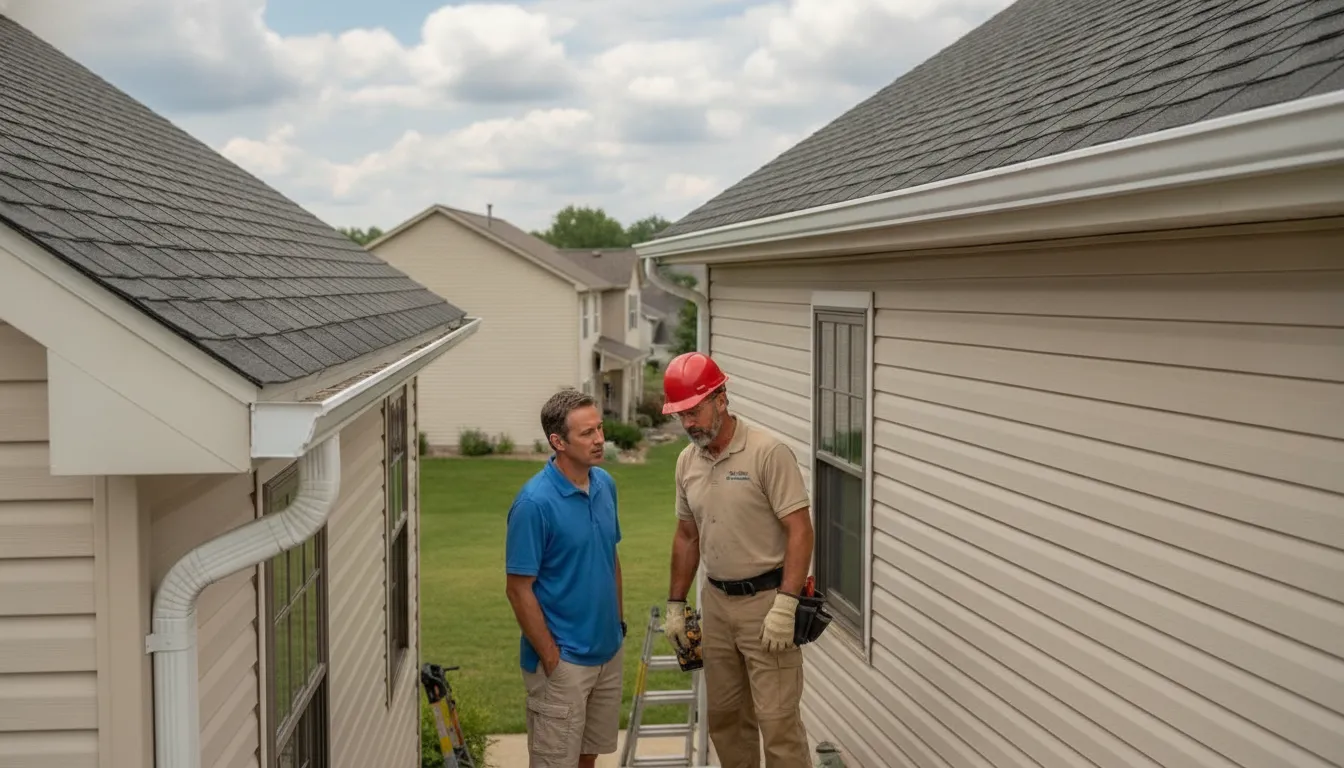
Choosing a roofing company in St. Anthony MN means looking for a careful inspection, a written scope that matches your home, suitable materials, clear communication, and a documented completion review. A dependable contractor should explain whether repair or replacement is appropriate instead of pushing unnecessary work.
The right questions reveal whether a company is prepared to work on your home and communicate responsibly from the first visit through cleanup. Before you compare proposals, verify the contractor’s local fit, qualifications, and inspection process.
What should you verify before hiring a roofing company in St. Anthony MN?
Start by confirming that the contractor actually works in your part of St. Anthony. Service pages can cover broad areas, while scheduling, crew availability, and municipal requirements may vary by address. Ask whether your address is within the company’s current service area and whether the team has completed projects with similar roof types, age, and weather exposure. Do not treat a nearby-city page as proof of coverage. For example, Referred Restoration’s documented footprint is Rogers-centered, and its available information does not confirm St. Anthony service. Verify eligibility before requesting an appointment.
Next, ask qualification questions that produce specific answers:
- What license or registration applies to this work, and can you provide the current information?
- Can you provide proof of general liability and workers’ compensation insurance, and identify who is responsible for subcontracted work?
- How many roofs similar to mine has the company completed recently?
- May I speak with references from comparable projects, not only view testimonials selected for advertising?
Licensing rules can differ by state and locality, so the Federal Trade Commission recommends checking whether local requirements apply and verifying that a required license is current. The same guidance advises homeowners to research a contractor beyond its advertising and ask for references. Read the FTC’s contractor-selection guidance for additional questions.
Look for evidence that matches your situation. A contractor who regularly handles steep sections, older homes, storm-related repairs, or coordinated gutter work should be able to explain what makes those projects different. Ask how findings will be documented, who will supervise the crew, and how questions are handled after the inspection. Reviews are most useful when you look for consistent descriptions of communication, cleanup, and follow-through rather than relying on a star rating alone.
For broader due diligence, use this guide on how to choose Minnesota roofers. If you are considering related exterior work, the reroofing and gutter planning guide can help you identify coordination questions before work begins.
What should a professional roof inspection include?
A useful inspection begins on site, not with a generic recommendation. The roofer should examine the roof surface, edges, flashing, vents, drainage points, and visible areas around the home. They should also look for signs of leaks or storm impact and explain which findings are urgent, which can be monitored, and which may require planned work.
The goal is an honest assessment tied to your specific home. Ask the inspector to show you what they found, explain the evidence, and distinguish repairable damage from conditions that may support replacement. A professional should not push a full replacement when a targeted repair is a reasonable path. If replacement is the better fit, the recommendation should explain why, what areas are affected, and what work is included.
Documentation makes the discussion easier to follow. Ask whether the inspection includes photographs or written notes, and request that the findings be connected to a clear scope of work. For storm damage, ask what evidence was observed, whether additional documentation is needed, and how the contractor can assist if you are working with an insurer. Referred Restoration documents storm-damage assessment and insurance-claim assistance as part of its roofing services.
- Which roof areas were inspected, including flashing, vents, edges, and drainage?
- What findings indicate repair, and what findings indicate replacement?
- Can you provide photos or written documentation of the observed conditions?
- Which materials and installation details fit this home’s condition and exposure?
- What should happen next, and what questions remain before work begins?
Referred Restoration describes its roofing process as an on-site inspection, an honest assessment, a home-specific solution, and professional installation. You can review the Referred Restoration roofing process for that documented workflow. Because the company’s published service footprint is Rogers-centered and does not confirm St. Anthony coverage, confirm your address before scheduling.
How can you compare roofing company proposals?
Put proposals side by side only after confirming they describe the same work. The Federal Trade Commission recommends getting written estimates from several firms and asking contractors to explain differences between them. A lower bid is not automatically the better choice when the scope, materials, or follow-through are different. The goal is a clear agreement that lets you compare the work itself, not just a number.
| Proposal item | What to confirm | Why it matters |
|---|---|---|
| Written scope | Areas included, preparation, and treatment of damaged decking | Defines the work and reduces misunderstandings. |
| Materials | Product type, manufacturer, underlayment, flashing, ventilation components, and whether substitutions require your approval | Different products and installation details can produce meaningfully different roof systems. |
| Exclusions | What the proposal does not include, including hidden damage, detached structures, gutters, or interior repairs | Knowing the boundaries helps you ask focused questions before work begins. |
| Timeline | Expected start and completion windows, weather contingencies, site access needs, and how schedule changes will be communicated | A shared timeline supports planning while recognizing that weather can affect outdoor work. |
| Cleanup | How tear-off debris, nails, packaging, and leftover materials will be collected and where they will go | Cleanup responsibilities should be clear rather than assumed after installation. |
| Warranty | Which coverage comes from the manufacturer, which comes from the contractor, and how a homeowner requests service | Written warranty terms clarify who handles a future concern and what conditions apply. |
| Permits | Whether the project requires a permit, who will obtain it, and what documentation you will receive | Permit requirements vary by jurisdiction, so this question should be answered for your property rather than assumed. |
Guidance from the City of Yukon, Oklahoma, also recommends a clear written agreement, a project timeline, product information, and questions about warranty coverage. Its permit instructions apply to Yukon, Oklahoma, not St. Anthony, Minnesota, so use them as a reminder to ask rather than as local legal advice. The FTC likewise suggests asking for references and checking whether people had similar experiences with the contractor.
For broader preparation, review this guide on how to choose Minnesota roofers, then ask each company to clarify any line that differs. A proposal that answers your questions in writing is easier to evaluate than one built on assumptions.
Sources: Federal Trade Commission contractor guidance and Yukon roofing contractor guidance.
Which roofing materials fit Minnesota weather?
Material selection should follow the home, roof design, ventilation plan, and written scope rather than a one-size-fits-all recommendation. Asphalt shingles are a common option and can suit many residential roofs when the product, installation details, and site conditions are properly matched. Metal roofing may be appropriate for some homeowners who prefer its appearance, service characteristics, or different approach to snow and weather exposure. Neither material should be presented as a universal answer or as a guarantee against storm damage.
Ask the roofing contractor to identify the proposed product and explain why it fits your roof in St. Anthony. A complete discussion should cover the roof’s slope, existing layers, areas exposed to wind, and how snow, hail, and temperature changes may affect the installation. The contractor should also explain any limitations or maintenance considerations in plain language. Guidance from the City of Yukon recommends that homeowners get informed about the roofing products a contractor plans to install, rather than accepting a vague material description: review the product questions before approving the scope.
Look beyond the surface material
Shingles or metal panels are only part of a roof system. Ask how intake and exhaust ventilation will be handled, whether the underlayment is listed in the scope, and how valleys, eaves, penetrations, and wall transitions will be protected. Flashing details deserve special attention because weak transitions can allow water entry even when the visible roof material appears sound. Discuss drainage as well, including gutters, downspouts, and areas where water may collect or discharge against the home. If the project includes related exterior work, a reroofing and gutter planning guide can help you identify coordination questions.
Clarify warranty responsibilities
Ask for the manufacturer warranty information for the exact product and separately ask what workmanship coverage the contractor provides. These are different forms of protection, and their requirements, exclusions, registration steps, and transfer rules may differ. Confirm who handles documentation and what maintenance could affect coverage. A roofing contractor may recommend asphalt shingles or metal roofing depending on the roof, product, installation details, and site conditions. Ask which materials the contractor installs and why a specific system fits your home. That does not replace a home-specific assessment or promise a particular result. The strongest written scope names the material, ventilation, underlayment, flashing, drainage work, and warranty responsibilities so you can compare complete roof systems, not just surface products.
How should a roofing company handle storm damage and communication?
After a storm, the first priority is safety. From the ground, look for displaced shingles, damaged flashing, fallen branches, interior water stains, or visible daylight. Do not climb onto the roof or enter areas that may be unstable. Take clear photos from safe locations, note when the damage occurred, and save related documents for your records. If water is entering the home, use temporary protection only when it can be done safely and contact the appropriate professionals.
A dependable storm-damage process should then move from observation to inspection. The contractor should examine the roof and surrounding exterior, explain what was found, and distinguish storm-related damage from older wear. Referred Restoration documents storm-damage assessment and insurance-claim assistance among its roofing capabilities, along with repairs, replacements, and emergency restoration. Its stated evaluation process begins with an on-site inspection and an honest, home-specific assessment before recommending a solution. Learn how Referred Restoration approaches roofing inspections and storm response.
Insurance conversations should remain factual and organized. Ask the roofing company what documentation it can provide, what information belongs to your insurer, and whether you should contact your carrier before repairs begin. The contractor should not promise claim approval or make decisions for your insurer. Keep copies of inspection notes, photographs, messages, and claim paperwork, and ask questions whenever the scope is unclear.
Communication matters even when weather changes the schedule. Before work begins, request a written agreement that identifies the planned work, materials, responsibilities, and warranty policy. Agree on how updates will be delivered and how weather contingencies will be handled. Guidance from the City of Yukon recommends a clear written agreement, a discussion of warranty policy, and an agreed completion timeline. A responsible crew should also explain temporary protection, cleanup, and the final walkthrough. Confirm that debris, loose materials, and work-area hazards will be addressed before the project is considered complete.
What should you check before the roofing project is complete?
- Compare the finished work with the written scope. Walk around the home with the contractor and confirm that the agreed work was completed, including roof sections, edges, penetrations, ventilation components, and any related exterior items. A clear written agreement gives you a practical reference for this conversation. If something looks different from the plan, ask for an explanation before treating the project as finished.
- Confirm the installed materials. Ask which shingle, metal, underlayment, ice-and-water protection, vents, flashing, and other products were installed. The final materials should match the documented proposal or any written change approved during the work. Keeping product information is useful for future repairs and maintenance.
- Inspect flashing and ventilation details. Pay particular attention around chimneys, skylights, walls, valleys, roof penetrations, and other transition points. Ask how ventilation was handled and whether the contractor found conditions that required a change. You do not need to diagnose the roof yourself, but you should receive a clear explanation of the completed system.
- Check the property and cleanup. Look at driveways, walkways, landscaping, siding, gutters, and attic-access areas for debris or damage. Ask how loose nails and roofing material were collected, and confirm that leftover materials will be removed or clearly identified for your records.
- Request completion documentation. Keep the final scope, approved changes, product details, inspection or completion records, photographs, and payment records together. If storm damage or an insurance claim was involved, ask which documents belong in your claim file.
- Review the warranty policy. Ask what coverage applies to materials and workmanship, who handles a future concern, and what exclusions or maintenance responsibilities matter. Do not rely on a verbal promise. Request the relevant warranty information in writing, as contractor-selection guidance recommends asking about warranty policy. Read the roofing contractor guidance for additional questions to raise.
- Ask the permit question. Ask whether your specific project requires a permit and who is responsible for confirming that requirement. Local rules can vary, so treat this as a question for the contractor and the appropriate St. Anthony office rather than assuming a general rule applies.
- Finish with a final walkthrough. Review the completed roof, documentation, warranty information, cleanup, and any remaining follow-up items together. Agree on what happens next and when outstanding work will be addressed. A defined completion timeline and clear communication help close the project without avoidable uncertainty.
When should you request a roofing inspection in St. Anthony?
Request an inspection when water is entering the home, when you see staining or dampness near a ceiling, or when shingles, flashing, or vents appear damaged. A leak can follow a less obvious path, so the room where you notice it may not be directly below the roof problem. Treat active water entry as a prompt to document what you see and arrange an assessment rather than waiting for the next storm.
Storm concerns are another clear reason to schedule an inspection. After hail, high winds, or fallen branches, look from the ground for displaced materials and other visible changes. Avoid climbing onto the roof. A qualified professional can assess areas that are difficult or unsafe to reach and explain which observations may warrant further attention. Referred Restoration documents storm-damage assessment and insurance-claim assistance as part of its roofing services, but confirm the current process for your situation.
Visible wear deserves a closer look
You do not need to wait for a leak to ask for help. Curling, missing, cracked, or unusually worn roofing materials can justify an inspection, especially when you are unsure whether the next step is maintenance, repair, or broader project planning. Ask the inspector to distinguish observed damage from normal aging and to explain what should be addressed now versus monitored.
Compare the answers, not just the recommendation
When comparing a roofing company in St. Anthony MN with other options, request a clear written scope that identifies the areas inspected, proposed work, materials, exclusions, and homeowner responsibilities. Ask who will handle questions, how updates will be communicated, what project timeline is realistic, and what warranty policy applies. The Federal Trade Commission recommends asking contractors for references and experience with similar projects; its guidance is available in the contractor hiring checklist.
Finally, confirm service-area fit before scheduling. Referred Restoration’s documented coverage does not specifically confirm St. Anthony, so ask whether the company serves your exact address and whether an inspection can be arranged there. You can review the company’s exterior services for general context, but the direct address check remains essential. That answer, paired with a specific written assessment, gives you a sound basis for the next decision.
Contact Referred Restoration online to confirm whether your St. Anthony address is within the current service area and discuss a roofing inspection. You can also call (763) 726-4245.
Frequently Asked Questions
How should I compare roofing companies serving St. Anthony?
Start by confirming that the company can evaluate your address and roof type, then ask about experience with similar projects. References, licensing or bonding requirements that apply locally, and who will communicate with you. Reviews can reveal patterns in communication and follow-through, but an attractive rating alone is not proof of workmanship. The Federal Trade Commission recommends checking references and researching a contractor beyond its advertising: FTC contractor guidance.
Should I get more than one written roofing proposal?
Yes. Written proposals make it easier to compare the inspection findings, materials, work areas, cleanup, schedule, warranty terms, and exclusions. If proposals differ substantially, ask each contractor to explain what is included rather than choosing based on the lowest number. A clear written agreement should reflect what you discussed before work begins. The FTC recommends obtaining written estimates from several firms and asking about differences.
How do I know whether my roof needs a repair or replacement?
Ask the inspector to connect each recommendation to visible conditions, such as the location and spread of damage, recurring leaks, and the roof’s overall condition. A useful inspection should explain what can be repaired, what may continue to fail, and what work is unnecessary. Request photos or other documentation, and do not approve a broad scope until you understand the specific problem being addressed.
What should I confirm before the roofing work is considered complete?
Review the completed areas with the contractor, confirm that the agreed materials and scope were used, and ask how cleanup and remaining concerns were handled. Also ask about warranty terms, documentation, and whether the project requires a permit or inspection. Agree on how completion will be communicated and what to do if a concern appears after the crew leaves.
Ready to discuss your roofing plans?
Contact Referred Restoration online to confirm service availability for your St. Anthony address and request a roofing inspection or project discussion. You can also call (763) 726-4245.