
A torn window screen is often a focused repair, not a reason to replace the entire window. In Minnesota, screens can be damaged by wind, corrosion, or everyday use, so the right solution depends on the mesh, spline, and frame condition.
Contact Referred Restoration online
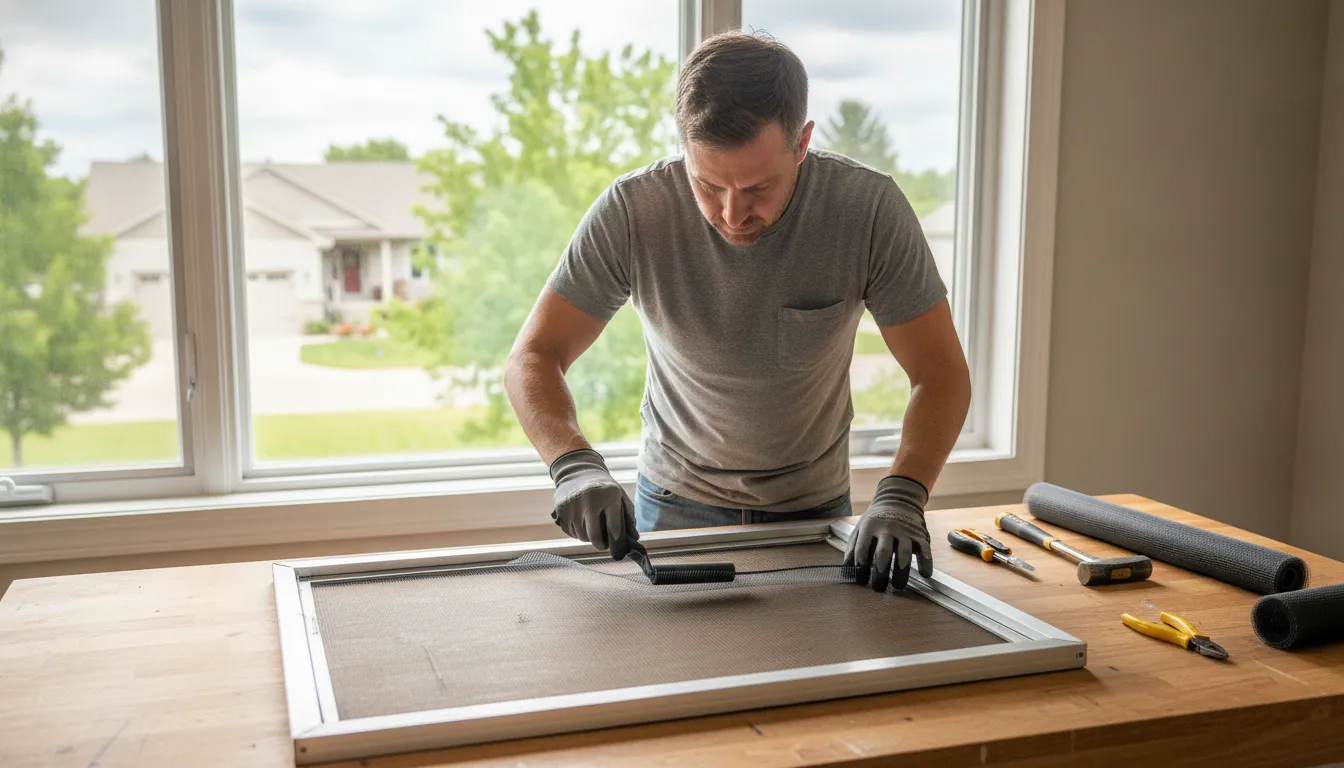
Learning how to replace window screen starts with deciding whether a small tear can be patched or the screen should be rebuilt. For a full replacement, remove the old mesh and spline, measure the screen frame carefully. Install compatible material with even tension. Check that the finished assembly fits securely. If the frame, glass, opening, or storm damage is involved, a window professional can help define the repair boundary.
Before gathering tools, inspect the removable screen and the surrounding window. A careful check of the frame, mesh type, and retaining spline will tell you whether this is a manageable screen project or a sign of a larger window issue.
What Should You Check Before Replacing a Window Screen?
Start by identifying which part of the screen assembly needs attention. A removable modern screen usually includes a frame, mesh, and spline, the flexible cord pressed into a channel to hold the mesh in place. Confirm that the assembly can be removed without forcing it, then choose a clean, flat work area where the frame can rest fully supported.
Inspect the frame before touching the mesh
Look over the frame and its corners before ordering material. If the frame is visibly bent, split, badly corroded, or no longer holds its shape, replacing mesh alone may not solve the problem. Keep screen-only work separate from full-window work. A screen that lifts out normally is a different project from a damaged window frame, glass, or opening.
Match the mesh to the existing screens
When practical, match the replacement screening to the other screens in the home. For wood frames, Missouri Extension recommends aluminum, galvanized steel, or plastic screening because these materials will not stain, rust, or need painting. Check the existing mesh closely before cutting so you do not mix materials or choose a noticeably different appearance. Missouri Extension’s screening guidance provides the material-selection reference.
Check the spline and prepare a safe workspace
Place the screen frame flat before removing the old spline and torn screening. A small screwdriver can help lift the spline from its channel, but work slowly so you do not gouge the frame or damage the channel. Inspect the spline after removal. Old spline often becomes brittle and may not be reusable, so plan to compare it with replacement spline before beginning installation. Keep the frame, utility knife, scissors, and loose mesh away from walkways, children, and pets. If the frame cannot lie flat or the work would require handling the window itself, stop at the screen boundary. Seek an assessment rather than forcing a DIY repair.
How to Replace Window Screen: How Do You Measure the Frame?
Measure the screen assembly or screened opening, not the visible glass. Start by removing the screen carefully and placing it on a flat surface. If the frame is removable, measure the inside dimensions of the opening where the mesh sits. Record the width and height in more than one place, because a bent frame or an opening that is not perfectly square can produce different readings.
For a screen attached to a wood frame, measure the length and width of the screened opening. Missouri Extension guidance uses those opening dimensions as the starting point for selecting and cutting replacement screening. Mark which measurement is the width and which is the height, and note whether the screen uses a separate frame, a channel, spline, staples, or molding. The attachment method affects how much material must extend past the opening.
Do not treat overlap as one universal number for every screen. In Phifer’s modern framed-screen method, the fabric is aligned squarely with a half-inch overlap on all sides. The same instructions also describe leaving at least one to two inches of excess screen around the edges while rolling the mesh into place. These allowances are working margins for installation, not the finished screen size. Follow the method that matches your frame and trim the excess only after the mesh is secured.
Before cutting, compare the frame corners and channels. If the frame is twisted, the channel is damaged, or the opening has changed shape, precise measurements alone may not solve the fit problem. A full-window measurement has a different purpose: it evaluates width, height, depth, and opening condition for a replacement window. You can measure a window opening accurately in that separate guide, but those instructions should not replace screen-frame measurements.
Write down the measurements, frame style, mesh material, and spline condition before purchasing supplies. If the screen is part of a larger window problem, pause before cutting and assess the frame, glass, and opening together.
How to Replace Window Screen Mesh Without Bending the Frame
Once the screen assembly is removed, the careful part of how to replace window screen mesh is controlling alignment and tension. A flat work surface helps keep the frame supported while you work. The goal is a smooth mesh panel secured in the existing channel, not a tightly stretched sheet that pulls the frame out of square.
- Set the frame flat and remove the old mesh. Place the removable screen frame on a stable, flat surface. Use a small screwdriver to lift the end of the spline from its channel, then pull the spline out carefully around the frame. Remove the torn screening after the spline is out. Save a short piece of the old spline if you need to compare its size when selecting replacement material. Older spline may be brittle and may not be suitable for reuse. Phifer’s installation guidance also begins with the frame flat and the old spline and screening removed.
- Lay the replacement mesh squarely. Unroll enough screening to cover the opening and place it over the frame. Keep the mesh aligned with the frame rather than letting it run diagonally from one corner to another. Phifer’s method uses a half-inch overlap on all sides, while other frame designs may need a different working allowance. Follow the channel and frame design you have, and leave enough material to hold securely while the spline is rolled in.
- Start the spline in one straight section. Set the spline over the mesh and press it into the channel with a spline roller. Begin near a corner, then work along one side. Keep the roller moving in the channel instead of forcing the spline down at isolated points. This seats the mesh progressively and makes it easier to notice if the fabric starts to skew.
- Work around the frame with light, even tension. As you roll the spline into the remaining sides, guide the mesh so it stays smooth, but do not pull it aggressively. Excessive tension can bend the frame, as noted in Westlake’s screen replacement guidance. If a wrinkle appears, back up to the last section and correct the alignment before continuing. Do not try to stretch a wrinkle away after all four sides are secured.
- Trim the excess mesh. After the spline is fully seated, inspect each channel for gaps or lifted sections. Use a sharp utility knife to trim the excess mesh along the outside edge of the spline. Keep the blade controlled and directed away from the frame seal and your hands. Trim gradually rather than cutting close before you know the spline is secure.
- Reinstall and test the assembly. Check that the frame remains straight, the mesh is free of major wrinkles, and the spline is seated continuously. Reinstall the screen without forcing it into the opening. If it rocks, binds, or no longer fits as it did before, remove it and reassess the frame before applying more pressure. A frame that has bent or a window opening that is damaged may need a professional assessment rather than another mesh attempt.
For Minnesota homes, a screen that fails again after careful replacement can point to more than worn mesh, particularly after freezing conditions or storm damage. Stop at the screen-only repair boundary if the frame, glass, or window opening is also damaged.
Which Screen Material Fits Your Home and Minnesota Conditions?
The best replacement material usually depends on the existing frame, the way the screen is held in place, and how closely you want the repaired panel to match the others in your home. Minnesota homeowners may also want to inspect screens after winter or a storm. The right choice still starts with the frame and attachment method rather than a broad promise about performance.
- Fiberglass screening: Fiberglass is commonly used for replacement mesh and is described as easier to install than aluminum in Westlake’s window-screen guidance. It can be a practical choice for a sound frame when you want an installation approach that is relatively forgiving.
- Aluminum screening: Aluminum is one of the screening options recommended for wood frames. It can be sensible when you want to match existing aluminum screening. Missouri Extension recommends matching other screening when practical.
- Wood-frame or attached screen: For a wood frame, aluminum, galvanized steel, or plastic screening is recommended because these materials will not stain, rust, or require painting according to Missouri Extension guidance. Inspect the frame and its joints before fastening new material.
Material selection is only part of the repair. A replacement screen should be aligned squarely, and the mesh should not be pulled so tightly that it bends the frame. If the frame is soft, loose, distorted, or difficult to remove, replacing mesh alone may not solve the underlying problem. In that situation, document the damage and consider an assessment before proceeding.
When the screen is part of a larger window issue, such as frame damage, glass damage, or storm-related damage, the project moves beyond a simple mesh swap. An experienced assessment can help separate a screen problem from a window repair or replacement issue without assuming that every damaged screen requires a new window.
Can You Repair a Window Screen Instead of Replacing It?
Often, yes. The right choice depends on whether the damage is limited to the mesh or has spread to the spline and frame. A small puncture does not automatically mean replacing the entire window. It may only require a careful patch or new screen fabric.
When a patch is enough
A minor hole or tear can be patched, although the repair will remain visible. Use the same type of wire fabric as the original screen, and make the patch extend at least two inches beyond the opening on every side. Small-hole patch kits are available for both aluminum and fiberglass screens. The Texas A&M screen repair guidance provides the same basic approach for matching the material and sizing the patch.
A patch makes sense when the surrounding mesh is still firmly held, the screen remains reasonably flat, and the appearance is acceptable. Before applying it, check the edges of the tear. If the mesh continues to unravel or more than one area is failing, a patch may only delay a more complete repair.
When to replace the mesh
Replace the complete screen when the hole is too large to repair, when several tears are present, or when the patch would look unacceptable. This is different from replacing the whole window. You can remove the old fabric, install new mesh, and reuse the frame if the frame is straight and structurally sound.
During that process, inspect the spline, the flexible cord that holds the mesh in the frame channel. Old spline can become brittle and may not be reusable. If it breaks, no longer grips the mesh, or has lost its shape, install appropriately sized replacement spline rather than forcing the old material back into place.
When the frame needs attention
A bent, cracked, corroded, or loose frame changes the decision. New mesh may not sit squarely or remain tight when the frame cannot hold its shape. Pulling the fabric too tightly can also bend a frame, so avoid treating excessive tension as a solution. If the damage involves the window itself, frame, glass, or storm impact, an assessment is more practical than a screen-only fix. For broader window decisions, see this guide to decide whether window repair is enough.
When Should You Call a Window Professional in Minnesota?
Replacing mesh is a reasonable do-it-yourself project when the removable screen frame is straight, the spline channel is intact, and the damage is limited to the fabric. Stop and request an assessment when the problem appears to involve the window itself rather than the screen insert.
Watch for frame, glass, and opening problems
A bent, cracked, rotted, or loose screen frame may not hold new spline securely. Repeated tears or a screen that will not stay seated can also point to movement, a damaged channel, or a poor fit rather than another mesh problem. If the window frame is warped, the opening is damaged, or the sash no longer operates normally, replacing screen material alone is unlikely to resolve the issue.
Call for help if glass is cracked, broken, fogged, or otherwise unsafe to handle. Do not remove a screen or window assembly from an upper level, a difficult opening, or a storm-damaged area if you cannot create a stable work setup. Minnesota homeowners may also need to look beyond the screen after harsh winter conditions, freezing weather, or wind storms have affected the window area. The safest next step is an evaluation of the glass, frame, opening, and surrounding damage.
Know what a window assessment can cover
Referred Restoration documents window glass repair and replacement, frame repair, complete window replacement, and storm-damage window repair among its window services. Its guide also covers several window styles, including double-hung, casement, sliding, bay, bow, and picture windows. That scope is different from promising screen-only service, so describe the problem accurately and ask what repair path fits the condition.
If you are unsure whether the issue is limited to the screen, use this guide to decide whether window repair is enough. A professional assessment can help separate a simple screen project from a glass, frame, opening, or storm-damage concern before you continue removing parts.
Learn more about documented window repair services in Rogers, including the types of window work Referred Restoration lists. Service availability can depend on the condition and location of the window.
What Should Minnesota Homeowners Check After Screen Installation?
Practical advice: Start by checking the screen in the frame, not just the mesh. Confirm that the panel sits evenly in its track or opening, the corners are fully engaged, and the latches or springs hold it securely. A screen that looks square on a workbench can still sit poorly after it is reinstalled.
Run a fingertip lightly along the spline channel. The spline should remain seated rather than lifting, buckling, or leaving a visible gap. Look across the mesh from several angles for loose areas, pulled corners, or wrinkles. Minor visual variation may not affect the fit, but a pronounced wrinkle can signal uneven tension. During installation, use gentle, even tension. Pulling too tightly can bend the frame, as noted in this screen replacement guidance.
Practical advice for Minnesota seasons: Before winter, inspect the frame and mesh for new tears, loose spline, corrosion, or movement. If you remove the screen for storage, keep it flat or supported so the frame is not forced out of shape. In spring, reinstall it carefully and repeat the fit and spline checks. Minnesota homeowners face harsh winters, freezing conditions, and storm damage concerns, so a quick inspection after severe weather is sensible. The local weather context is documented by Referred Restoration’s Minnesota service-area information.
Reassess the repair if the panel no longer fits, the frame has shifted, or the same area fails repeatedly. Those signs may involve more than the mesh itself. Stop and seek an assessment if storm damage affects the surrounding window, frame, or opening, rather than forcing the screen back into place.
Contact Referred Restoration online
Frequently Asked Questions
Can you replace a window screen yourself?
Yes, many homeowners can replace mesh on a removable screen frame with new screening, a spline roller, a utility knife, and replacement spline. Work on a flat surface, keep the mesh square, and press the spline evenly into the channel. If the frame is bent, corroded, difficult to remove, or connected to a damaged window, pause rather than forcing the assembly.
Should you repair or replace a damaged window screen?
A small hole may be suitable for a patch, while a large tear, multiple damaged areas, or a patch that leaves the screen unacceptable usually supports replacing the mesh. A patch is visible and should extend at least two inches beyond the hole on every side, according to Texas A&M AgriLife Extension guidance. Replace or assess the frame separately if it no longer holds the spline securely.
Is replacing window screens hard?
The process is manageable when the screen frame is removable and undamaged, but careful tensioning matters. Pulling the mesh too tightly can bend the frame, while loose or uneven spline can leave wrinkles and gaps. Measure the screened opening and compare the replacement with another screen in the home before cutting material.
When should you ask a window professional for help?
Request an assessment when the problem involves the glass, window frame, opening, storm damage, or a screen that repeatedly fails after replacement. Referred Restoration documents window glass repair and replacement, frame repair, complete window replacement, and storm-damage window repair. Screen-only service is not assumed, so describe the full condition and location when you contact the company.
Contact us when a window screen problem goes beyond the mesh
If the screen issue involves a damaged frame, cracked glass, storm damage, or uncertainty about the right repair path, an assessment can help clarify the next step without guessing. Referred Restoration documents window repair services for situations that extend beyond a screen-only fix.
Contact Referred Restoration online to discuss your window concern.