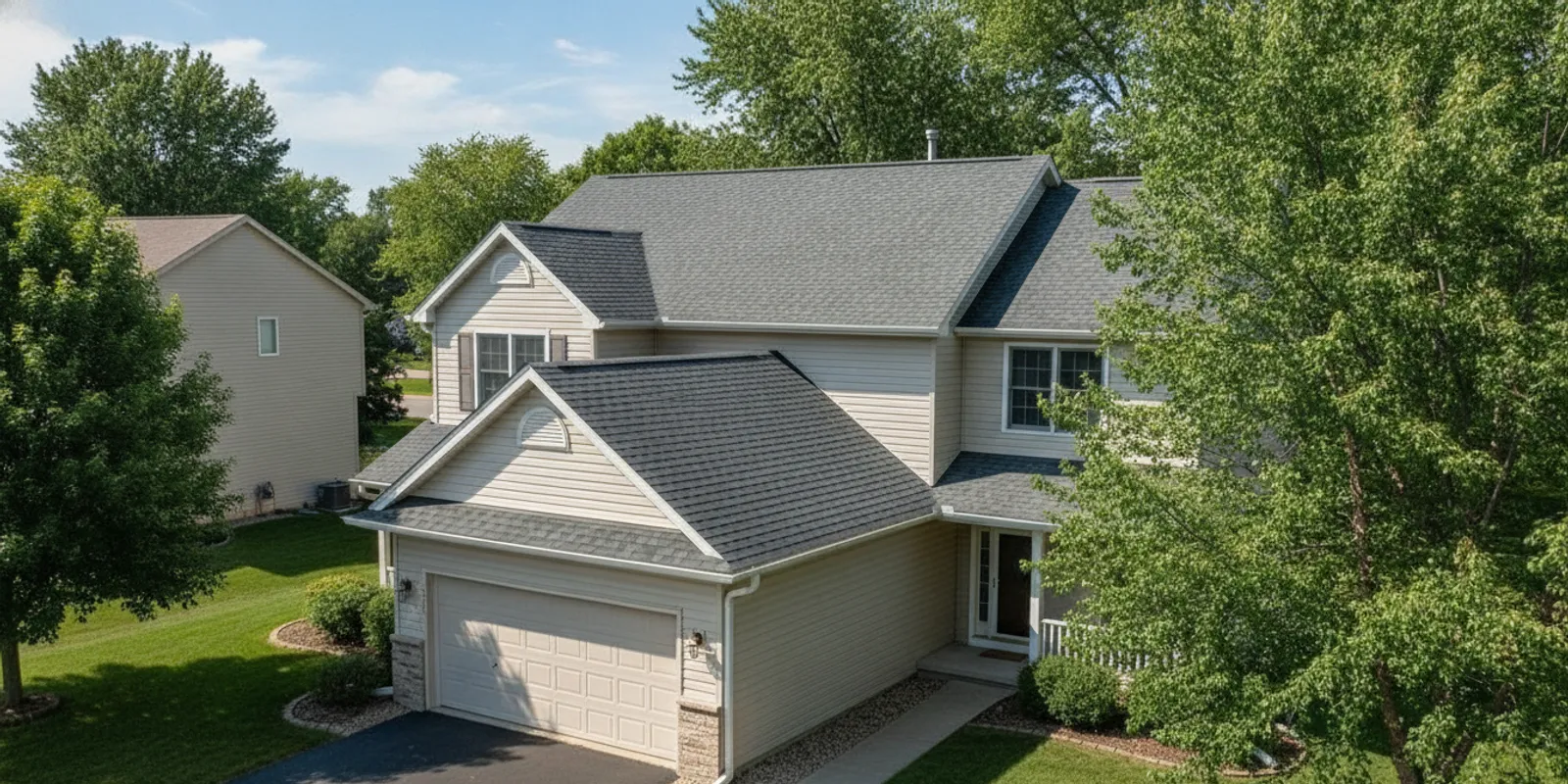
Planning residential roofing Rogers homeowners can rely on starts with understanding the roof’s current condition, not guessing from the street. Minnesota homes face snow, wind, rain, and changing temperatures, so an inspection can help identify concerns and choose a practical next step. This guide explains how to observe warning signs safely, compare repair and replacement paths, and prepare for a clear conversation with a roofing contractor.
Schedule a free roof inspection
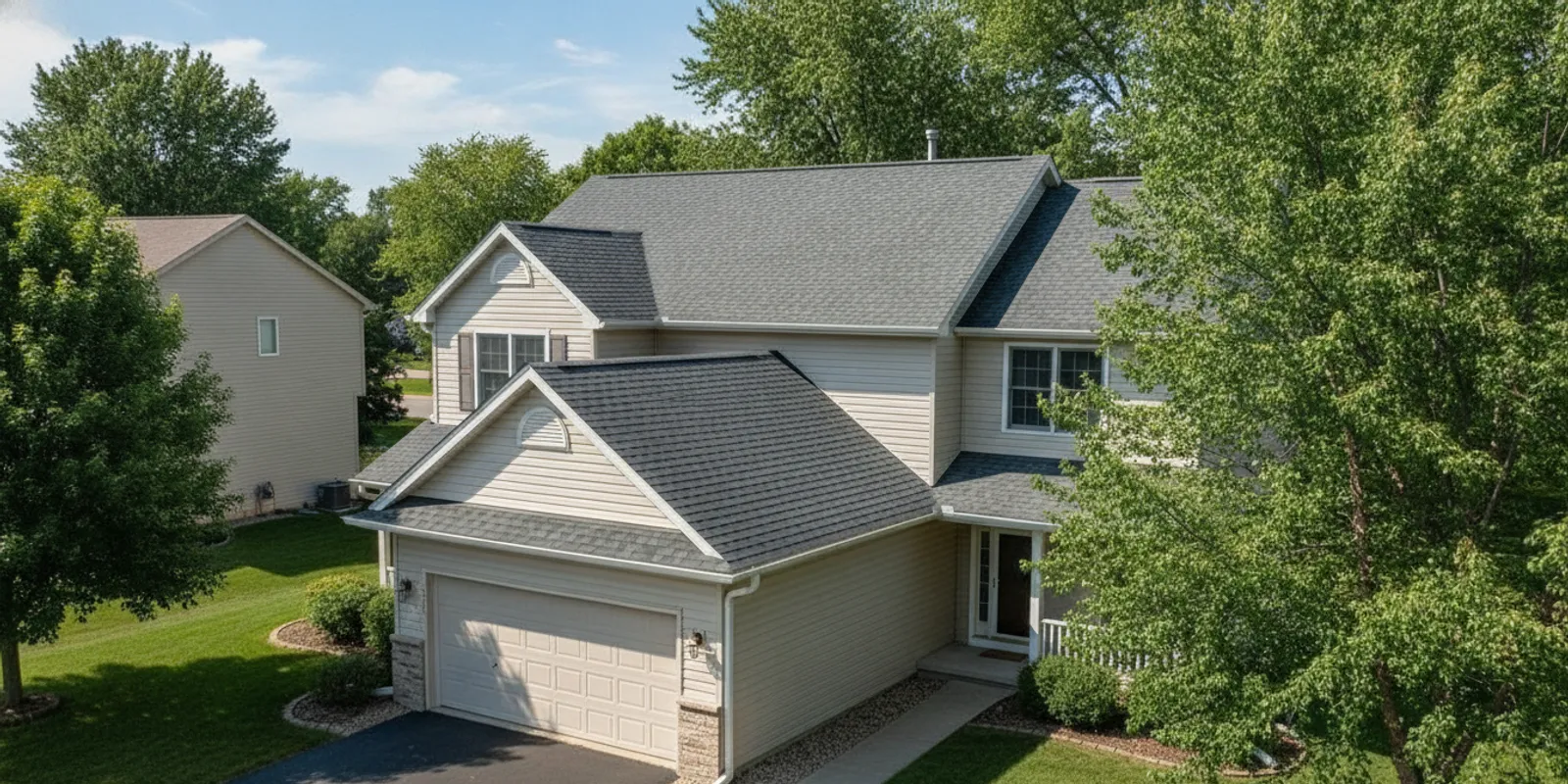
What should a residential roof inspection cover?
A useful inspection considers the roof as a system rather than judging shingles alone. The outer covering sheds water, while the underlayment, flashing, roof edges, penetrations, ventilation, and drainage details help manage moisture. A small-looking mark may be less important than a gap near a chimney or a water path that reaches the roof deck or interior.
From the ground, note missing, lifted, curled, or visibly damaged shingles. Look for uneven roof lines, debris gathered in valleys, damaged edges, or places where water appears to run behind siding or fascia. Inside, check ceilings and any attic space that is safely accessible for staining, damp insulation, musty odors, or unexpected daylight. These observations are clues for an inspection, not a diagnosis of the cause.
A thorough discussion should connect the visible signs to the roof’s details. Ask whether the inspector looked at valleys, flashing around roof openings, transitions between roof sections, eaves, and areas where different materials meet. If the interior shows a stain, ask how the location relates to the roof above it. Water can travel before it becomes visible, so the nearest roof feature is not always the source.
Do not climb onto the roof to investigate. Sloped or wet surfaces can be dangerous, and walking on roofing may cause damage. Use binoculars from a safe location if helpful, and take notes from the ground. If water is actively entering the home, move belongings out of its path if it is safe, and arrange professional help promptly. If water is near electrical equipment or fixtures, stay clear and seek appropriate assistance.
How can you document a concern before calling?
Clear notes make an inspection conversation more useful. Record when you first noticed the issue, whether it appeared after rain, snowmelt, wind, or a storm, and which rooms or exterior areas seem affected. Take dated photos from safe, repeatable viewpoints. For an interior stain, include a wider view that shows the room and a closer view that captures the mark. Do not open ceilings or disturb wet materials simply to get a better picture.
- Write down the room, wall, ceiling area, or roof edge where you noticed each symptom.
- Note whether the symptom changes after rain, thawing, or windy conditions.
- Keep photographs in date order and label them with the location.
- Save earlier inspection notes, invoices, or roof material information if you have them.
- Describe what you observed without assigning a cause before it has been checked.
For example, “water mark in the upstairs hallway after overnight rain” is more useful than “the roof is leaking by the chimney” if the source has not been confirmed. The first note records a fact and a time pattern. The second assumes a cause that may turn out to be elsewhere. Add details as you learn more, while keeping initial observations intact.
A simple record can also help distinguish a recurring symptom from a one-time event. If a stain grows, changes color, or returns after a later storm, add a dated photo and note the weather. If it stays unchanged, record that too. A timeline gives the inspector context without requiring you to make a technical judgment.
When might roof repair be appropriate?
Repair may be worth discussing when a concern appears limited to a defined area and the surrounding roof remains serviceable. Examples include a small section of damaged shingles, a flashing detail that needs attention, or a particular roof penetration that requires correction. The right work depends on the condition found, the roof material, the surrounding installation, and whether the source can be identified.
Ask the inspector to explain the evidence behind a repair recommendation. Which area is affected? What is the likely path for water? Will the proposed work address the source or only a visible symptom? Are there adjacent details that also need attention? What should you monitor afterward, and what would warrant a follow-up visit? These questions help distinguish a targeted solution from a temporary measure that leaves an underlying problem unresolved.
Think through a hypothetical example: after a windy day, you see one displaced shingle from the ground, while there are no interior stains and the surrounding roof looks even. That observation alone does not establish the full scope, but it gives an inspector a specific area to examine. If the inspection finds a localized issue and the adjacent materials are in sound condition, a focused repair may be reasonable to discuss. If examination reveals more widespread deterioration, the plan may need to change.
Referred Restoration offers roof repair in Rogers. If a concern follows a severe weather event, its Rogers storm damage service is another relevant service pathway. An inspection can help clarify whether repair, further evaluation, or a broader response is appropriate.
When should you consider roof replacement?
Replacement deserves consideration when wear or damage is widespread, recurring repairs no longer address the concern, or the roof’s overall condition makes continued patching a poor fit. Age can be part of the discussion, but age alone does not establish what a particular roof needs. Material, installation, exposure, ventilation, past repairs, and observed condition all matter.
Ask for a clear explanation of the areas examined and the conditions found. If replacement is recommended, ask the contractor to separate what is visible from what is suspected or concealed. Some details cannot be confirmed until existing materials are removed. A useful proposal explains how unexpected conditions will be documented, who will discuss any change with you, and what approval is needed before added work proceeds.
Discuss the proposed materials and installation scope in plain language. Ask how roof openings, valleys, edges, and transitions will be handled. Clarify how the crew will protect the home and surrounding property, remove old material, manage debris, and check the completed work. Request written terms for materials, workmanship, payment timing, and any warranty that is offered; do not assume terms that are not in the proposal.
Review the company’s Rogers roof replacement service to understand that service pathway. Replacing a roof can also be a sensible time to discuss nearby exterior details, such as drainage at the eaves, but each component should be evaluated on its own merits. Ask why any additional work is being proposed and whether it is included in the written scope.
How do repair and replacement compare?
| Consideration | Repair discussion | Replacement discussion |
|---|---|---|
| Typical scope | A defined area or specific component | A broad roof area or the full roof system |
| May fit when | The concern appears localized and the surrounding roof remains serviceable | Condition or damage is extensive, recurring, or unsuitable for continued patching |
| Key questions | What is the source, what will be addressed, and what follow-up is needed? | What is included, what may be concealed, and how will installation and cleanup proceed? |
| What the inspection can clarify | Whether a targeted solution is reasonable based on findings | Whether observed conditions support a larger scope and what options exist |
| Useful records | Photos of the symptom, repair location, and written work description | Material details, project sequence, exclusions, and change-approval process |
This comparison is a starting point, not a substitute for examining the actual roof. Two homes with similar-looking shingles can have different underlying conditions. Ask for written findings and a defined scope so you can compare recommendations on the same basis. If one contractor recommends a repair and another recommends replacement, ask each to identify the observations that led to that conclusion.
What should Rogers homeowners consider about Minnesota weather?
Local weather can affect both roof condition and the timing of an inspection or project. Snow and ice can obscure surfaces or limit safe access. Wind and hail may leave marks that are difficult to interpret from the ground. Heavy rain can reveal a drainage or flashing concern, while freeze-thaw conditions can make water entry more consequential when moisture reaches vulnerable areas.
After a storm, start with safety. Stay away from downed wires, unstable limbs, and damaged structures. Do not climb a ladder during high winds, icy conditions, or active precipitation. If you can safely inspect from the ground, photograph visible changes and note the date. Avoid assuming that a mark proves storm damage; an inspection can help distinguish storm effects from ordinary wear or an unrelated issue.
Weather also affects project planning. Ask how the contractor will communicate a schedule change if conditions are unsuitable for exterior work. Find out whether materials will be protected if delivery occurs before installation, how the site will be secured at the end of a workday, and whom to contact if weather arrives while the roof is open. These are planning questions, not predictions about the specific schedule.
If a concern is urgent, explain the symptoms when you call and ask what safe temporary steps, if any, are appropriate. Do not cover an opening by climbing onto the roof yourself. If water is coming inside, protect belongings only where it is safe to do so, and keep a record of what you observe before and after any temporary measure.
How can you assess a roofing proposal?
A written proposal should make the work understandable. Look for the areas included, the material and installation scope, how uncertain or concealed conditions will be handled, and what is excluded. Confirm how the crew will protect landscaping and property, manage debris, and review the finished work. If the proposal uses technical terms, ask for plain-language explanations before making a decision.
- Ask whether the recommendation is repair, replacement, or additional investigation, and why.
- Confirm which roof sections and related details are included in the scope.
- Ask how changes will be explained and approved if concealed conditions appear.
- Clarify schedule assumptions and what weather delays could mean for the work.
- Request written terms for materials, workmanship, payment timing, and any warranty offered.
- Confirm who will answer questions during the job and how final review will happen.
Compare proposals by scope and clarity rather than by a single line item. One may include work another excludes, or the contractors may be addressing different observations. Place the documents side by side and mark the roof areas, materials, removal and cleanup steps, exclusions, and change process. Then ask each contractor to explain any difference in terms you can understand.
For instance, if one proposal describes replacing a roof plane and another calls for work only around a vent, ask what each inspection found and whether the proposed scopes overlap. Request photographs or marked-up diagrams where useful. A clear explanation should connect the observation to the action, identify what remains uncertain, and avoid treating an estimate as a substitute for your questions.
You can review the company’s roofing and exterior service overview and its Rogers roofing information as part of your research. Use service pages to understand what pathways are available, then rely on an inspection and written proposal for the conditions and scope specific to your home.
What should you know about insurance and storm damage?
If you suspect storm damage, preserve your records and contact your insurer to learn the process under your policy. Keep copies of photos, inspection notes, correspondence, and documents you receive. Do not assume that every leak or worn component is covered, and do not treat a contractor’s inspection as a guarantee that a claim will be approved.
Ask the contractor to describe observed conditions separately from conclusions about coverage. The insurer determines how the policy applies. If an inspection identifies work that may be needed, request a written scope and discuss differences between that scope and the insurer’s documentation before work begins. This helps clarify what is being proposed and what has been authorized.
A directory can be one source of general consumer information, but it is important to check its geographic coverage. The Better Business Bureau residential-roofing directory for Rogers, Arkansas is not a Minnesota contractor directory, so Rogers homeowners should not use it to verify local availability. For any contractor, review the written scope, insurance information, contact details, and project terms directly. A listing or accreditation label is not a substitute for those checks.
How should you prepare for an inspection or project?
Before an inspection, share your observations and make access to relevant rooms or attic areas available if safe and practical. Mention prior repairs and any known roof work. Point out the date and location of any interior stain, and show the photos you have collected. Ask what the inspection can cover and whether you need to be home for access or discussion.
Before a project, confirm the work area and scope in writing. Discuss protection for landscaping, patios, and nearby items. Ask how old materials will be removed and handled, what cleanup includes, and how you will review the completed work. Move vehicles or outdoor belongings if the contractor requests it, and keep children and pets away from active work areas.
If the project includes gutters or adjacent exterior components, confirm whether each item is included or addressed separately. Roofing work can affect how water reaches the edge of the home, but an adjacent component should not be added to a scope without a clear reason. Referred Restoration also provides gutter installation in Rogers and siding services in Rogers; an assessment should establish whether either is relevant to your project.
Plan for communication as well as the physical work. Ask who will provide updates, how you will be told about delays, and what happens if the crew uncovers an unexpected condition. Agree on how decisions will be recorded. A short written note or approved change document can prevent confusion about whether a new task is part of the original scope.
What should you check after roofing work?
Before the crew leaves or shortly after completion, review the agreed scope with the contractor. Ask which areas were completed, whether anything changed, and whether any follow-up remains. If you have a project document or photographs, compare the completed work with those records. The goal is not to perform a technical inspection yourself, but to understand what was done and what documentation you should keep.
- Confirm that completed work matches the written scope or approved changes.
- Ask whether cleanup is finished and how leftover material or debris was handled.
- Request any product, workmanship, or care documents that were included in the agreement.
- Ask what signs to monitor and whom to contact if a concern returns.
- Store the proposal, approvals, photos, and final project records together.
After the next rain or thaw, observe the same interior and exterior areas from safe locations. If you notice a new symptom, record its date and location and contact the contractor to ask about the appropriate follow-up. Do not assume that every later mark is related to the roofing work, but do share the timing and evidence so the concern can be assessed.
What questions can make the inspection conversation clearer?
- What did you observe, and exactly where is it located?
- What evidence suggests the issue is active rather than old or cosmetic?
- Could more than one roof or exterior detail be contributing?
- What repair and replacement options are reasonable, if both apply?
- What is not included in the proposed scope?
- How will you document a concealed condition or change in scope?
- What should I monitor after the work, and who should I contact?
Use the answers to decide whether you understand the recommendation, not to pressure yourself into an immediate choice. A clear explanation connects the observation to the proposed action and identifies what remains uncertain. If you need time to compare written scopes, request the documents and review them carefully. For an initial conversation, the Rogers inspection contact page provides a direct service pathway.
Request a free inspection in Rogers
Frequently asked questions
Can I tell from the ground whether my roof needs replacement?
Ground-level observations can identify warning signs, but they usually cannot establish the full condition of a roof. Photograph what you can see safely and have a qualified professional examine areas that need closer evaluation. Ask for the evidence behind any recommendation.
Should I arrange roof work after every storm?
Not necessarily. A storm does not by itself prove that damage occurred or that repair is needed. Document visible changes safely, and arrange an inspection if you notice a leak, displaced material, or another concerning sign.
Does an inspection guarantee insurance coverage?
No. An inspection can document conditions, but your insurer applies the terms of your policy. Keep your records and direct questions about coverage and claim decisions to the insurer.
What if a roof leak appears during winter?
Protect belongings only if it is safe, avoid climbing onto an icy roof, and contact a roofing professional to describe the active leak and ask about safe next steps. If water is near electrical fixtures, avoid the area and seek appropriate assistance.
How can I compare two different recommendations?
Ask each contractor to identify the observed conditions, the roof areas included, and the reason for the proposed work. Compare written scopes and exclusions rather than relying on a brief verbal summary. If uncertainty remains, ask what additional inspection could resolve it.
Choose the next step based on evidence
For residential roofing in Rogers, a safe record of symptoms and a clear inspection are better starting points than a guess based on age or appearance alone. Compare written scopes, understand what each option addresses, and plan for weather and site conditions before work begins. This process gives you a practical basis for deciding how to protect your home.