Roof installation Rogers MN projects are easier to approve when the plan is written down before the first shingle comes off. A clear plan names the roof areas, the materials, and the flashing details. It also names the weather window, how you will hear about changes, and the checks you will make before the crew leaves. Those five answers are different from a general description of how a roof is built.
Contact Referred Restoration online to schedule a free inspection and talk through your roof installation questions. You can also call (763) 726-4245.
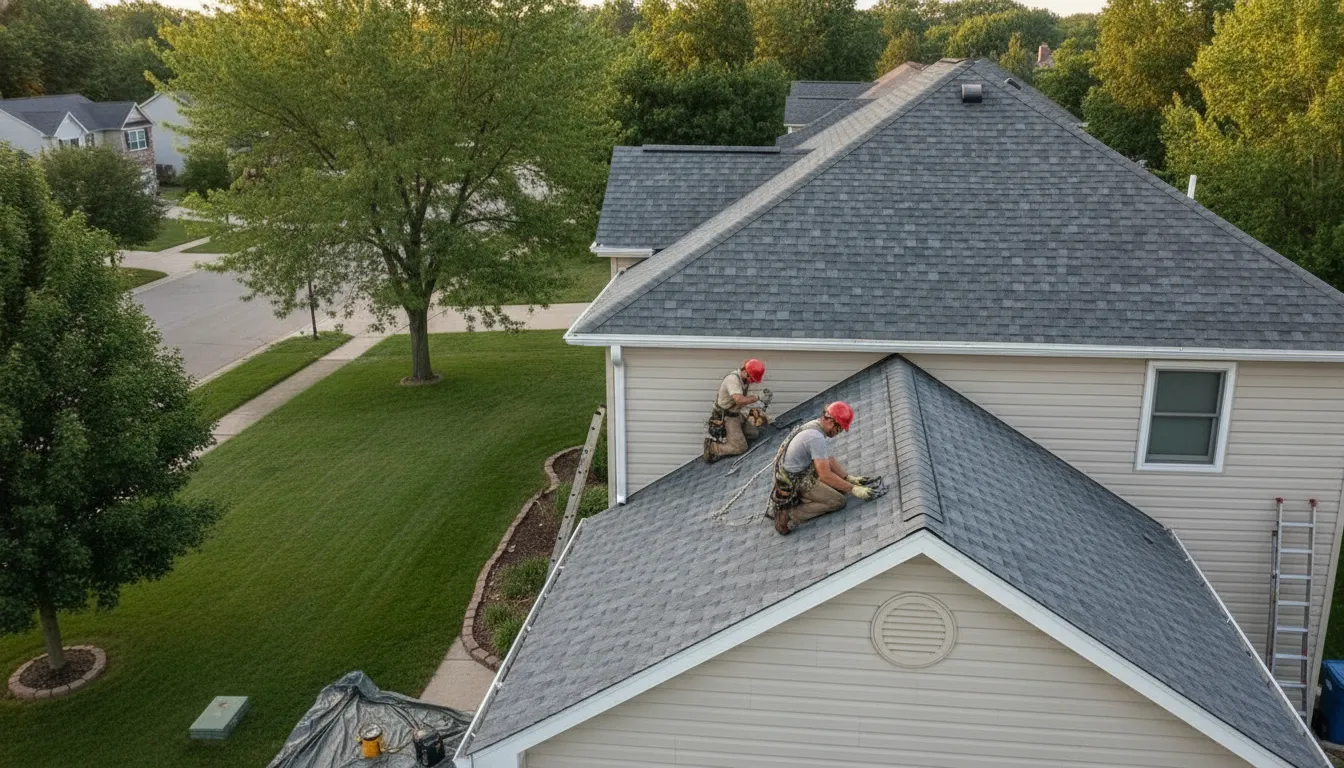
Referred Restoration is based at 20980 Rogers Dr, Suite 450, Rogers, MN 55374. The team follows a three-step path: a free inspection, a custom written plan, and installation with a final walkthrough. Most roof replacements are completed in one to three days, depending on size and weather. Use the questions below to make that plan specific to your house. For the full sequence of a local replacement, see the Rogers roof replacement process. For the statewide build sequence, from the deck through ventilation, see the Minnesota roof installation guide.
What should the written scope name for roof installation Rogers MN?
Ask for a written scope before you approve roof installation Rogers MN work. A color choice and a total are not enough. The scope should say which roof areas are included and whether the existing roofing is removed. It should also name the related pieces that travel with the shingles. If a section is excluded, the writing should say that too, so a garage, porch, or low slope is not assumed later.
A useful scope also separates what is known from what can only be confirmed after tear-off. Deck condition, rotten wood, and hidden flashing problems are common examples. Ask which of those items are included now and which would be a change you approve before extra work proceeds. That single distinction prevents a surprise conversation in the middle of the day.
Site protection belongs in the same document. Ask how the crew will cover plantings, protect siding and windows, and keep nails out of the driveway and lawn. Cleanup is part of the job, not a courtesy. The Rogers roof replacement page is the service overview. This checklist is the set of questions to settle in writing first.
Read the scope out loud with the person who will be home on installation day. If a line is vague, ask for a plainer version before you sign. “Replace the roof” is too thin. A clearer line removes the existing shingles on the house and garage, inspects the deck, and installs the system described below.
Which material and detail decisions should you confirm?
Confirm the product, not just the category. Referred Restoration installs asphalt shingles and metal roofing. In the company record, asphalt shingle roofs are described as lasting 20 to 30 years. Metal roofs are described as lasting 40 or more years when they are installed for Minnesota weather. Those figures are planning ranges, not a promise for one house. Ask which product is proposed and why it fits your roof. Also ask which manufacturer instructions the crew will follow.
Malarkey is the roofing brand named in Referred Restoration’s materials notes. Ask whether your proposal uses that line or another product, and ask for the product name in the writing. A brand mention without a product name is still too broad to check later.
Then move past the shingle. Ask where ice-barrier underlayment will go and how valleys and wall flashings will be handled. Ask whether drip edge is included. Ask how intake and exhaust ventilation will be left when the job is done. The City of Elk River’s reroofing sheet, written for the 2020 Minnesota Residential Code, is a useful nearby reference. It says roof assemblies are installed per the code and the manufacturer’s instructions. It also notes that ventilation is not automatically upgraded on a reroof. Manufacturer requirements can still call for it. Ask which standard your roof will follow, and ask what will be left unchanged.
The side-by-side material decision lives in the asphalt shingles versus metal guide. The asphalt-specific replacement path is in the asphalt shingle roof replacement guide. Use those pages to choose a system. Use this one to make sure the chosen system is named in your Rogers plan.
How should you read the weather window for a Rogers installation?
Ask for a weather window, not only a calendar date. A Rogers installation has to sit inside a dry stretch. The crew needs time to tear off, dry in, and finish without leaving the deck open to a storm. One to three days is the usual range for a replacement. Pitch, layers, and a complex roof can stretch that. Ask what “done for the day” means if the forecast turns. It might mean a covered deck, a finished section, or a full stop.
Season changes the wait more than the install day itself. Local operating notes for this market describe roughly four to six weeks of lead time in peak season. In winter the same notes describe about one to two weeks. Treat those as planning context, and ask for the current wait on your own job. A winter date can be realistic. It can also be the wrong window if temperatures will not let the shingles seal. Ask what temperature and precipitation limits the crew uses. Ask who makes the call to move the date.
If the project follows storm damage, keep the installation questions separate from the claim. Documentation, adjuster meetings, and emergency drying have their own path on the Rogers storm damage restoration page. Your installation plan should still say when tear-off starts and how the house stays closed if weather interrupts.
Ask what you should do at the house the day before. Cars moved, pets inside, attic access clear, and a contact who can approve a change are the usual items. Put that list in the same note as the weather limits so nobody is guessing at 7 a.m.
What communication should you expect once the date is set?
Name the person you will hear from, and name the moments that trigger a call. A good plan has one point of contact for scheduling and one for day-of questions. It also has a clear rule for concealed conditions. If the crew opens the roof and finds deck damage, you should already know the next step. Work either pauses for your approval or proceeds inside a limit you already set.
Ask how updates arrive. A text when the crew is on the way is enough for most Rogers homes. So is a midday note if the scope changes, and a message when the site is ready for review. You do not need a stream of photos. You do need to know if the finish will slip to the next dry day.
Ask who pulls any required permit and who meets an inspector if the city requires it. Do not assume a permit is or is not required. Ask, and put the answer in the same place as the schedule. Also ask how warranty paperwork will be delivered. Do not treat a marketing claim as a term. Referred Restoration does not publish a single warranty length. The documents for your product and your workmanship should be handed to you, not described in general.
Financing, when you want it, is a separate conversation through GreenSky. The plan can note that financing is available. It should not bury payment terms inside the installation scope. If you are comparing who should do the work, the Rogers roofing contractor guide covers local fit. This section is only about how that contractor will talk to you once the date is set.
Which completion checks belong on your list before the crew leaves?
Walk the job before the crew leaves. If you cannot be there, set a same-day review. Start on the ground. Look for nails in the grass, the driveway, and the flower beds. Look at siding, window screens, and outdoor fixtures the ladders passed. Open the attic if it is safe to do so. Look for daylight at penetrations that should be closed.
From a safe viewpoint, not by climbing, confirm the items written into the scope. Ridge and hip caps should be continuous. Valleys and wall flashings should match what you approved. Vents, pipe boots, and chimney flashings should look seated, not improvised. Gutters should be back in place if they were removed. Downspouts should still discharge away from the foundation. Ask the crew to point out any item they could not finish, and the date it will be closed.
Ask for the product name and the workmanship paperwork. Also ask for a short list of what you should watch through the first season. Seal-down strips on asphalt shingles need the right temperature to bond. If the crew installed in cool weather, ask when they expect that bond. Ask what you should do if a tab lifts. Care after installation, including the first-season watch, is covered in the new roof guide for Minnesota homeowners. Your checklist ends when those follow-ups are written down, not when the truck pulls away.
Keep a copy of the scope next to the completion notes. One scope line might say the ice barrier goes at the eaves per manufacturer instructions. The completion note should say that work was done, or say what remains. A finished roof with no notes is harder to revisit in the spring.
A short question list you can take to the inspection
Use one pass through these questions at the free inspection. Write the answers on the proposal, not on a separate scrap of paper that never makes it into the file.
| Planning question | What a clear answer includes | Ask again if you hear |
|---|---|---|
| What is in the scope? | Roof areas, tear-off, related metal, site protection, and cleanup | “We will replace the roof” with no areas named |
| What is not known yet? | Deck or flashing items that need approval after tear-off | A promise that nothing could change |
| Which product is this? | Asphalt or metal, product name, and the instructions the crew follows | Only a color or a brand with no product |
| Where do the details go? | Ice barrier, valleys, flashings, drip edge, and ventilation plan | “Standard installation” with no locations |
| What is the weather window? | Expected days on site, stop rules, and who moves the date | A date with no backup if rain arrives |
| Who calls you? | One contact, a rule for changes, and how warranty papers arrive | “We will let you know” with no person named |
| What do we check at the end? | Ground cleanup, flashings, vents, gutters, and a same-day review | “You will see it looks good” with no walkthrough |
- Confirm the written scope, including areas, tear-off, and exclusions.
- Name the product, ice barrier, flashings, and ventilation plan.
- Set the weather window and the person who can move the date.
- Agree how changes are approved once the roof is open.
- Review cleanup, flashings, and paperwork before the crew leaves.
The Elk River handout is a useful outside reference, not the Rogers permit office. It explains reroof rules under the 2020 Minnesota Residential Code, including a 115 mph wind criterion and ASTM D7158 shingle labels. Confirm anything local with your own building department. Keep the manufacturer instructions beside that code answer. The City of Elk River publishes the sheet as Reroofing Information Sheet.
How these questions fit the rest of your roof decision
These questions assume you are already planning an installation. They are not the test for whether a small repair would do. If you are still at that earlier fork, start with the repair or replacement conversation on the service page. Come back here once installation is the path. Mixing the two conversations in one document is how scopes get muddy.
Bring the list to the inspection and leave with answers written on the proposal. Referred Restoration’s free inspection is the right moment to do that, before materials are ordered and before a date is held. Homeowners in Rogers and nearby communities can use the same questions even when the roof shape is simple. A simple roof still needs a named scope, a weather window, and a completion check.
Contact Referred Restoration online and ask for a written plan before installation day. The office line is (763) 726-4245.
Frequently asked questions
How long does roof installation take on a Rogers home?
Most replacements are completed in one to three days, depending on the size of the roof and the weather. Ask how many days your own roof is expected to take, and ask what happens if the forecast changes after tear-off starts.
What should a roof installation proposal include?
It should name the roof areas and whether the old roofing comes off. It should also name the product, flashing, underlayment, site protection, and cleanup. Add the rule for conditions found after tear-off. A total without those lines is not a plan you can check.
Can roof installation in Rogers be scheduled in colder months?
Sometimes. Lead times are often shorter outside peak season, but shingles still need conditions that let them seal. Ask for the temperature and precipitation limits the crew uses, and ask who decides to move the date.
Who do I call if the crew finds damage after tear-off?
Call the contact named in your plan. Agree before the start date whether extra deck or flashing work pauses for your approval. That rule should be in writing, not left to the moment the roof is open.
What should I check before the crew leaves?
Check ground cleanup, look over flashings and vents from a safe viewpoint, confirm gutters and downspouts, and collect product and workmanship paperwork. Note anything unfinished and the date it will be closed. Do not climb the roof to do this review.
Contact Referred Restoration online to plan roof installation on your Rogers home. Call (763) 726-4245 to request the free inspection.