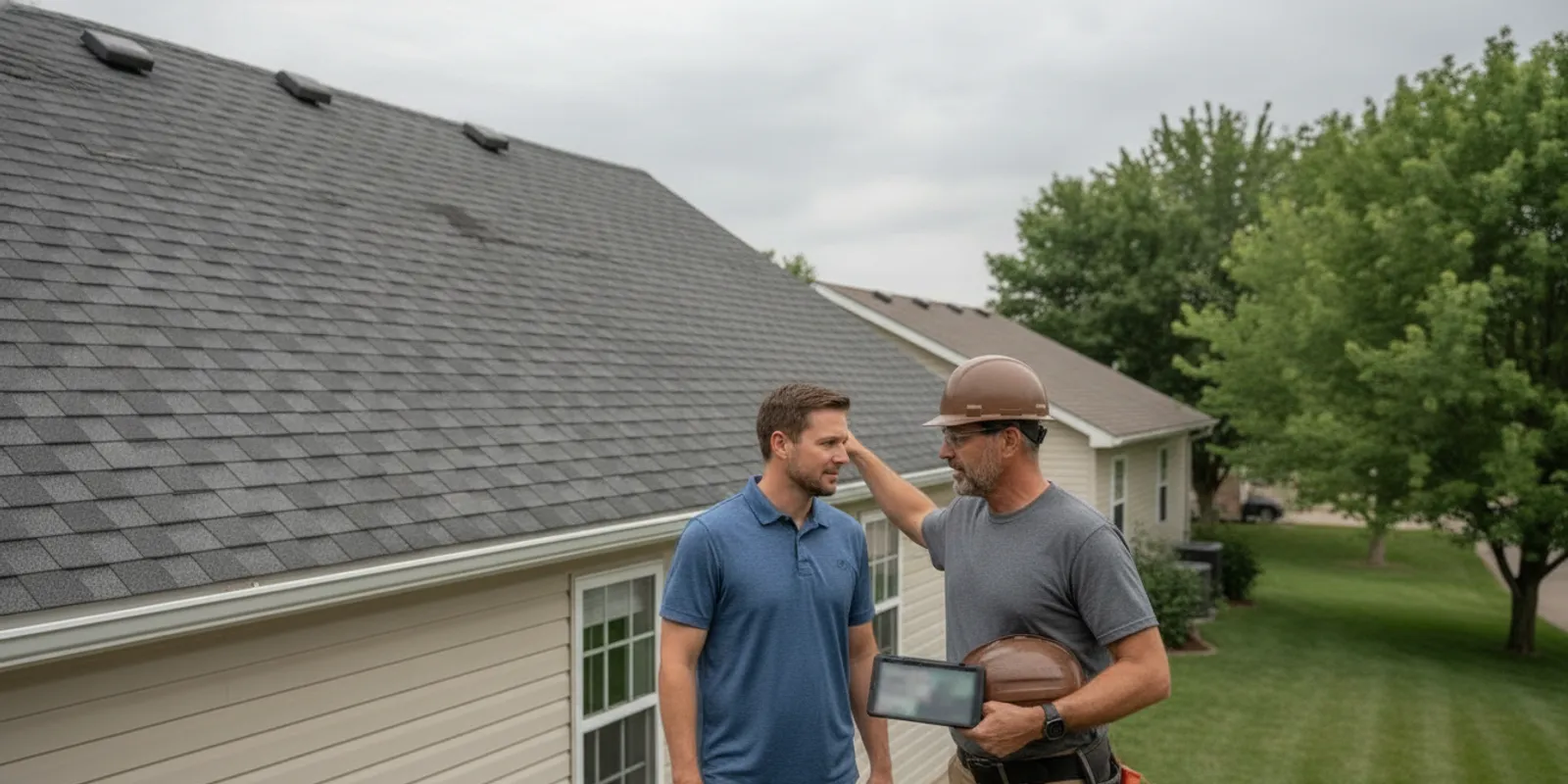
When comparing roofing companies in Rogers, start by looking for a clear, documented explanation of your roof’s condition and the work proposed. A useful conversation should distinguish a targeted repair from a larger project, explain what remains uncertain, and give you time to review the scope. The questions below help you compare the process and the evidence, not just a quick impression.
What should a roof inspection cover?
Ask the contractor to describe the areas they will examine and how they will share what they find. Depending on safe access and the type of roof, a review may consider the roof surface, edges, flashing, penetrations, valleys, drainage points, and visible signs inside the home. Ask whether the inspection is visual and whether any areas could not be reached or seen. A clear limit is more useful than an unsupported claim that every hidden condition has been ruled out.
Before the visit, make a short record of the problem. Note when you first saw it, whether it changes after rain, wind, snow, or thawing, and where you see the effects. A ceiling mark in one room, a damp attic area, loose material on the ground, or a change at a roof edge may help direct the discussion. Take photos from inside or from the ground if it is safe. Do not climb onto the roof to get a better view.
Ask for findings tied to locations, not just a general label such as “storm damage” or “old roof.” If a contractor points out a concern, ask what they observed, what it could mean, and whether another detail needs examination before a repair plan is chosen. Request photos or written notes when available, and ask the inspector to separate direct observations from possible explanations.
- Which roof areas and related components were examined?
- Were there areas that could not be assessed safely or clearly?
- Can you show me the observed condition in a photo or explain its location?
- What additional information would change the recommendation?
Roof access is a safety issue, not a homeowner test. OSHA provides fall-protection guidance; homeowners can leave elevated inspection work to qualified professionals and record visible concerns from safe locations.
How can you compare repair and replacement recommendations?
A repair and a replacement address different scopes. A repair may target a specific damaged area or component. Replacement covers a broader portion of the roofing system. The appropriate path depends on the condition and extent of the issue, the location, and whether related components are affected. Ask each company to connect its recommendation to observations made at your home rather than relying on a general statement about the roof’s age.
If one company recommends a limited repair and another recommends replacement, ask both to describe the same points: what they found, which area the proposed work addresses, what it does not address, and what signs would call for another assessment. A difference of opinion does not by itself show that either recommendation is wrong. It does mean you should understand the evidence and scope before deciding.
Ask for a written description of the repair’s limits. For example, if a proposal addresses one visible leak path, clarify whether it includes nearby flashing or other components that the inspection identified. If replacement is proposed, ask which roof sections and associated details are included, and why a repair would not be an adequate response to the observed condition. The answer should be specific to the findings, not a blanket rule.
| Comparison point | Repair discussion | Replacement discussion |
|---|---|---|
| Scope | Name the specific area and components to be addressed. | List the roof sections and related components included. |
| Reason for work | Connect the proposed work to the observed condition. | Explain why a limited repair may leave broader concerns unresolved. |
| Limits | State what the repair will not correct and what to monitor. | Identify exclusions, assumptions, and conditions that may need review. |
| Documentation | Request inspection notes and a written description of the repair. | Request a written scope and product details before approval. |
When comparing proposals, make sure they describe comparable work. One may include more preparation, flashing details, cleanup, or follow-up than another. Ask for unclear terms to be rewritten in ordinary language. If you need to understand a repair pathway, review the company’s Rogers roof repair information and discuss how it relates to your inspection results.
Which materials and roof-system details should you discuss?
Ask what material is proposed, why it fits the roof design, and which associated components are included. The visible surface is only one part of a roofing assembly. Underlayment, flashing, edges, ventilation details, and transitions around chimneys or other penetrations all affect how the assembly is completed. A proposal that names only a broad material category may leave important questions unanswered.
Request product names and specifications in writing. Ask whether the proposal identifies the manufacturer, product line, color or finish, and any related components. Clarify how a material substitution would be raised and approved. Two proposals can use similar general descriptions but differ in the products or installation details they actually specify, so compare the written information rather than assuming the labels mean the same thing.
For a Minnesota home, ask how the work plan accounts for changing weather. What protection is used if a work area is exposed? Who decides whether conditions require a pause? How will the contractor communicate a schedule change and protect the home before work stops? The practical answer should explain steps and responsibility rather than promise that weather will not affect the project.
If replacement is under consideration, the company’s Rogers roof replacement service information can help you identify topics to raise. Use the appointment to confirm the proposed assembly and details for your specific house, since a general service description is not a substitute for an individual written scope.
What should the written work plan make clear?
Before authorizing work, check that you can follow the sequence from preparation through final review. Ask when materials are expected, how the crew will access the property, where equipment may be placed, and whether outdoor items or landscaping need to be moved. Discuss how the work area will be protected and how you will receive schedule updates. These are straightforward details, but they help prevent different assumptions about what will happen at your home.
- Which roof sections and components are included?
- What preparation, property protection, and cleanup are planned?
- How will debris be handled and the work area checked?
- Who is the contact for questions before and during the project?
- What is excluded or dependent on conditions discovered after work begins?
- How will changes be documented and presented for your decision?
- What completion review and project documents will be provided?
Pay particular attention to work that may depend on conditions hidden beneath the visible surface. Ask how the contractor will document an unexpected condition, explain its implications, and contact you before proceeding with additional work. The proposal should make the process clear enough that you know how a decision will be requested and recorded. Keep the original scope, product information, inspection notes, photos, and any written changes together.
Scheduling deserves the same clarity. Ask what the company can say about the expected start window, how long the work may take under normal conditions, and what could shift that plan. Avoid treating a tentative date as a firm commitment unless the written agreement says so. A reliable process includes a way to update you when weather, material delivery, or site conditions affect the sequence.
How should you document possible storm damage?
After hail or strong wind, record the date and what changed. From the ground, note visible roof or exterior concerns and photograph them from a safe position. Inside, record any leak, ceiling mark, or damp area, including when it appeared and whether it changed after later weather. Do not walk on the roof, move damaged material, or attempt a risky temporary fix.
During an inspection, ask the contractor to distinguish what they observed from what they believe may have caused it. A date, photo, and location can help keep separate issues straight, especially if you notice more than one symptom. Ask what documentation the contractor can provide and keep copies with your own notes. If you contact an insurer, the insurer makes its own coverage decision; a contractor’s observations are not that decision.
Referred Restoration describes assistance with storm-damage claims among its roofing services. You can review its Rogers roofing service information and ask what help is available for your circumstances. Keep claim questions, inspection findings, and the proposed construction scope distinct so that you know which question each document answers.
If water is actively entering, tell the contractor where and when it is happening and ask what safe temporary measure is appropriate. Avoid assuming that a visible stain identifies the exact entry point. Water can travel before it appears indoors, so describe the symptom and request an assessment rather than trying to diagnose the path yourself. For a roof-edge drainage concern, the company’s Rogers gutter service information may help you identify related questions for the inspection.
How can you compare roofing companies fairly?
Give each company the same description of the problem and ask the same core questions. A consistent comparison helps you notice differences in the inspection, scope, communication, and project plan. It also reduces the chance that you compare a detailed proposal with a brief description that leaves key items open.
Look for answers tied to your roof, not only general claims. A useful explanation identifies where the concern is, what evidence supports the recommendation, what work is included, and what remains uncertain. You should be able to ask for clarification without being rushed into approval. If an answer depends on a condition that cannot be seen yet, the contractor should explain how that will be handled.
- Who will be my main contact and how will updates be shared?
- What inspection notes or photos can I review?
- Can you explain the proposed scope and exclusions in writing?
- How are weather delays and site changes communicated?
- What cleanup and completion review are included?
- What documentation will I receive at the end?
Do not compare proposals by a single headline number or a broad promise. Instead, line up the scope, specified materials, preparation, cleanup, change process, and follow-up. If a proposal is less detailed, ask whether the contractor can clarify it before you make a decision. This makes the comparison about the work and accountability rather than assumptions.
For instance, imagine two written proposals for a roof with a leak near a chimney. One names the chimney flashing and the work planned there; the other says only “roof repair.” Ask the second company to specify the location and components. Then ask both what inspection evidence supports the work and what is outside the scope. This simple side-by-side check can reveal that the proposals address different things, even if both use the word repair.
What should happen at the end of the project?
At completion, review the agreed scope against the work described as finished. Ask whether the work area has been cleaned, whether the specified roof components were addressed, and whether any agreed follow-up items remain. Request product information and relevant project documents for your home records. If an item could not be completed as planned, ask for a written explanation and the next step.
Use the final conversation to confirm whom to contact if you notice a concern later. If you see a new symptom, record its location and date, take a safe photo, and contact the contractor promptly. Describe what happened and the weather conditions rather than guessing at a cause. For a concern involving water moving along the roof edge, note where it travels and whether it occurs during particular conditions.
A roof project can coincide with other exterior questions, but keep each scope clear. If an inspection identifies a possible issue with siding or roof-edge drainage, ask whether it is connected to the roofing work or should be assessed separately. The company’s Rogers siding service information and storm-damage restoration information can help you identify the relevant service discussion without assuming that every exterior concern belongs in one project.
What questions can you bring to the first appointment?
A short, organized list helps you use inspection time well. Start with what you noticed and when. Then ask the contractor to walk through the findings, identify what they can and cannot see, and explain the proposed next step. You do not need to arrive with a technical diagnosis. Your observations are useful, and the contractor should explain the technical interpretation in plain language.
You can use this sequence:
- Describe the symptom, its location, and when it first appeared.
- Ask what areas will be examined and what access limitations apply.
- Request that the observed condition and its location be explained.
- Ask whether repair and replacement are both reasonable paths, and why.
- Request a written scope, product details, exclusions, and change process.
- Confirm the communication plan, schedule updates, cleanup, and final review.
After the appointment, write down any unanswered question and ask for clarification before agreeing to work. If you are gathering more than one opinion, share the same notes and symptoms with each company. That makes their findings easier to compare and reduces the chance that a different description of the problem drives a different scope.
Contact Referred Restoration online
Frequently asked questions
Should I get another opinion if recommendations differ?
If you are unsure about a recommendation, another inspection and written scope can help clarify what each contractor observed. Give each company the same information and ask for reasoning tied to the roof’s actual condition. Compare the evidence, scope, exclusions, and next steps rather than choosing based on a broad statement alone.
Can I inspect the roof myself after a storm?
Stay off the roof. Note visible signs from the ground and document interior symptoms from safe areas. A professional inspection is better suited to areas that are difficult or unsafe to reach. If you see active water entry, describe it and ask what safe next step is appropriate.
What if a contractor recommends replacement when I expected a repair?
Ask what findings support replacement, what a limited repair would address, and what concern would remain afterward. Request the explanation and scope in writing. If the difference is still unclear, you can ask another contractor to review the same symptoms and provide a separate assessment.
What should I prepare before an inspection?
Write down when the concern began, where you have seen water or other changes, and whether it follows rain, wind, snow, or thawing. Gather safe photos, prior project documents, and any storm records you have. If relevant, make the interior area accessible without climbing or moving anything unsafe.
What is a practical next step?
Choose a contractor whose inspection findings, proposed work, and communication plan are understandable before you approve a project. If you are comparing roofing companies in Rogers, bring your notes and questions to an appointment and ask for a written scope tied to your home’s observed condition. Taking time to clarify what is known, what remains uncertain, and how work will be documented can help you make a more informed decision.