
A ceiling stain after a Minnesota thaw is more than a cosmetic nuisance. Water may have traveled from a roof valley, damaged shingle, or flashing around a wall, chimney, or vent before it became visible indoors. Finding the entry point quickly helps limit damage to the roof deck, insulation, and interior finishes.
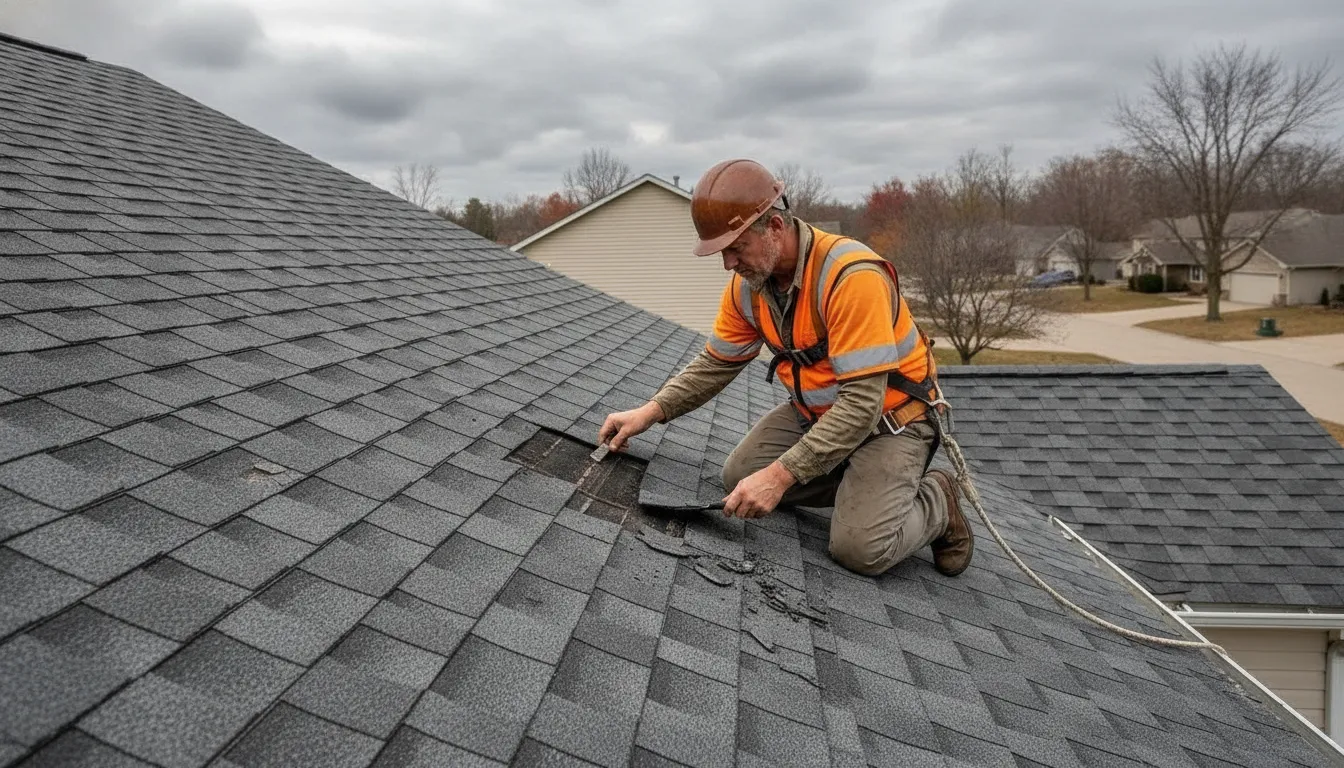
Roof shingles leak repair starts with tracing moisture from the attic or ceiling stain back toward its entry point, then correcting the underlying issue. That may mean replacing missing shingles, resealing a minor crack, or repairing flashing and ice-dam-related damage. The right repair depends on where water is entering, not simply where the stain appears. Schedule your free roof inspection with Referred Restoration for a clear assessment.
In cold weather, heat-driven ice dams can push water beneath shingles, while freeze-thaw cycles can worsen small gaps. Before deciding whether a repair is enough, it helps to understand the roof areas most likely to collect runoff and develop leaks.
If your Minnesota roof is leaking, schedule your free roof inspection with Referred Restoration to pinpoint the source before the damage spreads.
Where Roof Shingle Leaks Start
A roof leak doesn’t always begin directly above the ceiling stain. Water can travel along the roof deck, framing, or insulation before it becomes visible inside the home. When you’re checking for a problem, focus on the areas where shingles meet other roof surfaces, where water collects, or where something passes through the roof.
Valleys carry heavy runoff
A valley is the inside angle where two roof slopes meet. It channels water from both sections toward the eaves, so it handles more runoff than much of the surrounding roof. That volume makes valleys a common leak location, especially when shingles are damaged, the underlayment is missing or deteriorated, or debris prevents water from moving freely. The U.S. Department of Energy’s Building America program notes that proper installation at open valleys, hips, and ridges is part of keeping a shingle roof watertight. See the asphalt shingle roof installation guidance before attempting to inspect one from a ladder.
Flashing protects walls and roof penetrations
Flashing is the metal or other water-resistant material installed where roofing meets a wall, chimney, vent pipe, or similar feature. At a wall, step flashing helps keep water from getting behind the siding. Around chimneys and vent pipes, flashing and the surrounding seals have to remain intact as the roof expands and contracts through Minnesota’s weather cycles. Cracked, exposed, loose, or poorly installed flashing can let water enter even when the shingles nearby appear to be in good condition. Roof penetrations such as vents, pipes, and chimneys are frequently associated with flashing failures, according to Lowe’s roof leak repair guidance.
Missing shingles leave the roof exposed
High winds, hail, aging materials, and improper fastening can loosen or remove shingles. Cracked, curled, or damaged shingles can create openings around their edges, allowing water to reach the layers beneath. Missing or damaged shingles are primary entry points for water penetration, as explained in the U.S. Department of Energy’s Building America asphalt shingle roof guidance. Look for bare patches, lifted tabs, exposed underlayment, or shingle pieces in the yard, but avoid walking on a steep or wet roof.
Gutters and skylights can redirect water
Clogged gutters and downspouts can cause water to back up at the roof edge or overflow against fascia and siding. Leaves, granules, and ice can all interfere with drainage. Skylights are another vulnerable area because their flashing and seals interrupt the shingle surface. If a leak appears near a skylight, the visible water may come from failed flashing rather than the glass itself.
These areas can overlap. A damaged shingle may let water reach a wall flashing detail, while a clogged gutter can worsen runoff during a storm. A careful inspection should trace the water path instead of treating the first visible stain as the source.
Finding a Roof Shingle Leak Before the Damage Spreads
A roof leak often announces itself indoors before the damaged shingle is visible outside. Look for brown or discolored marks on ceilings, damp insulation, or moisture stains on attic rafters and the underside of roof sheathing. These are common early indicators of water intrusion, according to Lowe’s roof leak guidance. Even a small mark deserves attention, especially after heavy rain, strong winds, or a Minnesota freeze-thaw cycle.
Start by documenting where you see the stain, then inspect the attic if it is safe to enter. Use a flashlight to follow damp wood, darkened sheathing, or water marks toward the roof deck. Check the area around penetrations, such as vent pipes, chimneys, and skylights, along with nearby valleys and roof-wall transitions. Do not climb onto a wet or steep roof to investigate the exterior. A roof surface can be slippery, and stepping on shingles may create additional damage.
Trace the water path, not just the stain
The indoor stain does not always sit directly below the leak. Once water passes through a damaged shingle, failed flashing, or an opening around a roof penetration. It can travel along the roof sheathing or follow a rafter before dripping into the attic. That means a ceiling mark several feet away from the actual entry point can still be connected to one small opening higher on the roof.
From the attic, trace the path uphill toward the exterior area where water may be entering. On the roof, a professional can then examine the corresponding shingles, seams, flashing, and seal points. Missing, cracked, or damaged shingles can expose the roof structure to water penetration, while an issue in a valley can affect a much larger flow of runoff. The visible symptom alone is not enough to determine which repair is appropriate.
Why professional diagnosis matters
A temporary patch near the stain may stop water briefly without correcting the source. A professional inspection connects the interior evidence with the roof’s drainage patterns and identifies the true entry point. That is particularly important when wind or hail has affected multiple parts of the exterior. For professional roof leak repair and coordination, an inspection can help establish whether the roof, siding, gutters, or related flashing also needs attention.
If you find a new stain, contain dripping water indoors and arrange an inspection promptly. Referred Restoration provides free roof inspections for homeowners in Rogers, Cottage Grove, and nearby Minnesota communities. With recommendations based on the actual condition of the roof rather than the location of one visible mark.
How Roof Shingles Leak Repair Fixes Damaged Shingles and Flashing in Minnesota
Repair depends on where water is getting through and whether the surrounding roof materials are still sound. A missing or cracked shingle can expose the underlayment and roof structure to water, but replacing one visible shingle does not always address the full leak path. Water can travel beneath shingles before it appears inside the home, so the repair should include the nearby flashing, underlayment, and roof deck when needed.
Repairing cracked or loose shingles
For a minor crack or a shingle that has lifted but is otherwise in good condition. A roofing professional may use a specialized sealing compound to re-adhere the shingle to its substrate and create a watertight barrier. This approach is documented for minor shingle cracks, but it is not a substitute for replacing shingles that are split. Missing granules, badly curled, or damaged across a larger area. Specialized shingle sealing compounds can support a limited repair when the underlying materials remain sound.
DIY sealing may help slow water entry until an inspection can be completed, but it is a stopgap. Applying sealant over a damaged area can hide the source without correcting failed underlayment or nearby flashing. A durable repair should restore the roof’s water-shedding layers, not simply cover the symptom.
Replacing flashing at walls, chimneys, and vents
Flashing is formed metal or another water-resistant material that directs water away from vulnerable joints. At a roof-wall intersection, step flashing is installed in overlapping pieces so water cannot get behind the siding. The U.S. Department of Energy’s Building Science Education guidance identifies step flashing as essential for preventing water intrusion at these intersections. See the step flashing guidance for a technical explanation.
Kick-out flashing is the small transition at the lower end of a roof-wall intersection. It directs runoff away from the wall assembly instead of allowing water to collect behind the siding. Without it, repeated Minnesota rain, snow, and freeze-thaw exposure can contribute to moisture damage in the wall. Building Science Education explains kick-out flashing and its role in managing that runoff.
Flashing around chimneys, vent pipes, and other roof penetrations also needs careful attention because these are frequent leak locations. The repair may involve replacing deteriorated flashing, correcting overlaps, or repairing a vent boot rather than adding surface sealant. If you are deciding when to replace asphalt shingle roofs, an inspection can distinguish an isolated repair from broader shingle, underlayment, or flashing failure.
Why Minnesota Weather Triggers Roof Shingle Leaks
Minnesota weather can turn a small weakness in a roof into an active leak quickly. Homes in Rogers, Cottage Grove, St. Francis, and Monticello face repeated exposure to snow, ice, hail, strong wind, and sharp temperature changes. Each condition stresses shingles and the materials beneath them in a different way.
Freeze-thaw cycles and ice dams
During a cold winter, heat escaping from the living space can melt snow on the warmer sections of a roof. That water runs toward the colder roof edge, where it refreezes and forms an ice dam. As the dam grows, meltwater can back up beneath the shingles and enter the roof assembly. The University of Minnesota Extension explains how ice dams form and how to prevent the water backup they cause. Learn about preventing ice dams from the University of Minnesota Extension.
Ice dams can also conceal the original damage. Once warmer weather arrives, trapped moisture may show up as staining in the attic or on a ceiling, even when the roof looks intact from the ground. Homeowners concerned about recurring winter leaks can review our guide to preventing roof leaks from ice dams.
Snow load, hail, and wind damage
Heavy snow adds weight to the roof system and can place extra stress on aging shingles, flashing, and underlying decking. Snow and ice may also hide cracked or displaced materials, making a leak harder to locate until water reaches the attic or interior.
Hail can bruise, crack, or loosen the protective surface of an asphalt shingle. The damage may be subtle, but it can leave the underlying layers more vulnerable to water. High winds create a different problem by lifting shingle edges, breaking tabs, or exposing fasteners. Once a shingle no longer lies flat and seals correctly, rain can work beneath it during the next storm.
What homeowners should do after a storm
After severe weather, look for missing shingles, loose granules, lifted edges, bent metal, and debris on the roof or in the gutters. Avoid climbing onto a wet or icy roof. A professional inspection can check areas that are difficult to see safely, including valleys, roof edges, and flashing around vents and walls. If damage is widespread or the roof is nearing the end of its service life, compare repair options with the condition of your existing asphalt shingle roofs before choosing a solution.
When to Repair vs Replace Your Shingle Roof
A roof leak doesn’t automatically mean the entire roof needs to come off. The right recommendation depends on whether the problem is isolated or whether the roofing system is failing in several places. A small repair may make sense when damage is limited to a few shingles, one flashing detail, or a single leak area. Replacement deserves closer consideration when deterioration is widespread, repairs keep recurring, or the roof is nearing the end of its expected service life.
Asphalt shingle roofs typically last about 20 to 30 years, although installation quality, ventilation, weather exposure, and maintenance all affect that range. Missing or damaged shingles leave the underlying roof structure vulnerable to water penetration, as the U.S. Department of Energy’s Building America program explains. Use the comparison below as a starting point, not as a substitute for an inspection.
| Condition | Small repair may fit | Full replacement may fit |
|---|---|---|
| Extent of damage | Damage is confined to a small, clearly identified area, such as a few missing or cracked shingles. | Damage is widespread across multiple sections, with deterioration of the shingles or roof deck. |
| Age of roof | The roof is relatively young and most shingles remain flexible, sealed, and firmly attached. | The roof is approaching or beyond its typical 20-to-30-year service range and shows broad aging. |
| Number of leak areas | There is one isolated leak with a traceable source and no signs of related damage elsewhere. | Multiple leaks appear across different slopes, valleys, penetrations, or roof-wall intersections. |
| Repeated repair needs | A targeted fix addresses the underlying issue and is unlikely to be followed by another repair nearby. | Repeated repairs are needed in different locations, suggesting the roofing system is no longer performing consistently. |
| Overall shingle condition | Most shingles are flat, intact, and well bonded, with only limited cracking or displacement. | Widespread granule loss, curling, brittleness, exposed mat, or missing shingles appears across the roof. |
Ventilation can influence where a roof falls on that spectrum. Adequate attic ventilation helps reduce heat and moisture buildup, which can prematurely damage shingles and shorten their useful life, as explained in the U.S. Department of Energy’s guide to durable attics. If ventilation, insulation, or moisture problems are contributing to deterioration, replacing surface materials alone may not solve the underlying issue.
For a deeper look at the decision, review our guide to when to replace asphalt shingle roofs. A professional inspection can compare the roof’s age, leak pattern, shingle condition, and ventilation before recommending a focused repair or a complete replacement.
Preventing Future Roof Shingle Leaks
A repair addresses the immediate entry point, but a few maintenance habits can help protect the rest of the roof through Minnesota’s snow, wind, hail, and freeze-thaw cycles. Prevention starts with the roof system as a whole, including the attic, drainage paths, nearby trees, and the condition of the shingles.
Keep attic moisture and heat under control
Proper attic ventilation allows heat and moisture to move out of the attic instead of building up beneath the roof. That matters in every season. Excess heat and moisture can prematurely damage asphalt shingles, shorten their service life, and contribute to conditions that make future leaks more likely. The U.S. Department of Energy’s guide to durable attics covers the role of balanced ventilation in managing heat and moisture.
Ventilation should be evaluated as part of the entire roof system, not treated as a quick add-on. A roofing professional can look for blocked intake vents, inadequate exhaust, or insulation and air-sealing issues that allow warm household air into the attic. Improving airflow does not replace a damaged shingle or failed flashing, but it can reduce stress on otherwise sound materials.
Maintain gutters and clear nearby branches
Gutters and downspouts need a clear path to carry water away from the roof and foundation. Leaves, granules, and other debris can restrict drainage, allowing water to back up along the roof edge. Check them after heavy storms and again before winter, then confirm that downspouts discharge water away from the home.
Overhanging branches deserve attention as well. Wind can bring limbs down onto shingles, while repeated contact from smaller branches can wear the surface over time. Trimming branches back from the roof reduces debris and makes it easier to see damaged areas during a visual inspection. Tree work should be handled safely, especially near power lines or steep roof edges.
Schedule inspections before small damage becomes a leak
Routine inspections can identify cracked, curled, or missing shingles before water enters the roof assembly. The University of Minnesota’s roofing maintenance inspection checklist emphasizes early detection of these conditions. An inspection should also review valleys, flashing, vent penetrations, gutters, and areas affected by recent wind or hail.
After a storm, coordinating the roof with related exterior components is important. Siding, gutters, windows, and flashing can all be affected by the same event. So a broader assessment helps prevent one overlooked problem from sending water back into the home. For storm-related concerns, professional roof leak repair and coordination can help organize the inspection and repair process before visible damage spreads.
Unsure whether your roof needs a repair or replacement? Contact Referred Restoration online to schedule a free inspection in Rogers, Cottage Grove, and surrounding Minnesota communities.
Frequently Asked Questions
How do you fix leaky roof shingles?
Start by tracing the water from the attic or ceiling stain to its entry point, because the visible drip may be away from the actual roof defect. A repair may involve replacing missing or cracked shingles, resealing a minor crack, or correcting flashing around a wall, chimney, vent, or valley. Damaged shingles can expose the roof structure to water penetration, so the repair should address both the shingle and any wet underlayment beneath it. See Building America’s shingle repair guidance.
Is roof leak repair covered by insurance?
Coverage depends on your policy, the cause of the damage, and whether the issue resulted from a covered event or long-term wear. Before disturbing the area, take photos, note when the leak appeared, and contact your insurance carrier for instructions. A roofing professional can document visible damage, but no contractor can guarantee that an insurance claim will be approved.
Can you fix a roof leak without replacing the whole roof?
Often, yes. A localized leak may be repairable when the surrounding shingles, flashing, roof deck, and underlayment remain serviceable. Replacement becomes more likely when leaks recur in several areas, shingles are broadly damaged, or moisture has affected the underlying structure. An inspection can separate a small repair from a roof-wide condition without assuming the answer in advance.
Is it normal for a roof to leak in heavy rain?
No. Heavy rain can expose a weak valley, failed flashing, clogged drainage path, or damaged shingle, but a sound roof should shed water. In Minnesota, snowmelt and freeze-thaw conditions can also create ice dams that back water beneath shingles, according to the University of Minnesota Extension. Treat a recurring leak as a warning to investigate the roof and attic promptly.
Ready to Schedule Your Free Roof Inspection?
A professional inspection can help pinpoint whether a leak starts with a damaged shingle, flashing, or a weather-related issue before repairs become more involved. Schedule your free roof inspection by contacting Referred Restoration online, or call (763) 726-4245. You’ll receive a clear assessment and practical next steps for your Minnesota roof, without pressure.