When water spills over a gutter, stains siding, or appears near a roof edge, the source may involve more than one part of the drainage path. Homeowners searching for roof gutter repair in Rogers can start by noting where water appears and when it happens. A careful inspection can help separate a gutter issue from a roof concern before small signs turn into interior or exterior damage.
Request a free exterior inspection
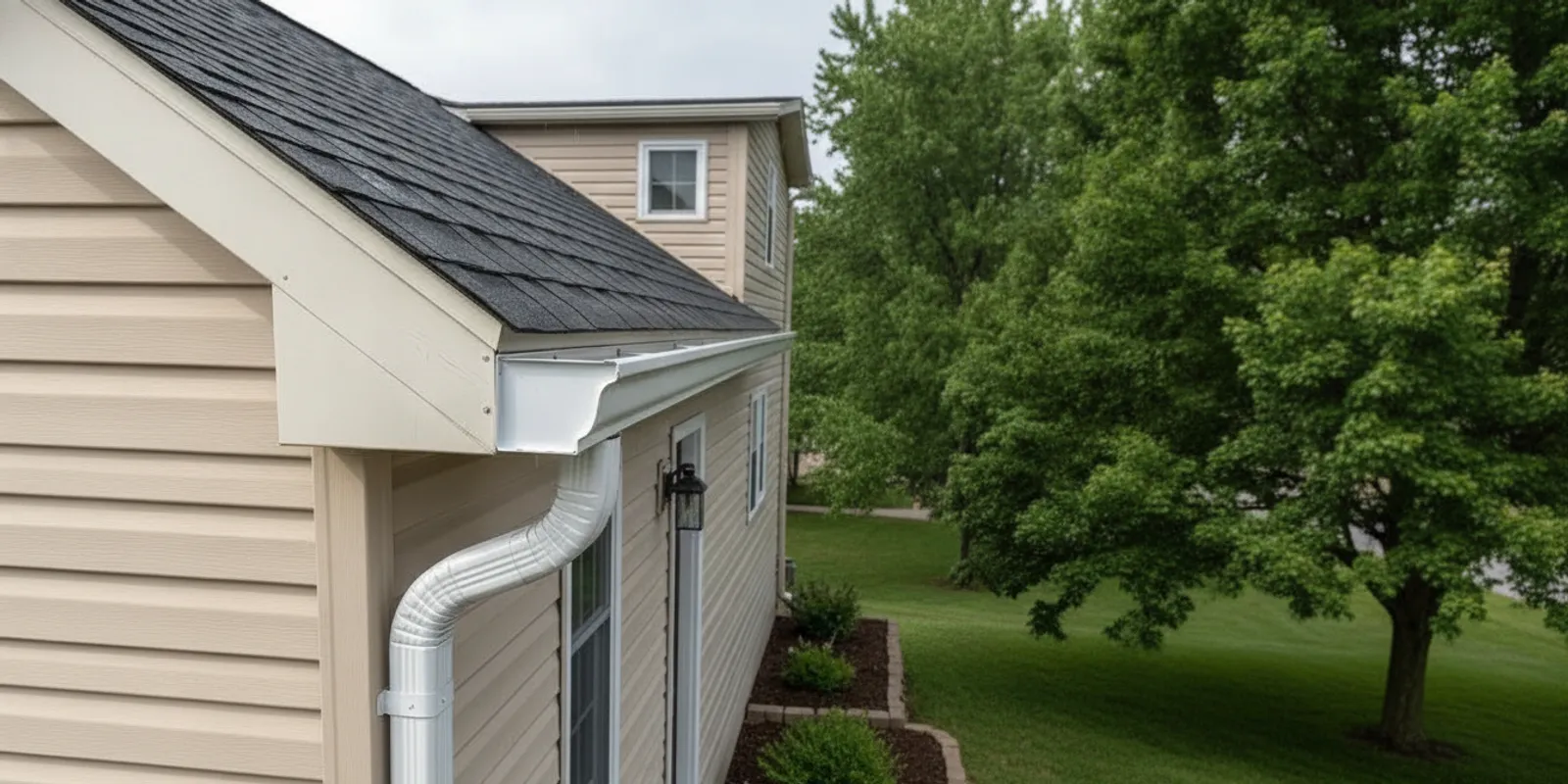
What should roof gutter repair Rogers address when drainage problems combine?
Rain should move from the roof surface into the gutter, through the outlet and downspout, and away from the house. A problem anywhere along that route can make water show up where it does not belong. The visible symptom is not always located at the source. For example, a wet patch below a roof edge could result from a blocked outlet, a gutter that has shifted, or runoff that is not entering the channel as intended.
Look for patterns rather than drawing conclusions from one moment. Notice whether overflow occurs during ordinary rain or only during a very heavy downpour. Check whether it happens in one spot or along a long section. Observe from the ground; do not climb a ladder or step onto a wet roof. A qualified inspection can assess the roof edge and gutter attachment safely.
- Water over the front lip: May point to debris, an obstructed outlet, a gutter alignment issue, or a capacity concern.
- Water behind the gutter: May indicate a gap, a loose section, or runoff bypassing the channel.
- Drips at a seam or corner: Can indicate a separated joint or damaged section.
- Water staining below the roof edge: Could reflect repeated wetting from overflow or a roof-edge issue that merits evaluation.
- Ponding near the foundation: May be related to the downspout discharge path, not only the gutter itself.
How can you trace the water path without taking risks?
A few observations made from safe locations can give an inspector useful context. Start with the weather and timing. If it is safe to observe during rain from a window or doorway, note where water first becomes visible and where it ends up. Do not reach toward a gutter or attempt to clear it while it is wet, icy, or above ground level.
- Record the location. Identify the side of the home, nearby corner, and whether the issue is at a roof valley, gutter joint, outlet, or downspout.
- Note the conditions. Record whether the event followed steady rain, intense rainfall, melting snow, or a freeze-thaw period.
- Look for repeat evidence. From the ground, note stains, peeling paint, damp-looking siding, washed-out soil, or marks below a joint.
- Check discharge direction. See whether the downspout visibly sends water away from the wall or releases it beside the foundation.
- Take ground-level photos. Photograph the area when dry and, only from a safe sheltered position, when the issue is visible.
- Share the observations. A written note about the location and weather helps focus an inspection.
Avoid poking into the gutter with a tool, pulling on a loose section, or applying sealant as a quick fix. Those actions may hide evidence or worsen a damaged attachment. Roof and gutter components are elevated, and wet surfaces create fall hazards. If water is entering the home, protect belongings and contact an appropriate professional promptly.
How can you prepare for roof gutter repair Rogers?
A recurring problem can be difficult to describe from memory. A simple log can show whether the pattern is tied to a particular location or weather condition. It need not be complicated: use a note on your phone or a paper calendar, and record only what you can see safely.
- Date and approximate time: Record when you noticed the symptom, not just when the rain began.
- Weather context: Note steady rain, a brief downpour, wind, thawing snow, or freezing conditions.
- Exact location: Identify the side of the house, nearest corner, and level of the symptom.
- What happened: Describe overflow, a drip, a wet patch, soil movement, or an indoor mark without naming an assumed cause.
- What changed: Record whether the sign disappeared, continued after the weather, or returned in the same place.
For example, two notes might show overflow at the same outlet during separate steady rains, while another note shows a stain after snowmelt at a different roof edge. The repeated outlet symptom may help focus gutter checks; the separate stain should be described independently rather than folded into the first issue. Clear records make it easier to discuss whether one condition or multiple conditions are present.
Use this log as context, not proof. Rain intensity can vary from one storm to another, and a symptom may be hidden when the exterior is dry. Do not wait to collect a perfect record if water is actively entering the home or a loose component appears unsafe. In that situation, prioritize safety and arrange an assessment.
For a broader look at gutter system considerations, read about how seamless gutters differ as a system option. That information can support a conversation about system choices, but the right response to a current leak or overflow still depends on the condition observed at the home.
Which symptoms point more toward a gutter issue?
Some clues are concentrated on the gutter system. A visible sag, a section pulling away from the fascia, a leaking seam, or repeated overflow at one outlet can help direct attention to the channel and its connections. Debris may obstruct water flow, especially after leaves, needles, or other material collect. Ice and packed snow can also change how water moves during Minnesota winter weather.
These clues do not prove the cause. The gutter may be affected by an attachment problem, a blockage, alignment, or another condition. A professional can check the run, joints, hangers, outlet, and downspout as a connected system. Referred Restoration provides gutter installation service information for Rogers and seamless gutter information for homeowners considering system work.
When a gutter section is loose or visibly deformed, avoid standing beneath it during wind or heavy precipitation. Do not assume that a single repair will address recurring overflow if the same condition returns across different storms. The aim is to identify why the water is leaving its intended route and whether adjacent components also need attention.
When could the roof edge be part of the problem?
Water near a gutter can sometimes involve the roof edge or runoff path rather than a defect in the gutter alone. If shingles, roof-edge materials, or nearby surfaces appear damaged from the ground, mention that during an inspection. Interior signs such as a new ceiling mark or dampness near an exterior wall should also be documented. Do not enter an attic if access is unsafe or conditions are uncertain.
Roof drainage depends on components working together. The National Association of Certified Home Inspectors describes installation concerns such as improperly sloped gutters and gutters that are loose or poorly attached in its overview of roof drainage systems. That is useful context, but it does not diagnose a particular home. A site assessment is needed to determine the source of a leak or overflow.
If the visible signs suggest roof damage as well as drainage trouble, explain both when arranging service. Referred Restoration offers roof repair in Rogers and roofing inspection and service information. A clear description helps determine which exterior components should be reviewed.
What should an inspection of roof and gutter drainage cover?
A useful inspection looks at the water route as a whole, rather than focusing only on the most obvious drip. The professional should explain what was observed, what component appears to be involved, and what remains uncertain. Ask for the findings to be described in plain language, especially if more than one part of the exterior may contribute.
- The gutter run, visible alignment, and areas that appear loose or separated.
- Seams, corners, outlets, and connections to downspouts.
- Signs that water has passed behind or over the channel.
- The roof edge and nearby surfaces where runoff enters the gutter.
- Downspout discharge and visible evidence of water collecting near the house.
- Any interior or exterior staining you reported, with its location and timing.
- Recommended next steps, including whether further assessment is needed.
Ask the inspector to distinguish direct observations from possible explanations. For example, “the joint is visibly separated” is an observation, while “the separation caused the interior stain” may require additional evidence. This distinction helps you understand what is known and what needs follow-up.
Referred Restoration describes a three-step service process: a free inspection, a custom solution, and professional installation. You can review the company’s exterior restoration services and discuss the concern during an inspection. The company serves homeowners in the Rogers area and offers roofing, siding, gutter, and window services.
How do repair and replacement paths differ?
The appropriate response depends on the condition, extent, and cause of the problem. A localized issue may be addressed differently from repeated problems across multiple sections. An inspection can clarify whether attention should focus on a connection, an individual gutter section, the overall system, or a related roof component.
| Observed condition | What it may suggest | Useful next step |
|---|---|---|
| One leaking seam or corner | A localized joint or connection issue | Ask for the joint and nearby sections to be checked |
| Repeated overflow at one outlet | Possible obstruction, alignment, or outlet concern | Have the outlet and connected run assessed |
| Multiple sagging or loose sections | Broader attachment or system condition | Request an evaluation of the full gutter run |
| Water staining near roof edge and indoor marks | Potentially connected exterior and interior symptoms | Document locations and ask whether roof components need review |
| Water pooling beside the home | Discharge or grading path may be involved | Check where the downspout releases water and discuss drainage |
This table is a guide for organizing observations, not a diagnosis. A repair recommendation should explain which condition it addresses and how the work relates to the larger water path. If replacement is suggested, ask what evidence supports that approach and whether the assessment covered the full affected area.
How does Minnesota weather affect gutter concerns?
In Minnesota, roof drainage faces rain, falling leaves, snow, ice, and repeated temperature changes. These conditions can make a small weakness more noticeable or change where water travels. A wet autumn may reveal overflow from debris, while thawing snow can expose a drainage path that was not obvious in dry weather.
After a storm or thaw, observe from the ground when conditions are safe. Note whether water is spilling over, dripping at a connection, or collecting near the building. In winter, do not chip ice from a gutter or attempt roof work. Ice can be heavy, and a frozen surface increases fall risk. If a concern seems urgent or water is entering the home, contact a qualified professional rather than waiting for a convenient season.
Seasonal checks should be visual and cautious. Keep notes on recurring locations, and mention whether the issue appears after wind-driven rain, a long period of precipitation, or snowmelt. Repeated evidence in the same place is especially useful when deciding whether to arrange an inspection.
What should you confirm after the work?
Once the work is complete, request a clear explanation of the area addressed and any follow-up observations to monitor. From the ground, check whether the repaired section looks secure and whether downspouts appear connected. Do not climb to verify elevated work. Ask what changes in water flow you should expect and whom to contact if the same symptom returns.
After the next suitable rainfall, observe the drainage from a safe location. Look for recurring overflow at the same point, new drips, or water collecting beside the home. A single storm may not reveal every condition, so keep notes if symptoms recur. If a new interior mark develops, document it and report it promptly.
Before the visit, it can help to turn a general complaint into a short, testable description. “The gutter is bad” gives little direction. “Water spills over the back corner above the driveway during steady rain, and a brown mark appeared on the nearby soffit afterward” identifies a location, weather pattern, and related sign. Add whether you have seen the same behavior more than once. These details help the inspector decide where to begin while keeping the homeowner safely on the ground.
It also helps to separate immediate protection from the permanent solution. If water is reaching stored items, move them away from the wet area when safe and use a container to catch drips. Do not cover a roof opening or climb out to make a temporary repair. If water is near electrical equipment, avoid the area and seek appropriate help. A temporary measure indoors does not resolve the exterior source, so record what you did and tell the inspector.
How can you compare possible findings without guessing?
Different patterns can look similar from the yard. A short, focused comparison can prevent one visible symptom from being mistaken for a confirmed cause. Use the observations as prompts for questions, not as a do-it-yourself diagnosis.
- Overflow in one location during rain: Ask whether the outlet, nearby channel, and alignment were checked. If it happens only in unusually intense rain, note that too; the inspector can consider how conditions relate to the finding.
- Drips after rain has stopped: Report how long they continue and whether they come from a seam, the fascia area, or a downspout connection. Do not try to identify the source by touching wet exterior materials.
- Water on siding below the roof edge: Note whether the mark begins near a corner or extends across a wider area. Ask whether runoff is entering the channel as intended and whether the roof edge warrants review.
- Soil washout at a downspout: Describe the discharge point and where water travels afterward. The issue may involve how water leaves the downspout rather than a leak in the gutter run.
- Interior stain with no obvious outside overflow: Share the room, wall or ceiling location, and when the mark appears. A dry gutter observation on one day does not rule out an intermittent issue.
For instance, imagine that water spills over a single corner during a long rain, but the rest of the gutter appears to drain. That pattern gives the inspector a place to start, yet it does not establish whether the outlet is blocked, the run is misaligned, or the incoming runoff is concentrated there. A second case is a stain that appears under a roof edge after snowmelt, with no observed overflow. The timing and location are useful, but roof and drainage components may both need examination. In each case, evidence is stronger when it includes repeat observations, photographs, and the weather conditions.
What questions can make the inspection conversation clearer?
A homeowner does not need technical vocabulary to ask for a useful explanation. Ask the professional to connect the visible symptom to the inspected component and to describe how certain that connection is. If work is recommended, discuss the scope before the visit ends.
- What did you observe directly? Request specific findings such as a loose section, visible joint separation, debris, or a stain, rather than only a broad label.
- Which parts of the water route did you review? Confirm whether the assessment included the roof edge, gutter run, outlet, downspout, and discharge area where relevant.
- What other explanation remains possible? This question is useful when a symptom could involve more than one exterior component.
- What work is proposed, and what does it address? Ask for a plain-language description of the affected area and how the recommendation responds to the observed condition.
- What should I watch after the work? Agree on visible signs to monitor and how to report a recurrence.
These questions also help when the recommended work involves more than one area. Ask which part is being addressed first and whether another inspection is needed before the full water path can be understood. Keep a copy of the written findings, photos, and any follow-up instructions together. That record is especially helpful if the same location becomes wet after a later storm or thaw.
Contact Referred Restoration online to discuss an inspection
Frequently Asked Questions
Can a gutter problem look like a roof leak?
Yes. Overflow or water passing behind a gutter may wet nearby exterior materials and resemble a roof-edge leak. The location and timing provide clues, but an inspection is needed to identify the source.
Should I clean a gutter that is overflowing?
Do not climb a ladder or work on a roof if you are not equipped and trained to do so, especially in wet, icy, or windy conditions. A professional can assess the blockage and system condition safely.
How do I know whether the gutter needs repair or replacement?
The extent and distribution of the damage matter. A localized issue may have a different solution from several loose, leaking, or deformed sections. Ask for an inspection and an explanation of the evidence behind the recommendation.
What details should I share when requesting service?
Describe where water appears, when it happens, whether it repeats, and any visible stains or interior signs. Ground-level photos can help communicate the location without putting you at risk.
What is the best next step?
Start with safe observations and record the water’s location, timing, and apparent route. If overflow, loose sections, roof-edge concerns, or interior signs recur, arrange an inspection that considers the connected drainage path. A clear assessment can help identify whether the concern is limited to a gutter component or involves nearby exterior areas as well.