A roof replacement and a siding project should not be treated as separate design decisions. On a Minnesota home, the materials meet at edges, corners, windows, and trim, so their color, profile, and installation details all influence the finished result. Coordinating them from the start can create a cleaner exterior while helping the home stand up to snow, hail, and seasonal temperature swings.
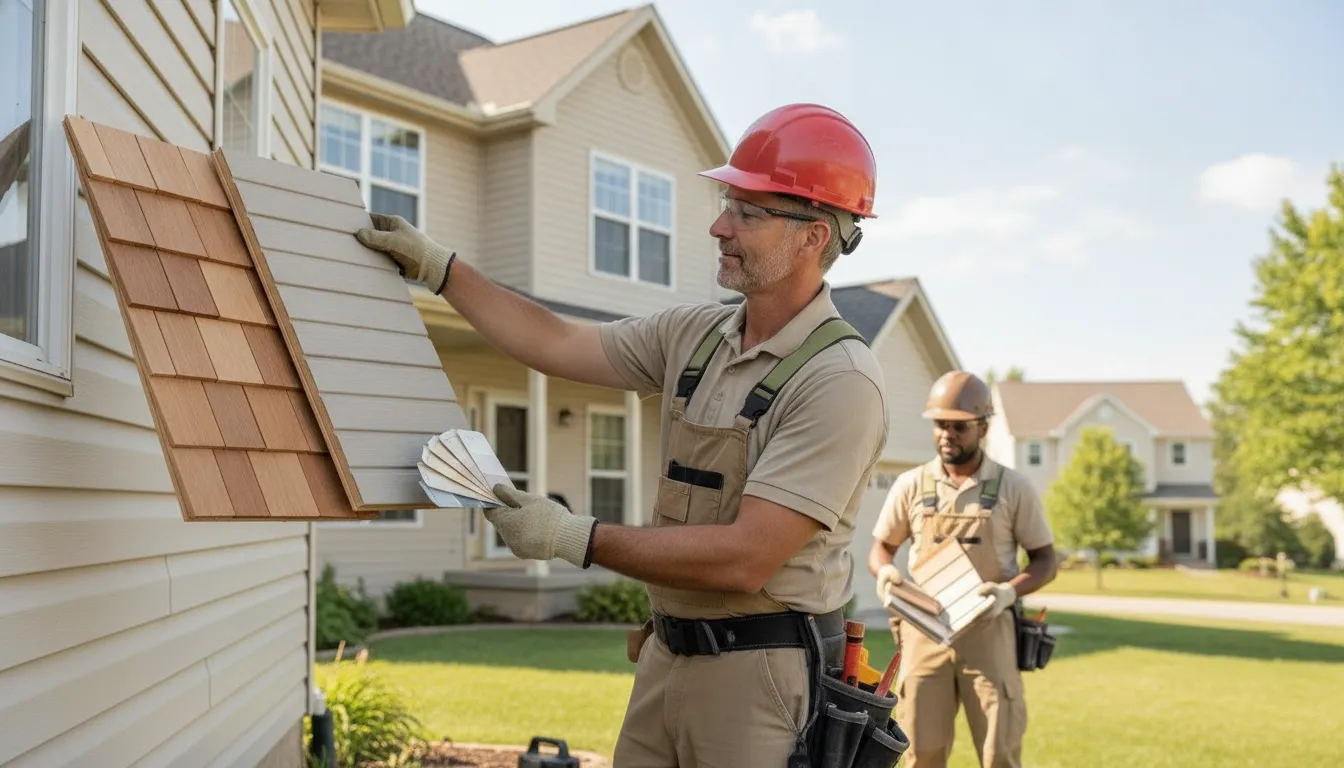
When choosing house shingles siding combinations, start with the roof’s color and texture, then select siding and trim that support its undertones, architectural style, and maintenance needs. Just as important, confirm that the roofing, siding, flashing, and water-resistive layers will work together to direct moisture away from the structure.
That balance of appearance and performance matters whether you are updating a home in Rogers, St. Francis, Monticello, or Cottage Grove. Before comparing colors or siding materials, it helps to understand why these exterior systems need to be planned as one connected assembly.
Why House Shingles and Siding Need to Work Together
Your roof and siding are separate systems, but they share one job: moving water away from the house. That is why choosing house shingles siding as a coordinated exterior system matters beyond appearance. On Minnesota homes in Rogers and Cottage Grove, the roof, wall cladding, flashing, windows, doors. And trim all need to work together through snow, hail, rain, and seasonal temperature changes.
Think of the exterior as a continuous drainage plane. The University of Minnesota Extension describes this protective layer as including the weather-resistive barrier, flashings, and roofing components. Together, those layers help protect the structure from water intrusion. If one transition is poorly planned or improperly installed. Water can find a path behind the siding or around a roof edge, where hidden moisture may cause damage over time.
Water-shedding works through overlap. Each layer should direct water outward and over the layer below it, in the same way roof shingles overlap to carry water downhill. Siding courses, step flashing, wall flashing, kick-out flashing, and roof-edge details must preserve that direction. The exact details vary by home and material, but the principle stays the same: never create a seam that sends water behind the exterior system.
Transitions deserve special attention
Roof-to-wall intersections are especially important because they combine two systems in a small area. Windows, doors, and skylights also have to integrate carefully with the drainage plane. The University of Minnesota Extension notes that these openings are part of the building’s outer surface and must be integrated with siding and roofing components to help prevent moisture damage. A replacement project is an opportunity to inspect these connections instead of treating the roof and siding as unrelated surfaces.
Coordination also improves curb appeal. A roof color, siding profile, and trim scheme that complement one another make the home look intentional from the street. More importantly, coordinating the work helps avoid mismatched edges, exposed transitions, or repairs that look like separate patches. Homeowners planning restoration after wind or hail damage can review coordinating exterior finishes as part of the broader repair process.
Using one restoration team for roofing and siding can simplify that coordination. Referred Restoration can evaluate the connected exterior, plan the transitions, and keep the finish details aligned from the first inspection through installation. For homeowners in Rogers, Cottage Grove, and nearby Minnesota communities, single-source convenience means fewer handoffs and one team accountable for how the completed exterior performs and looks.
What Is Shingle Siding and How Is It Different From Roof Shingles?
Shingle siding is a wall-cladding style made from overlapping horizontal courses. The individual pieces create a layered appearance that resembles the texture of roof shingles, which is why the terms can sound interchangeable. Shingle siding may also be called shake siding or shingle-style siding, depending on the material and profile.
Shingle siding covers walls
The primary job of shingle siding is to cover and protect the exterior walls of a home. Its overlapping layout helps create the distinctive stepped pattern homeowners often choose for gables, dormers, accent walls, or an entire exterior. The material is selected for its appearance and its suitability as wall cladding, then installed as part of the home’s siding and moisture-management system.
Common shingle siding materials include cedar, fiber cement, vinyl, and engineered wood. Each produces a somewhat different texture and level of visual variation. Cedar can provide a natural, hand-crafted look, while fiber cement, vinyl, and engineered wood offer other approaches to a consistent shingle profile. The right choice depends on the home’s design, the desired maintenance routine, and how the siding will work with the roof, trim, and other exterior finishes.
Roof shingles protect the roof deck
Roof shingles serve a different purpose and are installed on the roof rather than the walls. They form the weather-exposed roof covering over the roof deck, where the system must shed rain, melting snow, and other precipitation. Although both products may overlap, roof shingles and shingle siding are not automatically interchangeable. They have different profiles, installation requirements, and roles in the building envelope.
That distinction matters when planning a replacement. The roof material establishes one major exterior texture, while shingle siding adds another on vertical surfaces. Reviewing both together can help prevent an exterior that feels visually disconnected. For more context on selecting a roof system, see our guide to shingle and siding compatibility before finalizing the combination.
In short, shingle siding borrows the layered look of roof shingles for the walls, but the two products should be evaluated as separate parts of the home. Coordinating their profiles, colors, and installation details creates a more unified exterior without confusing their functions.
Popular Siding Materials That Pair Well With Shingle Roofs
The best siding choice depends on more than appearance. In Minnesota, exterior materials need to stand up to heavy snow, hail, moisture. And repeated temperature swings while still creating a balanced transition from the roofline to the walls. Shingle siding is installed in overlapping horizontal courses that resemble roof shingles, and it is available in several materials, including vinyl, fiber cement, engineered wood, and cedar.
Vinyl siding
Vinyl is a practical option for homeowners who want a clean, consistent exterior with relatively simple upkeep. It can complement asphalt shingle roofs in traditional, contemporary, and cottage-inspired designs. When paired with the right roof color and trim, vinyl helps create a cohesive look without competing with the texture of the shingles. Proper installation remains important, especially around corners, windows, and roof transitions where wind-driven rain and melting snow can test the exterior envelope.
Fiber-cement shingle siding
Fiber cement offers a more substantial shingle-style appearance and is well suited to homes where durability and a textured finish are priorities. Hardie Shingle provides a fiber-cement shingle look with ColorPlus finishes and a 30-year substrate warranty. Those specifications can make it a strong fit for Minnesota exteriors, although the installation details and flashing still matter as much as the product itself. The roof and siding should be planned together so the courses, trim, and roof edge create a deliberate transition.
Engineered wood
Engineered wood can deliver the warmth and dimensional character homeowners want from wood siding while offering a consistent manufactured profile. It pairs naturally with architectural or dimensional shingle roofs, particularly when the goal is a welcoming Craftsman, farmhouse, or transitional exterior. A qualified installer should account for moisture management, clearances, and vulnerable joints so seasonal expansion and contraction do not undermine the finished system.
Cedar shake and shingle
Cedar brings authentic texture and character to a roof-and-siding combination. Its natural variation can soften a bold roof color or reinforce a rustic design, but it also requires careful installation and ongoing attention to preserve its appearance. Cedar shake and shingle siding is considered a premium material, so its specific installation needs should be part of the planning conversation. For more guidance on matching your siding finishes, compare the material’s texture, maintenance requirements, and weather exposure with the rest of the home.
Whether the home is in Rogers, St. Francis, Monticello, or Cottage Grove, the most reliable pairing is one that connects appearance with sound water-management details. Roof and siding materials should work as one exterior system, not as separate decisions made at different times.
Choosing House Shingles and Siding Colors for Curb Appeal
The right color pairing makes a roof and siding feel intentional rather than selected as separate projects. When homeowners compare house shingles siding combinations, begin with the character of the home itself. A simple ranch, a traditional two-story, and a Craftsman-inspired exterior each have different lines, proportions, and details that can guide the palette.
Architectural history can help, too. Historic preservation guidance from the Cambridge Historical Commission recommends considering a home’s architectural style, the historical context of its materials, and the way colors influence one another. You do not need to reproduce an original color scheme exactly, but the home’s design should remain the starting point. A restrained palette usually supports older or traditionally styled homes, while a contemporary design may allow stronger contrast between the roof, siding, and entry door.
Start with the roof’s visual weight
Roof shingles cover a large surface and often have a varied, dimensional appearance. Look at the shingle sample in daylight, then compare it with siding samples beside the home’s brick, stone, or other permanent features. A roof with warm brown, tan, or red undertones generally works best with siding that shares some warmth. Gray or blue-gray shingles can support cooler siding colors, although a neutral siding tone may bridge the two.
Matching does not mean making every exterior element the same color. In fact, a subtle difference between roof and siding can add depth. The goal is to repeat one undertone or connect the materials through a neutral trim color. Test larger samples when possible, because a color that looks balanced on a small card can appear much stronger across an entire wall.
Use trim to define the design
Trim around windows, doors, corners, and roof edges is more than a finishing detail. The placement of color can be more important to communicating a building’s design than the colors themselves, according to the Cambridge Historical Commission. Use trim to emphasize the home’s strongest lines, separate a darker roof from lighter siding, or frame architectural features without making them compete.
For practical guidance on selecting those transition pieces, see our guide to coordinating house shingles and siding. Homeowners in Rogers, St. Francis, Monticello, and Cottage Grove can also review samples at the exterior of their home before committing. A careful comparison of roof, siding, trim, and fixed masonry helps create curb appeal that feels natural in its Minnesota setting.
How to Coordinate Roof and Siding Undertones Without Clashing
Once you have narrowed down your roof and siding materials, compare their undertones rather than judging each sample by its main color. Undertones are the subtle warm or cool influences beneath a visible shade. A gray shingle may lean blue, while another gray may carry brown or taupe. The same distinction matters with siding, especially when Minnesota daylight, snow cover, and seasonal shadows change how the exterior appears.
Start by identifying warm and cool influences
Warm undertones include red, tan, brown, cream, and yellow. Cool undertones include blue, green, violet, and some crisp grays. Matching two warm finishes usually creates a comfortable, traditional appearance. Cool finishes can feel clean and modern. You can also mix warm and cool materials, but one finish should clearly lead while the other supports it.
View roof and siding samples outdoors, ideally at different times of day. Hold them near the brick, stone, driveway, or other fixed elements that will remain on the home. A roof that looks neutral in a showroom may appear distinctly blue or brown beside an existing masonry surface. Consider the architectural style and surrounding context as well. Guidance from the Cambridge Historic Commission explains that architectural style and the way colors influence one another both matter when selecting exterior colors.
Use trim as the visual bridge
Trim around windows, doors, corners, fascia, and soffits can connect a roof with siding that has slightly different undertones. For example, warm siding and a cooler gray roof may work when the trim repeats a quiet gray, cream, or blended neutral found in both surfaces. White trim can provide a sharper break, but it may emphasize the difference between warm and cool finishes rather than soften it.
Trim placement can be as important as the colors themselves. It outlines transitions and controls where the eye moves across the exterior. Which is why the placement of colors is often more important to a building’s design than the colors alone, according to the same exterior-color guidance. For practical ideas on using these transition areas, review this guide to coordinating house shingles and siding.
Keep the proportions simple
A straightforward proportion approach helps prevent a busy facade. Let the roof and primary siding carry most of the visual weight, then use trim as the smaller connecting element. A common starting point is to treat the roof as one major color and the siding as another major color. With trim as an accent rather than adding several competing shades. If the roof has a strong pattern or contrast, choose quieter siding. If the siding has pronounced texture, a more restrained roof can keep the exterior balanced.
Before making a final selection, view larger samples against the actual home. Check how the combination looks beside existing windows and landscaping, then confirm that the trim completes the transition instead of introducing another undertone.
Single-Source Exterior Restoration: One Contractor, One Vision
Replacing more than one exterior component is easier to manage when one contractor oversees the full plan. Roof shingles, siding, gutters, and windows are not separate systems at the edge of a house. Their details meet at corners, eaves, wall openings, and other transition points. Coordinating those connections from the start helps the finished exterior look intentional and perform as a complete system.
This matters in Rogers, St. Francis, Monticello, and Cottage Grove, where homes experience snow, hail, wind, and seasonal temperature changes. A roofing crew may focus on shingles while a separate siding crew approaches wall transitions differently. If no one owns the overall sequence, small differences in flashing, trim, color, or installation can leave the exterior looking pieced together. One project lead can keep the design decisions and installation details aligned.
Coordination protects the areas where materials meet
Windows and doors need careful integration with the surrounding siding and roofing components. The University of Minnesota Extension explains that these openings must connect properly with the drainage plane to help prevent water penetration and moisture damage. The drainage plane includes weather-resistive barriers, flashings, and roofing components, and it should protect the home from the bottom to the top. Learn more about how the drainage plane keeps water out.
Installation sequence is part of that protection. Building components should overlap so water moves out and over the layer below, in the same way roof shingles overlap. When one contractor coordinates the roof, siding, gutters, and windows, the team can plan these layers together instead of leaving each trade to solve only its own portion.
A consistent plan also improves the finished appearance
A single-source approach reduces the chance of mismatched trim profiles, uneven transitions, or siding and roofing choices that compete with one another. The goal is not to make every material identical. It is to create a clear relationship between the roofline, wall cladding, window surrounds, gutters, and other visible details.
That same coordination is useful after storm damage, when several exterior finishes may need attention at once. Read more about coordinating exterior finishes before starting repairs. A local team that treats the home as a whole can explain which work should happen together. Identify transition points early, and maintain one vision from planning through completion.
Comparing Shingle-Look Siding Materials
Shingle siding, also called shake or shingle-style siding, is installed in overlapping horizontal courses that resemble roof shingles. That repeating profile can add texture and a distinctive character to a Minnesota home, but the best material depends on more than appearance. Homeowners should compare how each option handles seasonal exposure, how much upkeep it requires, and how its installation needs fit the project.
Cedar, fiber cement, vinyl, and engineered wood can all create a shingle-look exterior, but they offer different combinations of natural texture, consistency, resilience, and maintenance. The table below provides a practical starting point. A site assessment can then account for the home’s existing roof, trim, windows, drainage details, and the finish that best suits the architecture.
| Material | Appearance | Durability | Maintenance | Cost |
|---|---|---|---|---|
| Cedar shake | Natural grain, variation, and a warm, traditional texture. | Can perform well when properly selected, installed, and protected, but natural wood remains sensitive to moisture and weathering. | Typically requires more ongoing attention than manufactured alternatives, including monitoring, cleaning, and finish maintenance. | Premium material with installation requirements that can increase the overall project investment. |
| Fiber-cement shingle | Clean shingle or shake profile with consistent sizing and a wide range of finish options. | Strong long-term performance with low-maintenance characteristics. Hardie Shingle includes ColorPlus finishes and a 30-year substrate warranty. | Generally lower maintenance than natural cedar, although it still needs proper installation and periodic inspection. | Mid-to-premium investment, depending on the product, finish, access, and installation scope. |
| Vinyl shingle | Uniform color and texture, with styles that can create a crisp or traditional appearance. | Resists routine moisture exposure and does not require wood-style refinishing, but product quality and installation matter. | Usually straightforward to maintain with periodic washing and inspection for impact or installation damage. | Often a more accessible material option, with the final investment shaped by the product and labor involved. |
| Engineered wood | Designed to capture the visual warmth and variation of wood with a manufactured profile. | Offers consistent performance when installed according to the manufacturer’s requirements and protected from moisture intrusion. | Usually requires less upkeep than traditional cedar, but exposed edges, joints, and finish should be inspected regularly. | Moderate investment that varies with the product line, detailing, and installation needs. |
Material selection should also include the details behind the finish. The drainage plane, weather-resistive barrier, flashings, and roofing components work together to protect the home from water intrusion. Installation should overlap components so water moves outward and over the layer below, rather than behind the siding. For that reason, choosing a material and choosing an experienced installer are connected decisions. Referred Restoration can help homeowners compare options while coordinating the roof and siding as one exterior system.
Steps to Coordinate Your Exterior for Your Next Replacement
Coordinating a roof and siding replacement takes more than choosing two attractive colors. On a Minnesota home, the exterior must also manage snow, rain, ice, and seasonal temperature changes. A clear plan helps the roof, siding, trim, windows, and drainage details work as one system, whether the project is in Rogers, St. Francis, Monticello, or Cottage Grove.
- Assess the current roof and siding state. Start with a whole-exterior inspection rather than evaluating each surface in isolation. Look for aging shingles, loose or damaged siding, deteriorated trim, soft areas, and signs of moisture around windows, doors, roof edges, and wall transitions. This assessment helps determine whether the roof and siding should be replaced together or sequenced carefully. It also identifies details that may be hidden once new materials are installed. The University of Minnesota Extension explains that a home’s drainage plane includes the weather-resistive barrier. Flashings, and roofing components, all of which help protect the structure from water intrusion. Review the drainage-plane guidance before finalizing the scope.
- Choose the roof and siding together from a shared palette. Collect roof and siding samples at the same time, then view them outdoors in morning, afternoon, and overcast light. The roof usually covers a large visual area, so its color and texture should establish the foundation for the siding choice. Consider the home’s architectural style and how the colors influence one another, not just whether each sample looks appealing on its own. A shared palette can include a dominant roof tone, a complementary siding finish, and one restrained accent for doors or shutters.
- Plan trim as the bridge between materials. Trim connects rooflines, siding fields, windows, doors, and corners. Decide where it will frame transitions and whether it should repeat a roof undertone, contrast with the siding, or provide a neutral separation. Placement matters as much as color. Guidance from Cambridge’s Historic Commission notes that color placement can be more important to a building’s design impression than the colors themselves. Use trim deliberately around gables, soffits, fascia, and openings so the exterior feels organized rather than visually busy.
- Coordinate drainage and flashing. Confirm how water will move from the roof edge across siding transitions and around windows and doors. Materials should overlap in a way that directs water outward and over the layer below, similar to the overlapping courses of roof shingles. Window and door flashing must also integrate with the siding and roofing components to reduce the risk of moisture damage. These details are especially important on Minnesota homes exposed to repeated freeze-thaw cycles. Ask for the installation sequence and transition details before work begins, not after the surfaces are covered.
- Schedule a single exterior contractor when practical. One coordinated contractor can keep the roof, siding, trim, gutters, and related flashing decisions aligned. That reduces handoff gaps between crews and gives you one point of contact for questions about sequencing and finish consistency. It also makes it easier to address an unexpected transition condition without separate contractors working from different assumptions. Choose a local team that explains the plan clearly, documents the scope, and treats the home as an integrated exterior system.
Frequently Asked Questions
What is the siding called that looks like shingles?
It is commonly called shingle siding, shake siding, or shingle-and-shake siding. It is installed in overlapping horizontal courses that resemble roof shingles. Common options include cedar, fiber cement, vinyl, and engineered wood, so the appearance can be tailored to the home’s style and the performance needs of the exterior.
What is the difference between roof shingles and siding?
Roof shingles cover the roof deck and shed water from the top of the home. Siding covers the vertical wall surfaces and helps protect the wall assembly from weather. Shingle-style siding borrows the layered appearance of roof shingles, but it is a separate wall-cladding product with its own installation requirements.
Do roof shingles and siding have to match?
No. They do not need to be identical, but they should work together through compatible colors, undertones, and trim. A roof with a warm undertone may pair more naturally with warm siding, while contrasting siding can still work when the trim creates a deliberate visual bridge.
Are shingles cheaper than siding?
That comparison depends on which products you mean. Roof shingles and siding serve different parts of the home and should be selected and planned as separate systems. Among shingle-look siding options, cedar is generally a premium material, while vinyl is often a more economical choice. Fiber cement and engineered wood provide additional appearance and durability tradeoffs.
What siding materials work well with asphalt shingles?
Vinyl, fiber cement, engineered wood, and cedar-style siding can all pair well with asphalt shingles. The best choice depends on the desired appearance, maintenance expectations, exposure to Minnesota weather, and how the siding color relates to the roof’s undertone. Reviewing both finishes together helps prevent an accidental mismatch.
Ready to Coordinate Your Roof and Siding?
A coordinated exterior can help your home look finished while keeping material choices and installation details aligned. Referred Restoration can review your roof, siding, trim, and overall exterior design to help you plan the next step with confidence.
Contact Referred Restoration online for a free exterior assessment and consultation. You can also call (763) 726-4245 to discuss coordinating your roof and siding.