A roof replacement is a major decision, but the lowest estimate is rarely enough to identify the right contractor. In Minnesota, the company you choose should explain how it handles snow, wind, hail, ventilation, insurance documentation, and the details that protect your home after installation.
Contact Referred Restoration online
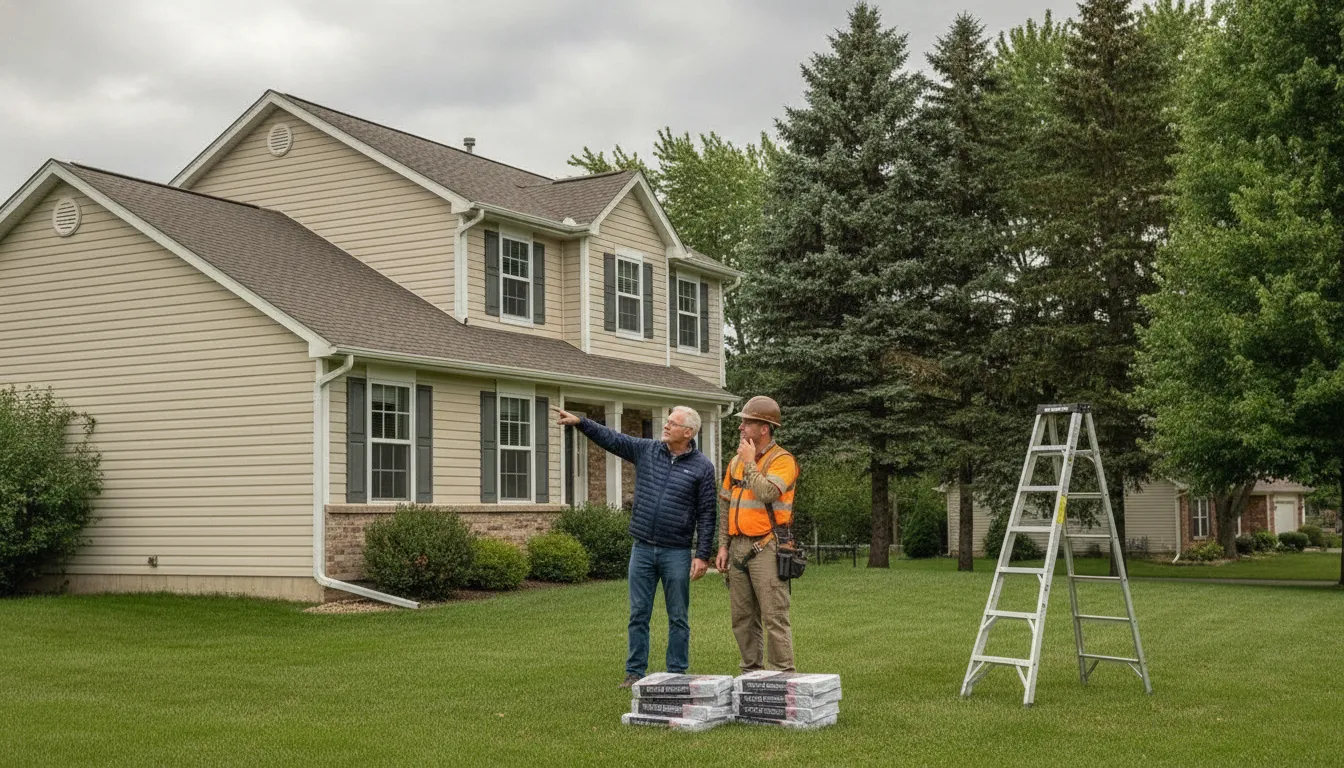
When comparing roofers companies, look beyond online ratings. Confirm licensing and insurance, ask about local climate experience, read both workmanship and manufacturer warranty terms, and compare written estimates line by line. A trustworthy contractor should make the scope, materials, schedule, payment terms, and follow-up support easy to understand.
That framework helps you compare professional businesses on accountability and service quality, not just sales promises. Start by checking the credentials and basic documentation that should be in place before you invite a roofing company to inspect your home.
What Should You Check Before Comparing Roofers Companies?
Before comparing roofers companies, verify licensing, insurance, business identity, and accountability. Those checks help you evaluate the contractor behind each proposal before you compare the recommended work or sign a contract.
A polished estimate or friendly introduction does not tell you whether a roofing company is properly licensed, insured, established in Minnesota, or accountable after the crew leaves. Those details help separate a professional operation from a short-term sales presence, especially after a storm when homeowners may feel pressure to act quickly.
Verify the license and insurance
Minnesota requires residential building contractors and roofers to be licensed when they contract to construct or improve a dwelling by offering more than one special skill. The Minnesota Department of Labor and Industry explains that licensing includes requirements such as having a company principal pass an exam and maintaining liability and property damage insurance. Licensed contractors must also complete continuing education each year. You can verify a contractor’s license through the Minnesota DLI and check whether the state lists disciplinary history or enforcement actions.
Do not treat a license as a substitute for asking practical questions. Request the company’s current license number and ask what insurance coverage applies to the work at your home. A credible company should answer clearly and provide documentation without becoming defensive. Hiring a licensed contractor also gives homeowners access to Minnesota’s Contractor Recovery Fund, an additional consumer protection that is not visible from an online advertisement.
Confirm the business identity and local accountability
Ask for a physical Minnesota business address rather than a post office box, along with a local phone number. Then confirm that the name on the estimate, contract, insurance documents, and payment instructions is consistent. This basic check can reveal whether you are dealing with the established roofing company you researched or an unrelated salesperson collecting leads.
References and time in business can add useful context. Ask for recent customers with projects similar to yours, and listen for specifics about communication, cleanup, warranty follow-through, and how unexpected conditions were handled. You can also check a contractor’s litigation history through the state court system. Reviews may help you identify patterns, but they should support, not replace, official verification.
Watch how the company asks you to decide
High-pressure sales tactics, an unmarked vehicle, or a demand for a full or substantial payment before work begins are reasons to slow down. Be especially cautious if a contractor offers to absorb or rebate your insurance deductible. Minnesota prohibits insurance deductible rebates for roof repairs. If an insurance claim is involved, ask what happens if the carrier denies it. Under certain restrictions, Minnesota homeowners may cancel a roofing contract after an insurance denial, and the contractor should explain the relevant contract language rather than rush your signature.
Before signing anything, ask who will supervise the project and who will be your point of contact if conditions change. A company that can explain its inspection, communication, and documentation process is easier to evaluate than one that makes broad promises. Put important answers in writing, including the work scope, materials, schedule, payment timing, and how changes will be approved. This gives you a consistent basis for comparing companies instead of relying on sales language alone.
This is more than a basic checklist. You are comparing accountability, documentation, and service structure. For homeowners in the area, reviewing Rogers roofing services can help you see what a local inspection-led process looks like before requesting proposals.
How Does Minnesota Climate Experience Affect a Roofing Company Choice?
Choose a roofing company that can explain how Minnesota snow, wind, hail, freeze-thaw changes, and seasonal moisture affect inspection, materials, installation, and follow-up service. Local climate experience should be visible in the questions the contractor asks and the details documented in the proposal.
A roofing company that works in Minnesota should understand more than basic installation. Heavy snow, strong wind, hail, freeze-thaw changes, and seasonal moisture all place different demands on a home’s exterior. When comparing roofers companies, ask how experience with these conditions affects inspection, material selection, installation, and follow-up service.
Start by asking for examples of similar homes and storm conditions the company has handled in your area. A contractor serving the Rogers, Cottage Grove, and surrounding corridor should be able to explain how local weather influences roof inspections and repair decisions. If the work follows hail or wind damage, ask whether the company regularly handles storm repair and can document the condition of the roof before recommending work. The Minnesota Department of Labor and Industry specifically advises homeowners to evaluate a contractor’s storm-repair experience when that is the purpose of the project: Minnesota storm-repair guidance.
Questions about snow, wind, and hail?
Good questions reveal whether a company is evaluating your roof or simply presenting a standard sales pitch:
- Snow and freeze-thaw exposure – Ask how the inspection accounts for snow accumulation, wind-driven rain, and repeated freeze-thaw conditions.
- Hail and wind documentation – Ask what damage the contractor will document and whether you will receive inspection photos.
- Ventilation and moisture – Ask how the company evaluates attic ventilation and moisture concerns, not just visible shingle damage.
- Flashing and transitions – Ask how the crew inspects penetrations, chimneys, walls, and other transition points.
- Material fit – Ask which materials are recommended and why they are appropriate for Minnesota weather.
These questions do not require the contractor to promise a particular product or performance rating. They help you see whether the inspection accounts for the full roofing system, including materials, flashing, ventilation, and the way water and snow move across your specific home. Referred Restoration uses an inspection-led process that begins with a free inspection, continues with a custom solution, and ends with professional installation. The company also emphasizes premium materials, including Malarkey roofing products, while matching recommendations to the home’s needs.
Look for documentation and coordinated support
Storm work often involves more than shingles. Ask whether the company will record related damage to siding, gutters, windows, or other exterior components and whether it can help you understand the documentation needed for an insurance claim. Insurance assistance should mean clear observations and organized communication, not promises about what an insurer will approve. A company that can coordinate the broader project may also reduce confusion when several exterior systems need attention. Learn more about coordinated roof and exterior repair after a storm.
Finally, pay attention to how the contractor explains uncertainty. A trustworthy company will identify what the inspection shows, separate storm damage from normal wear, and explain which questions require further review. That local accountability is more valuable than a vague claim of climate expertise. Before choosing, compare the quality of each company’s answers, inspection records, material explanation, and plan for follow-up after Minnesota weather tests the completed work.
How to Compare Roofing Estimates Without Chasing the Lowest Bid
Compare roofing estimates by matching scope, materials, preparation, schedule, payment terms, and change-order procedures rather than choosing the lowest total. A detailed proposal makes it easier to identify what each company will actually do.
A roofing estimate is useful only when it lets you compare the same work across different roofers companies. A short proposal may look attractive because it leaves out details that another contractor has included. Before comparing totals, compare the work itself. Ask whether each estimate describes the roof areas involved, the preparation required, the materials selected, and the responsibilities of both parties.
Minnesota’s Department of Labor and Industry recommends that a contract include a detailed work summary, materials, payment schedule, timelines, and written change-order provisions. Those details create a clearer basis for comparing proposals and help prevent disagreements after the project starts. You can review the state’s homeowner guidance at the Minnesota DLI contractor hiring guide.
| Estimate item | What to confirm |
|---|---|
| Project scope | Which roof sections, penetrations, vents, and related repairs are included? |
| Removal | Does the proposal explain tear-off, disposal, and cleanup of old roofing materials? |
| Underlayment | What underlayment is specified, and where will it be installed? |
| Shingles | What manufacturer, product line, color, and installation requirements apply? |
| Flashing | Will flashing be inspected, repaired, or replaced around walls, chimneys, skylights, and other transitions? |
| Labor | Who will perform the work, and what supervision and site protection are provided? |
| Schedule | What are the expected start conditions, project sequence, and completion timeline? |
| Payment schedule | When are payments due, and does the schedule avoid a substantial payment before work begins? |
| Written change orders | Does every change require a written description and your approval before the work proceeds? |
Materials deserve more than a product name. Confirm the exact shingle line, underlayment, flashing approach, ventilation work, and accessories included. If one estimate lists a complete installation system while another simply says “new roof,” the proposals are not yet comparable. Ask each contractor to explain what happens if concealed damage appears after removal, and how that possibility will be documented.
Removal and cleanup are especially easy to overlook. Clarify how many existing layers are included, how debris will be protected from damaging the property, and whether the final cleanup includes a site inspection. The estimate should also identify labor expectations, crew supervision, material delivery, and schedule assumptions. A professional proposal makes those responsibilities visible instead of leaving them to verbal promises.
Payment terms can also reveal how a company operates. The Minnesota DLI advises homeowners to be cautious about contractors who require full or substantial payment before work begins. A reasonable payment schedule should be written clearly, tied to the contract, and understandable before you sign. Be careful with any document presented as “just an estimate.” DLI warns that signing an estimate or authorization can sometimes create a binding contract before you have decided to hire the contractor.
Finally, ask how changes will be handled. Hidden deterioration may require an adjustment, but that does not justify an unclear process. Every change should identify the added or removed work, materials, schedule effect, and revised terms in writing. You should have an opportunity to review and approve it before the work moves forward.
The lowest bid may simply reflect a narrower scope, less complete preparation, or unresolved assumptions. Choose the proposal you can understand and compare, not merely the one with the smallest number. A careful estimate gives you a clearer view of the contractor’s service model, communication habits, and accountability before materials arrive.
Contact Referred Restoration online to discuss your roofing inspection and receive a clear, project-specific assessment.
What Roofing Warranty Terms Should You Read Closely?
Read the contractor’s workmanship coverage and the manufacturer’s material coverage separately. Confirm who handles a claim, what exclusions apply, how long each commitment lasts, and what maintenance or documentation you must keep.
A roofing warranty is only useful when you understand what it covers, who stands behind it, and what responsibilities remain yours. Do not treat the word “warranty” as a single promise. Roofing coverage commonly involves at least two separate commitments: the roofing contractor’s workmanship coverage and the manufacturer’s material coverage. These commitments may have different conditions, exclusions, claim procedures, and parties responsible for responding.
Separate workmanship coverage from material coverage
Workmanship coverage addresses the installation itself. Ask what happens if a problem results from how the roof was installed, such as an issue with detailing, flashing, or another part of the agreed scope. Material coverage comes from the product manufacturer and addresses defects in the roofing products under that manufacturer’s terms. A material warranty does not automatically mean the contractor will correct every installation-related problem, and a workmanship commitment does not replace the manufacturer’s product terms.
The written contract should identify the materials being installed and describe the work in enough detail to connect the warranty to the actual project. The Minnesota Department of Labor and Industry advises homeowners to require a detailed work summary and a description of materials in the contract. Review the state’s contractor guidance before signing so you can compare warranty language alongside the rest of the agreement.
Ask about exclusions and homeowner responsibilities
A warranty does not cover every event that can affect a roof. Ask whether the terms exclude storm damage, wind or hail events, ice-related conditions, poor maintenance, alterations by another contractor, improper ventilation, or damage from objects and animals. The specific exclusions depend on the contract and product documents, so do not rely on a verbal summary.
Also ask what could void or limit coverage. The answer may involve keeping records of inspections, reporting problems within a stated period, avoiding unauthorized repairs, or following manufacturer installation and maintenance requirements. If the contractor recommends a repair outside the original scope, ask whether it affects either warranty and request the answer in writing.
Clarify transferability and claims handling
If you may sell your home, ask whether the workmanship or material coverage can transfer to a future owner. Transferability may require notice, documentation, or action within a specific period. Never assume that coverage follows the home automatically.
Find out who receives the first call when something goes wrong. A responsive roofing company should explain how to report a concern, what documentation is needed, who evaluates the issue, and whether the contractor communicates with the manufacturer. Referred Restoration’s process begins with a free inspection, moves to a custom solution, and then proceeds to professional installation. That inspection-led approach gives homeowners a clear opportunity to discuss warranty documents and project records before work begins. For storm-related work, the team also assists homeowners with insurance claims, but insurance coverage and warranty coverage remain separate matters.
Get the paperwork before installation
Before approving the project, request the complete warranty documents, not only a brochure or a salesperson’s description. Confirm the contractor’s legal business name, the products specified, installation scope, exclusions, maintenance expectations, claim contact, and any transfer rules. Ask these practical questions:
- Responsibility – Which problems are handled by the installer, and which are handled by the manufacturer?
- Exclusions – What conditions are excluded from each type of coverage?
- Records – What records should I keep after installation?
- Claims – How do I start a claim, and who coordinates the response?
- Future work – What happens if the roof is affected by a future storm or repaired by someone else?
High-quality materials and careful installation matter, but clear terms matter too. Compare the actual documents, keep them with your project records, and make sure every promised change is included in the written agreement. A warranty should make responsibilities easier to understand, not harder to find.
Should You Choose Residential Roofers Companies or General Contractors?
Choose a residential roofing specialist when the primary need is a roof replacement, repair, inspection, or storm response. A general contractor may be a better fit for a larger renovation that requires several trades, but the right choice depends on the work your home actually needs.
A general contractor may coordinate several trades for a large renovation, while a residential roofing company focuses on the roof system, the exterior details around it, and the conditions that affect performance over time. For a straightforward replacement or a storm-damage repair, that specialized attention can make the process easier to evaluate.
Where residential specialization helps
A residential roofer works with the features that make homes different from commercial buildings, including sloped roof designs. Attic ventilation, flashing around penetrations, gutters, siding transitions, and the way water moves away from the structure. The company should also understand the residential requirements that apply to the project. Minnesota’s Department of Labor and Industry explains that residential contractors and roofers must follow the Minnesota State Building Code. State licensing requirements are also part of the consumer-protection framework for qualifying residential work. You can review the state’s guidance on residential contractors, remodelers, and roofers.
Specialization is especially useful when the cause of the work is wind, hail, or another storm event. Ask whether the company regularly documents storm damage, communicates with insurance carriers, and explains what the inspection found before recommending repairs. Referred Restoration provides storm-damage assistance as part of its residential exterior services, using an inspection-led process that moves from a free inspection to a custom solution and professional installation. Homeowners seeking Rogers roofing services can use that process to keep the scope focused and understandable.
When a general contractor may be the better fit
A general contractor can be a practical choice when the roof is only one part of a broader project. For example, a major renovation may require coordinated work on framing, insulation, windows, siding, electrical systems, or interior finishes. One project manager may simplify scheduling when several unrelated trades must work in sequence. The key is to confirm who is actually performing the roofing work, who is responsible for permits and inspections, and how roof-related changes will be documented.
For exterior storm restoration, the distinction can be less important than the contractor’s ability to coordinate connected repairs. A residential exterior company that handles roofing, siding, gutters, and window replacement may be able to keep related exterior decisions under one conversation. A general contractor may provide that coordination through subcontractors. In either case, request a written scope that identifies the roof work, materials, removal, flashing, cleanup, and any adjoining exterior repairs. Choose the company that can explain those responsibilities clearly, demonstrate relevant residential experience, and remain accountable from inspection through completion.
Which Warning Signs Mean You Should Keep Comparing?
Keep comparing when a contractor pressures you to sign, avoids specific answers, cannot provide clear documentation, or demands a substantial payment before work begins. These signals warrant a slower review of the company’s credentials, scope, and contract.
A professional comparison should leave you feeling informed, not hurried. Minnesota’s Department of Labor and Industry advises homeowners to be cautious when a contractor arrives in an unmarked vehicle, uses high-pressure sales tactics, or requires full or substantial payment before work begins. Those behaviors do not prove that a company cannot perform quality work, but they are reasonable signals to slow down and verify the business before signing.
Be careful with pressure and vague promises
A roofing company should be able to explain what it observed, what work it recommends, and how the recommendation appears in the written estimate. Be cautious if a representative says you must decide immediately, refuses to explain materials, or presents an estimate that leaves major parts of the project undefined. An estimate or authorization may sometimes be treated as a binding contract. So do not sign simply to receive a second opinion or reserve a place on a calendar.
Insurance-related promises deserve the same care. Minnesota does not allow contractors to rebate or absorb an insurance deductible for roof repair. A company that promises to cover your deductible is not offering a helpful shortcut. It is describing conduct that the state prohibits. Ask the company to explain the claim process honestly, then keep your insurance decisions separate from the contractor’s sales pitch.
Review the paperwork before you commit
Read the contract for a detailed scope, materials, timeline, payment schedule, and change-order process. The Minnesota DLI recommends that changes be put in writing and signed. That simple step helps prevent a verbal promise from disappearing when the crew arrives or when the project encounters an unexpected condition.
If storm damage is involved, read the cancellation language carefully. Minnesota homeowners may have rights to cancel a roofing contract when their insurance company denies the claim, subject to the law’s restrictions. A reputable company should be comfortable giving you time to understand the contract and ask questions. If a representative discourages review, avoids written answers, or asks for an unusually large upfront payment, keep comparing roofers companies.
Use verification, not fear, to make the decision
There is no need to choose a contractor based on the most urgent sales message. Verify licensing, insurance, references, and business identity. Compare complete scopes and warranty responsibilities. Then select the company that communicates clearly and can explain how it will protect your home through the work.
For homeowners who want a direct conversation about inspection-led roofing service in the Rogers area, Rogers roofing services can be a useful starting point before requesting a written plan.
Contact Referred Restoration online
Frequently Asked Questions About Comparing Roofing Companies
How do I choose the best roofing companies in my area?
Start by confirming that each company is properly licensed for the work, carries appropriate insurance, and can provide a physical business address and references. Then compare how each company inspects the roof, documents the recommended scope, explains materials, handles warranties, and communicates about scheduling. The best fit is not necessarily the company with the most polished advertisement. It is the company that gives you clear information and a written plan you can understand.
What should I look for when comparing roofers companies?
Compare the business behind the estimate as well as the estimate itself. Look at licensing, insurance, residential experience, local weather knowledge, communication, warranty responsibilities, and the detail included in the written scope. Ask what is included in removal, preparation, flashing, ventilation, cleanup, and follow-up. A meaningful comparison makes it possible to see whether two recommendations are actually offering the same work.
How can I get reliable estimates from roofing companies?
Request an on-site inspection and ask for a written estimate that identifies the work, materials, schedule, payment timing, and process for changes. Avoid comparing a single total alone. If an estimate uses broad phrases such as “complete replacement” without describing the work, ask for clarification before signing. You should have enough information to compare scope and responsibilities without feeling pressured to decide immediately.
How do I know if a roofing company understands Minnesota’s climate?
Ask how the company approaches roofs exposed to Minnesota snow, wind, hail, freeze-thaw conditions, and heavy precipitation. Ask how it documents storm damage, evaluates flashing and ventilation, and recommends materials for the home. Local experience should show up in the inspection conversation and the written plan, not just in a service-area list. A company that regularly serves the Rogers, St. Francis, Cottage Grove, or Monticello corridor should be able to explain how local conditions affect the work.
What warranty terms should I expect from roofers companies?
Ask the company to separate workmanship coverage from manufacturer or material coverage. Confirm who handles a claim, what exclusions apply, whether coverage can transfer to a future homeowner, and what maintenance or documentation is required. Ask for the warranty terms in writing and keep them with the contract and final project records. Do not rely on a broad promise that the roof is “covered” without learning which party is responsible for each type of problem.
Choose a Roofing Company With Confidence
Comparing roofers companies is easier when you focus on accountability, local experience, a complete written scope, and warranty terms you can explain back in your own words. A careful inspection and a clear conversation should help you understand the next step without pressure.
Referred Restoration serves homeowners in Rogers and nearby Minnesota communities with an inspection-led process for roofing and other exterior restoration needs. Contact Referred Restoration online to discuss your home and request the right next step. You can also reach the team at (763) 726-4245.