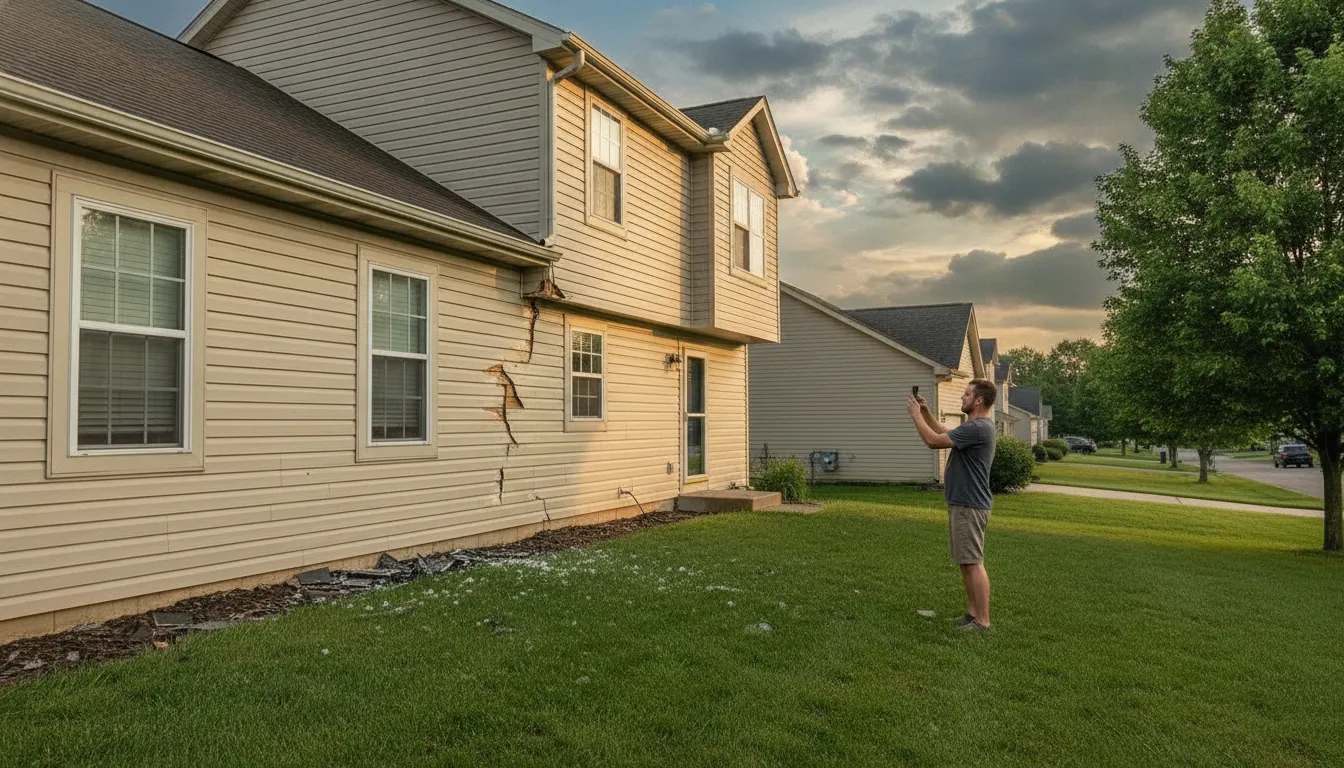
After wind or hail hits a Rogers house, the first useful step is a record, not a guess about whether the wall needs new cladding. Storm damage siding replacement Rogers homeowners can prepare by photographing every elevation, writing down the material, and saving a short timeline before anyone starts permanent work. A clear file helps an adjuster and a contractor look at the same evidence. It also keeps you from relying on memory once the weather turns and the marks are harder to see.
Contact Referred Restoration online to schedule a siding inspection. Call (763) 726-4245.
This guide covers the documentation packet only. It does not replace a statewide list of storm signs, a whole-home repair checklist, or a planned exterior refresh. Those jobs already have their own pages. Use this one to build the file you will hand over before replacement work is discussed.
What a Storm Damage Siding Replacement Rogers File Should Include
A useful file is a small set of facts that someone else can follow without walking the house first. Start with the date and time of the storm, the address, and which walls face the wind. Add a note about whether you were home, whether neighbors saw hail, and whether you already called your insurer. Keep the note short. The photos do the rest of the work.
Photograph the whole wall before you photograph the damage. A wide shot shows where the bad panels sit in relation to windows, corners, and the roofline. Then move closer so a dent, crack, or missing piece fills a large part of the frame. Take both from the same standing spot when you can, so the close-up matches the wide view. The Minnesota Department of Commerce tells property owners to photograph or video the damage before cleanup, and to hold off on throwing pieces away until the adjuster has seen them.
Write the material in plain words. Vinyl, fiber cement, engineered wood, and wood each mark differently, and a later reader should not have to guess from a photo. If you know the brand or color name from a prior invoice, add it. If you do not, say so. A wrong brand name is worse than a blank line.
Measure only what you can reach safely from the ground. Count damaged courses or panels on one wall, then note the wall’s approximate width in feet if you can pace it. Do not climb a ladder to chase a high mark. A missed upper course can be added during the inspection. A fall cannot be undone by a better photo.
Save receipts for any temporary cover you buy, such as tape or a small sheet used to keep water out of an opening. Commerce also says additional damage may not be covered if you skip reasonable temporary protection, and that you should keep those receipts. Temporary means temporary. Do not pull off sound panels or start a replacement while the claim is still being opened.
How to Photograph Each Wall Before Anyone Talks Replacement
Walk the house in one direction and label every photo set with the wall it shows. North, south, east, and west are better than “front” and “back” if more than one person will read the file. If you are unsure of the compass, use street side, backyard, garage side, and neighbor side, and stick to those four names the whole way through.
On each wall, capture four things:
- One wide photo of the full elevation, including the ground and the eave.
- One mid-range photo of the damaged area with a window or corner in frame for scale.
- Close photos of each distinct mark: dents, cracks, holes, lifted laps, and missing pieces.
- A photo of any debris on the ground that clearly came from that wall, left where it fell.
Put a coin or a tape measure next to a dent only if you can do it without pressing the panel. The point is scale, not a lab sample. Avoid filters, night mode that smears edges, and tight crops that cut off the surrounding course. Hail marks on vinyl can look like small dimples. A soft photo makes them look like dirt.
Video helps when a still photo cannot show a loose panel moving. One slow pass along the wall is enough. Narrate the wall name and what you see, then stop. Long videos are harder for an adjuster to review than a labeled photo set.
Do this while the light is even. Early morning glare on light vinyl hides shallow dents. If the first pass is poor, repeat that wall later in the day and keep both sets. Do not delete the first round. A timeline of photos can show that a crack grew after the storm, which is a different fact from damage that was already there.
If a window, gutter, or roof edge is also marked, take one photo that shows the siding and that neighbor component together, then stop. Roof, gutter, and window documentation belongs in their own notes. Mixing them into every siding frame makes the siding file harder to use. Referred Restoration can look at the whole exterior, but this packet stays about the wall covering.
What to Record About the Material, the Storm, and the House
Photos without context get questioned. Add a one-page note that a stranger could read in two minutes. Use the same headings every time so nothing important is left as a memory.
| Record | What to write | Why it matters |
|---|---|---|
| Storm date and type | Date, about what time, and whether it was hail, wind, or both. | Ties the marks to one event instead of old wear. |
| Wall and exposure | Which elevation, and whether it faces open yard or is sheltered. | Shows why one side failed and another did not. |
| Material | Vinyl, fiber cement, engineered wood, wood, or unknown. | Sets what a matching replacement would have to meet. |
| Age if known | Install year from a permit, invoice, or prior owner note, or unknown. | Separates storm marks from age-related cracking. |
| What is damaged | Count of cracked, dented, loose, or missing pieces you can see. | Gives a starting scope without guessing hidden layers. |
| What you already did | Temporary cover only, plus receipt dates. | Shows you limited further water entry without altering the loss. |
| Who has seen it | Insurer call date, claim number if you have one, and any visit booked. | Keeps the timeline in one place. |
Hail size is useful only if you can say how you know it. NOAA’s hail overview explains that stronger updrafts can keep stones aloft longer and grow them larger, which is why one storm can mark siding while a weaker cell nearby does not. If you saved a stone in the freezer or photographed one next to a coin, say that. If you only heard a neighbor’s guess, label it as a neighbor’s guess. Do not invent a diameter.
Note prior repairs. A patched course from an older storm is not the same as new cracking around it. If you have a photo from a listing, a past inspection, or last summer’s paint job, add it as a before image and date it. Before-and-after pairs are the fastest way to show that a mark is new.
Skip payment figures and guesses about what a policy will pay. Those answers live in your policy and in the adjuster’s report. Putting a dollar figure in a homeowner note does not make the documentation stronger, and it can conflict with the policy you actually have. Rogers homes are not all on the same policy form. Write the facts. Let the policy answer the money question.
What to Hand Over Before Replacement Work Starts
When the file is complete, make one folder and stop adding random camera-roll shots to the front of it. A clean handoff has the wide shots, the close shots, the one-page note, the receipts, and any before photos. Share a copy with your insurer and keep your own copy. If you text photos to a contractor, also send the note so the pictures are not stripped of dates and wall names.
Ask three practical questions at the first inspection, and write the answers down:
- Which marks are on the siding face, and which may involve the layer behind it?
- Can damaged pieces be matched, or is a larger run the only way to keep the wall consistent?
- What should stay untouched until the adjuster has finished looking?
Those questions are about scope and sequence. They are not a repair-versus-replacement lecture, and they are not a materials comparison. Matching, color, and profile can force a larger area of new siding even when some panels still look fine. That is a documentation point: photograph the full run that would have to match, not only the broken piece.
Referred Restoration inspects siding in Rogers, repairs cracked or loose areas, and installs vinyl, fiber cement, and LP SmartSide when replacement is the right scope. The company also handles roofing, gutters, and windows, which matters when one storm marked more than the wall. For the siding file, ask the inspector to confirm what you already photographed rather than starting from a blank walk. Your notes give them a map.
If the roof took hail too, keep that record separate and use the Rogers storm roof inspection guide for the roof visit. Use the storm siding signs guide if you still need help naming what you see. Use the Minnesota storm damage checklist for gutters, windows, and the first safety pass. This page stays on the siding replacement file.
Do not authorize a full tear-off because a visitor says the wall “will not match” unless that conclusion is written down and tied to the photos. You can approve temporary drying-in. Permanent replacement should wait until you and your insurer agree on what the photos show, or until you decide to proceed outside a claim with a written scope. Commerce’s claim guidance is to wait for the adjuster before permanent repairs when a claim is open.
Rogers Details That Belong in the Same Packet
Local context is part of the evidence. Rogers sits northwest of the Twin Cities, and summer hail and straight-line wind are both common reasons siding fails here. A note that says only “storm” is weak. Write the day, which side of the house faced the wind, and whether nearby homes on the same street showed the same pattern. You do not need a weather study. You need a sentence you can stand behind.
Add anything that changes how water hits the wall. A wide open corner, a missing downspout extension, or a gutter that overflowed onto the siding can explain staining that is not hail. Photograph those conditions once. They belong in the packet so nobody later treats a drainage mark as impact. If the gutter itself is damaged, point to it and then use the gutter notes separately. Rogers gutter service is a different visit from the siding file.
Service-area honesty matters in the handoff. Referred Restoration is based in Rogers and also serves nearby communities, including Cottage Grove. If the house is in Rogers, say Rogers and include the street name in the note. If you are comparing this packet with a different town’s storm, do not mix the addresses. One property, one file.
Window glass and siding often get marked in the same hail event. Photograph a cracked pane only to show it sits on the damaged wall, then follow the Rogers window repair path for the glass. Leaving the glass story inside the siding note makes both records worse.
If you want a local contractor to review the file, start with two pages. Use Rogers siding contractors for inspection, repair, and replacement. Use Rogers storm damage restoration when the roof and walls were hit together. Bring the folder. A walk-through without your photos wastes the first visit on rediscovery.
Mistakes That Weaken a Siding Replacement Record
The most common mistake is cleaning up too soon. Tossing cracked pieces, hosing dents so the wall looks tidy, or letting a handyman replace the worst panels “so it looks better for the adjuster” removes the evidence the visit was supposed to confirm. Keep damaged pieces in a labeled box if they fell off. A loose piece in a box is still evidence. A piece in the trash is gone.
The second mistake is photos with no location. Fifty close-ups of dents that could be any wall will not support a scope. If you already took them, retake the wide shots and pair them. You do not need to reshoot every dent if the wide shot and one mid-range shot pin the group to a wall.
The third is mixing projects. A wish list for new color, new trim style, or a full exterior refresh is a different conversation from storm documentation. Park that list in a separate note. The house siding replacement guide covers planned refreshes. The Rogers vinyl siding installer checklist covers how to compare installers when you are choosing who does the work. Neither replaces the storm file, and the storm file should not try to do their job.
The fourth is safety theater. Leaning a ladder on dented vinyl to “get a better angle” can crack more panels and can injure you. Ground-level photos plus a professional look at the high courses are the record. Say in the note which courses you could not see. An honest gap is better than a blurry photo from an unsafe climb.
The fifth is treating online diameter charts as your claim. If you did not measure a stone, do not write a size. NOAA’s explanation of how hail grows is background, not a measurement of what fell on your street. Your photo of a stone, or the absence of one, is the fact.
A Simple Order of Work for the First Two Days
Day one is safety and capture. Confirm you can walk the yard. If power lines or a leaning tree are involved, stay back and call for emergency help first. Then take the four-wall photo set, write the one-page note, and call your insurer to report the loss if you plan to file. Commerce’s first step after a loss is that call. Write down the name of the person you spoke with and the claim number.
Day two is organization, not construction. Build the folder, add receipts, and send the copy your insurer asked for. Book the inspection you were told to book. If water is entering through a hole, add only the temporary cover you already planned and photograph it before and after. Then stop. More “helpful” demolition usually hurts the record.
Bring the same folder to the contractor visit. Ask the inspector to mark which photographed areas they could confirm from the ground and which need a closer look. Update the note with that sentence the same day, while it is still accurate. A week later, memory blends two storms and two walls.
When replacement is confirmed, the documentation job is finished and the project job begins. At that point the photos still matter, because they show the starting condition, but the scope, material, and schedule should live in the written proposal. Do not keep expanding this packet into a build diary. Start a new note for installation day if you want one.
Contact Referred Restoration online before you schedule replacement. Call (763) 726-4245.
Frequently Asked Questions
What should I document for storm damage siding replacement in Rogers?
Document the storm date, each wall, the siding material, wide and close photos, fallen pieces, temporary-repair receipts, and your claim number if you have one. That packet is what an adjuster and a contractor can share. Leave payment figures and coverage guesses out of it.
How soon should I photograph siding after a Rogers storm?
Photograph it as soon as the yard is safe to walk, and before cleanup. The Minnesota Department of Commerce advises photos or video before you throw anything away, and a prompt call to your agent or insurer if you will file a claim. Repeat a wall later if the first light was too harsh, and keep both sets.
Can I replace damaged siding before the adjuster visits?
Make only temporary, inexpensive repairs that stop further water entry, and keep the receipts. Commerce says to wait for the insurer’s instructions before permanent repair or replacement when a claim is in progress, and not to discard damaged property until the adjuster says you can. If you are not filing a claim, get a written scope before any tear-off.
Does a siding photo file replace a storm inspection?
No. Photos show what you could see from the ground. An inspection checks whether the marks stop at the face or continue into the wall, and whether a match is possible. Use the photos so the inspection starts from evidence instead of a blank walk around the house.
Where does roof or gutter damage go in this file?
Note that those parts were hit, take one photo that shows them next to the siding, and keep the detailed roof and gutter records separate. Mixing every exterior trade into the siding folder makes the replacement scope harder to read.
Contact Referred Restoration online to review your siding photos. Call (763) 726-4245.