
Counting shingles by the piece can be misleading because a bundle is packaged by coverage, not by one universal number of shingles. Different products vary in size, thickness, design, exposure, and manufacturer packaging, so two bundles may contain different counts while covering similar areas.
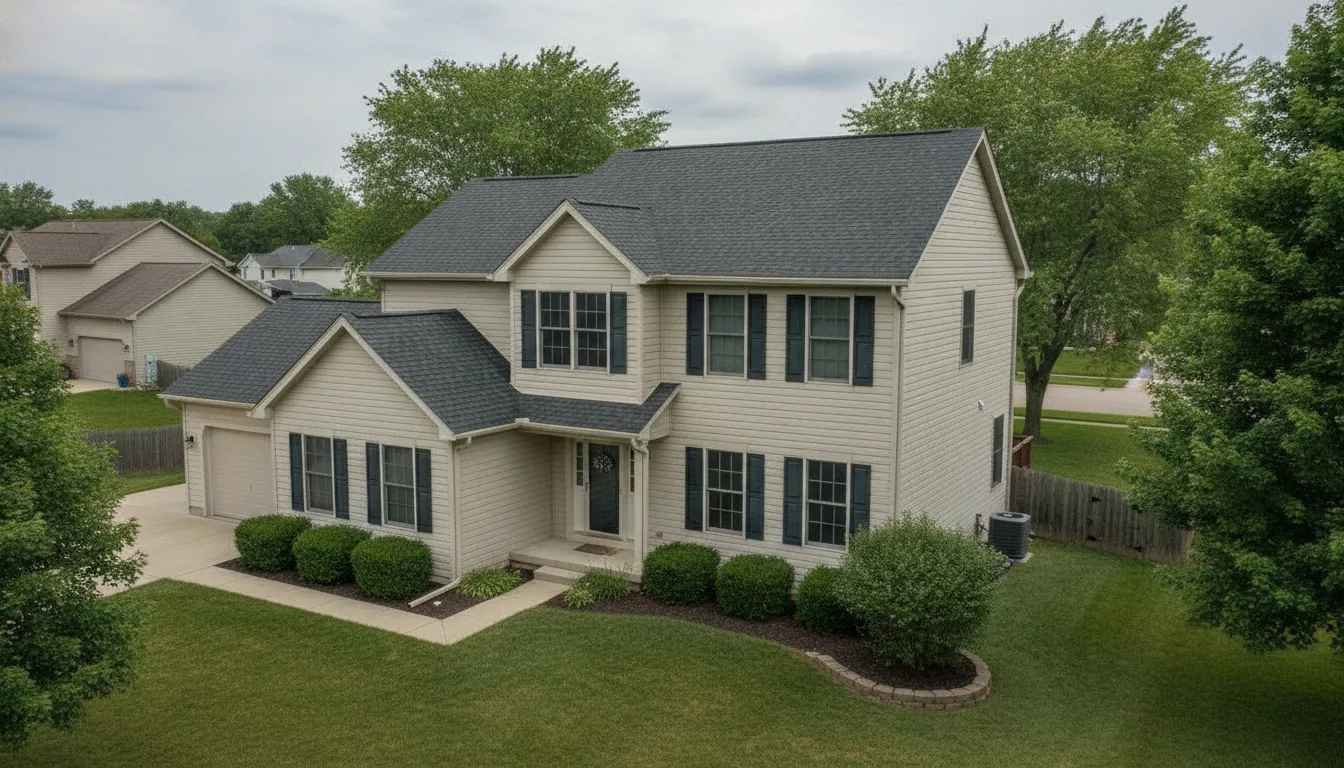
In general, how many shingles in a bundle depends on the product line. Many standard asphalt shingle bundles cover about 33 square feet, or roughly one-third of a roofing square, but specialty products may cover less. Check the bundle label and manufacturer specifications instead of relying on piece count alone.
That distinction matters when you are planning materials for a repair or replacement. Roof pitch, valleys, hips, ridges, starter materials, cuts, and waste can all change the total needed. The first step is understanding what the bundle actually covers and how that coverage applies to your roof.
Contact Referred Restoration online for a roof inspection or honest assessment.
How Many Shingles Are in a Bundle?
There is no universal answer to how many shingles are in a bundle. As a practical estimate, a bundle of 3-tab shingles often contains about 26 to 29 pieces, while an architectural bundle commonly contains about 20 to 22. Luxury shingles may contain only 10 to 16 pieces, and wood or cedar shingles may contain roughly 200 to 400 pieces. Those ranges vary by manufacturer, product dimensions, thickness, and exposure, so the count on its own is not a reliable way to compare products.
Three-tab shingles usually have a more uniform shape and a relatively high piece count. Architectural shingles are thicker and heavier, so fewer pieces may fit within a package. Luxury products use even more material per piece and may be packaged with fewer shingles. Wood and cedar products are a separate category altogether. Their smaller individual pieces and different installation exposure explain why one bundle can contain hundreds of pieces while covering only about 25 to 35 square feet. These typical ranges are summarized in roofing guides from Quality Exteriors and Clear Choice Roofing.
Coverage matters more than piece count
When planning materials, check the bundle’s stated coverage before counting individual shingles. A roofing square represents 100 square feet, and many standard asphalt or architectural products cover approximately one-third of a square per bundle, or about 33 square feet. IKO notes that its listed coverage values are approximate and that specialty shingles can cover less area per bundle because their heavier construction affects packaging. For example, some specialty products are listed at 25 or 20 square feet per bundle, which changes how many bundles are needed for the same roof area.
This is why two packages with different piece counts can still cover similar areas, or why a package with more pieces may cover less. Manufacturer packaging is designed around the product’s dimensions, usable exposure, weight, and installation pattern. The bundle label and the manufacturer’s installation specifications are more useful than a general online range. IKO’s explanation of bundle counts and coverage provides the relevant comparison: shingle coverage depends on the specific product.
For a Minnesota roof, the final material estimate also needs to account for the roof’s shape, pitch, valleys, hips, ridges, starter courses, and cutting waste. A piece count can answer a general question, but it cannot replace the product label or a measurement of the actual roof surface.
Why Does the Number of Shingles in a Bundle Vary?
There is no universal answer to how many shingles in a bundle because manufacturers package products according to more than piece count. The bundle has to represent a practical amount of material to handle, transport, and install, while also matching the coverage promised for that product line. As a result, two bundles can contain different numbers of shingles and still cover similar areas. In other cases, a specialty product may contain fewer pieces and cover less area.
Shingle dimensions are one reason. A longer or wider shingle can cover more roof surface with each piece. Thickness matters, too. Heavier, thicker products occupy more space and weight within the package, so the manufacturer may include fewer pieces. IKO notes that specialty shingles with heavier construction can be packaged for approximately 20 square feet of coverage per bundle, compared with product lines listed at approximately 33.3 square feet per bundle. Those figures are approximate and apply to the listed products, not every shingle on the market.
Style changes the calculation as well. Three-tab, architectural, and specialty shingles do not necessarily have the same dimensions, profile, or installation exposure. Exposure is the portion of a shingle that remains visible after the courses above it overlap. A larger exposure can allow each installed piece to contribute more visible coverage, while a smaller exposure uses more material over the same roof area. Roof design, starter courses, cuts, and other installation details can also affect the material required, even when the bundle label looks straightforward.
| Factor | Effect |
|---|---|
| Dimensions | Larger pieces may cover more area |
| Thickness and weight | Heavier products may contain fewer pieces |
| Style and exposure | Installation coverage varies |
| Product line | Label coverage beats piece count |
That is why comparing bundles by counting pieces can produce a misleading result. IKO gives the example that one brand might package 20 shingles while another packages 26, yet the first bundle could cover more area. Before choosing materials, check the exact coverage listed on the package and follow the manufacturer’s installation instructions. For a closer look at shingle options for Minnesota homes, review the product-selection factors that go beyond bundle count.
How Much Roof Area Does a Bundle Cover?
Roofing coverage is usually discussed in terms of a square. One roofing square equals 100 square feet of actual roof area, not 100 square feet of the home’s horizontal footprint. For many standard asphalt shingle products, a bundle covers approximately 33 square feet, so about three bundles typically cover one square. That is a useful industry reference point, but it is not a universal rule for every product. IKO identifies its coverage values as approximate, and the package label for the specific shingle should take priority.
The phrase “how many shingles in a bundle” can be misleading when you are trying to estimate coverage. Two packages may contain different numbers of individual shingles while covering a similar area, or one may cover less. Shingle dimensions, thickness, exposure, style, roof design, and manufacturer packaging all affect the result. Coverage area is therefore more useful than piece count when comparing products or planning materials.
Standard architectural and performance shingle lines may cover about one-third of a square per bundle. For example, IKO lists several products at approximately 33.3 square feet per bundle, or three bundles per square, and describes its Cambridge, Dynasty, and Nordic lines as covering a full third of a square per bundle. See the manufacturer’s coverage information for the product you are considering: IKO’s shingle bundle and coverage guide.
Specialty products can require more bundles for the same roof area. Heavier construction may reduce the coverage packed into each bundle. IKO lists Crowne Slate at approximately 25 square feet per bundle, or four bundles per square, and Armourshake at approximately 20 square feet per bundle, or five bundles per square. These examples show why simply multiplying a roof’s estimated squares by three can be wrong for specialty materials. Wood and cedar products can also have different coverage ranges based on their size and thickness.
Roof shape adds another important limitation. A 1,000-square-foot horizontal footprint does not necessarily represent 1,000 square feet of shingles. Roof pitch increases the sloped surface area, so a steep roof over the same footprint needs more material than a low-slope roof. Valleys, hips, ridges, dormers, starter courses, and cuts also affect the final quantity. Waste and extra material should be considered, but a fixed allowance should not be assumed without reviewing the roof design and installation requirements.
Use bundle coverage as a way to understand the terminology, not as a precise homeowner calculator. The most reliable estimate comes from measuring the actual roof planes, applying the correct pitch and design considerations, and checking the manufacturer’s specifications for the selected product.
Can You Estimate Bundles From Roof Size Alone?
Not reliably. A rough measurement of the home’s footprint can provide a starting point, but it does not show the complete surface that shingles must cover. Roof pitch increases the actual area compared with the horizontal footprint. A steep roof over a given floor plan needs more material than a lower-slope roof over the same footprint. Shingle bundle counts also vary by product dimensions, exposure, roof design, and manufacturer packaging, so a piece count is not a dependable substitute for coverage information.
The roof’s shape matters just as much. Valleys and hips create additional cuts, while dormers, ridges, and changes in roof plane add details that are easy to miss from ground-level measurements. Starter courses and ridge materials may be packaged separately from the field shingles. Some pieces will also be trimmed around penetrations, walls, and edges. Those offcuts are part of a realistic material plan, not an error in the estimate.
A high-level estimating process looks like this:
- Measure the roof planes. Start with each section’s length and width, then account for the slope rather than treating the horizontal footprint as the final roof area. Pitch conversion factors can be used as an estimating aid, but the result remains an approximation.
- Convert the adjusted area into roofing squares. One roofing square represents 100 square feet of roof area. This gives a useful common measurement, but it does not yet tell you how many bundles to order because coverage varies between products.
- Check the exact product specifications. Read the bundle label or manufacturer’s installation information for coverage per bundle, required exposure, and accessory requirements. Two packages with different piece counts may cover similar areas, or a package with more pieces may cover less.
- Account for roof details and waste. Add material for valleys, hips, ridges, starter courses, cuts, and unavoidable waste. Complex designs with dormers or multiple valleys generally require more planning than a simple gable roof. Do not apply a generic waste percentage without considering the actual design.
- Compare the estimate with the roof’s condition. A measurement cannot identify damaged decking, concealed moisture, flashing concerns, or an underlying repair need. If the roof is aging, leaking, or storm-damaged, an inspection is more useful than ordering bundles from a rough calculation.
For a clearer view of how shingles, underlayment, flashing, ventilation, and other components work together, review this guide to residential roofing system layers. It helps put the bundle estimate in context: shingles are one part of a complete roofing system, and accurate material planning should account for all of them.
When Should a Homeowner Get a Professional Roof Assessment?
A professional assessment is worthwhile when a homeowner sees a leak, missing or damaged shingles, visible storm damage, aging roofing materials, or simply cannot tell whether the roof is still performing as it should. A bundle count can help explain material coverage, but it cannot show whether water has reached the underlayment, decking, insulation, or interior of the home.
After hail or high winds, look for displaced, cracked, bruised, or missing shingles, but do not climb onto the roof to investigate. Damage is not always obvious from the ground, and a safe inspection can also review flashing, valleys, roof edges, and other areas where water may enter. Minnesota roofs face freezing winters, heavy precipitation, snow, ice, and hail. The University of Minnesota Extension identifies snow, ice, wind, and hail among the conditions homeowners should plan for.
When a repair may be enough
A repair can be appropriate when the damage is limited and the surrounding roofing system remains sound. Examples may include a small area of missing shingles, a localized leak, or visible storm damage that has not affected broad sections of the roof. The right repair depends on the source of the problem, the condition of adjacent materials, and whether water has traveled beyond the visible spot. Prompt attention matters because a small opening can expose the roof system to additional moisture.
When replacement deserves consideration
Replacement becomes more likely when the roof is aged, severely damaged, repeatedly failing, or no longer has enough sound material for dependable repairs. Asphalt shingle roofs are often described as lasting 20 to 30 years, but that is a general material statement, not a guarantee for every home. Installation quality, ventilation, weather exposure, maintenance, and the condition of the underlying roof system all affect service life.
An assessment should explain what was observed and why the recommendation is repair or replacement. Referred Restoration offers free roof inspections, honest assessments, and expert recommendations for homeowners who need that clarity. For more detail on urgent issues, review when roof repairs are needed. A measured evaluation is more useful than choosing materials or estimating bundles before the roof’s actual condition is understood.
What Should You Check on the Shingle Bundle Label?
The bundle label is more useful than counting pieces when you are trying to understand how much roofing material you have. Shingle counts vary by product type, dimensions, exposure, roof design, and manufacturer packaging. Before comparing bundles or planning materials, use this checklist.
1. Product name and style
Confirm the manufacturer, product line, and style. A three-tab shingle, architectural shingle, and specialty product may have very different piece counts and coverage. The product name also helps you find the correct installation instructions and warranty information. Do not assume that two bundles with similar-looking shingles are interchangeable.
2. Coverage per bundle
Look for the coverage area, usually shown in square feet or as a fraction of a roofing square. A roofing square equals 100 square feet of roof area. Some listed architectural products cover approximately 33.3 square feet per bundle, or one-third of a square, while specialty products can cover less. IKO notes that its coverage values are approximate, so treat the label for your specific product as the controlling reference. You can review the manufacturer-backed explanation of shingle bundles and coverage for additional context.
3. Bundles per square
Check whether the label states three, four, or another number of bundles per square. Three bundles per square may be common for some asphalt products, but it is not a universal rule. If you are searching for how many shingles in a bundle, remember that the piece count does not tell you the coverage by itself. One brand may include more pieces in a bundle that covers less area than another bundle with fewer pieces.
4. Installation instructions and accessories
Find the manufacturer installation instructions or the reference to them on the packaging. Specifications control details such as fastening, exposure, underlayment, ventilation, starter shingles, hip and ridge materials, and flashing. Ask whether those accessories are included or packaged separately. Starter courses and specialty ridge products are often not counted as standard field-shingle bundles.
5. Lot, color, and consistency
Compare the lot or batch information and color name across bundles. Keeping the same product, color, and lot together helps reduce visible variation on the roof. If labels do not match, pause before installation and confirm compatibility with the manufacturer or roofing professional.
For a broader overview of sequencing, materials, and installation decisions, see this guide to professional roof installation. When the label and the roof conditions seem difficult to reconcile, manufacturer specifications and a measured roof assessment should guide the final material plan.
Contact Referred Restoration online if you want help assessing your roof and planning the next step.
Frequently Asked Questions
How many shingles are in a bundle of 3-tab shingles?
A 3-tab bundle commonly contains about 26 to 29 shingles, depending on the manufacturer. That count is only a starting point because shingle dimensions, exposure, and package coverage can differ. Check the product label and installation instructions rather than comparing piece counts alone. IKO explains how bundle counts relate to coverage.
How many bundles of shingles are in a roofing square?
For many standard asphalt and architectural products, three bundles cover approximately one roofing square, or 100 square feet. Some specialty products cover less per bundle, so they may require four or five bundles per square. Coverage values are approximate and should be confirmed for the exact product.
How many shingles are in a bundle of architectural shingles?
Architectural bundles are often listed at about 20 to 22 shingles, but the exact number varies by product line and manufacturer. Architectural shingles are shaped and built differently from 3-tab shingles, so the bundle count does not by itself show how much roof area the package covers.
Why does the number of shingles in a bundle vary?
Manufacturers package shingles according to the product’s size, thickness, design, weight, and intended exposure. A heavier or larger shingle may have fewer pieces in a bundle while still covering a useful amount of roof area. Use the stated square-foot coverage and bundles-per-square information for estimating materials.
Can I calculate bundles from my home’s footprint?
Not reliably. The sloped roof surface is larger than the home’s horizontal footprint, and valleys, hips, ridges, dormers, starter courses, and cutting waste affect the final quantity. A professional assessment can measure the roof geometry and identify whether repair or replacement is the more appropriate next step.
Ready to Get a Clearer Picture of Your Roof?
A professional assessment can help you move beyond a rough bundle estimate and understand whether your roof needs repair, replacement planning, or no immediate action. Referred Restoration provides a practical, honest evaluation for homeowners who want informed next steps. To request a roof inspection or assessment, contact Referred Restoration online or call (763) 726-4245.