A roof problem rarely stays limited to the spot where you first notice it. A missing shingle can expose the layers below. Failed flashing around a chimney, wall, or vent can also let water travel before it appears indoors. For homeowners in Rogers, Cottage Grove, St. Francis, and Monticello, Minnesota’s freeze-thaw cycles, wind, hail, and winter moisture make early attention especially important.
Contact Referred Restoration online
Roofing repair typically means locating the actual source of damage, correcting affected shingles or flashing, and checking nearby roof components for hidden moisture or deterioration. Prompt attention to leaks, lifted shingles, granule loss, and storm damage can help protect the home’s interior.
From the ground, homeowners can look for curling edges, bald patches, or missing materials. Inside, check for ceiling stains or damp attic areas. A visible symptom does not always identify the entry point. The right next step depends on what an inspection finds and how the roof is performing as a whole.
What Does Roofing Repair Usually Include?
Roofing repair can include replacing damaged shingles, correcting flashing, improving a failed water-shedding detail, or addressing storm damage. The right scope depends on the visible surface, the underlayment, the roof deck, and nearby transitions. A focused inspection helps separate a localized problem from broader roof-system deterioration.
Roofing repair is not limited to replacing a visibly missing shingle. The scope depends on where water or weather has compromised the roof system and whether nearby components are still directing water correctly. A careful assessment may include shingles, flashing, drainage paths, vents, and areas where protective granules have worn away. Referred Restoration’s Rogers roofing services include inspections, repairs, replacements, and storm-damage restoration.
Shingles and the layers below
Repair may involve replacing shingles that are missing, torn, lifted, or otherwise damaged. A professional also looks at the surrounding shingles instead of treating one piece in isolation. Wind, hail, and repeated freeze-thaw cycles can affect adjacent areas even when the issue is not obvious from the ground.
The repair should restore the shingle pattern and its ability to shed water. It should also account for the underlayment and roof deck beneath the visible surface. If those underlying layers are compromised, replacing only the top shingle may leave the actual water-entry problem unresolved.
Flashing at roof joints
Flashing protects joints where the roof meets a chimney, wall, vent, skylight, or another change in direction. These transitions are frequent failure points when flashing is incomplete, displaced, or improperly integrated. The University of Minnesota Extension explains how roof and wall details move water outward rather than channeling it into the structure.
Roofing repair may include resealing, replacing, or correcting flashing. The goal is not simply to cover a visible gap. It is to rebuild the joint so water follows the intended path and remains outside the home.
Drainage and granule loss
A roof works as part of a larger drainage plane. Its layers should overlap, directing water out and over the layer below. Granules on asphalt shingles help protect the material from ultraviolet exposure. When they are missing, exposed asphalt can age more quickly. An inspection can distinguish isolated storm damage from broader wear.
What Are the Most Common Signs You Need Roofing Repair?
Common signs include missing, lifted, curled, cracked, or torn shingles, heavy granule loss, damaged flashing, recurring leaks, ceiling stains, damp attic insulation, and sagging along the roofline. These clues show that a roof deserves closer evaluation, but they do not always identify the actual point where water enters.
Roof problems often start with small changes that are easier to spot from the ground or inside the home than from the roof surface. Watch for curled or lifted shingle edges, missing shingles, torn areas, or bald-looking patches. After high wind or hail, these signs deserve particular attention.
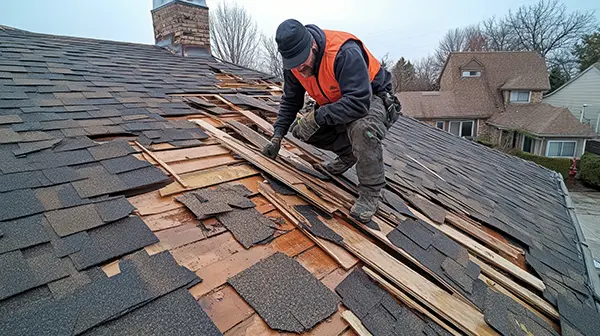
From the ground, use binoculars instead of climbing onto a sloped or wet roof. Look for uneven rows, exposed underlayment, loose materials, and damaged flashing around chimneys, vents, skylights, and roof-to-wall transitions. Do not pry up shingles or disturb flashing during a basic inspection.
Interior clues can be just as useful. Check ceilings and upper walls for brown stains, damp spots, peeling paint, or bubbling drywall. In the attic, look for damp insulation, darkened wood, daylight through the roof deck, or an unusual musty smell. A leak may appear several feet away from the entry point because moisture can travel along framing or other roof components.
Other warning signs include recurring leaks after earlier patching, granules collecting heavily in gutters, and visible sagging along the roofline. Clogged gutters can also back water up under the roof edge. These symptoms can have more than one cause, so do not assume the most obvious damaged shingle is the entire problem. Referred Restoration’s guide to roof shingle leak repair provides additional context for identifying leak patterns.
How Does Minnesota Weather Affect Roof Damage?
Minnesota weather can stress roofing through freeze-thaw cycles, wind, hail, snow, and ice dams. These conditions may loosen shingles, damage flashing, remove protective granules, or redirect water toward vulnerable joints. A roofing repair assessment should trace the damage pattern instead of addressing only the first stain or loose shingle a homeowner notices.
Minnesota weather can test a roof in several different ways over one year. A roof may face freeze-thaw cycles, strong wind, hail, and snow-related moisture. These conditions do not always create an obvious opening immediately. They can loosen materials, stress vulnerable transitions, or expose a weakness that becomes a leak during the next storm.
Roofing repair should therefore address the source and pattern of damage, not only the visible symptom inside the house. A professional assessment can help distinguish isolated damage from a condition affecting a larger area.
Freeze-thaw cycles
Moisture that freezes and thaws around shingles, flashing, seals, and joints can place stress on those components. Areas where the roof meets a chimney, wall, or vent deserve particular attention. Water can travel beneath roofing materials before it appears as a ceiling stain, so a professional may need to trace the entry point and inspect the underlying materials.
Wind and hail
Wind may lift, tear, or remove shingles, while hail can cause granule loss or impact damage that is difficult to identify from the ground. Avoid climbing onto the roof after a storm. Note loose materials, fallen debris, or new interior water marks from a safe location, then arrange an assessment.
Ice dams
Ice dams form when snow melts on warmer upper sections and refreezes at the colder roof edge. The resulting ridge can block drainage and allow water to move into the roof system or home. The University of Minnesota Extension explains ice-dam formation and prevention. Address damp areas promptly while the source is being evaluated.
Can You Repair Part of a Roof Instead of Replacing It?
A localized roofing repair may fit when the damage is confined, the roof deck and structure remain sound, and new materials can be integrated correctly. Replacement deserves consideration when damage is widespread, underlying layers have deteriorated, or separate patches would not restore dependable weather protection across the roof system.
Sometimes a roof needs a focused repair rather than complete replacement. The deciding factor is not simply how visible the damage appears. An assessment should determine whether the roof deck and supporting structure remain sound and whether the affected area can be integrated correctly with the existing roof.
| Consideration | Localized repair may fit | Replacement may be more appropriate |
|---|---|---|
| Extent of damage | The problem is confined to a clearly identified section. | Damage is widespread or affects multiple roof areas. |
| Underlying condition | The roof deck and structure remain sound after inspection. | Hidden deterioration affects the roof system. |
| Material integration | New materials can be properly tied into the existing roof. | A lasting repair requires broader system work. |
| Weather performance | The repaired area can provide dependable protection. | The existing system cannot reasonably handle local weather demands. |
Replacement becomes a stronger consideration when damage is not isolated, the supporting layers are no longer sound, or separate repairs would not restore dependable protection. That decision should follow inspection findings rather than pressure to choose the largest project. See this Minnesota roof replacement guide for broader decision context.
What Should You Do After Wind, Hail, or Ice Damage?
After wind, hail, or ice damage, keep people away from unsafe roof surfaces and downed lines. Document visible conditions from the ground, limit interior water exposure, and arrange a professional assessment. Do not remove roofing materials or make a patch that could conceal the original storm damage before it is evaluated.
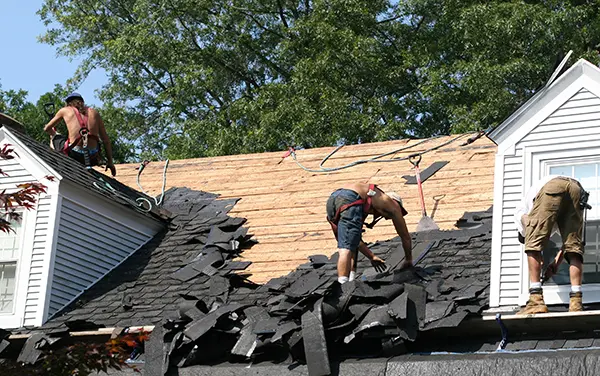
After a storm, start with safety rather than a ladder. Look from the ground for lifted or missing shingles, exposed underlayment, fallen branches, damaged vents, loose flashing, and interior water marks. Do not climb onto a wet, icy, or visibly damaged roof. If a tree, power line, or unstable structure is involved, keep clear and contact the appropriate emergency service.
Six practical steps
- Protect people first. Keep away from unstable structures, downed lines, and unsafe roof surfaces.
- View the roof from a safe location. Use binoculars when helpful, but do not climb onto a wet or damaged roof.
- Limit interior exposure. Place containers under active drips and move belongings away from the area.
- Document what you can see. Take photos and note the storm date, visible damage, and interior symptoms.
- Preserve the condition. Avoid removing roofing materials or making a repair that hides the original damage.
- Arrange an assessment. Share your notes with a professional who can evaluate visible and hidden damage.
A professional inspection can connect visible storm evidence with less obvious roofing repair needs. Referred Restoration helps homeowners in Rogers and neighboring communities assess hail and wind damage. The team can also help navigate the insurance-claim process. For a related overview, read the Minnesota roof insurance claim process guide. Homeowners in Cottage Grove can also review the company’s Cottage Grove exterior restoration services when several exterior systems need attention.
How Can You Prevent Small Roof Problems From Growing?
Homeowners can reduce avoidable roof problems by keeping gutters and downspouts clear. Watch for shingle or flashing changes from the ground, check attic areas for moisture, and arrange professional help when a roof is steep, wet, icy, or damaged. Maintenance does not replace an inspection after a storm or active leak.
Preventive maintenance can help limit water intrusion and protect areas that are harder to inspect. Work from the ground whenever possible, and leave steep, wet, icy, or visibly damaged surfaces to a professional.
Maintain drainage
Leaves, twigs, and roof granules can collect in gutters and restrict the path water needs to follow. When water backs up at the roof edge, it can contribute to shingle deterioration. Inspect gutters after major storms, check downspouts, and confirm that discharge moves away from the foundation. Referred Restoration provides gutter services in Rogers when the drainage system needs attention.
Track visible changes
Keep notes and photos from ground-level checks so missing, lifted, cracked, or worn shingles are easier to recognize over time. Also watch for loose material near eaves and in gutters. These observations do not replace an inspection, but they can help a professional understand when a change began.
Watch transitions and the attic
Flashing at chimneys, walls, skylights, and vents helps waterproof joints. From the ground or attic, watch for displaced flashing, staining, damp insulation, or daylight where it should not appear. If active water is present, protect furniture and flooring, avoid electrical hazards, and arrange help rather than waiting for another storm.
When Should You Call a Professional for Roofing Repair?
Call a professional when water enters the home, a leak returns, storm damage is visible, the roof is unsafe to access, or the source of moisture is unclear. Professional help is especially important around flashing, vents, skylights, multiple roof slopes, and any situation where a temporary patch has not solved the underlying problem.
Contact a professional when a leak continues after a temporary measure, water stains return, or you cannot identify where moisture is entering. Water may travel along roof decking, framing, or insulation before it appears inside, so the visible stain is not necessarily below the damaged area.
Professional help is also appropriate when damage is widespread, the roof is steep or unsafe, flashing or penetrations are involved, or a storm may have affected multiple slopes. Repeatedly sealing the spot where water appeared can delay the correct repair if the actual entry point is elsewhere.
A consultative process should begin with an assessment, followed by a solution suited to the home’s condition and professional installation. Referred Restoration describes its process as inspection, custom solution, and installation. The assessment can clarify whether localized roofing repair is appropriate or whether damage extends into the underlying roof system. If related exterior work is also needed, the team provides Rogers siding services alongside its roofing work.
Contact Referred Restoration online
You can also call (763) 726-4245 to discuss a roofing repair concern with the team. The phone number is displayed as text only so the article uses the verified URL-based contact path.
Contact Referred Restoration online
Frequently Asked Questions
Can you repair just part of a roof?
Often, yes. A targeted repair may address a limited area of damaged shingles, flashing, or another roofing component when the surrounding roof deck and structure remain sound. An inspection helps determine whether the problem is localized or part of broader deterioration.
What is the most common roof repair?
Common repairs include replacing missing or damaged shingles, correcting flashing, sealing water-entry points, and addressing damage after wind or hail. The visible symptom does not always show the full scope, so the surrounding roof and underlying layers should also be evaluated.
How do you identify roof shingle damage?
From the ground, look for missing, lifted, curled, cracked, or torn shingles, uneven rows, and areas with heavy granule loss. Inside, check for stains, damp insulation, musty odors, or daylight through the roof deck. Do not climb onto an unsafe roof.
When should you call a professional for roof repair?
Call when water is entering the home, a leak returns, storm damage is visible, the roof is unsafe to access, or you cannot identify the source of moisture. Professional assessment is especially important when flashing, roof penetrations, or multiple roof areas may be involved.
Contact Referred Restoration online
A timely assessment can clarify the condition of your roof and the next practical step for your Minnesota home.